5 read min
Industry Insights from Kimberly McKinley, Senior Industry Advisor at Microsoft
Retail planning has always been a balancing act between science and art. The science lies in the data, forecasts, inventory positions, and financial targets that guide decision-making. The art comes from understanding customers, spotting emerging trends, shaping assortments, and making the countless judgment calls that define successful merchandising.
For years, however, merchants and planners have spent much of their time trapped in the science. Data lived in different systems, planning processes were fragmented, and teams often spent more time gathering information than acting on it.
According to Kimberly McKinley of Microsoft, that model is rapidly changing. As retailers invest in next-generation merchandise planning platforms, AI, and connected data environments, planning is evolving from a reactive process into a continuous, intelligent capability that enables faster and more strategic decisions. The future of Merchandise Planning will be more connected, more granular, and increasingly autonomous.
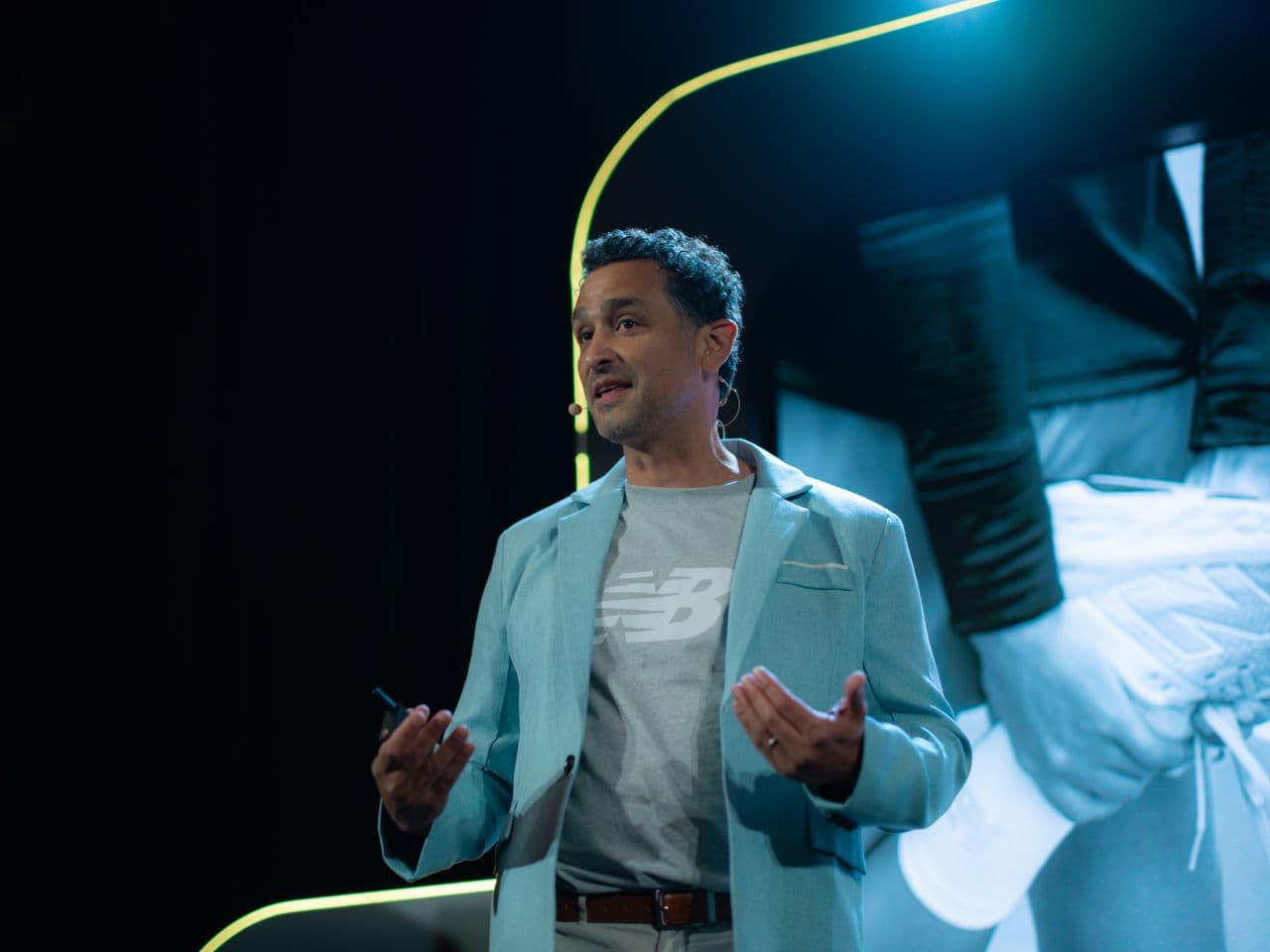
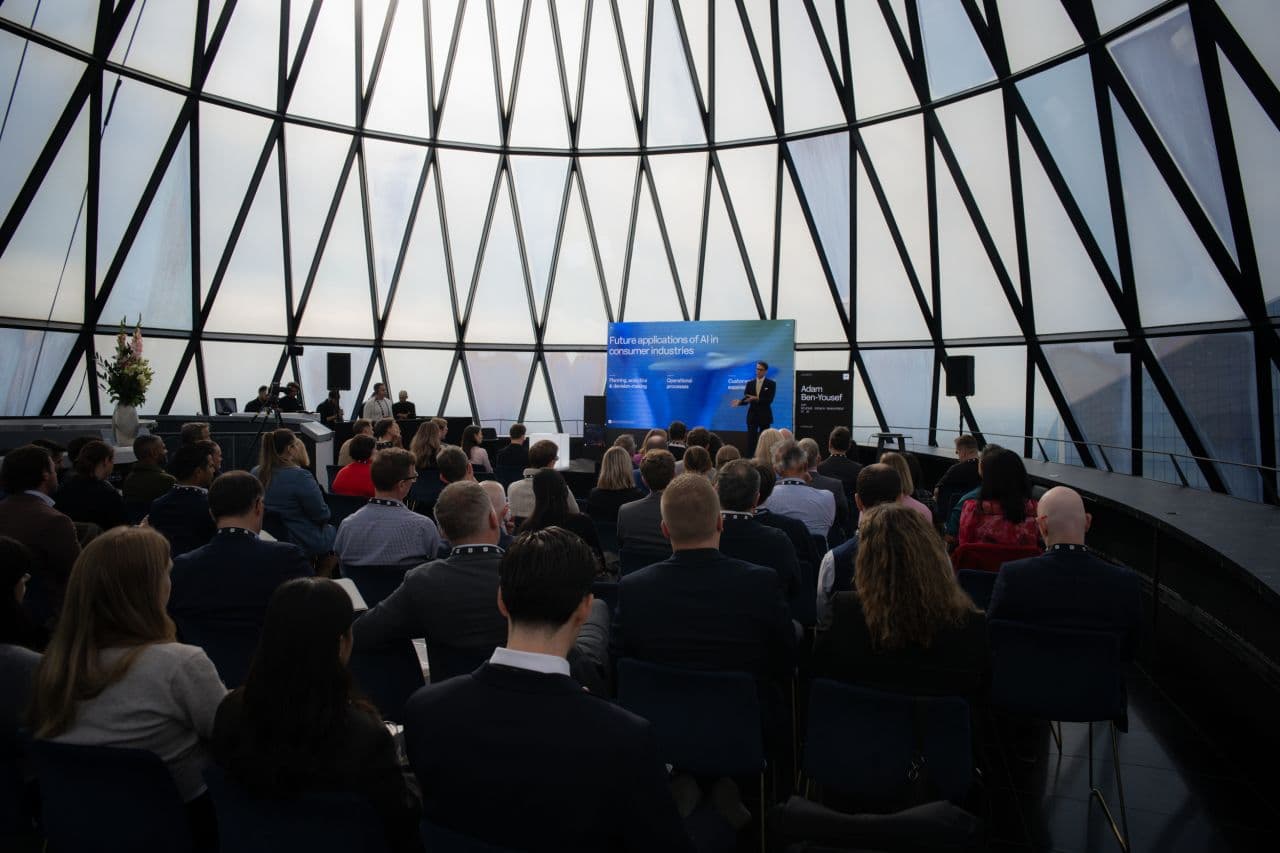
Watch McKinley's full aim10x Digital 2026 keynote below.
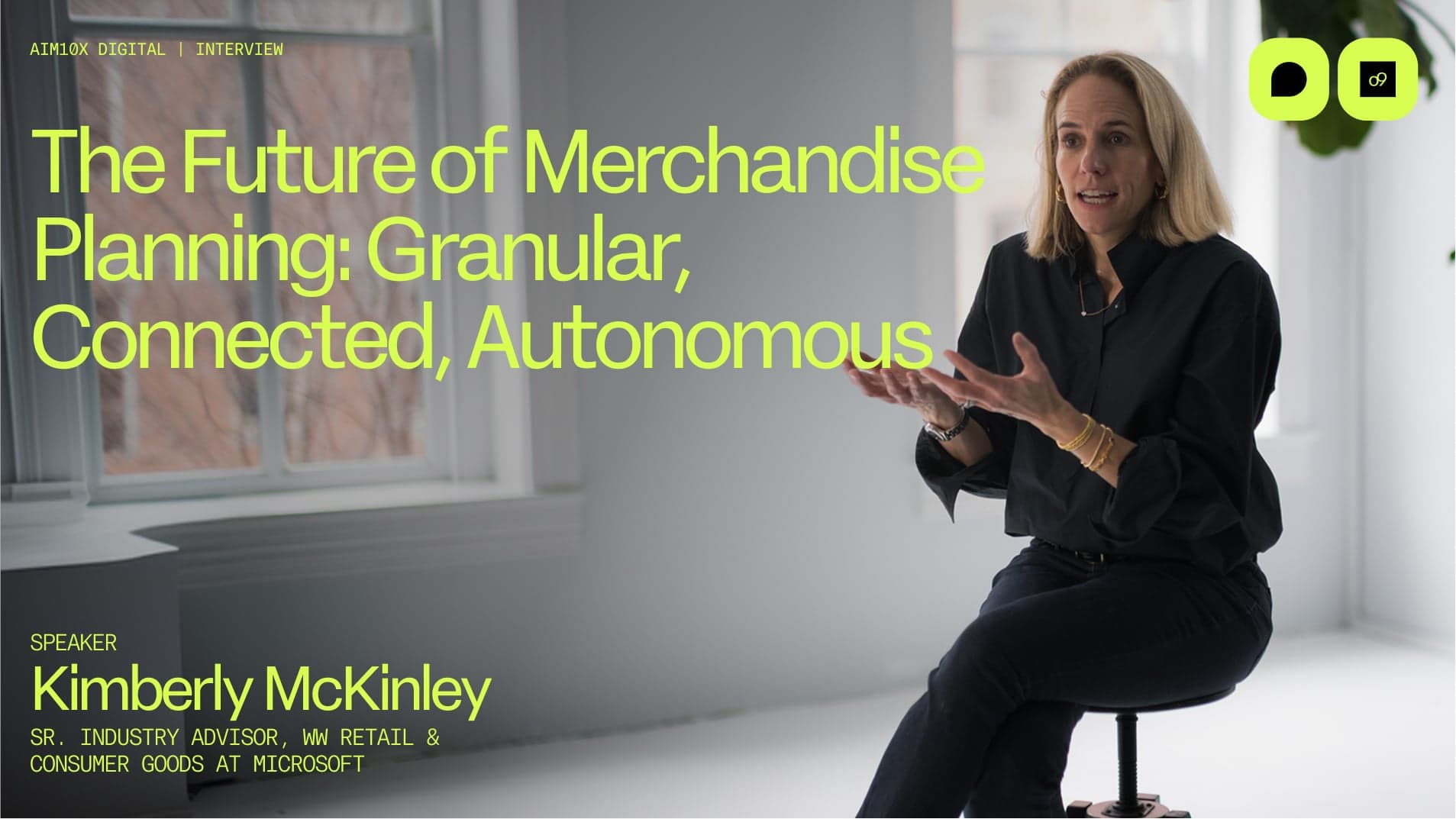
The Foundation Is Still Data
While much of the industry conversation focuses on AI, McKinley emphasized that the starting point remains the same: data.
Many retailers have spent years modernizing their supply chains, yet challenges persist in integrating planning, merchandising, inventory, and operational data into a unified view. When teams operate from different versions of the truth, decision-making slows down, and opportunities are missed.
As McKinley noted, "the biggest issue that we're still seeing... is that most retailers and brands are still spending some time to unify their data."
The impact becomes particularly visible during the selling season. A decision that should take hours can take days when teams are manually gathering data, reconciling spreadsheets, and debating which numbers are correct. In today's retail environment, where consumer demand can shift overnight, that delay can be costly.
Creating a unified view of the business gives planners, merchants, and leadership teams a common foundation for action. It accelerates decision-making, improves collaboration, and allows organizations to respond to changes as they happen rather than after the fact.
From Seasonal Planning to Continuous Planning
Traditional merchandise planning was built around discrete planning cycles. Teams created plans, executed them, and periodically reviewed performance against expectations. Today, that approach is becoming increasingly difficult to sustain.
Consumer demand is now influenced by social media signals, micro-trends, regional preferences, and rapidly changing market conditions. Retailers can no longer afford a "set it and forget it" approach to planning.
"We have social signal now that we can track and measure," McKinley explained. "That social signal is causing micro trends and micro seasons."
At the same time, technology has advanced to a point where continuous planning is not only possible but increasingly necessary. Organizations can now monitor performance in near real time, identify emerging issues earlier, and adjust plans throughout the season rather than waiting for the next planning cycle.
This shift is also enabling a level of granularity that was previously difficult to achieve. Retailers can evaluate performance at the store level, understand localized demand patterns, and make targeted decisions that better align inventory with customer needs.
Let Technology Handle the Science
One of the most compelling themes from the discussion was the distinction between what should be automated and what should remain human-led.
“When your company has done the work to put all of the data together and get everybody looking at the same view of the business, then the repeatable workflows can be taken care of by the technology.”
Kimberly McKinley
Sr. Industry Advisor, WW Retail & Consumer Goods, Microsoft
Many planning activities are highly repeatable. Forecast generation, workflow management, data reconciliation, inventory calculations, and other routine processes consume significant time but often create limited strategic value.
According to McKinley, these activities are ideal candidates for automation.
"When your company has done the work to put all of the data together and get everybody looking at the same view of the business, then the repeatable workflows can be taken care of by the technology."
This is where AI and next-generation planning platforms can have an immediate impact. By automating routine workflows, organizations free planners and merchants to focus on higher-value decisions.
Rather than spending hours manipulating spreadsheets, teams can devote more attention to assortment strategies, vendor relationships, customer behavior, and in-season opportunities.
Elevating the Art of Merchandising
Automation is not about replacing planners or merchants. It is about allowing them to focus on the aspects of their roles that create the greatest value.
McKinley describes this as elevating the "art" of merchandising.
The most successful merchants combine data-driven insights with deep business knowledge, market awareness, and intuition. They understand their customers, recognize emerging opportunities, and know when to deviate from the plan.
As technology assumes responsibility for more routine activities, these uniquely human capabilities become even more important.
"The exception-based workflows," McKinley said, "that's the art, that's the strategy, that's the merchant and the planner knowing their business."
The future planner will spend less time producing information and more time interpreting it. The future merchant will spend less time gathering data and more time making strategic decisions.
Preparing for an Autonomous Future
While AI is creating new possibilities, McKinley stressed that successful transformation requires more than technology.
Organizations must examine existing processes, challenge legacy ways of working, and establish strong governance structures. Leadership alignment, change management, and clearly defined success metrics remain critical to adoption.
One of the most effective approaches is identifying early adopters within the organization who can act as champions for change. These teams help demonstrate value, encourage adoption, and build momentum for broader transformation.
Looking ahead, McKinley believes autonomous capabilities will increasingly become part of the merchandise planning landscape. As AI agents become more capable, they will assist teams by managing portions of workflows, surfacing insights, and supporting decision-making. Human expertise will remain essential, but the nature of work will continue to evolve.
The retailers that succeed will be those that create a strong data foundation today while preparing their organizations for a future where planning is faster, more connected, and increasingly intelligent.
The destination is not simply a better planning system. It is a planning environment where data is unified, workflows are automated, decisions are connected, and merchants are empowered to focus on the strategic choices that drive growth.
That future is already beginning to take shape.
About the authors

The Editorial Team, o9
A multidisciplinary collective of editors, strategists, technologists, and former executives with experience across Fortune 500 companies and top consulting firms. Grounded in o9’s mission to help enterprises make faster, better decisions through the power of AI-driven planning and execution software, the team shares clear, practical insights on digital transformation, supply chain, and enterprise planning to support business leaders in navigating complexity and driving change.