Overview
AI/ML Demand Forecasting
Continuously improve forecast accuracy, stability, and trust — even when history is broken.
AI/ML Demand Forecasting on the o9 Digital Brain applies advanced machine learning, multi-model ensembles, and Forecast Value Add (FVA) to generate accurate, explainable, and resilient forecasts in highly volatile environments.
Forecasting in a World of Permanent Volatility
Forecast volatility is now the default. Post-pandemic disruptions, pricing shocks, promotions, weather events, and rapid channel shifts routinely distort demand patterns and erode the reliability of traditional time-series methods. In many organizations, recent history is “broken,” making classical models brittle and forcing planners to compensate with manual overrides that often introduce more noise than signal. The challenge is not simply producing a forecast — it’s producing one that stakeholders trust, that holds up across planning cycles, and that remains usable when conditions change faster than the calendar.

The Complete Guide to Strategic Demand Planning 2026
Forecasting is the first step. Learn how to transform predictions into precise actions.
From Accuracy to Forecast Value Add (FVA)
Leading organizations are moving beyond static accuracy metrics toward Forecast Value Add (FVA), which measures whether forecasting activities actually improve the forecast compared to a baseline. This shift creates clear accountability for human overrides, builds trust in automation, and improves the forecasting process itself — not just the final number. Instead of debating adjustments after the fact, teams can see which interventions helped, which hurt, and where touchless automation should be expanded.

Forecast Value Add Explained: Are Your Demand Plans Adding Value?
With clear visuals and examples, we explain how to read FVA results and use them to continuously improve your planning process.
Touchless Demand Forecasting
Model Tournaments & Ensemble Forecasting
AI/ML Demand Forecasting uses model tournaments and ensemble forecasting to continuously compare algorithms and model blends, selecting the best-performing approach by segment and horizon as patterns evolve. Rather than relying on a single method, the system adapts over time, producing ensemble forecasts that outperform individual models and remain more resilient in volatile environments.
Advanced Feature Engineering
Advanced feature engineering further strengthens performance by identifying and testing demand drivers such as price and promotions, weather and holidays, and calendar effects, while retaining only statistically significant features to reduce noise and avoid overfitting.
Touchless Forecasting
Touchless forecasting operationalizes this at enterprise scale by generating system baselines for most intersections while reserving human judgment for true exceptions, and continuously learning from accepted and rejected overrides to improve performance cycle over cycle.
Forecastability-Based Segmentation
Forecastability-based segmentation ensures that forecasting strategies match demand behavior at scale. High-forecastability items benefit from improved data quality and reduced override dependency, medium-forecastability items gain from pattern recognition and driver-based modeling, and low-forecastability items shift the emphasis from pure prediction to collaboration, hierarchy shifting, and smarter item recognition.
What Makes o9 Different
Forecast Value Add (FVA) Analysis
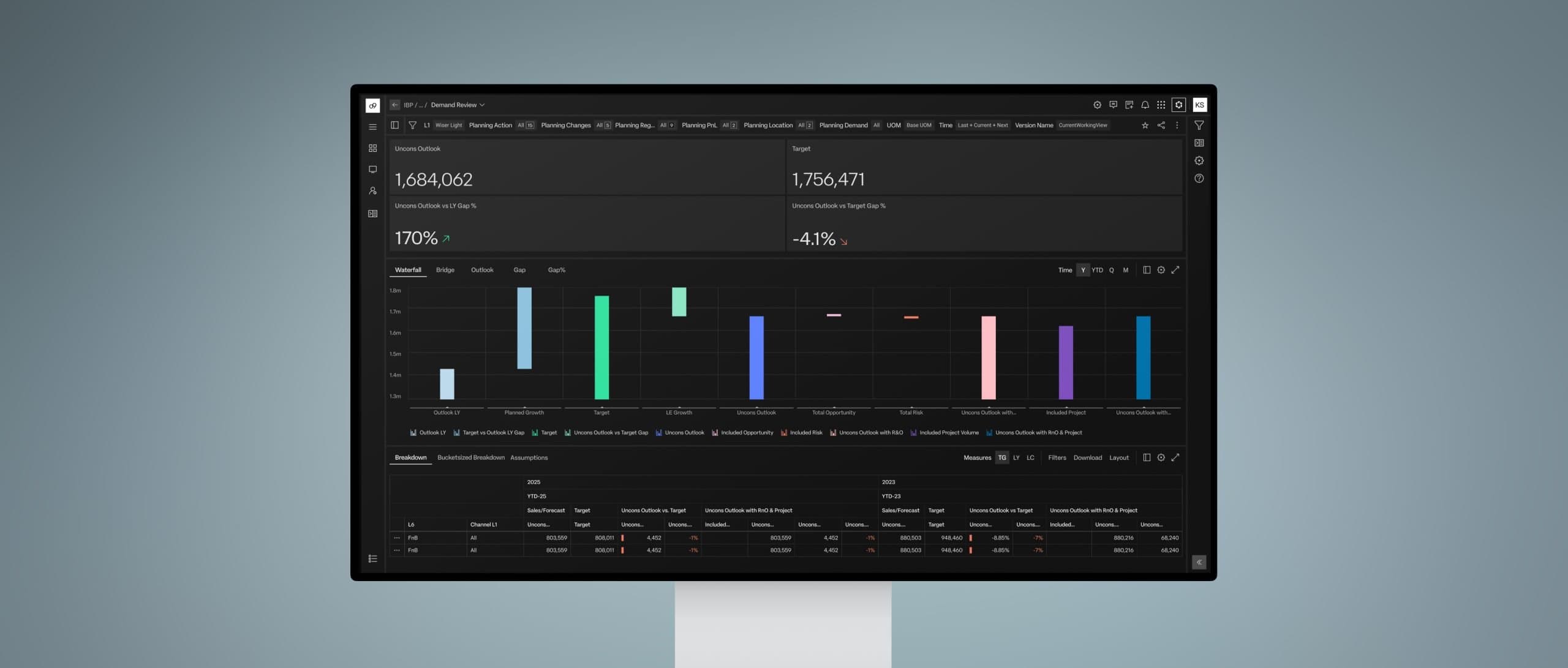
o9 anchors forecasting improvement in FVA analysis that quantifies the impact of every step in the process. Teams can clearly distinguish positive FVA (where human input improved the forecast), negative FVA (where adjustments reduced quality), and touchless areas where no intervention is required. This transparency drives behavior change, reduces unproductive manual work, and creates sustained improvement rather than temporary gains.
Stability & Reasonability Metrics
Beyond accuracy, o9 incorporates stability and reasonability metrics to ensure forecasts remain consistent across planning cycles and make sense in year-over-year and cumulative comparisons. These guardrails prevent the “whiplash” effect that comes from overfitting or reacting to noisy signals.
Multi-Model AI at Scale
Instead of a single algorithm approach, o9 applies multi-model AI at scale — combining statistical models, gradient-boosted trees, and deep learning techniques — to deliver stronger accuracy, better stability, and clearer explainability through ensembles.
Industries Supported


Powered by the o9 Digital Brain
AI/ML Demand Forecasting runs on the o9 Digital Brain, powered by Graph Cube technology. This platform foundation replaces rigid relational databases with a model built for complex enterprise relationships, representing planning structures as connected nodes and edges. It scales across massive SKU-location hierarchies while enabling rapid experimentation, scenario analysis, and continuous learning — so forecasting performance improves even as volatility increases.

The o9 Digital Brain
The digital brain is powered by our patented Enterprise Knowledge Graph (EKG)
Modular by design, enterprise by default
o9 accelerates implementation through configurable building blocks that can be tailored to unique business requirements.
Basic ML / Statistical Forecasting
Advanced ML Forecasting
Forecasting Maturity Model
Pre-built industry templates provide packaged logic and workflows that reduce time to value while remaining fully customizable.
A digital operating model for VUCA conditions
APEX is o9’s AI-powered operating model for enterprises navigating volatility, uncertainty, complexity, and ambiguity (VUCA). It enables organizations to plan, execute, and learn as one connected system.

The o9 Digital Brain powers APEX by connecting enterprise data, knowledge, and decisions through a single intelligent model.
Collaborative Demand Planning is one of the building blocks of the Digital Brain. It contributes domain-specific capabilities into the enterprise-wide model that enables APEX from the ground up—linking this solution to decisions across the entire value chain.
→ Learn how the APEX Operating Model works
Where AI drives real decisions

Deep Learning
Deep learning reduces manual model tuning through automated feature creation and neural-based pattern detection.
Meta Learning
Models learn which algorithms work best for each intersection and how to combine them effectively.
Gradient-Boosted Ensembles
Multiple algorithms collaborate to generate a more accurate and stable forecast than any single model alone.
Results in real-world complexity
Amway

Amway adopted touchless forecasting with FVA-driven accountability to eliminate manual handoffs and rebuild trust in system forecasts, reducing forecast review cycles dramatically.
Outcomes included improving accuracy and bias, sustaining high fill rates, and increasing adoption across the organization.
Kraft Heinz

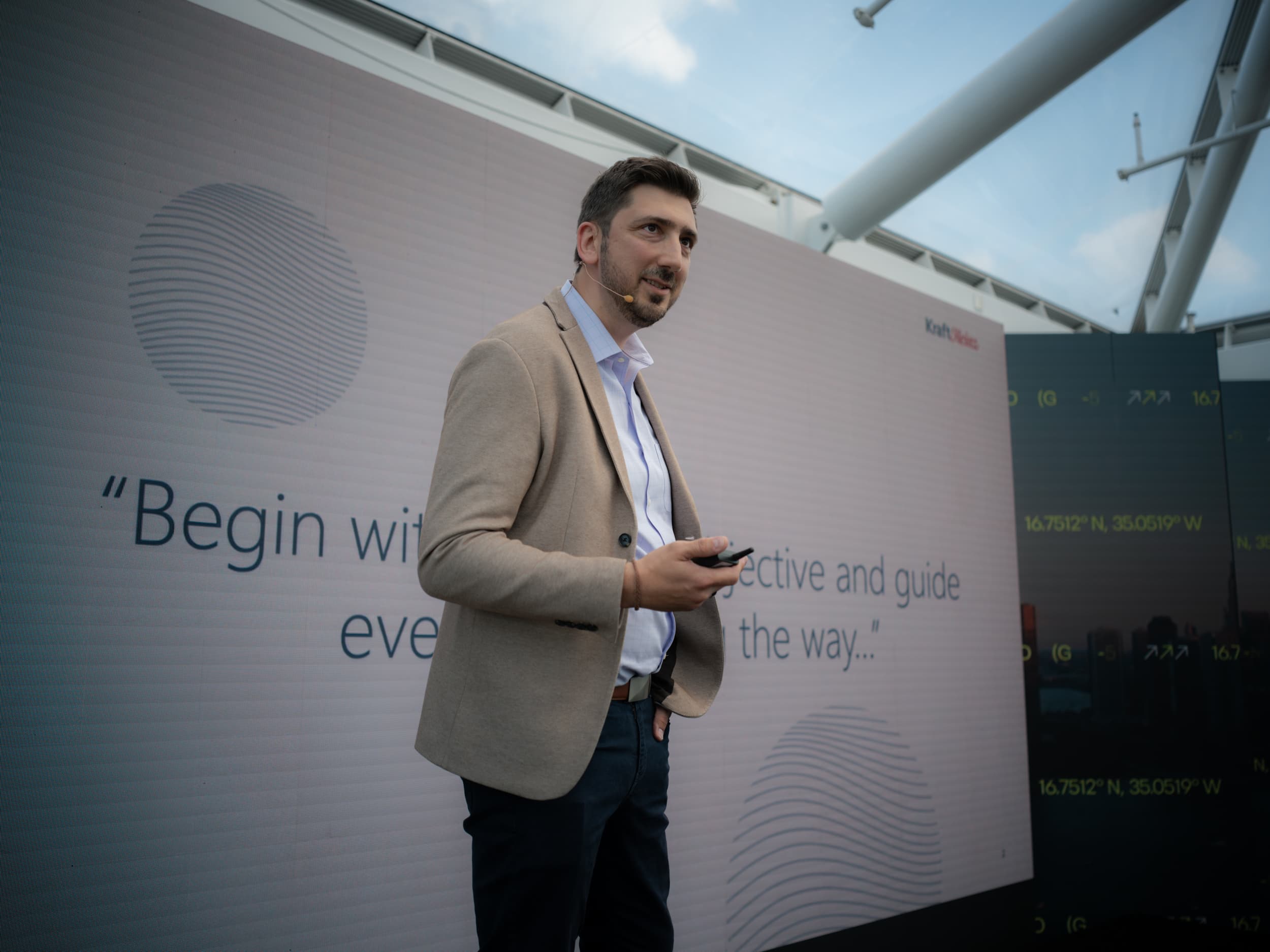
Kraft Heinz has used AI-powered forecasting to address material shortages, pricing volatility, and the need for precision at scale, leveraging an approach that continuously runs simulations to adapt forecasts as conditions shift.
Outcomes included improved monthly and short-term weekly accuracy, reductions in excess inventory, and lower supply chain losses.
25%
Reduction in Excess Inventory
9.1%
Improvement in Monthly Forecast Accuracy
11%
Reduction in Losses
What our customers say
“With o9 AI/ML-based forecasting in place, we’re already seeing improved forecast accuracy, stronger cross-functional collaboration, and faster, more informed decision-making—all within a centralized platform.”
Gaby Gutierrez
VP of Global Supply Chain Planning at Amway
“We had a significant reduction in expedited costs. Our target was 4 to 6 million dollars. And we achieved close to 9 million dollars…”
Jay Koganti
Vice President of Supply Chain COE
“The o9 platform unlocked significant processes for us in order to effectively address changes in our volumes and to align those volumes to our labor capabilities at our distribution centers.”
Ashley Ward
Senior Manager Supply Chain Planning
[0/0]

Request a Live Demo
Schedule a live, personalized demo with one of our industry experts.
Related Solutions
Create a more responsive and economically aligned planning ecosystem
Supply Chain Planning & Analytics

Revenue Growth Management
o9’s Revenue Growth Management solutions provide a unified, AI-powered approach to commercial planning that connects pricing, promotions, portfolio, and strategic P&L decisions with real-time insights and scenario modeling. By integrating advanced analytics, demand signals, and cross-functional data into a single platform, organizations can simulate outcomes, optimize revenue drivers, and strengthen alignment between commercial strategy and execution across markets and channels.
Demand Sensing
Rapidly identify short-term trends and market shifts to accurately predict what consumers want, when and where.
Related content

[article]
Choose the right demand planning resources

[video]
Demand Planning in today's world: a demand planner's perspective in manufacturing

[article]
Demand planning: Roughly right or precisely wrong?

[video]
E1 | Rethinking Demand Planning in the Face of Increasing Variability

[video]
What is Demand Planning?
Frequently Asked Questions (FAQs)
AI/ML demand forecasting uses machine learning algorithms to identify complex patterns and demand drivers that traditional methods cannot capture, continuously learning and adapting as market conditions change.