AI-Driven Demand Sensing Software for Enterprises


UNLOCKING BILLIONS IN VALUE FOR CLIENTS IN 30+ INDUSTRIES
Sense demand as it happens - and respond before volatility turns into lost sales or excess inventory.
Demand Sensing on the o9 Digital Brain captures short-term demand signals from real-time data and leading indicators, enabling organizations to sense, shape, and respond to demand changes at the speed of the market.

The problem traditional planning can’t solve anymore
Traditional planning methods are increasingly too slow and too coarse to keep up with how demand moves today. Viral trends, weather events, promotions, and local disruptions can shift buying behavior overnight — long before those shifts show up in historical sales history. When organizations rely primarily on ERP-driven forecasts and standard planning cycles, they miss demand spikes and drops, respond late, and end up paying the price through stockouts, excess inventory, waste, and margin erosion.
The problem is amplified by the reality that many demand changes are local and channel-specific, occurring at the store, zip-code, or fulfillment-channel level where conventional forecasts often lack visibility.
From Planning Horizons to Execution Horizons
Retailers and manufacturers are shifting from long-term planning horizons to short-term execution horizons measured in days and weeks.
This shift prioritizes leading indicators over lagging history, moves forecasting closer to where execution happens (store, item, day, or even hour), and treats demand as something that must be continuously sensed and actively shaped around real constraints. Demand sensing becomes the connective tissue between what the market is doing now and what the supply chain needs to do next.
o9 enables this shift by:
What this solution enables
What Makes o9 Different
Industries Supported





























Powered by the o9 Digital Brain
Demand Sensing runs on the o9 Digital Brain, built to handle the speed, scale, and diversity of modern demand signals. It supports IoT and edge data sources, models the supply chain as a digital twin for execution, and enables simulation of responses to demand spikes before changes are deployed into replenishment and allocation.
Where traditional relational databases struggle under streaming, high-granularity data and complex hierarchies, the o9 platform is designed to operate at that scale continuously.
Modular by design, enterprise by default
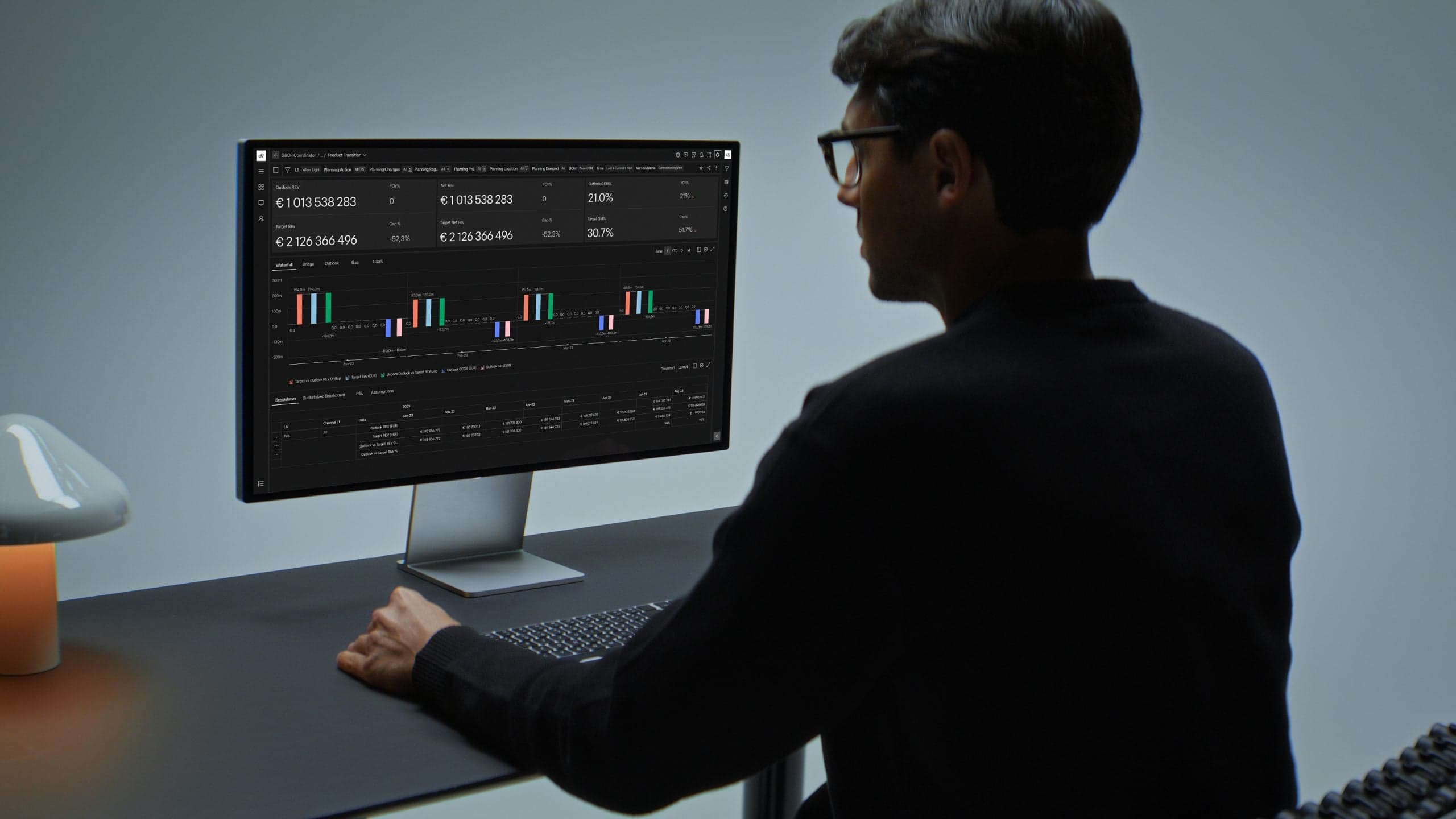
o9 accelerates implementation through configurable building blocks that can be tailored to unique business requirements.
Core Building Blocks
Data Ingestion & Connectivity
Pre-built industry templates provide packaged logic and workflows that reduce time to value while remaining fully customizable.

A digital operating model for VUCA conditions
APEX is o9’s AI-powered operating model for enterprises navigating volatility, uncertainty, complexity, and ambiguity (VUCA). It enables organizations to plan, execute, and learn as one connected system.

The o9 Digital Brain powers APEX by connecting enterprise data, knowledge, and decisions through a single intelligent model.
Collaborative Demand Planning is one of the building blocks of the Digital Brain. It contributes domain-specific capabilities into the enterprise-wide model that enables APEX from the ground up—linking this solution to decisions across the entire value chain.
→ Learn how the APEX Operating Model works
Where AI drives real decisions
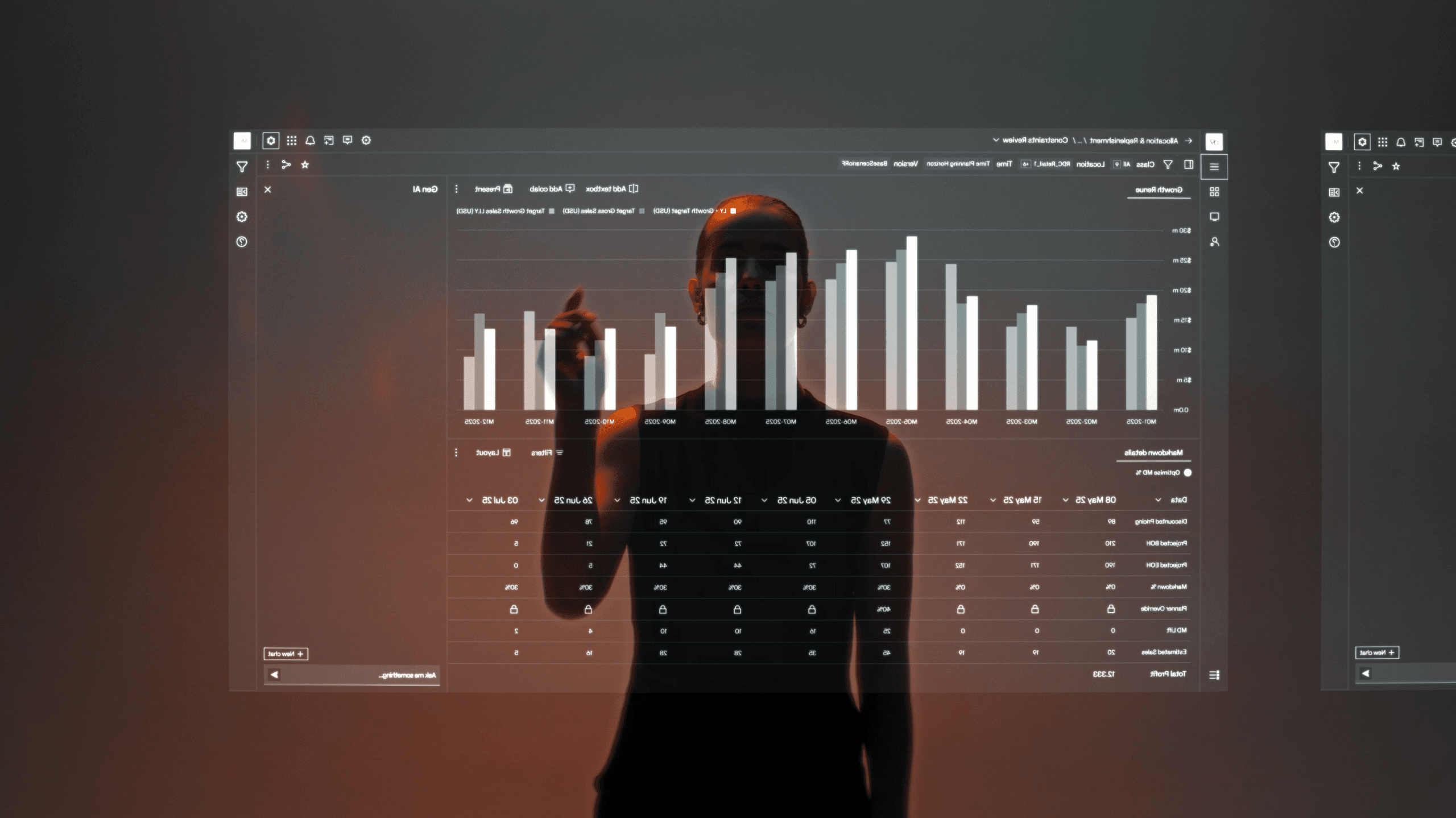
Machine learning enhances demand sensing through causal lag features that capture how events like promotions and campaigns influence demand days or weeks later, improving responsiveness without losing continuity.
Hierarchical machine learning helps manage sparse or intermittent signals by aggregating demand intelligently and then disaggregating forecasts down to store/day levels, improving accuracy even for slow-moving items.
For high-velocity categories, intraday forecasting supports hourly or shift-level sensing in areas such as fresh food and bakery, convenience retail, and quick-service food where the execution window is measured in hours, not weeks.
→ Learn more about o9 AI innovations

Results in real-world complexity
ABinBev

By leveraging o9’s integrated planning platform, AB InBev replaced legacy systems such as SAP APO with a single, cloud-native solution, streamlining demand forecasting, supply planning, and inventory management.
The transformation enabled a 60% reduction in out-of-stocks, a 53% decrease in inventory losses, and a four-year high in service levels. Additionally, planners experienced a 30% time savings, while touchless planning adoption reached 70-90% across key markets.
60%
Reduction in Stock-Outs
53%
Decrease in Inventory Losses
90%
Touchless Planning Adoption
Kraft Heinz

7,000 SKUs across multiple regions, Kraft Heinz partnered with o9 Solutions in North America and Europe to implement an advanced ML forecasting platform, collaborative demand planning solution, and a sales planning module.
This initiative resulted in an 11% increase in Monthly Forecast Accuracy, a 14% increase in Weekly Forecast Accuracy, a 20% reduction in safety stock levels, and a 32% reduction in time spent on forecasting.
10%
Increase in Forecast Accuracy
25%
Decrease in Excess Inventory
32%
Reduction in Time Spent on Forecasting
What our customers say
“The o9 platform makes our decision-making much faster. It’s also giving us a better and deeper understanding of the analytics, the cost of decisions, and now when we make those decisions, there’s a much higher degree of confidence that we actually execute.”
Bill Grah
Director of S&OP
“o9 is moving the team’s workload and energy away from executing mundane, tedious tasks like determining how many units of each SKU go to each store every single week. We're moving them upstream into preseason planning, into developing strategy, and then the system executes automatically.”
Brady Coady
Associate Vice President of Allocations and Merchandise
“What's really succeeding with us is the idea of the connection to the data and a best-in-class UX/UI, so the people that use the business can really make an impact.”
David Almeida
Chief Strategy & Technology Officer
[0/0]
Related solutions





Demand planning is an integral part of any business's supply chain management process, and its importance extends across multiple dimensions, impacting everything from operational efficiency to customer satisfaction and long-term profitability. A well-executed demand planning process ensures that businesses can anticipate customer needs and align resources effectively.