


UNLOCKING BILLIONS IN VALUE FOR CLIENTS IN 30+ INDUSTRIES
o9 EKG for
Powers Grocery Retail
how it works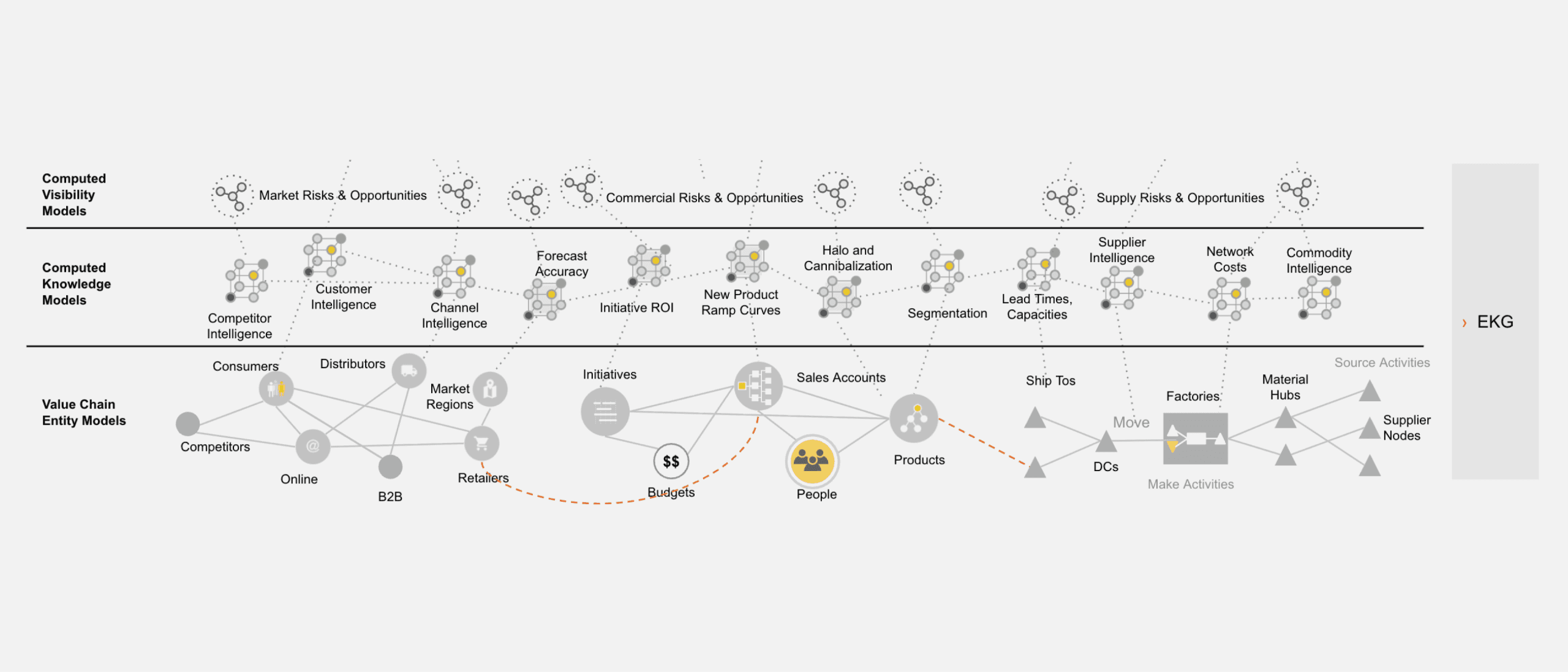
The o9 Enterprise Knowledge Graph (EKG) connects your retail data—items, stores, DCs, vendors, capacities, policies, and transactions—into one decision model. With this foundation, teams can run synchronized plans across horizons (strategic, tactical, daily) while continuously learning from what actually happened.
External market knowledge can be harmonized alongside internal signals to explain what’s driving demand, not just predict it—so planners can act with confidence, faster, and with fewer handoffs.
Why Grocery Retailers choose o9
for connected planning
Grocery volatility is constant
your decisions can’t be
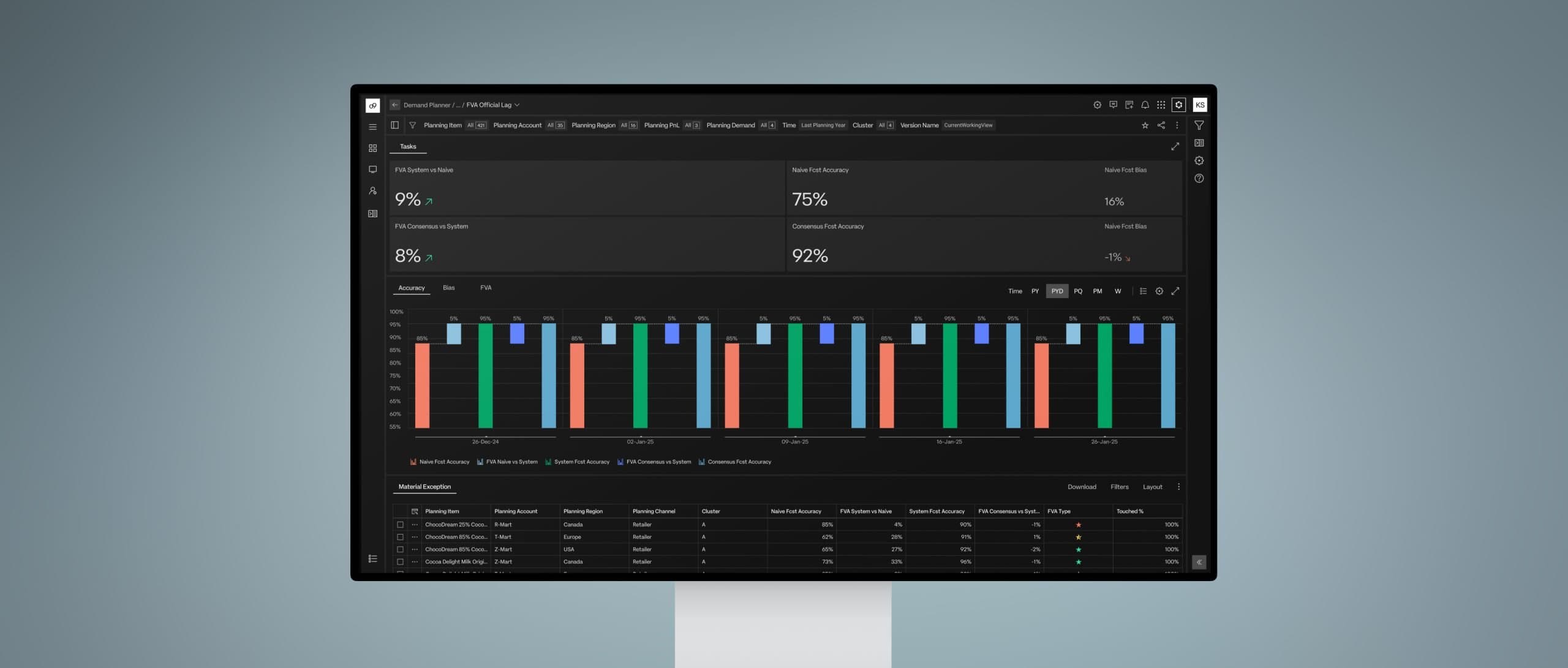
Forecasts miss fast-changing demand because external drivers (weather, local events, macro conditions, digital signals) aren’t cleansed, timed, and modeled consistently—so planners rely on late manual overrides and debate.
Use outside-in market knowledge streams to ingest and harmonize public data with internal signals, then apply explainable ML so teams can see feature importance, trust the forecast, and scale improvements across channels and regions.
Omnichannel growth forces separate forecasts (in-store, click-and-collect, ship-from-store, ship-from-DC). Meanwhile slow movers and long-tail assortments create sparse data that breaks store-SKU forecasting at scale.
Run hierarchical forecasting: forecast at the most stable level (cluster/DC/category) and disaggregate intelligently to stores and days. Keep omnichannel forecasts aligned and reconciled so supply and labor plans don’t diverge.
Proven Results for
Grocery Retailers Leaders
Real-time Intelligence,
Enterprise-wide Impact


Experience the power
of o9 first-hand

Take a Tour