12 read min
From volatile demand to shifting consumer preferences, retailers and apparel brands are navigating constant disruption. At aim10x Americas, o9’s largest event with more than 400 industry professionals, executives and solution experts shared how they are addressing these challenges with integrated, AI-powered planning.
EchoStar showed how it freed $300 million in inventory, Zamp S.A. lifted forecast accuracy to 92 percent across nearly 3,000 restaurants, and New Balance unified its global planning on a single platform. Live demos brought the future to life, highlighting touchless replenishment and AI-driven merchandising that turn weeks of analysis into instant, actionable insights.
Here are the highlights.
Digitally Transforming the Wireless Telco Retail Supply Chain
A year ago, EchoStar was staring down a financial crisis. Inventory was bloated, cash was locked up, and the company was struggling to keep pace with volatile demand in its Boost Mobile wireless business. The broader portfolio—which also includes DISH Network and Sling TV in pay television, and Hughes in satellite services—added to the complexity.
Geoffrey Fry, VP of Enterprise Supply Chain, described the turning point bluntly: “We’ve had a pretty crazy journey from the brink of bankruptcy a year ago to now being cash rich. But the only way through was to change the way we worked.”
When Gmail Is a Planning Tool
At the time, the tools on hand were notably outdated for a company managing billions of dollars in product. “We started with spreadsheets and Gmail. Yes, Gmail was one of our planning tools. It didn’t work out as well as you might imagine.”
Lean Thinking Meets Digital Transformation
He saw the crisis as a forcing function to accelerate change, applying lean principles to strip out non-value-added inventory and reorient planning around what customers valued most. The real shift came with the adoption of o9’s demand and supply planning platform, integrated with Oracle ERP. Central to the transformation was multi-echelon inventory optimization (MEIO), which allowed EchoStar to optimize inventory across suppliers, distribution centers, warehouses, and retail stores, rather than treating each node in isolation.
Results That Changed the Game
The results of the transformation so far have been substantial:
- “We went from about $500M in inventory to just over $200M—close to a 70% reduction in the cell phone business. Other divisions not using o9 saw inventory increase.”
- “That gave us effectively just-in-time delivery, let us achieve 26 turns on inventory, and dramatically improved cash flow.”
- “o9 gave us the ability to model upstream and downstream interactions, to see the whole chain, and to optimize inventory in ways spreadsheets never could.”
- “Multi-echelon inventory optimization was especially powerful. Instead of just national DC inventory, we showed the whole chain. That shifted the conversation from blaming the supply chain to addressing real root causes.”
A Wireless Telco Retail Supply Chain—Reinvented
By embedding o9 into its core planning, EchoStar transformed its operations. Distribution centers now function as cross-docks, inventory turns have reached world-class levels, and decisions are driven by trusted data rather than gut feel.
The Bigger Lesson: Cash Is King
As Geoffrey reflected, the lesson goes beyond technology: “Cash is critical in every business—whether you’re growing, super profitable, or near bankruptcy. Inventory is a big source of cash. By applying lean principles, focusing on customer value, managing across the whole chain, aligning with partner motivations, and using the right tools, we pulled hundreds of millions out of inventory while serving customers better.”
How Zamp S.A. Is Enabling End-to-End Planning for QSR Growth
Zamp S.A., the largest restaurant operator in Brazil, runs nearly 3,000 Burger King, Popeyes, Starbucks, and Subway locations with a workforce of 20,000. For Luciano Tótola, Supply Chain Director, the challenge is immense. “For me, with almost 3,000 restaurants, it’s like having 3,000 plants. The same noise you hear when a plant stops due to a material issue, I hear when a store stops because there’s no bread or no beef.”
Breaking Free from Siloed, Reactive Planning
Legacy planning processes only made that challenge harder—siloed, reactive, and prone to excess stock, wasted shipments, and “stressed” teams. To break the cycle, Zamp partnered with o9 to implement an end-to-end, AI-powered planning platform—the first of its kind in Brazil for quick-service restaurants (QSR) and fast casual.
AI-Powered Planning, Built for Restaurants
In scope were demand planning, supply planning, and store replenishment, powered by AI forecasting, real-world constraints, daily SKU-level forecasts for every restaurant, and tailored enhancements such as a “leakage factor” for production variances and truckload optimization to cut logistics costs.
Luciano explained that Zamp had to transform quickly: “We didn’t have time to fix processes first and then automate. We had to do both at once. Leveraging o9’s reference models gave us speed while embedding best practices.”
The Business Impact: Less Waste, More Revenue
He explained the business value unlocked with the o9 platform at length:
- “Forecast accuracy improved 20%, now running at 92%.”
- “Store-level accuracy improved 12%, now at 70%.”
- “Spoilage and obsolescence dropped nearly 60%.”
- “Restaurant managers spend 30% less time placing orders.”
- “Inventories decreased 13%, transport costs by 20%, and shipment frequency fell.”
- “Most importantly, stock-outs at stores fell 32%. That increased revenue, made operations more efficient, and freed staff to focus on customers.”
Culture Change at the Core
According to Luciano, the transformation was as much about culture as technology. “Discussions are healthier, collaboration stronger, and our supply chain now provides real value across the company,” he said.
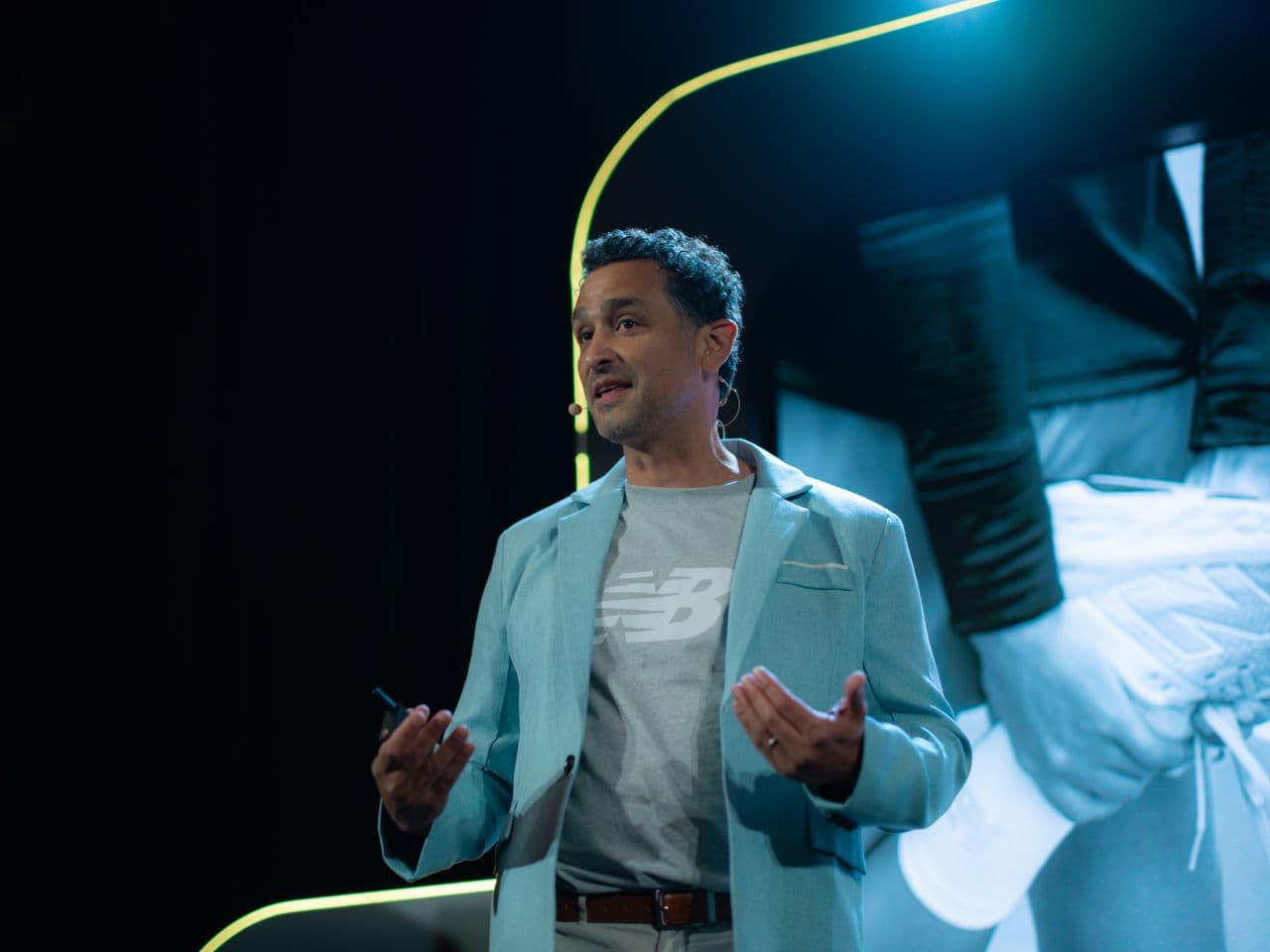
New Balance: Reinventing Retail Through Planning
For New Balance, growth has been both a blessing and a challenge. The independently owned footwear and apparel company has surged over the past decade, signing major athletes and expanding into more than 50 countries.
But behind that momentum, planning systems were fragmented and outdated. “Over the last five to ten years, we’ve had an amazing problem: we cannot stop growing,” said Xavier Vargas, Director of Global Planning COE. “But growth is great only if you can do it profitably. The complexity of our systems and processes made that difficult.”
Too Many Tools, Too Much Complexity
Product lines were managed differently—some with Excel, others with in-house systems—and even basic data definitions varied. Knowledge often lived with just a few experts, while the company’s ERP system was being phased out. “There was simply too much complexity in our end-to-end planning to enable profitable growth,” Xavier explained.
A Bold Leap: ERP, PLM, and Planning in One Go
The solution was bold: implement a brand-new ERP, PLM, and planning system simultaneously. “We went from a Friday blackout to a Monday where everyone woke up to the same system, and we didn’t miss a beat.” At the center was o9’s integrated platform, unifying demand, inventory, and supply planning, with early steps toward IBP. It brought statistical forecasting, advanced size curves, smarter allocation and replenishment, and scenario-based RCCP planning—all in one connected system.
From Blackout to Breakthrough
He spoke about the benefits the team now sees from this transformation:
- “The ability to handle new product introductions and apply the right size curves has been a game-changer in footwear.”
- “For RCCP, it used to take a week to run a constrained plan; now it takes no longer than an unconstrained one.”
- “We’ve shifted from spending a week questioning data to having it available on day one and talking trade-offs.”
- “Our ability to serve markets on time, in full, has continued to improve month over month.”
Planning for the Marathon, Not the Sprint
For Xavier, the transformation is about more than speed and accuracy. It’s also about people and culture. “None of this happens without people. Plan for the marathon. Change is constant. We won’t get everything right—but how will you manage expectations, and how will you bring your people along the way?”
Making Execution Decisions Touchless in Retail: From DCs to Store Shelves
What if the daily firefight of retail replenishment could be replaced with foresight? That question framed one of the live product demos at aim10x Americas, where o9 showcased how its platform and new agentic AI innovations are set to transform decision-making.
The Replenishment Dilemma
Michael Crowe, Director of Solutions Consulting at o9, introduced the challenge many apparel and omnichannel retailers face: getting the right stock from central distribution centers into stores—while also balancing wholesale channels.
For planners, this means a barrage of questions every day: How many orders need approval? Which ones matter most? Where is inventory piling up, and where are stockouts looming? And how can sales be driven without relying on constant promotions or markdowns?
A Smarter Start to the Planner’s Week
The demo unfolded as if a planner were starting their week. Instead of combing through spreadsheets, the planner receives an email—or even a podcast-style audio while walking the dog—summarizing the issues that matter most: problem areas, root causes, and recommended actions.
Inside the platform, dashboards displayed the usual KPIs: supportability, lost sales, and order approvals. But layered on top was a generative AI summary, translating charts into clear takeaways. The system highlighted that 95 percent of replenishment orders were already touchless—auto-approved under pre-set rules—leaving only true exceptions for review.
Exceptions That Really Matter
Clicking into manual approvals revealed why certain orders were flagged. Low-margin items and atypical shipping routes required human oversight. The system quantified the trade-offs, showing, for example, that approving one nonstandard order would increase transport costs but deliver a net gain of $2,800.
He showed how approval logic is set up. Products and stores are segmented by class, with rules for lifecycle, margin, and thresholds. New, high-margin products, for example, can be configured to always require planner review. The platform then drilled into supportability. The East region was underperforming, and the system pinpointed the cause: a demand spike driven by New York Fashion Week. External signals like competitor promotions could also be incorporated, giving planners a fuller picture of why anomalies occur.
From Problem to Solution in One Flow
The system didn’t just flag the issue—it proposed solutions. Options included transferring stock between DCs or reallocating inventory from wholesale to retail. Each choice came with forward-looking projections showing how inventory would dip and recover, and what the impact would be across the business. Once the planner chose a path, the decision was committed to the master plan with a single click, complete with a recap and confirmation.
Accessible for Every Planner
Michael closed by stressing the accessibility of the tools: “Do you need a PhD? No. A normal business user can configure the agents in plain language.”
In under 20 minutes, the demo took the audience from a planner’s Monday morning briefing through to resolution, showing how routine decisions can be automated, root causes explained, and trade-offs quantified—all in one workflow. As Michael put it: “We can enable these decisions quickly. That shifts planners from firefighting to foresight.”
Driving Retail Growth With Next-Gen Integrated Merchandising & Assortment Planning
What if merchandisers could spend less time wrestling with spreadsheets and more time making decisions that actually drive growth? That was the question framing Rhiannon Toole’s demo at aim10x Americas, where she showed how o9’s agentic AI is reimagining merchandising and assortment planning.
The Pain of Planning Today
She began by putting the audience in the shoes of a global merchandiser tasked with planning the Fall/Winter 2025 season. The process today is slow and manual—reviewing last season’s performance, building financial plans, planning assortments, and making buy decisions. “Planning in retail has never been tougher,” she said, pointing to disruptions, shifting consumer preferences, and volatile markets.
Insights That Normally Take Weeks—Now in Seconds
Most teams can describe what happened, but struggle to explain why or to decide what to do next. Rhiannon showed how o9’s agentic AI compresses weeks of analysis into seconds. For Fall/Winter 2024 women’s outerwear, the system flagged two clear signals:
- Over-investment in wool coats that underperformed.
- Outperformance in sustainable cardigans, driven by Gen Z preferences.
“These are exactly the kinds of insights that typically take days or weeks,” she noted. “The agent does it in seconds.” Just as importantly, it explained why, linking internal sales data with external signals like trade press and web data.
From Hindsight to Foresight
The system then shifted from hindsight to foresight, identifying the demand drivers for Fall/Winter 2025—average selling price, option count, and store changes—ranked by importance. For women’s cardigans, ASP emerged as the key lever, giving merchandisers a clear guide for where to focus. From there, the AI generated three scenarios—base, downside, and upside—and recommended the best path to pursue.
Turning Insights into Store-Level Action
Finally, she demonstrated how insights flow directly into execution. With o9 Auto-Assort, line builds, range planning, and allocation were automated and localized to the store level. The system confirmed the earlier findings—weakness in wool, strength in organic—and translated them into store-level inventory plans.
“With o9, we flip that: roughly 20 percent on mechanics, 80 percent on actual planning and decision-making,” she said.
Smarter, Faster, More Confident Decisions
Retail planning may never be simple, but embedded AI agents are shifting the balance. “The agent turns insights into action in-system,” she concluded. “So we can plan smarter and faster for the years ahead.”
Read more client stories from aim10x Americas:
- Acuity and Smurfit Westrock: Manufacturing Stories from aim10x Americas
- Keurig Dr Pepper, BISSELL, Molson Coors, and Shurtape: Consumer Goods Stories from aim10x Americas
About the authors

The Editorial Team, o9
A multidisciplinary collective of editors, strategists, technologists, and former executives with experience across Fortune 500 companies and top consulting firms. Grounded in o9’s mission to help enterprises make faster, better decisions through the power of AI-driven planning and execution software, the team shares clear, practical insights on digital transformation, supply chain, and enterprise planning to support business leaders in navigating complexity and driving change.