5 read min
The easiest way to misread a transformation is to describe it as a technology program.
That is usually the visible part of the story: legacy tools replaced, processes redesigned, data cleaned up, a new platform put in place. Necessary, certainly. But not sufficient. The harder question is what the business builds inside itself to make that change hold once the implementation team steps back and day-to-day pressure takes over.
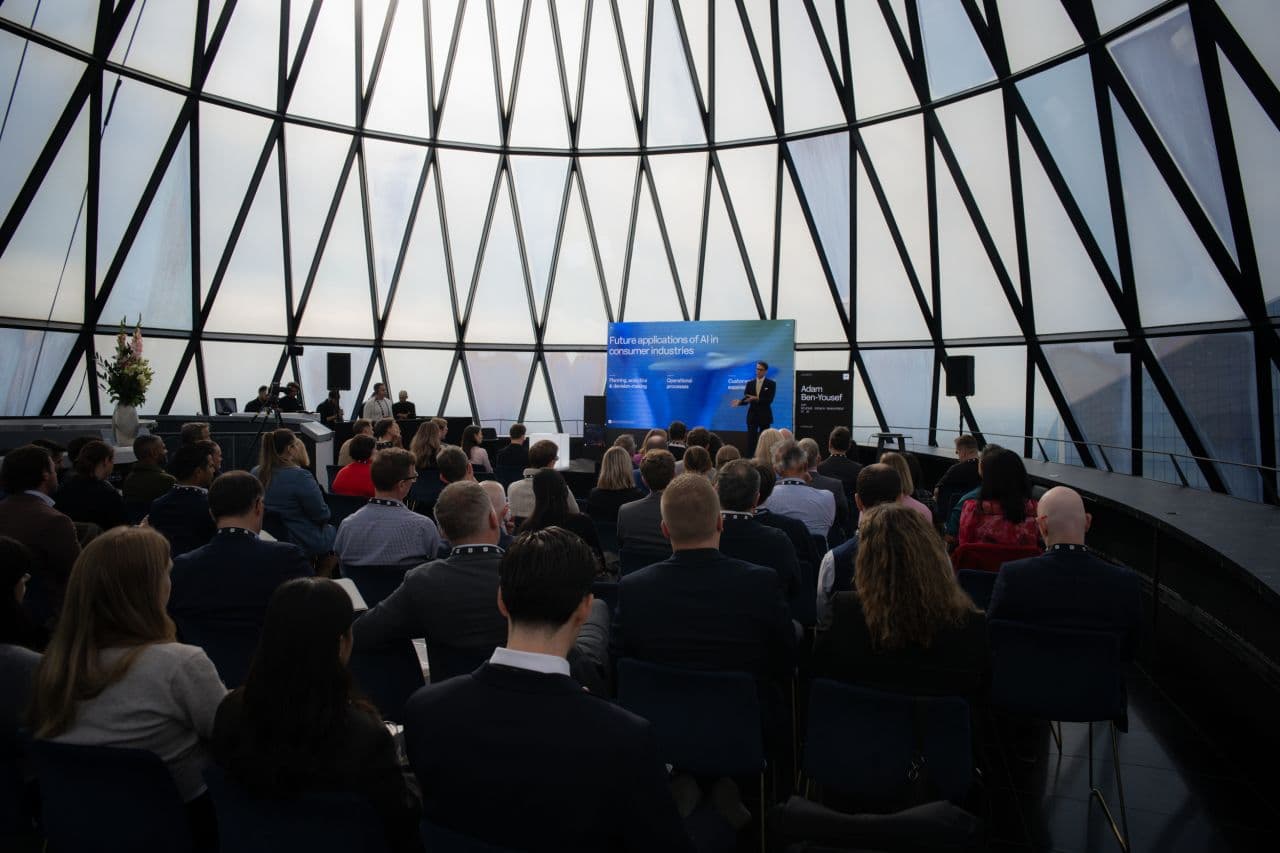
That's why I am interested in hearing from a leading global vertically integrated retailer at aim10x Europe on June 4th in Amsterdam.
The retailer has been modernizing in-season planning across its direct-to-consumer business, moving away from fragmented tools, spreadsheets, and manual workarounds toward a more integrated model for forecasting, allocation, and replenishment. At this scale, across this many markets, categories, and store formats, that is a serious undertaking.
But the more interesting story is not the platform alone. It's the internal capability being built around it. And a central part of that capability is the retailer's Center of Excellence.
The story around the platform
This internal capability matters because strong transformations do not succeed at implementation and then somehow stay successful by inertia. They last because someone inside the business is able to protect the model, interpret the exceptions, manage the trade-offs, and keep the operating logic coherent after go-live. In large organizations, that role often belongs to the Center of Excellence (CoE).
In retail, that role becomes even more important.
Planning in this environment is not a neat technical exercise. It sits close to commercial performance. A retailer of this scale is managing a broad assortment across multiple product categories. It is serving channels with different rhythms and constraints. It is trying to respond to changing consumer demand while maintaining inventory productivity and store-level execution. In that setting, forecasting, allocation, and replenishment are not separate boxes on a slide. They are interdependent decisions that show up quickly in sales, stock positions, and credibility with the business.
That is why planning modernization cannot be reduced to a systems upgrade.
Why retail makes the challenge harder
A company can replace its tools and still leave the real operating problem untouched. Legacy environments survive not because they are elegant, but because people know how to work around them. They know where the exceptions live. They know which manual interventions matter, which local habits have to be preserved, and which spreadsheets quietly carry the process. None of that is ideal. But it is familiar, and familiarity often gets mistaken for control.
Real transformation disrupts that comfort.
The retailer's challenge was not simply to automate an existing process. It needed a planning foundation that could generate a stronger demand signal, support more disciplined allocation, and improve replenishment performance across different store formats and markets. It needed more consistency across regions, with broader rollout and scale in mind. And it needed all of that to hold up under live operating pressure, not just in design sessions.
A weak forecast does not stay contained. It moves downstream into poorer allocation decisions. Allocation errors then show up as stock imbalance, missed demand, or slow-moving inventory. Replenishment, meanwhile, has to absorb the realities of lead times, receiving constraints, local trading patterns, and imperfect supply conditions. In a business like this, those connections are exposed every day.
Why the CoE becomes the differentiator
This is where the CoE becomes strategically important.
Not because the CoE is the headline of the story, but because it is the catalyst for extracting sustained value for the long-term from a planning platform.
In many organizations, a Center of Excellence begins with a relatively narrow mandate. It tests, validates, supports roll-outs, and helps stabilize the environment. That is useful, but only up to a point. In a transformation of this scale, someone has to own the solution and ensure it stays relevant in the future as business requirements naturally evolve. That is the transition worth paying attention to.
From project support to real stewardship
What makes this case interesting is not just that a CoE exists, but that its role appears to be broadening into genuine stewardship: requirement shaping, design participation, deployment readiness, configuration oversight, planner support, KPI monitoring, and the routines that keep a planning model relevant once it is no longer new.
That shift matters because it marks the difference between dependency and internal ownership.
And ownership is the real dividing line in transformations like this. It is the difference between a capability the business has access to and a capability the business can actually run. That distinction is often underestimated. There is a tendency to think the hardest work ends at go-live. In reality, go-live is the start of a new chapter in the transformation.
The conversation moves from "Can we build this?" to "How will we govern it?" From "Can we standardize the process?" to "Can it stay coherent when the business reality changes?"
Hear their story at aim10x Europe in Amsterdam
Every company says it wants more integrated planning, better data-led decisions, and stronger execution discipline.
The more revealing question is what inside the business will make those ambitions repeatable. Who owns the model when it comes under pressure? Who interprets the exceptions? Who protects the logic from being negotiated away release by release? Who ensures the business is not simply using a new capability, but becoming better at running it?
Increasingly, the answer is some version of the CoE.
If this topic resonates with you, I highly recommend you join us in Amsterdam on June 4th at aim10x Europe. Attendance is free, and you'll hear many real planning transformation stories from our clients in the retail and merchandising space.
About the authors
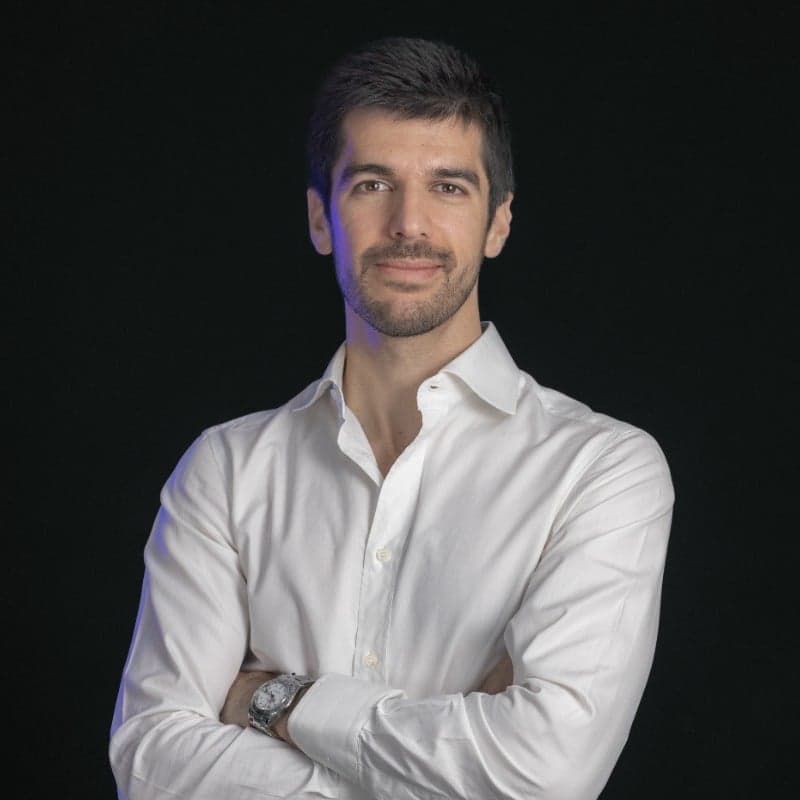
Vittorio Morelli
Vice President of Sales
Vittorio Gargiulo Morelli is Vice President of Sales at o9 Solutions, with over 12 years of experience spanning Bain, Accenture, and high-growth SaaS. He leads enterprise B2B sales and digital transformation initiatives, closing multimillion-dollar deals with Fortune 500 retail and manufacturing clients to optimize supply chains, drive growth, and advance sustainability. An INSEAD MBA graduate with global experience across Europe, the Middle East, and Latin America, Vittorio is passionate about sustainability, technology, and building high-performing teams that deliver measurable impact.