6 read min
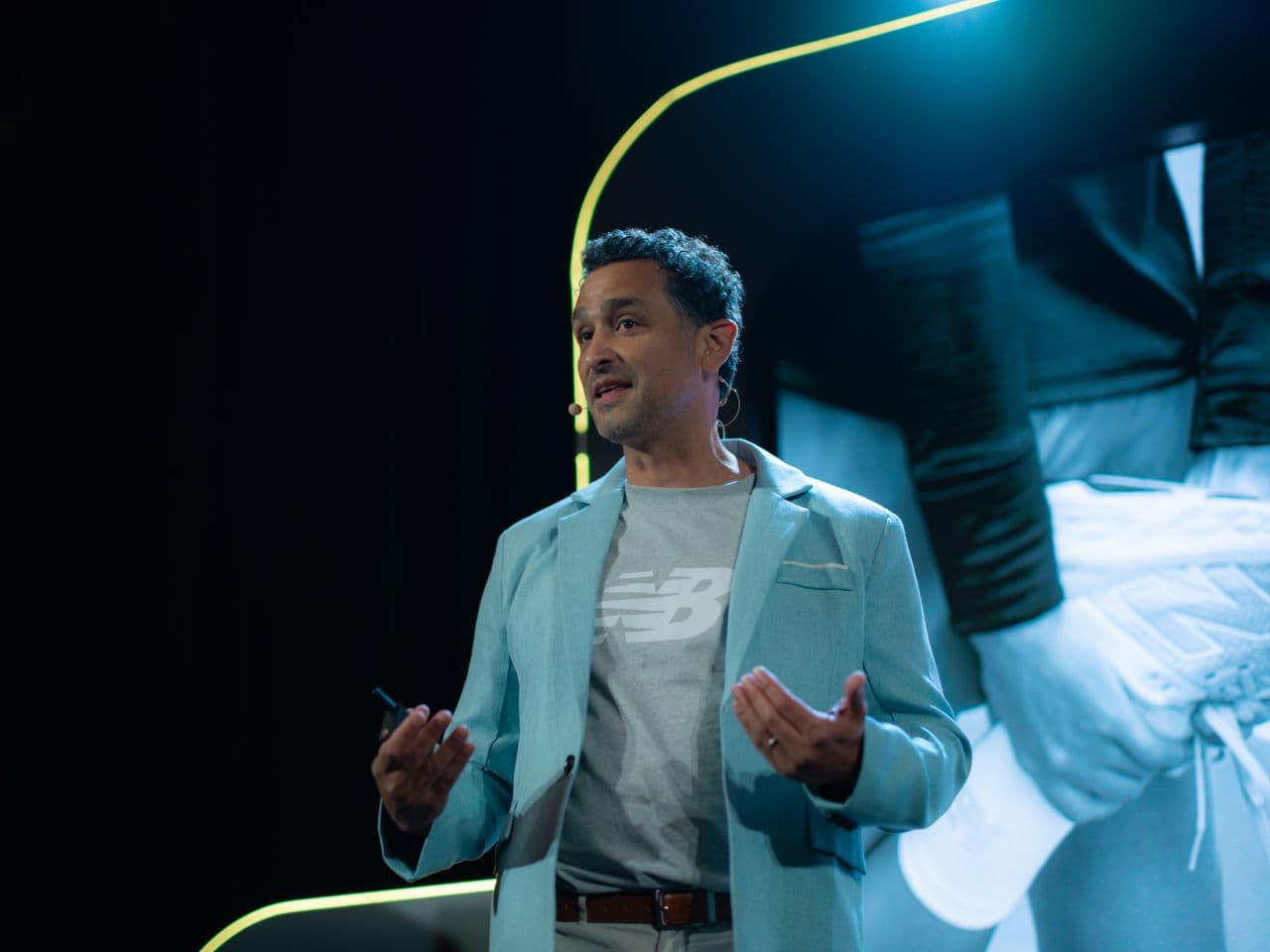
A few years ago, I used to open talks with what felt like a provocation: What would you do if your demand dropped 25% overnight? Or if 40% of your channel mix shifted instantly? Back then, it sounded extreme, almost academic. Today, it feels like a Tuesday.
We live in a world where volatility is not an anomaly but the baseline. COVID, AI, trade wars, and climate disruptions have made unpredictability a permanent feature of our industry. The challenge before us is no longer whether change will come, but whether we are ready to adapt when it does. That readiness is what separates those who endure from those who excel.
1. The Squeeze We All Feel
Retail and fashion have always been margin games. But today, that game feels rigged from both sides. On one hand, consumers are under pressure. Two-thirds expect prices to rise, they are tightening their wallets, and they are trading down wherever they can. Yet their expectations have not softened. They still demand speed, convenience, sustainability, and value.
On the other hand, our costs keep climbing. Labor, logistics, tariffs, and raw materials continue to rise. Supply chains that were once reliable now bend under the weight of geopolitical tension and natural disruption. We are being squeezed from both ends, the top line and the bottom line.
And yet, the mandate remains: grow profitably.
Across hundreds of conversations with global retailers and fashion brands, I have seen three major levers that define who is winning today.
- First, leaders are focused on short-term efficiency and getting every ounce of productivity from operations. They are automating trading decisions, improving forecast accuracy, and freeing working capital trapped in excess inventory.
- Second, they are building medium-term resilience by designing for volatility instead of fearing it. That means diversifying sourcing, embedding scenario planning, and creating cross-functional supply planning capabilities that allow teams to pivot when the world shifts.
- And third, they are using data to protect and expand margins intelligently. By modeling price elasticity and understanding true consumer drivers, they know when to pass costs through and when to absorb them to protect the brand promise. These are not quick fixes; they are strategic capabilities.
2. The Next Wave: Agents, Not Just Algorithms
While we are still industrializing the first generation of AI in forecasting, supply, pricing, and promotion optimization, etc. a new wave has already taken the world by storm: agentic AI.
This next wave will reinvent how back-office work gets done. These systems don’t just predict; they act, reason, and transact inside your organization with clear guardrails and full auditability.
In this model, every core operation becomes a network of specialized agents collaborating with people.
- Inventory & allocation: Agents continuously reconcile demand signals, stock positions, and constraints to place and rebalance orders across DCs and stores, optimizing margin and service levels, escalating only true exceptions.
- Procurement & supplier collaboration: Purchase requisitions, RFQs, and POs are generated, negotiated, and confirmed via agent-to-agent protocols. The system instantly evaluates supplier capacity, lead times, quality, and price to recommend or auto-execute the optimal award.
- S&OP and replanning: Planning agents run rolling scenarios, detect risk (e.g., supply delays), and propose plan changes with quantified impact on revenue, margin, and OTIF, capturing decisions as auditable policy updates.
- Logistics & fulfillment: Agents schedule carrier pickups, tender loads, and reroute shipments in response to disruptions, balancing freight cost, SLA compliance, and carbon targets.
- Data & compliance: Master-data agents cleanse, enrich, and validate product and supplier records; policy agents enforce regulatory and ESG constraints at the point of decision.
As consumers engage through their own agents, back-office agents will mirror that autonomy, executing decisions and transactions instantly on shared systems and marketplaces. Humans shift from manual processing to supervising policies, handling edge cases, and refining objectives. The result is a step-change in speed, accuracy, and resilience that will reshape retail operations and how teams work day to day.
But if agentic AI is how back-office work will run, the question becomes: how do you start this journey deliberately, safely, and with impact? Four elements stand out to me:
- Vision: Tie every pilot to a clear operating-model roadmap. Define where autonomy should live, what guardrails apply, and the business outcomes (margin, service, working capital) you’ll measure quarter by quarter.
- Invest in the knowledge layer: Not just “more data.” Agents need contextualized, deterministic knowledge: governed ontologies, policies, and embedded analytics that make actions logical, explainable, and repeatable (no hallucinations). This is the layer that runs replenishment, pricing, and allocation decisions and can show the rationale every time.
- Break existing processes: Don’t speed up yesterday’s workflow. Use agents to collapse steps. Pricing, promotion, allocation, and assortment should be decided concurrently, not sequentially. Design for exception handling and policy supervision from day one.
- Talent: Build multidisciplinary squads (business, data, engineering, ops) that co-own outcomes. Upskill planners and buyers as “policy managers” who set objectives and review exceptions, while AI engineers steward the knowledge layer and guardrails.
AI isn’t a bolt-on tool; it must become the fabric of how work happens. Start small, wire it to your roadmap, and let the knowledge layer and new process design compound value with each use case.
3. Transforming the Operating Model to Move at the Speed of Retail
The speed of retail has already surpassed the speed of our planning processes. A viral post can shift demand in hours, but most organizations still plan weekly or monthly. Those cycles are too slow for the world we now operate in.
Technology makes it possible to move toward continuous planning. Signals can be sensed, scenarios simulated, and decisions executed continuously, often without human intervention.
Imagine a denim style that suddenly trends on social media. Within minutes, your system detects the spike, reallocates inventory, adjusts pricing, and triggers replenishment. Only exceptions that fall outside guardrails are escalated to planners. Decision speed increases fivefold, analysis time drops by 80 percent, and sales rise by up to 5 percent through faster reactions and fewer stockouts.
This is not automation for its own sake. It is about aligning the pace of decisions with the pace of the market.
Of course, technology alone cannot solve everything. If store labels cannot be changed in real time, dynamic pricing remains theoretical. Flexibility must extend beyond data into the supply chain, networks, and in-store operations. Postponement strategies, modular production, and digital shelf agility are becoming essential. The physical side of retail must now match the speed of the digital.
At o9, we often use a simple guide to focus transformation: S.A.F.E.
- S — Speed: Compress the loop from signal to decision to action.
- A — Automation: Use AI to remove bias and manual effort while keeping human judgment where it adds value.
- F — Flexibility: Build supply chains and organizations that can pivot quickly.
- E — End-to-End: Replace siloed optimization with an integrated view that maximizes enterprise value.
This framework helps ensure that technology investment leads to operational impact.
Volatility will not disappear. The future will belong to the companies that can absorb it, not by predicting every disruption, but by sensing, simulating, and responding continuously.
Our old operating models were built for stability. The next generation must be built for speed. The retailers and brands that will define the next decade are not those that avoid disruption but those that harness it as a source of competitive advantage.
In today’s retail world, operating speed has become the new moat. The race to build it is already underway.
About the authors

Santiago Garcia-Poveda
Retail Digital Transformation Leader
Santiago holds a Master in Civil Engineering from Universidad Politécnica de Madrid and Ecole des Ponts, and an MBA from Haas - University of California, Berkeley. In o9 Solutions, Santiago leads our strategy for the retail industry, bringing his expertise on the industry needs, guiding the product development efforts, and engaging with industry executives to advise on their digital transformation. Before o9 Solutions, Santiago worked for McKinsey & Company for 8+ years serving. Business to Consumer clients (apparel, groceries, hardlines, and CPGs) globally on their Digital and Analytics challenges across multiple areas of their business (supply chain, commercial, procurement, …). Additionally, Santiago also has industry experience from working as Director of Business Transformation in Adidas Outdoor, a corporate strategy for Esprit, focused on accelerating the product delivery process and increasing the collaboration with wholesale partners.