11 read min
In today’s margin-sensitive retail landscape, operational efficiency is essential. Retailers must move high-volume, multi-SKU assortments across store networks while controlling labor and logistics costs. Though invisible to customers, pack configuration is a powerful internal lever. When executed well, it enables cost-saving tactics like cross-docking, reduces DC workload, and accelerates fulfillment—yet balancing efficiency with store-level demand remains a complex, often overlooked challenge.
Designing packs for shipment brings significant complexity, especially with size and color variability across diverse store locations. Fixed-ratio packs often misalign with actual store-level demand, shaped by regional demographics, fit preferences, and climate, leading to inventory mismatches. This results in unnecessary unpacking and repacking at distribution centers, increasing manual labor, handling costs, and delaying fulfillment. Poor alignment between forecasted demand and pack structure can also trigger stockouts in popular sizes or overstock in fringe ones, affecting margins.
As consumer preferences evolve, like shifting body sizes or fit trends, dynamic size curves and adaptable pack strategies become essential. Without automation, traditional planning struggles to manage this complexity, making it harder to deploy the right distribution strategy at scale. Effective pack optimization must address granular demand shifts and operational constraints to deliver agility and accuracy.
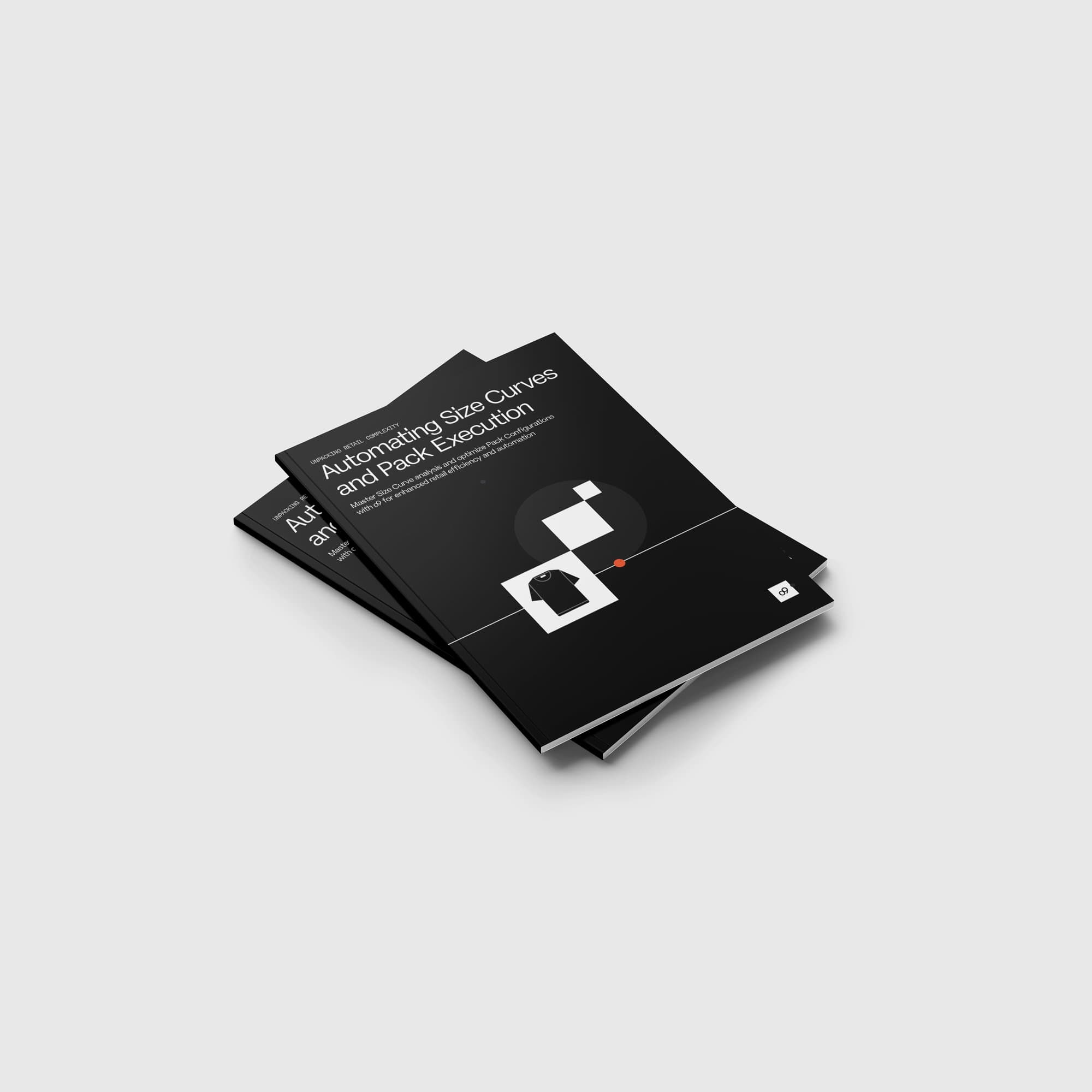
This guide explores how automation in size curve analysis and pack optimization can reduce stockouts, minimize inventory waste, and build smarter, demand-driven supply chains. Whether you're a planner, merchandiser, category manager, supply chain professional, or simply exploring retail tech, this guide offers foundational insight into solving one of retail’s most complex challenges, matching inventory to true market demand.
What is a Size Profiler?
Size profiling transforms historical sales data into actionable intelligence, revealing how each size (S, M, L, etc. for apparel, or 37, 38, 40, etc. for footwear) contributes to sales at the store level. This enables smarter allocation and prevents the inefficiencies of a one-size-fits-all strategy.
Even within a single region, like the Southern U.S., size curves can vary significantly. In Houston, TX (urban), Medium and Large sizes dominate. In Lubbock (a college town), Small and Medium are more common, while in McAllen (a border town), demand skews toward Large and XL due to lifestyle and cultural preferences.
Applying a uniform size curve across all stores often leads to inventory imbalances. To address this, o9 applies advanced clustering algorithms that group stores with similar size and demand behavior. This approach moves beyond static models by identifying localized size preferences driven by region, store format, and customer demographics. These demand-based clusters become the foundation for pack optimization, allowing retailers to define and allocate pack configurations closer to true customer demand. The result is improved inventory accuracy, fewer manual DC adjustments, and greater fulfillment efficiency across the network.
For a deeper dive into how size profiling works, read our full article here.
What is a Pack?
In the softlines industry, a pack refers to a predefined assortment of sizes bundled for distribution. While commonly used, unoptimized packs can add unnecessary cost through extra handling at distribution centers. Pre-pack optimization helps retailers define pack strategies that reduce labor-intensive unpacking and repacking, avoid excess DC processing, and enable direct-to-store shipments. Since products typically move through the supply chain in packs—though sold individually—optimizing this unit reduces intermediate nodes and improves overall efficiency and profitability.
Packs are critical to retail planning for flow of goods, supporting both buy planning (vendor to DC/store) and allocation or replenishment (DC to store). They simplify assortment-level buying by streamlining purchase order creation and enabling cost-effective movement of goods, ensuring Minimum Display Quantities (MDQs) are met and shelf availability is maintained through efficient core size replenishment.
However, pack planning is complex due to constraints such as minimum and maximum units allowed per pack, total pack count limits and Minimum Display Quantities (MDQs). Manual planning often proves inefficient. Automated solutions that leverage sales data and forecasts enable retailers to create store-specific packs at scale. Let’s now explore the different pack types that make this possible in softlines retail:
- Bulk Packs (Singles/Eaches) - Bulk packs contain single or multiple units of the same SKU—such as 12 black size M T-shirts—shipped together in individual packaging for efficiency. Despite being individual items, they’re grouped for efficient replenishment—hence also called “singles.”
- Pre-Packs - Predefined assortments of various sizes for a single style-color, e.g., 1 S, 2 M, 2 L, 1 XL, used for initial store allocations. Pre-packs are often designed to meet Minimum Display Quantities (MDQs), ensuring a complete size run is available to fulfill initial fixture fill requirements for each style-color at the store level.
- Rainbow Packs -These include multiple colors and sizes of a single style, such as a T-shirt in red, blue, and green across sizes S to XL.
From Profile to Pack: The Pre-Pack Strategy
Once the seasonal buy plan is finalized, the output from size profiling is used to generate a size-level buy across all stores. This results in store-level size-wise receipts—i.e., the total units needed per style-color-size to meet store customer demand. Based on this, the Pack Solver creates optimal pack configurations, determining both the pack composition and the number of packs required per store. These configurations feed directly into vendor purchase orders, ensuring the supply chain delivers the right size mix to the right locations.
Whether using vendor-defined or custom packs, the o9 Pack Optimization solution aligns inventory with localized demand by factoring in receipts, replenishment needs, vendor constraints, DC efficiency, and MDQs—enabling cost-effective, scalable, demand-aligned purchase orders.
Note: In Step 3, packs can be handled in two ways: by optimizing vendor-provided configurations, or by creating and optimizing custom packs.
From First Fill to Final Drop: Pack Planning in Action
Retailers typically divide seasonal inventory purchases into multiple drops to balance initial certainty with in-season adaptability. Initial fills focus on fixture-ready stock, while later DC drops offer flexibility to adjust based on performance. These subsequent drops identify size gaps from sell-through trends and enable targeted replenishment, helping retailers fine-tune inventory decisions throughout the season.-
Strategy 1: First Load in Packs, Remaining in Singles
In this approach, the initial fill, say 40%, is shipped in pre-packs to ensure stores receive a complete size run upfront, fulfilling Minimum Display Quantities (MDQs). Subsequent drops—vendor to DC, then DC to store—use singles to adjust inventory based on real-time sales.
Pros
- Reduces DC labor by using pre-packs that streamline warehouse picking and simplify store receiving.
- Ensures each store launches with a complete, ready-to-sell size assortment from day one.
- Enables precise size-level replenishment based on real-time sales and store-specific demand patterns.
- Adapts to unpredictable sell-through, helping reduce overstock and improve accuracy in in-season allocation.
Cons
- Requires vendor negotiation to split purchase orders between pre-packs and bulk for greater flexibility.
- Replenishing with singles in later drops increases transport volume and store handling, raising both delivery and labor costs compared to full packs.
Strategy 2: Only Pre-Packs (Fixed Ratio Model)
Here, the full 6-month buy is planned as pre-packs. In this example, 40% is allocated upfront to fulfill MDQs; the remaining 60% is distributed across future drops using the same or varied pre-pack ratios. Pre-pack ratios might vary during later replenishments based on recent sales trends and evolving size demand patterns.
Pros
- Highly efficient and scalable.
- Streamlined processing at vendor and DC levels.
- Ideal for fast fashion with short lifecycle, quick turnovers, high freshness.
Cons
- Increases DC workload due to unpacking pre-packs or picking singles since subsequent drops are received in pack format.
- Offers limited flexibility to adjust based on actual store-level sell-through.
- May cause overstock or stockouts in fringe sizes, increasing markdowns and reducing margins.
- Pack constraints can drive overbuying, tying up more working capital than buying singles.
Both methods are widely used in the industry. Retailers typically choose based on factors influencing pack planning complexity, such as:
- Trend-driven fashion: Requires flexible pack strategies to support fast-changing styles.
- Inventory objectives: High turnover goals demand tight pack-to-demand alignment.
- Product lifecycle: Longer lifecycles allow standardized packs; shorter ones need more agility.
Flexibility in achieving precise size-level availability and DC capacity for handling or repacking also shapes the decision.
How Product Lifecycles Shape Pack Optimization in Apparel and Footwear
Both apparel and footwear use pack optimization to align inventory with demand, but their approaches vary significantly. Apparel prioritizes speed and flexibility, responding to short product lifecycles, fast-changing trends, and frequent assortment turnover, particularly in fast fashion, where styles may change every few weeks, demanding agile pack strategies.
Footwear, in contrast, emphasizes precision and stability. Most running shoes, often launched in Series 1/2/3, follow cyclical release patterns and can remain in the market for up to a year. This extended lifecycle stems from longer development timelines, including sole material research and mold tooling with vendors. As a result, size ratios remain relatively constant, allowing the Pack Solver to run less frequently, unlike fashion, where fluctuating demand requires frequent sSolver runs and more dynamic pack planning.
The table below highlights how Pack Optimization differs between apparel and footwear:
| Pack Optimization Aspect | Apparel | Footwear |
| Size Flexibility | Apparel items are more flexible in size variation; consumers might size up or down. | Customers rarely compromise on shoe size, making accurate size-level forecasting critical (Akchen & Caro, 2023). |
| SKU Volume | More styles, colors, and fits require more frequent pack revisions and clustering. | Fewer SKU variations, but takes up a larger physical space due to box packaging. |
| Life-Cycle Length | More SKUs lead to frequent restocking of sizes based on sell-through rates. | Footwear has fewer product drops and follows a more structured, long-term replenishment plan at the stores. |
| Pre-Pack Usage | Used for initial allocations or later replenishments, depending on vendor flexibility, considering retailers don’t revise pack configurations frequently with changing demands. | Used with standard configurations; DCs receive packs, but stores are replenished with singles based on demand. |
The True Purpose of Size and Pack Optimization
Size and pack optimization enables retailers to align inventory more accurately with actual consumer demand. In fashion, where sizing is non-negotiable, size profiling is essential for precise forecasting, targeted size-level allocation, better inventory productivity, and improved full-price sales. Supporting this, CSULP‑PRPC research found that optimizing case packs led to a 2.9% reduction in DC replenishment and picking costs.
Pack Optimization builds on this by offering several key benefits, like:
- Reducing handling and operating costs at both DC and store- levels - By minimizing unpacking, repacking, and manual interventions, optimized packs reduce labor and streamline logistics across the distribution network.
- Minimizing overstock and understock risks by factoring in lifecycle costs - Aligns pack planning with demand shifts and lifecycle stages to minimize overstock, prevent stockouts, and ensure right-size delivery to the right stores.
Together, these capabilities drive availability, reduce waste, and enhance profitability across the supply chain.
Transforming Inventory Strategy with Size and Pack Precision
Retailers managing complex assortments with multiple sizes and color variants under each style face increasing pack planning challenges. High SKU variation demands careful coordination to balance cost and availability across locations. A data-driven approach helps evaluate demand and streamline inventory flow from vendor to DC to store. By aligning pack configurations with store-level needs, businesses reduce handling inefficiencies and better match supply with demand. Over time, this enables more targeted pack execution—improving inventory accuracy and supporting margin growth.
As competition intensifies, size and pack optimization has shifted from a nice-to-have to a strategic necessity for retailers. Accurately aligning inventory to localized size-level demand helps reduce stockouts, minimize markdowns, and boost full-price sell-through while enhancing supply chain productivity. To remain competitive, brands must embrace predictive, tech-enabled, and localized pack strategies that scale.
The o9 Size and Pack Optimization solution enables smarter retail decisions by recommending optimal pack configurations—defining size mix and pack count by store and style-color. It also considers the risk of overstocking by biasing the solver to prevent both understocking and overstocking, helping align pack outcomes with business objectives.
Beyond configuration, o9 optimizes pack allocation by determining the most efficient blend of pre-packs/bulks to meet demand while controlling cost and complexity. With integrated Merchandise Financial Planning, Assortment Planning, and seamless retail buying workflows—including embedded size and pack logic—o9 transforms complex data into actionable insights, turning size profiling into a scalable, cost-efficiency enabler.
About the authors

o9
The Digital Brain Platform
o9 Solutions is a leading Enterprise Knowledge and AI-powered platform helping companies build Agile, Adaptive & Autonomous Planning & Execution Models for transforming enterprise decision-making in environments of rising volatility and uncertainty. Whether it is improving forecast accuracy, matching demand and supply and driving collaboration across the multi-tier supply chain to improve resilience at optimal costs and inventory, or optimizing new product and commercial initiatives to drive revenue growth and margins, decision-making processes from long-range to tactical to execution horizon can be made faster and smarter and connected on o9’s Digital Brain Platform.
o9 brings together game-changing technology innovations — such as innovative enterprise knowledge graph modeling, big data analytics, advanced algorithms for forecasting, demand/supply balancing, scenario planning, real time learning, collaboration, generative and agentic AI, easy-to-use interfaces and cloud-based delivery, and innovative management methods — as well as organization, process and change management best practices to transform decision-making speed and intelligence.