6 read min
When you walk into a Burger King in São Paulo and order a Whopper, you expect the buns, the patty, the fries, and the sauce to all be there. You don't think about the four hundred and ninety-nine other suppliers, the thousands of SKUs, or the store manager who, between greeting customers and scheduling shifts, somehow has to forecast demand and write a replenishment order. That invisibility is the entire point of a well-run supply chain, and it's exactly what makes the work so difficult to do well.
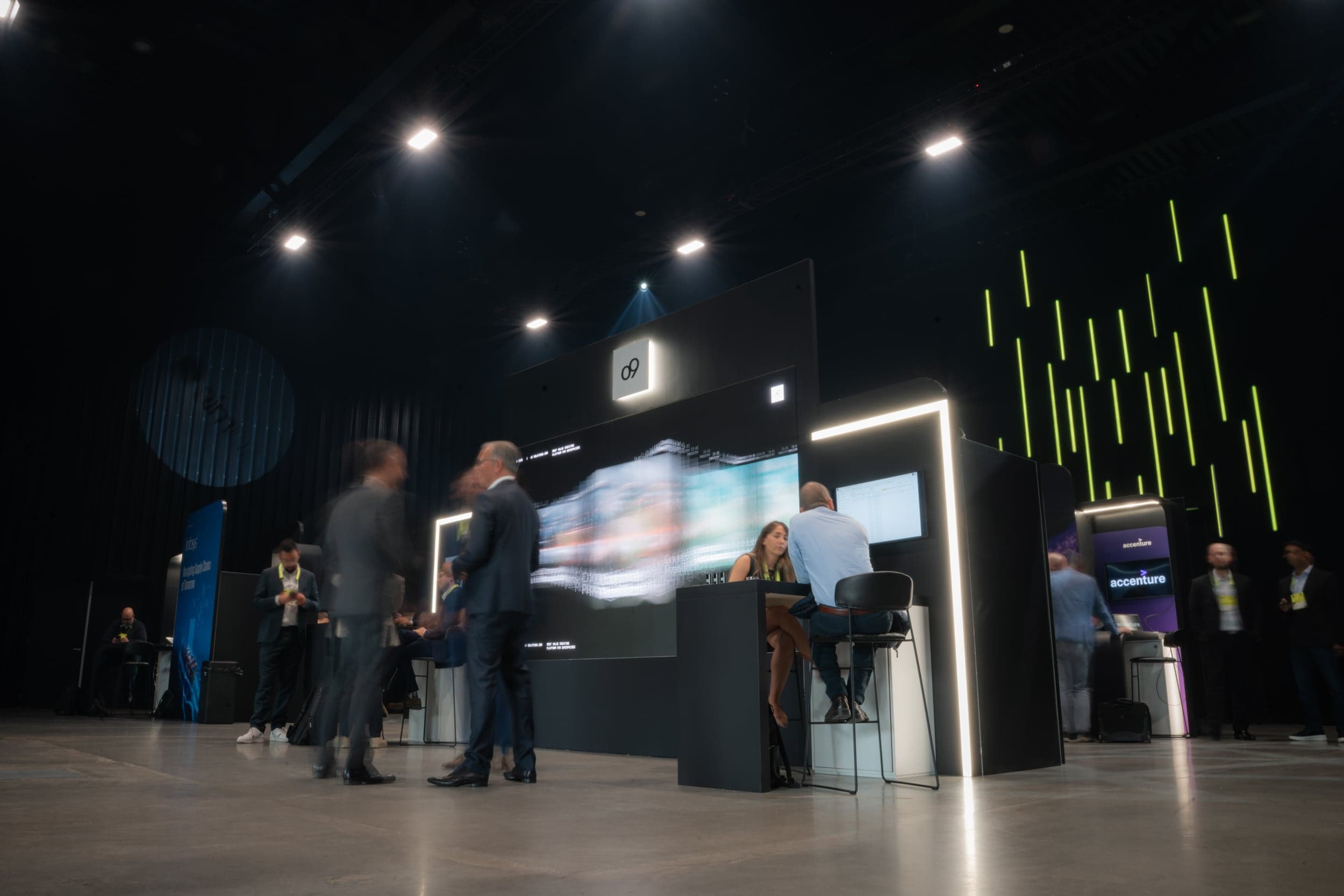
At Gartner Supply Chain Symposium/Xpo 2026 in Orlando, Luciano Totola, Supply Chain Director at ZAMP, took the stage to walk through how his team made that invisibility possible across 2,071 restaurants and four iconic brands.
ZAMP is the largest restaurant operator in Brazil, running Burger King, Popeyes, Starbucks, and Subway under one roof. That's roughly two billion in sales, nearly 20,000 direct employees, and enough customers served annually to feed the entire population of Brazil once over. Each brand brings its own identity, its own supply complexity, and its own customer expectations.
And customers, as Luciano put it bluntly, don't accept excuses. "We, as customers, don't accept excuses. When we go to a restaurant, we want our item in every restaurant."
Meanwhile, the operator is expected to keep waste and cost under control at the same time. The operational reality behind that promise is daunting:
- Volatile demand across thousands of SKUs. Sales patterns shift constantly with the market, and the team has to react fast.
- Store-level production fragility. If a single critical item is missing, whether buns, meat, or fries, the store has to either pull items off the menu or close entirely. Luciano drew a vivid parallel from his CPG background: "I used to say that the same noise that you have when you stop a production line is basically the same noise that I have when I have to close the store. The difference is that I have almost three thousand production lines."
- Structural turnover. Crew turnover in Brazilian QSR sits around 110% per year. As Luciano described it: "We basically change everybody, and that, of course, leads to inconsistent results."
- Geographic complexity: Brazil is a continental-scale country, so the supply chain infrastructure must be highly robust and well-structured to achieve the expected service levels.
On top of all that, the planning function itself was running on Excel sheets, siloed processes, and a team perpetually stuck in firefighting mode. Something had to change.
The Vision: Six Connected Initiatives, One Orchestrating Brain
Rather than chase a single silver bullet, ZAMP designed an end-to-end transformation built on six interconnected initiatives, including a track-and-trace system for last-mile deliveries, stronger invoice governance, digitized in-store inventory counting, and a control tower. At the center, orchestrating the flow from the supplier all the way to the restaurant, sits the o9 platform.
The Transformation: Data First, Then Process, Then Tool (Sort Of)
Luciano was refreshingly candid about the lessons learned over the two-and-a-half-year implementation.
- Data was the foundation. No advanced planning capability survives bad inputs, so the team invested heavily upfront in cleaning and validating data before anything else.
- Three capabilities went live: demand planning with advanced statistical models forecasting six months out, supply planning building weekly and monthly procurement plans, and store replenishment handling fulfillment.
Two honest admissions from the leader's seat
- First, the blueprint phase matters more than people think. Skimp on it and developers will take far longer than expected. "If you don't have a good blueprint, the developer will take more time than you expect. So spend time with your teams, provoking the discussions that you need, because that will save you a lot of time and effort."
- Second, conventional wisdom says you implement a process before you implement a tool. ZAMP didn't have that luxury, because the company was growing too fast, so they built both at once. What saved them was leaning on o9's reference models for roughly 70% of the design, keeping things simple, and reserving custom development for the 30% that genuinely needed it. That custom 30% produced some of the most valuable capabilities in the system: a future-flow optimizer for purchase orders and stock transfer orders that meaningfully improved inbound flows, a "leakage factor" that bridges demand and supply planning by accounting for real-world dispersion (the extra sauce, the heavier pour), and machine learning models forecasting every SKU at every store.
The Results: A Chart That Paid for the Project
The tangible numbers are the kind that justify a board conversation. As Luciano told the room: "This chart is basically responsible for the return of our investment."
- Forecast accuracy improved 20 percentage points, now running around 92%
- Inventory down 13%
- Spoilage down nearly 80%
- Transport cost down roughly 22%
But Luciano was emphatic that the numbers aren't the real story. The cultural shift is clear. Sales, marketing, and finance now trust supply. The nearly 500 suppliers in ZAMP’s network engage in genuine what-if conversations, anticipate investment decisions together, and surface risks earlier. The supply chain has become more predictable, with actions driven by anticipation rather than reaction, and the firefighting cycle has cooled.
The People Most Transformed: Store Managers and Customers
The two stakeholders Luciano kept returning to weren't planners. They were store managers and customers.
Picture the store manager before this transformation: running labor scheduling, prepping the restaurant, handling customers, and then, in whatever time is left, doing inventory control, projecting sales, exploding the bill of materials, checking stock, and writing replenishment orders. None of that work is what actually matters to the customer experience. "It's a lot of things and they were not focused on what matters, that is the food and the customer experience."
After the transformation:
- Time spent on ordering dropped 30%
- Forecast accuracy at store level improved ~20%
- Manager satisfaction nearly doubled
- ~70% of SKU orders are now touchless
- 90% of orders are automatically scheduled, with a target of 100% touchless
For customers, on-shelf availability improved 32% across all items and roughly 70% on A-curve SKUs, the items they care about most.
What's Next
ZAMP isn't treating this as a finished project. Three threads are active: a fully autonomous ordering pilot in one region with zero store-manager touch (shifting the operating model from order management to inventory deployment), integration of the newly acquired Starbucks and Subway operations to capture M&A synergies, and a redesign of the next generation of stores informed by everything the transformation has revealed.
The Closing Message
Luciano ended where every good transformation story should end, with a reminder that none of this started with technology: "We didn't start this transformation by technology. They were very important enablers. We started solving a problem that mattered to the people at the heart of our business." The buns are on the shelf. The line stays open. And almost no one has to think about why.
About the authors
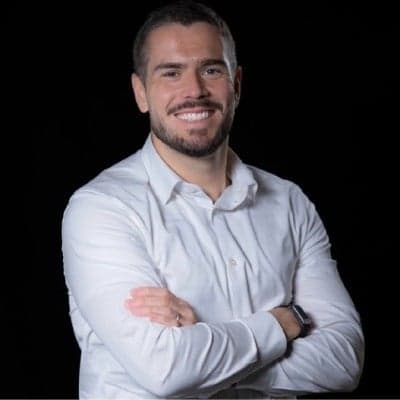
Renato Tavares
Client Management Services and Delivery Senior Director
Renato Tavares is a Senior Director at o9 Solutions, leading Services and Delivery for o9 LATAM. Based in Brazil, he leads regional, multi-country delivery teams and partners with leading organizations across Latin America to drive large-scale, end-to-end digital transformation initiatives. He brings a hybrid background across industry and consulting, with experience leading transformations in S&OP, integrated business planning (IBP), supply chain planning, logistics execution, and AI-driven planning, connecting strategy, technology, and execution to deliver measurable business impact.