5 read min
Growth has never been harder to achieve. Markets move faster. Consumer preferences evolve constantly. Competitive dynamics change almost overnight. Yet many commercial organizations continue to build annual plans using the same approaches, assumptions, and spreadsheets that worked last year. The challenge is obvious.
If the market has changed, repeating yesterday's plan is unlikely to deliver tomorrow's growth.
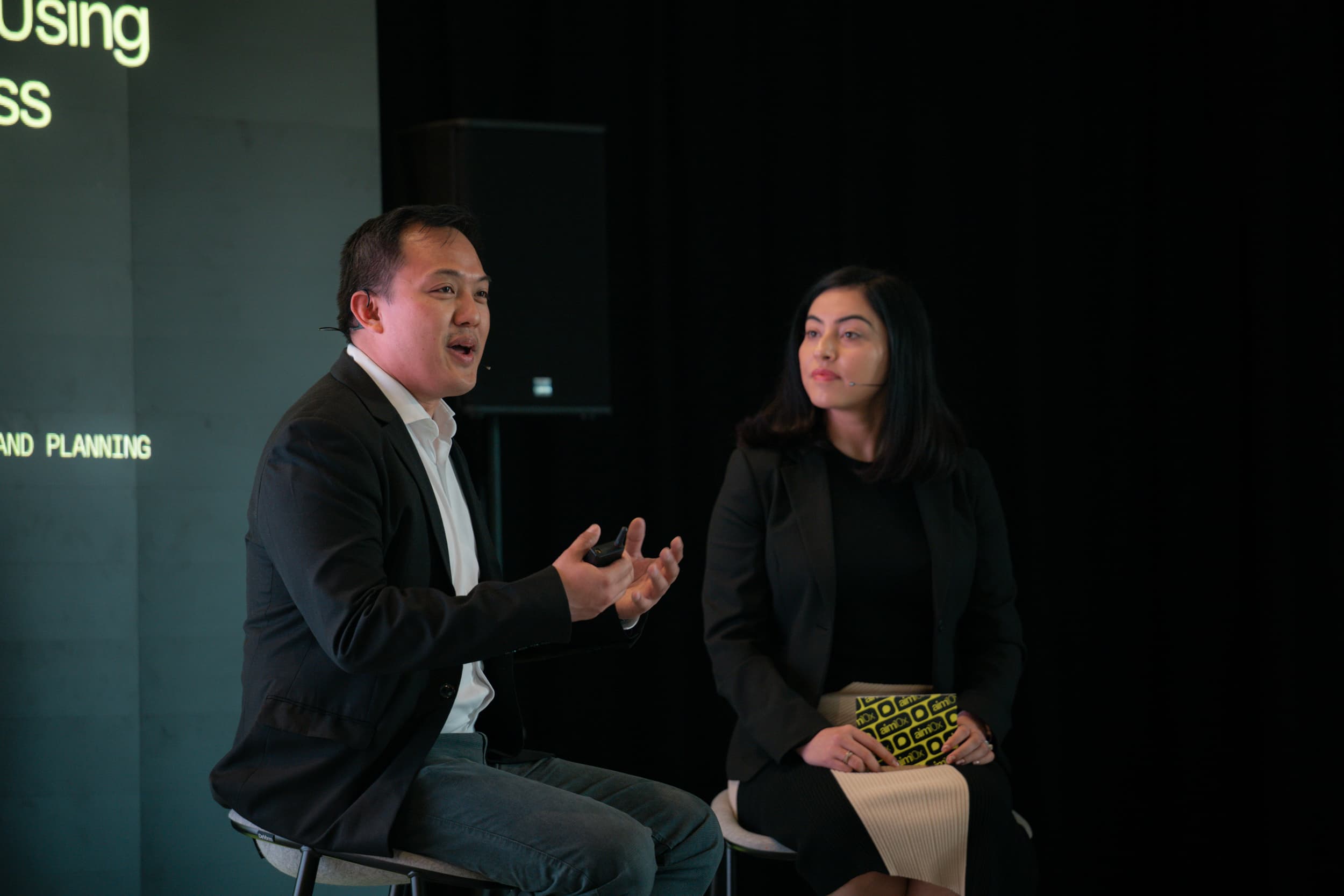
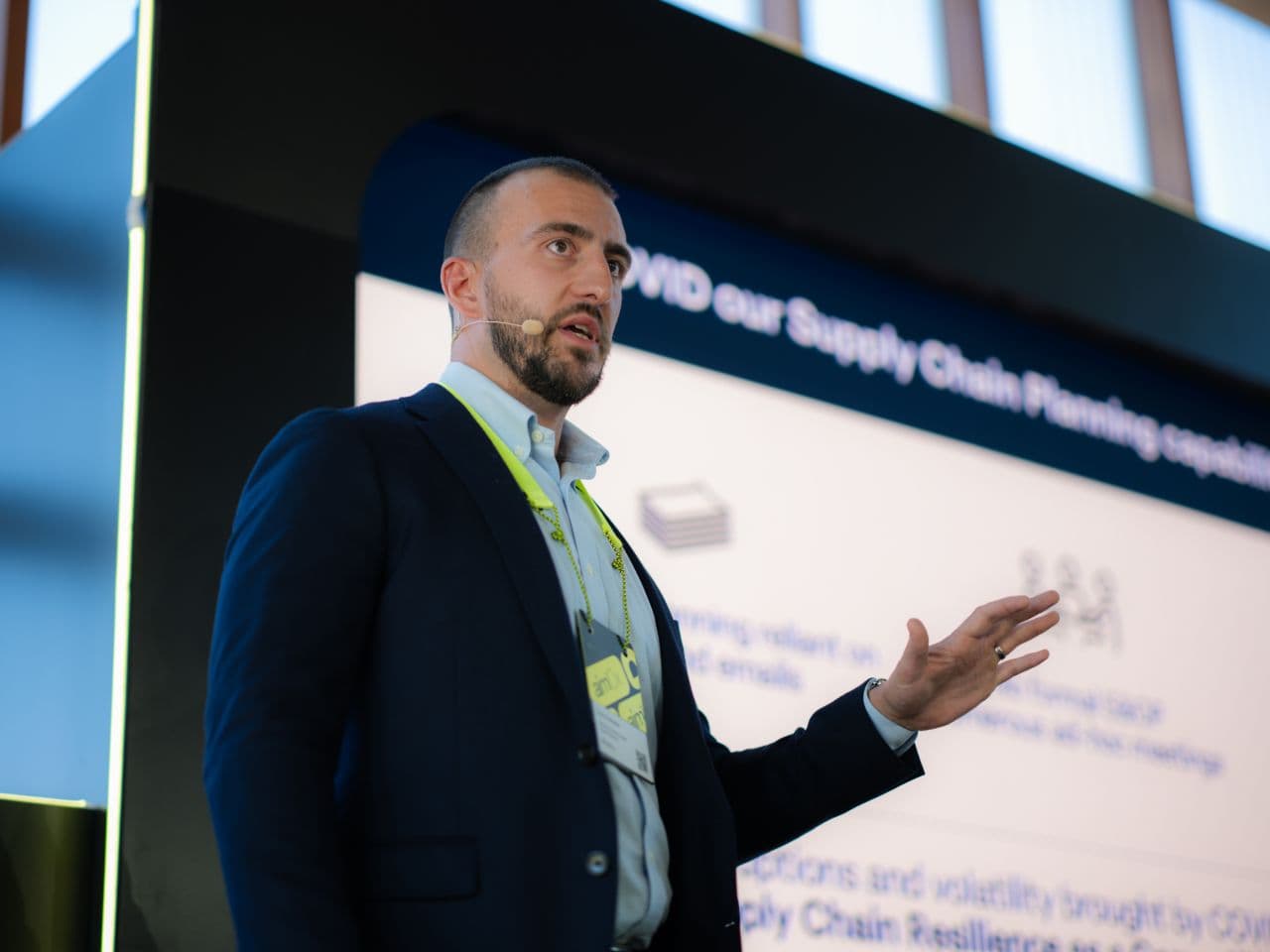
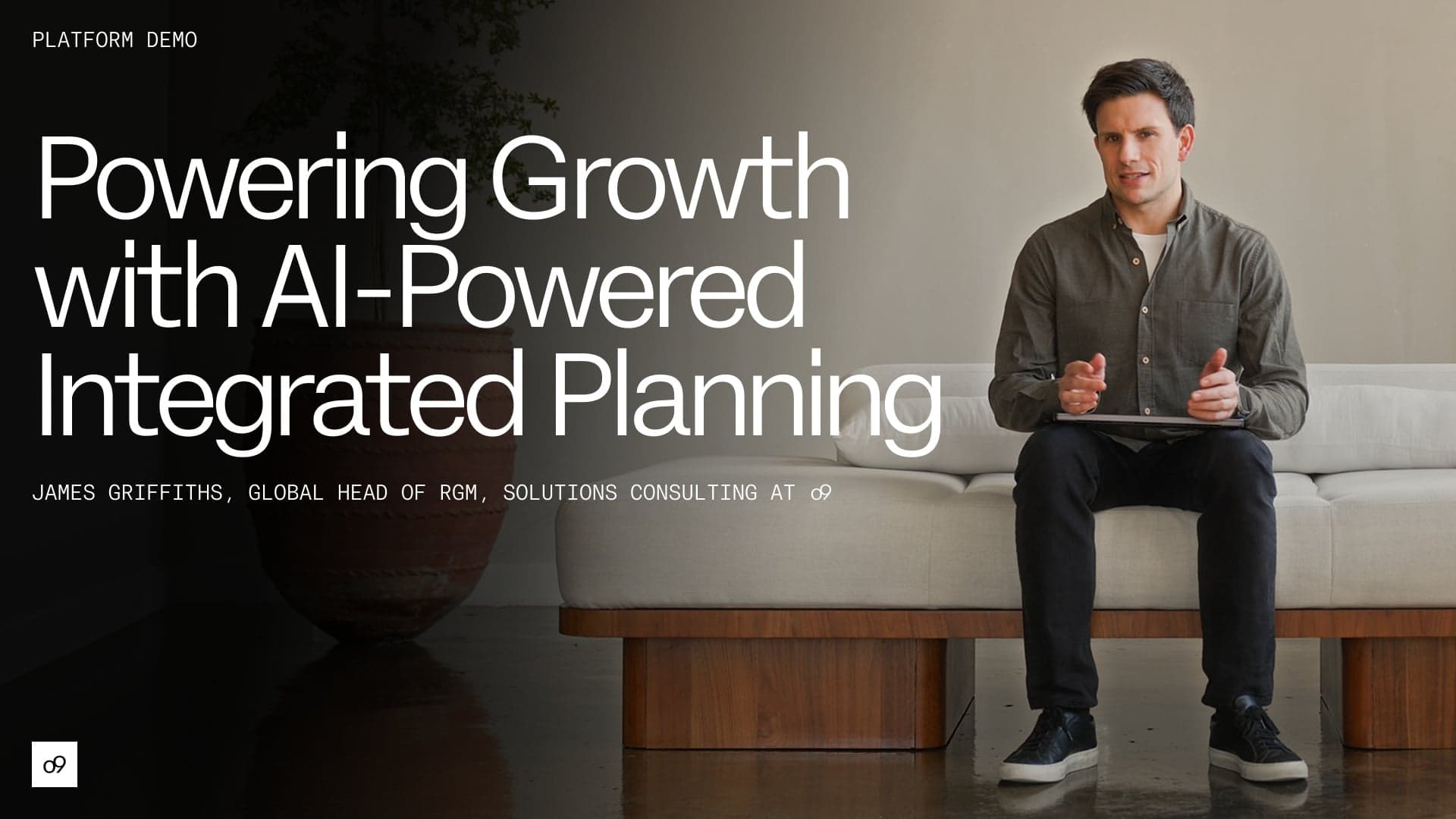
That was the central message from James Griffiths' demonstration at aim10x Digital 2026, where he explored how AI-powered commercial planning enables organizations to orchestrate every growth lever—from pricing and promotions to assortment and marketing—in a single connected planning environment.
As Griffiths put it, "The competition is always evolving. Consumer demands are always changing. How do I keep up with that?"
Watch the entire Demo of James Griffiths' aim10x presentation below.
Commercial Planning Has Become Too Complex
For today's category managers and commercial teams, growth is no longer driven by a single decision. Pricing affects promotional performance. Promotions influence assortment decisions. Marketing changes demand patterns. Assortment impacts consumer choice and brand perception. Each decision creates ripple effects across the business. Yet in many organizations, these activities are still planned independently by different teams, using different tools and different assumptions.
That fragmentation creates blind spots.
"If I change my assortment, it might mean I change my pricing. If I change my pricing, it might mean I change my promotion strategy."
The challenge is no longer making better individual decisions. It is understanding how those decisions interact before they are executed.
Moving Beyond Siloed Planning
The demonstration introduced what o9 calls initiative-based planning, where every commercial initiative is managed within a single planning framework.
Pricing adjustments, promotional campaigns, assortment changes and marketing investments become connected initiatives rather than isolated activities.
This creates something many organizations struggle to achieve today: visibility into the cumulative impact of commercial decisions.
Rather than evaluating promotions independently from pricing or assortment, planners can understand how every initiative contributes to revenue, margin and long-term growth objectives.
As Griffiths explained, "Everything is on the same calendar and we can weigh up those decisions against each other."
That orchestration changes how organizations think about growth.
Instead of asking whether an individual promotion is successful, leaders can ask whether the entire commercial portfolio is creating the greatest possible business value.
AI Finds the Highest-Value Opportunities
Commercial organizations rarely suffer from a lack of ideas. The challenge is prioritization. Every pricing adjustment, promotion, assortment expansion or marketing campaign competes for limited budget, limited execution capacity and limited shelf space.
“The AI agents are already suggesting to me which possible value-creation opportunities to focus upon, because they've got a really high likelihood of being successful.”
James Griffiths
Global Head of RGM, Solutions Consulting, o9 Solutions
Rather than expecting planners to manually evaluate every opportunity, the demonstration showed AI identifying the initiatives with the highest likelihood of success. The platform assessed hundreds of possible value-creation opportunities before recommending where commercial teams should focus first.
"It's already suggesting to me which ones to focus upon because they've got a really high likelihood of being successful."
Instead of replacing commercial judgment, AI becomes an intelligent advisor that helps teams concentrate their effort where it is most likely to create value.
Balancing Science with Commercial Judgment
One of the strongest messages throughout the demonstration was that commercial planning remains both an art and a science. Machine learning models evaluate pricing elasticity, promotional effectiveness, transfer effects between products, assortment interactions and consumer behaviour. But planners remain responsible for making the final decision.
As Griffiths noted, "Pricing isn't just art and it isn't just science. We need to blend those two together."
The platform allows planners to adjust recommendations while ensuring they remain within business rules and governance constraints. Financial impacts are recalculated immediately, allowing users to understand the implications of every change before committing it to the plan.
This creates confidence without removing human ownership.
Turning Insight into Value
Perhaps the most important concept introduced during the demonstration was the distinction between analytics and decision-making. Organizations have invested heavily in dashboards and reporting tools. What many still struggle with is converting insight into commercial action. Historically, analytics existed in one system, while planning happened elsewhere.
According to Griffiths, "We really wanted to understand how we can turn insight into value."
Every promotion, price change, and assortment decision on the platform becomes an initiative with projected revenue, volume, and profit impacts attached.
The platform not only recommends actions but also quantifies the value they are expected to create.
That allows planners to move beyond intuition and evaluate decisions based on measurable business outcomes.
Creating Explainable AI
Trust remains one of the biggest barriers to AI adoption in commercial planning. Many organizations hesitate to act on recommendations they cannot explain. The demonstration addressed this challenge directly. Every AI recommendation remained transparent, allowing planners to understand why it was suggested, what assumptions were made, and how the projected value was calculated.
The system also preserved both the original recommendation and any planner overrides, creating complete traceability throughout the planning process.
Rather than becoming a black box, AI becomes a collaborative planning partner.
Building Faster Commercial Decisions
At the conclusion of the demonstration, one outcome stood above all others. Commercial teams no longer need to spend days searching across spreadsheets, collecting information from different departments, or manually comparing disconnected plans. They begin with the highest-value opportunities already identified. They understand the trade-offs between competing initiatives. They evaluate scenarios, collaborate across functions, and commit decisions within a single connected planning environment.
As Griffiths concluded, "I've been able to use much more data, much more information to act faster in a world of continuous change."
That may ultimately become the defining advantage of AI-powered commercial planning. Not replacing commercial expertise. Helping every commercial decision create more value than the one before it.

About the authors

The Editorial Team, o9
A multidisciplinary collective of editors, strategists, technologists, and former executives with experience across Fortune 500 companies and top consulting firms. Grounded in o9’s mission to help enterprises make faster, better decisions through the power of AI-driven planning and execution software, the team shares clear, practical insights on digital transformation, supply chain, and enterprise planning to support business leaders in navigating complexity and driving change.