7 read min
Amsterdam, NL – aim10x Europe, hosted by o9 Solutions, offered a sharp departure from the typical conference experience. More than 300 senior leaders in supply chain, commercial, and IT came together for a day shaped by strategic conversations, peer exchange, and real-world insight.
Leaders from the consumer products sector were at the forefront, sharing how transformation is being put into practice at scale. Executives from Kraft Heinz, Barilla, and Philip Morris International walked through their journeys in redesigning planning to increase agility, unlock growth, and navigate complexity. These sessions went beyond high-level vision. They focused on measurable business impact, internal change, and the hard work of leading transformation in fast-moving markets.
Barilla: Leading with Process to Enable Scalable, Enterprise-Wide Planning
Barilla is transforming its global planning capabilities to meet rising complexity across its diversified food portfolio. At aim10x Europe, Stefano Pietroni, Group Vice President of Supply Chain Design, Planning, and Customer Service, and Patrizia Urbani, Global IT Vice President for Supply Chain and related functions, shared how the company is repositioning planning from a back-office function to a strategic business enabler.
Historically, planning had not been a major investment area. That changed as Barilla faced greater demand volatility, complex promotional dynamics, and operational fragmentation across brands with varying shelf lives and production constraints. “Planning connects production to sales,” Stefano said. “That is where agility lives.”
The phase-out of SAP APO created an opportunity to rethink planning end-to-end. Barilla began with process design, defining core needs across demand, distribution, production, and order promising. The transformation started with order promising and is now expanding across EMEA, with a global rollout to follow. “We needed to move from managing shortages to anticipating them,” Stefano noted.
Tool selection was business-driven. “We were replacing a mature solution, but we also wanted innovation,” Patrizia explained. The team selected o9 Solutions after testing real use cases with active end-user involvement. An Acceleration Team of IT and business leaders worked closely with o9 to co-design the solution, including in-person collaboration across geographies.
Three factors enabled success: alignment with business goals, discipline in maintaining the Target Operating Model, and deep collaboration with o9. Lessons included underestimating internal resource needs and recognizing the need to balance Agile with structured delivery. “Flexibility requires discipline and competence,” Patrizia said. “Without them, it becomes a risk.”
The transformation is ongoing, but Barilla’s mindset has shifted. “Planning is no longer an operational task,” Stefano concluded. “It is a strategic lever for resilience, growth, and service.”
Kraft Heinz: Replacing Consensus Culture with Accountability and Continuous Improvement
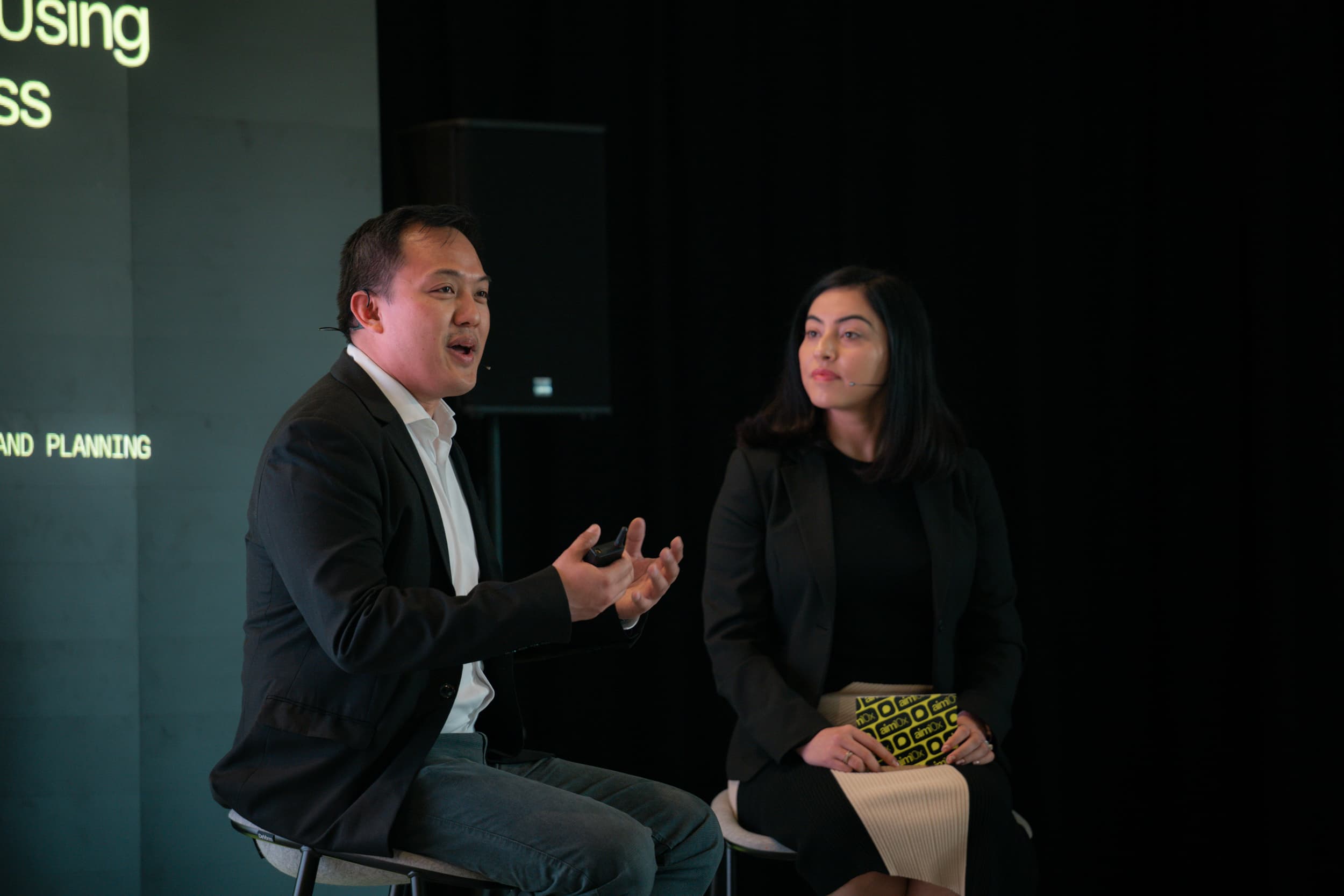
Marcelo Iuki, Head of Global Customer Excellence and Demand Planning at Kraft Heinz, joined Saumya Kapoor, Vice President of Sales at o9 Solutions, to discuss the company’s evolving planning strategy. The conversation centered on shifting from alignment-driven models to a more agile, outcomes-focused approach rooted in shared ownership and continuous improvement.
“We wanted to optimize for cost, service, and cash, and that is where the transformation journey started. Kraft Heinz is targeting more than 90 percent automation across planning horizons as part of its broader vision for touchless planning. The strategy balances long-term ambition with phased execution. “We alternate focus across different planning levels mid-term vs short term,” Marcelo explained. “Each phase builds on the last.”
The platform is currently live in North America and Europe, which represent the majority of the business. Global expansion is now underway. “We are adopting a reference model to ensure what we build is fast, scalable, and cost-effective,” Marcelo said. The approach prioritizes the reuse of proven components while allowing local adaptation.
Reflecting on lessons learned, Marcelo offered advice to two audiences. For those early in the process, he recommended deliberate pacing. “Walk slowly at the beginning. Understand your process before selecting tools.” For mature teams facing challenges, he stressed the importance of engagement. “Ask if your people understand the change. Are they using the system? Do they trust it? Most of the value lies in how you lead the change.”
The Kraft Heinz journey continues to evolve, guided by a clear vision: an intelligent, scalable, and user-centered planning model. The foundation is not just technology, but trust, clarity, and a willingness to challenge conventional ways of working.
The Bold New Playbook for Success for Consumer Goods Companies
Vineet Khanna, former Global Head of Supply Chain at Nestlé, joined Megha Gupta, Vice President of Industry Solutions, onstage to share his new strategic blueprint for CPG survival and success. With his unique style of candor, provocation, and deep industry insight, Vineet declared: “The biggest mistake any business leader can make is to assume what’s happening now is a short-term trend. Those good old days of growth are not coming back.”
He painted a stark picture: sluggish demand, missed forecasts, and profit margins under siege. More than half of CPG firms missed their top-line targets this year, and nearly 80% have slashed profit expectations. “CPG is the only industry that remembers COVID fondly,” he quipped, “but even those days are gone.”
The threat, according to Vineet, is a dual front of aggressive private labels and nimble, tech-powered startups. “Market share is not being lost to other CPGs,” he said. “It’s being lost to startups and to private labels that now innovate faster and communicate better.” The flyswatter-versus-spider cartoon he displayed became a metaphor for companies still tackling modern challenges with legacy structures and outdated thinking.
The Three Guiding Principles
At the heart of this bold new playbook lie three principles:
- Use the Crisis: Quoting Churchill, he reminded the audience, “Never let a good crisis go to waste.” He urged companies to challenge inefficiencies and "sacred cows" with urgency.
- Consumer-Centricity: There is only one moment of truth, Vineet emphasized, when the consumer chooses your product. “If they buy it, your entire strategy has worked. If not, nothing has.”
- Resilience Through Adaptability: He warned against viewing resilience as mere survival. “It’s not about bouncing back; it’s about transforming. Adapt to win, not just to cope.”
His framework rests on four critical focus areas: consumer, competition, cost, and capital, held aloft by two wings: Digital capabilities and culture/ways of working.. He likened it to a bird: “No bird can fly on one wing, and no bird can fly without wings.”
Of particular concern was cost. “We need a brutal focus on cost,” Vineet said, citing untapped savings of 10–20% in logistics and procurement alone. “Without freeing up those funds, we can’t invest in technology or innovation. And when that happens, companies move into survival mode, cutting people and freezing growth.”
The Heartbeat of Change: Digital Transformation
Digital transformation, VIneet and Megha agreed, must be more than an IT initiative. “Technology must sit at the heart of the enterprise,” Vineet stated. “If it's seen as peripheral, it won’t deliver.” He cautioned against “digital band-aids” and siloed systems, advocating instead for integrated planning platforms and data-driven agility.
One key message stood out: “Start from capability, not from technology.” Whether predicting demand or accelerating promotions, he urged companies to define outcomes first, then engineer the tech stack.
Megha echoed this, noting that most organizations are still run by “hundreds of people on email,” reacting to disruption rather than designing for resilience. But with AI, simulation, and connected execution, she said, “90% of those resources can be refocused on transformation.”
As the session drew to a close, Vineet reiterated his call for bold, systemic change. “This is not the time for incrementalism. This is the time to rethink the business model, the org structure, and how we fund the future. Because not everyone will get it right, and those who do will win big.”
Looking Ahead: aim10x Americas | September 10 | Dallas
The sessions with Barilla, Kraft Heinz, and Philip Morris International demonstrated how leading consumer goods companies are rethinking planning to drive agility, scale, and resilience. Each transformation told a distinct story. Barilla is elevating planning into a strategic function. Kraft Heinz is advancing toward touchless, globally scalable models. Philip Morris International is designing a dual-path supply chain to support its vision of a smoke-free future. Despite their differences, these journeys shared core enablers: clearly defined operating models, cross-functional alignment, and technology anchored to business value.
What distinguished these stories was not only their ambition but also their rigor in execution. These companies are moving beyond legacy system replacement toward integrated, adaptable ecosystems built on trust, data, and continuous learning.
As consumer expectations shift and markets become more dynamic, these examples provide a practical blueprint for long-term performance. The conversation will continue at aim10x Americas on September 10 in Dallas, where industry leaders will examine how to scale intelligent planning across functions and industries.
About the authors

o9
The Digital Brain Platform
o9 Solutions is a leading Enterprise Knowledge and AI-powered platform helping companies build Agile, Adaptive & Autonomous Planning & Execution Models for transforming enterprise decision-making in environments of rising volatility and uncertainty. Whether it is improving forecast accuracy, matching demand and supply and driving collaboration across the multi-tier supply chain to improve resilience at optimal costs and inventory, or optimizing new product and commercial initiatives to drive revenue growth and margins, decision-making processes from long-range to tactical to execution horizon can be made faster and smarter and connected on o9’s Digital Brain Platform.
o9 brings together game-changing technology innovations — such as innovative enterprise knowledge graph modeling, big data analytics, advanced algorithms for forecasting, demand/supply balancing, scenario planning, real time learning, collaboration, generative and agentic AI, easy-to-use interfaces and cloud-based delivery, and innovative management methods — as well as organization, process and change management best practices to transform decision-making speed and intelligence.