10 read min
Consumer goods companies are navigating a period of relentless volatility. Demand shifts overnight, supply chains remain fragile, and complexity continues to grow across products, markets, and channels. For many, traditional planning processes—manual, siloed, and slow—are no longer enough.
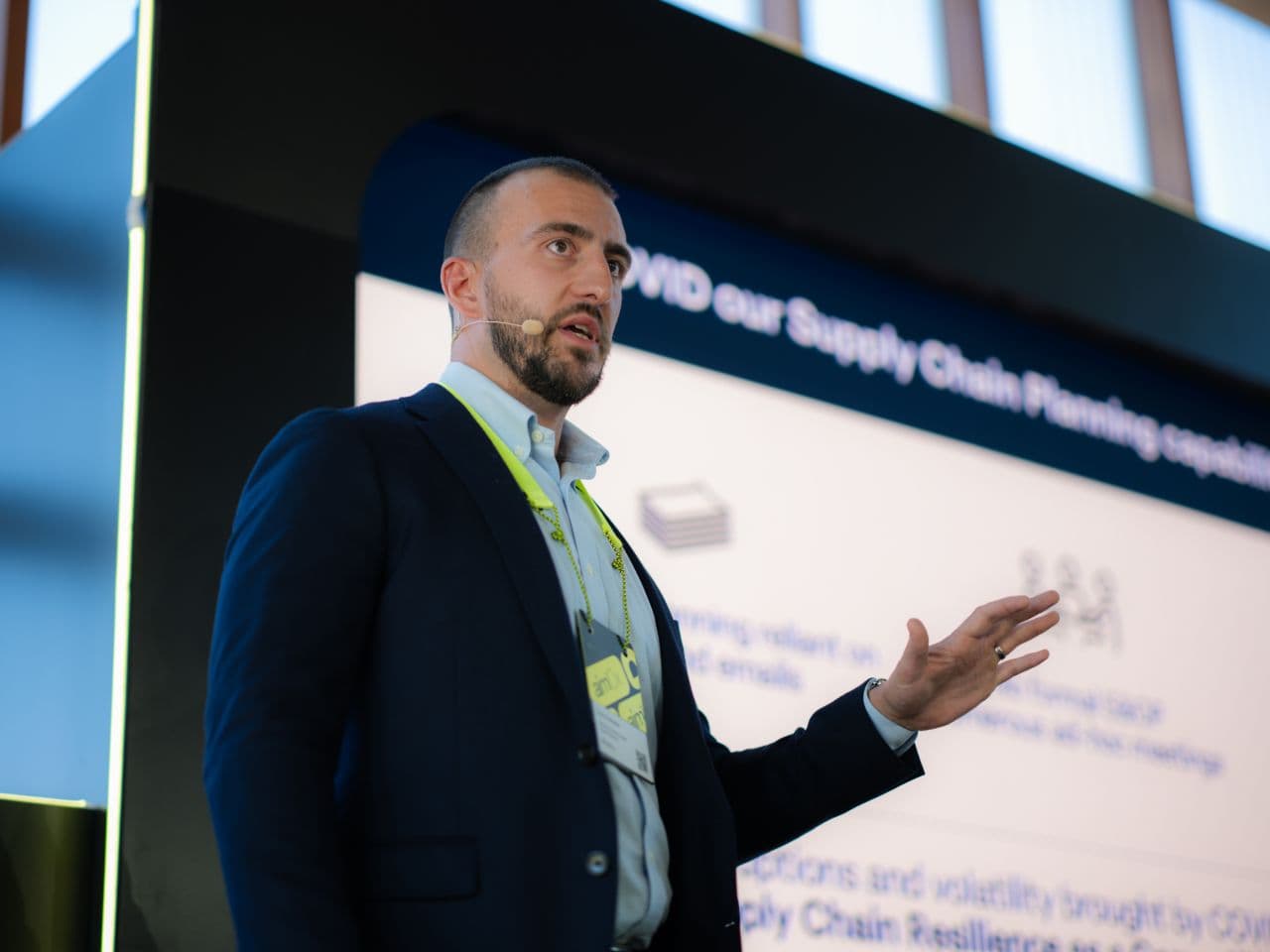
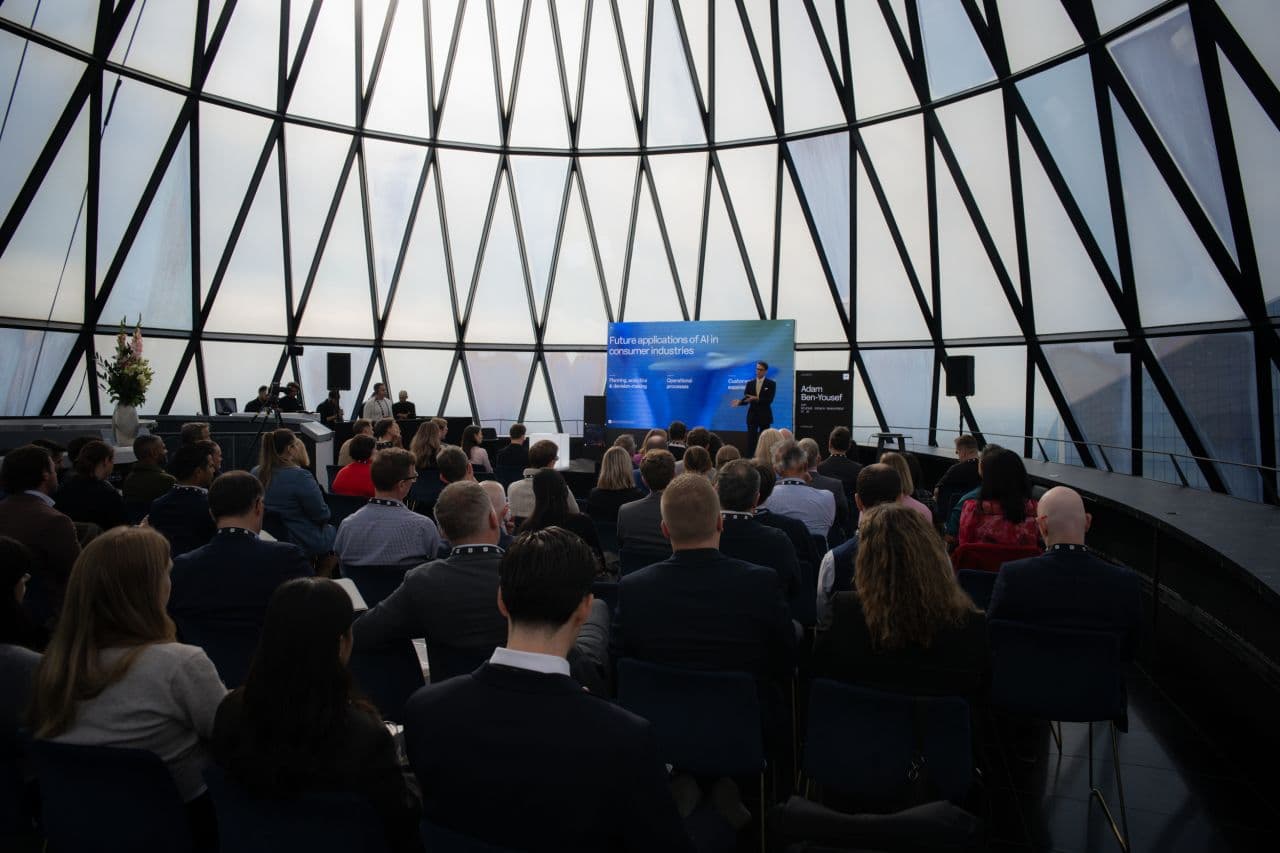
At aim10x Americas, o9’s largest event with more than 400 industry professionals, leaders from BISSELL, Shurtape, Molson Coors, and Keurig Dr Pepper shared how they are addressing these challenges head-on. Each described a journey from firefighting to foresight, showing how o9’s AI-powered planning platform is helping them improve accuracy, cut costs, and build resilience.
Here are the highlights of their stories.
How BISSELL Built a Smarter, Connected Supply Chain
BISSELL Homecare—a nearly 150-year-old company with over 20% market share in North America and sales in 70+ countries—outlined how it transformed supply chain planning from manual, spreadsheet-driven firefighting into an integrated, end-to-end capability on the o9 platform.
Tony Schlader, Director of Global Supply Chain Planning, recalled the breaking point: “We didn’t have the information we needed. We were spinning in circles.” With COVID disruptions hitting suppliers, the company was relying on a basic Oracle MRP, Excel, and ad-hoc “S&LB” meetings that produced slow, error-prone decisions and even conflicting instructions to suppliers.
Choosing a Unified Platform
That crisis became the catalyst. BISSELL launched an RFP for a single platform to unify demand, supply, inventory optimization, supplier collaboration, S&OP, and scenario management. “We found one partner who could meet it: o9,” said Tony.
Tangible Business Impact
The business impact has been substantial:
- “Forecast bias is down 4%. That’s been huge: historically, sales controlled the forecast and skewed to avoid stockouts. With o9, we’ve driven bias down—helping inventory, too.”
- “The headline number: $20 million in safety stock reduction. With o9, we manage this weekly. Using o9 to cover promos without holding that buffer all year let us give $20 million back to the business for other investments.”
- “Year to date, we’re at ~96% overall fill rate and 90%+ at Amazon, which recognized BISSELL last year as a Day One partner.”
- “We also cut planning-controlled costs by 60%—less rebalancing across the network, fewer expedites, fewer out-of-network shipments. And we reduced the planning organization by 10% while becoming far more capable.”
Tony was especially emphatic about the role of multi-echelon inventory optimization: “That tool is a game changer for us.”
Proving Resilience in Tariff Shocks
The value goes beyond steady-state metrics. When the U.S. government announced “Liberation Day” tariffs on April 2, BISSELL used o9’s scenario planning to deliver a full analysis by April 4. He described the difference from 2020: “The feeling I had this time, compared to six years ago, was totally different. I said: ‘Great. We’ll have something for you in a day or two.’”
The analysis included:
- P&L impacts of 15–20% price increases, with elasticity modeled.
- SKU-level inventory runways under halted production.
- Alternate sourcing options with bridging inventory plans.
Making Scenario Planning Standard
Today, scenario planning is embedded. “It takes a few hours to run a bottoms-up analysis of a multi-billion-dollar organization. A few hours. When we compared an o9 scenario to finance’s back-of-the-envelope version, they differed by tens of millions. Bottoms-up matters. o9 made that standard.”For BISSELL, the shift to o9 was not only about lowering costs and raising service.
As Tony put it: “One of the biggest impacts planning can make is arming executives with the information they need to make critical decisions at the moments that make or break the company.”
Shurtape: Driving Customer Satisfaction with Collaborative Planning
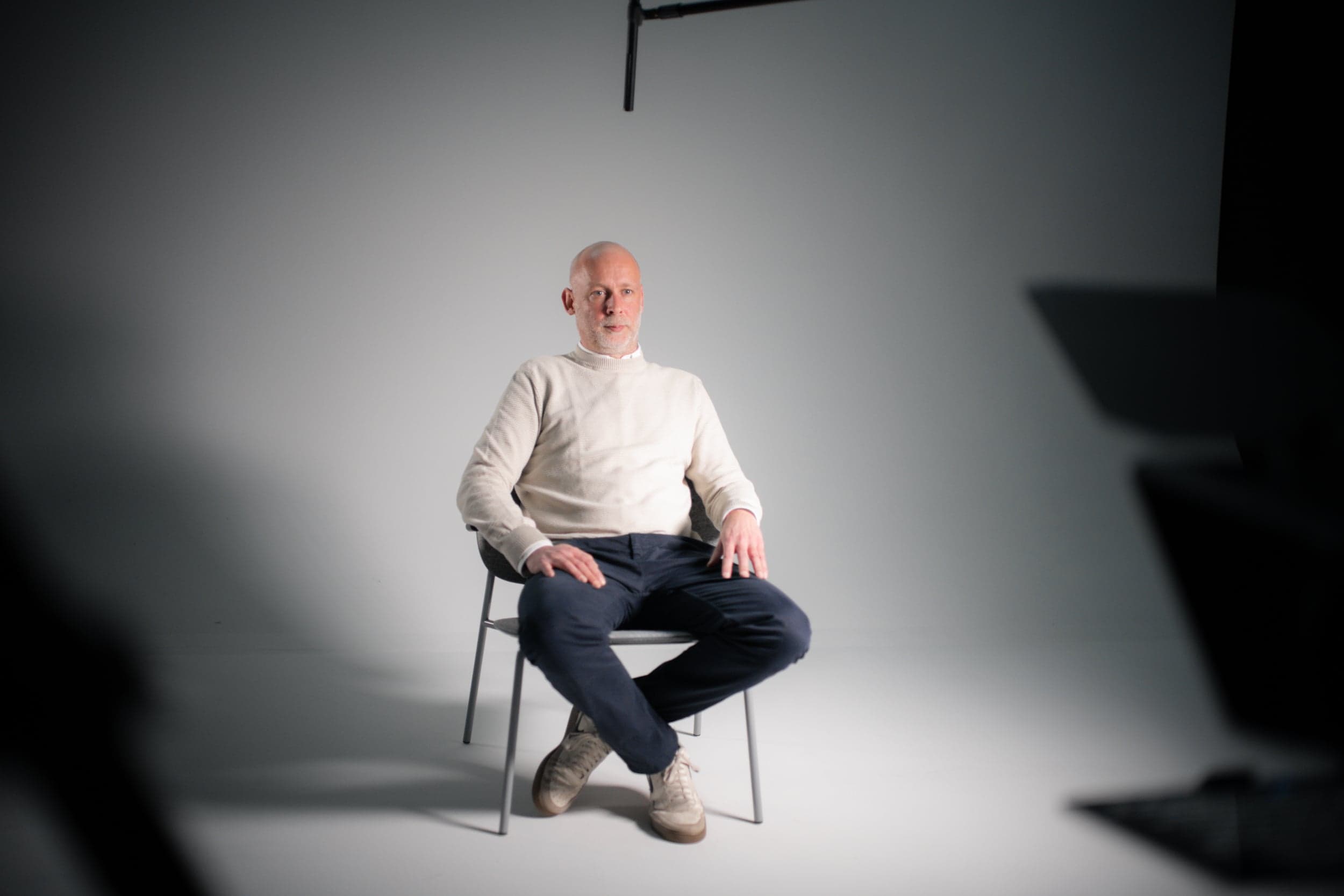
Shurtape Technologies—a family-owned manufacturer known for consumer brands like FrogTape and T-Rex—has grown from about $200 million in revenue when Kyle Stephens joined to nearly $1 billion today, with operations spanning multiple regions. To sustain that growth, the company transformed its planning capabilities with o9’s AI-powered forecasting, demand planning, and integrated business planning platform.
Pandemic Pressures Expose Legacy Gaps
The pandemic highlighted the gaps in its legacy planning software. Retail sales surged as home improvement boomed, while industrial demand tied to food distribution declined. Legacy tools couldn’t keep up. “We had two very different things happening at once. The software we had wasn’t working,” said Kyle, Demand Manager at Shurtape.
Four Pillars of Transformation
The company set four pillars to guide transformation: obsess over customers, be better tomorrow than today, be data-driven and results-focused, and embrace outside change.
o9 quickly delivered measurable gains across forecasting, service, and efficiency:
- “Forecast accuracy improved from ~55% before o9 to ~65% with lead-time lags, and in some cases reaching the best-in-class 70% benchmark.”
- “Service fill rate improved sharply in 2024, thanks to ensemble forecasting and stronger KPIs.”
- “For the first time in a decade, we have a single integrated forecast across all regions.”
- “Better service levels and accuracy gave leaders more trust in the planning process.”
From Debating Numbers to Managing Exceptions
Kyle emphasized the efficiency shift: “We used to spend years debating numbers with dozens of models. Now we have one forecast, one truth, minimal touches. The system does the heavy lifting. We manage the exceptions.”
A Single Source of Truth for the Enterprise
Today, Shurtape runs o9 as its single source of truth. Forecasts align across finance, sales, and planning. Metrics drive decisions. Planners focus on exceptions. Executives rely on the system for annual operating plan budgeting and strategy—with measurable gains in accuracy, service, and trust.
How Keurig Dr Pepper Unified Planning Across the Supply Chain
Navin Chander, Vice President of S&OP and Customer Service at Keurig Dr Pepper (KDP), described how the $12B North American food and beverage leader is transforming planning with o9. With 125 brands, 30+ manufacturing sites, 100+ DSD distribution centers, and a 29,000-strong workforce, scale and complexity demanded a bold approach.
“The question becomes: how do you build a supply chain that takes the very first signal of risk or opportunity and connects it to every decision?” Navin asked.
Why KDP Went “Middle-Out” Instead of “Top-Down”
Rather than start with demand planning, KDP went “middle-out” with supply planning on o9. By leveraging existing demand signals, building material forecasts in SAP, and establishing o9 as the planning engine, KDP unlocked quick execution wins while laying the foundation for expansion upstream and downstream. “That approach created early momentum—better demand-supply synchronization, visibility into demand stability, and improved inventory planning.”
Turning Planning into a Competitive Advantage
Key capabilities now live on o9 include:
- Unconstrained and constrained supply planning, rolled out site by site.
- Scenario planning for cross-functional alignment.
- Weekly S&OE cycles, shifting from identifying risks to actively mitigating them.
- IDP for demand visibility, already in place.
Even amid strikes and disruptions, Navin noted, “Weekly S&OE cycles now focus less on identifying risks and more on mitigating them. Even with challenges like strikes at manufacturing sites, we’ve maintained service levels and launched new products successfully.”
The Secret Weapon: A Planning Product Team
KDP has also built a dedicated planning product team on o9. “That product team is probably our biggest asset—it’s what will allow us to deliver future capabilities.” Looking ahead, KDP plans to expand multi-echelon inventory optimization and scenario planning across all DSD distribution centers and integrate raw material collaboration.
Lessons for the Industry
He closed with advice to peers: “The question isn’t ‘When should I start?’ The answer is always now—or yesterday. The better question is ‘How ready am I?’ That readiness helps you figure out your next step and how to make progress quickly.”
Amplifying Agility With AI-Powered Scenario Planning
Lizzie Lee, SVP of Solutions Consulting, spoke next, putting the audience in the role of a category planner for pastries. Her demo showed how o9’s agentic AI can transform the job from chasing data to making better, faster decisions.
The setup: a widening gap between unconstrained pastry forecasts and company financial targets. In the old world, a planner would spend days digging through spreadsheets, emails, and meeting notes to identify potential risks and opportunities to evaluate. As Lizzie put it: “Agility is all about how do I make the best decisions, and faster decisions, given what we have and what the situation is today.”
From Manual Search to Automated Insight
Instead of relying on planners to hunt for data, advanced supply chain analytics now push insights directly to them in a weekly, auto-generated email with the top 10 risks and opportunities. These insights are compiled automatically from internal data, transcripts, comments, and even external signals like the web.
One item jumps out: a sudden surge in donut demand in Canada, triggered by competitor shortages. The AI agent has already flagged it, tagged it in o9, and created a line item in the planner’s workspace. “Now I don’t have to spend time looking for the information. It’s at my fingertips,” Lizzie noted.
Agents at Work: From Risk to Scenario
From there, two agents take over:
- R&O Agent surfaces and classifies risks and opportunities.
- Scenario & Supportability Agent instantly shows whether supply can meet demand, with ad hoc visuals created on the fly. It also stress-tests upside scenarios—such as adding 15% more donut demand for Q4—while automatically generating alternatives.
From Firefighting to Fast, Confident Action
What once required coordination across commercial, demand, and supply teams over days or weeks now happens in minutes. In this case, the agents confirm supply can cover the upside, with full revenue and margin breakdowns, plus ESG and sustainability projections across Scope 1, 2, and 3. If demand couldn’t be met, the AI would propose trade-offs—partial fulfillment, mitigation actions—quantified in financial and operational terms.
One Planner, Many Roles—Powered by AI
Instead of firefighting across silos, one planner can now spot opportunities, test feasibility, and act in a single flow. Lizzie closed the demo with a sharp contrast: “Today, multiple roles across functions are needed to identify, evaluate, and act on opportunities. In the AI-enabled world, one role with agents can do it all—breaking silos, acting as one team, and making the best decisions faster.”
Read more client stories from aim10x Americas:
- Acuity and Smurfit Westrock: Manufacturing Stories from aim10x Americas
- New Balance, Five Below, ZAMP, and EchoStar: Retail Stories from aim10x Americas
About the authors

The Editorial Team, o9
A multidisciplinary collective of editors, strategists, technologists, and former executives with experience across Fortune 500 companies and top consulting firms. Grounded in o9’s mission to help enterprises make faster, better decisions through the power of AI-driven planning and execution software, the team shares clear, practical insights on digital transformation, supply chain, and enterprise planning to support business leaders in navigating complexity and driving change.




![Aim10x digital shurtape [bts] copy](/_next/image?url=https%3A%2F%2Fcms.o9solutions.com%2Fwp-content%2Fuploads%2F2025%2F12%2Faim10x-Digital-Shurtape-BTS-copy.jpg&w=3840&q=75)