5 read min
Every planning transformation depends on data. Yet for many organizations, data remains one of the biggest roadblocks to value realization. It sits across disconnected systems, requires manual interpretation, and often depends on the experience of people who know where to find it, how to clean it, and how to make it useful.
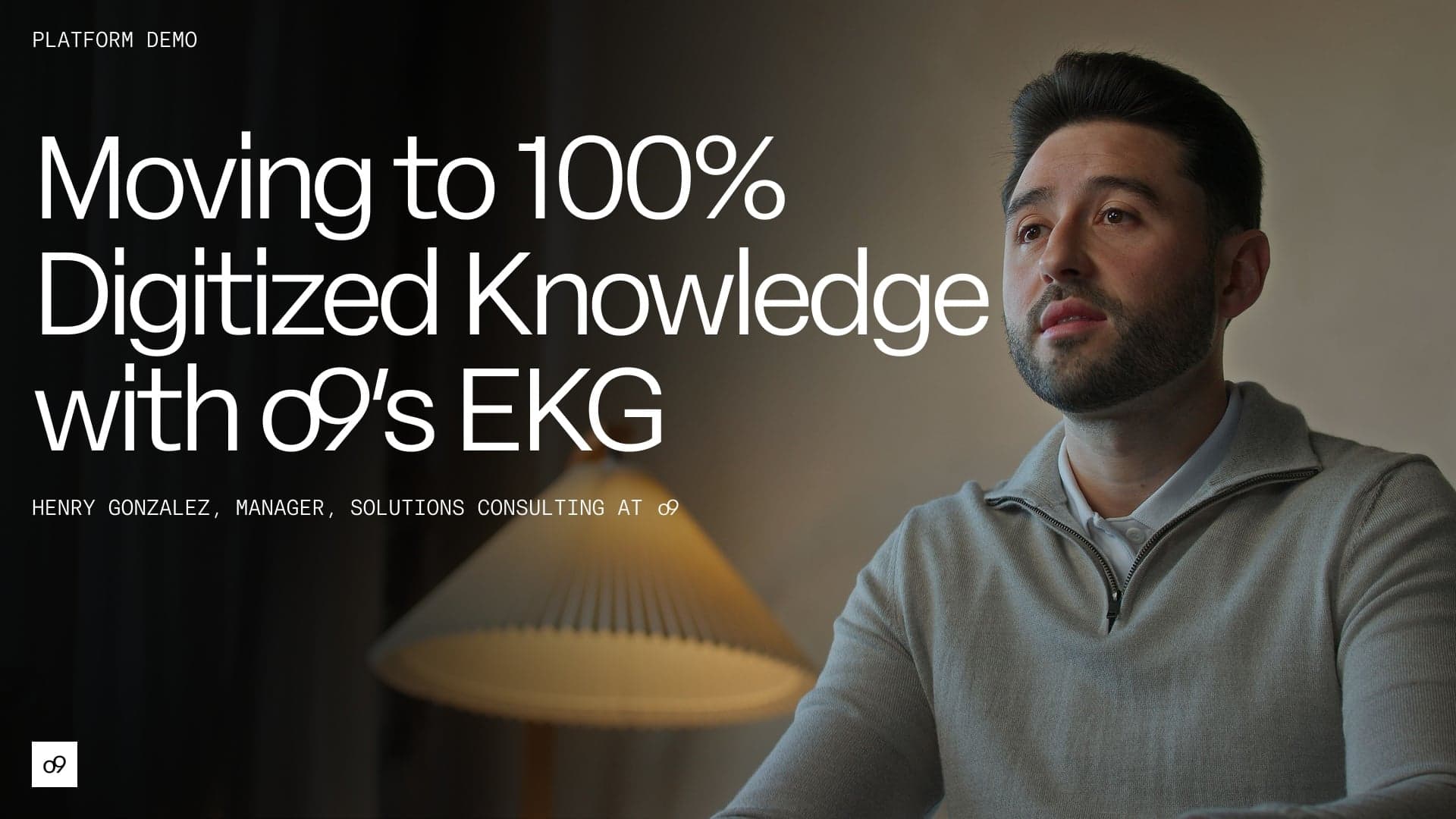
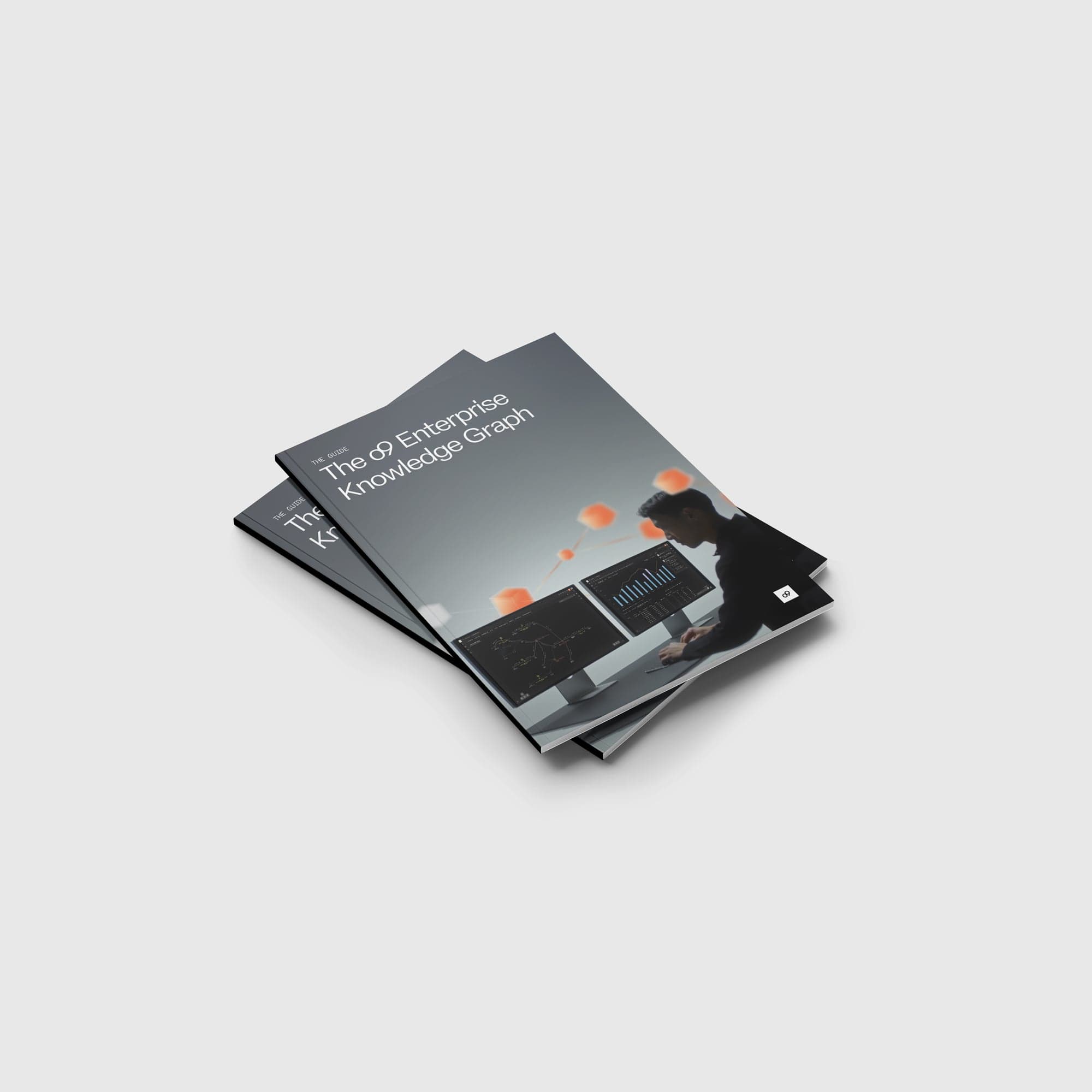
In the o9 demo, Henry Gonzalez showed how the o9 Enterprise Knowledge Graph, or EKG, helps organizations move from fragmented data and undocumented expertise to a more connected, governed, and digitized knowledge model. The goal is not simply to integrate more data into a planning system. It is to make knowledge usable, scalable, and actionable across the enterprise.
As Gonzalez explained, “the vision for us here at o9 Solutions is to transform data from being the roadblock to where it is a strategic asset that can drive growth for the organizations that we serve.” Watch the entire demo below.
From Data Integration to Digital Knowledge
Traditional implementation work often begins with data extraction, mapping, cleansing, and validation. These steps are essential, but they can also be cumbersome, error-prone, and heavily dependent on architects and functional experts. Missing fields, anomalies, and mapping discrepancies may not be identified until functional testing begins, delaying implementation and increasing manual effort.
The o9 EKG demo showed how agents can support this process by helping architects understand the current data landscape, connect new data sources, identify missing fields, and run exploratory data analysis. Instead of relying on multiple parties to answer basic questions, users can ask the agent what data exists, where gaps appear, and what is required to support a planning capability such as supply planning.
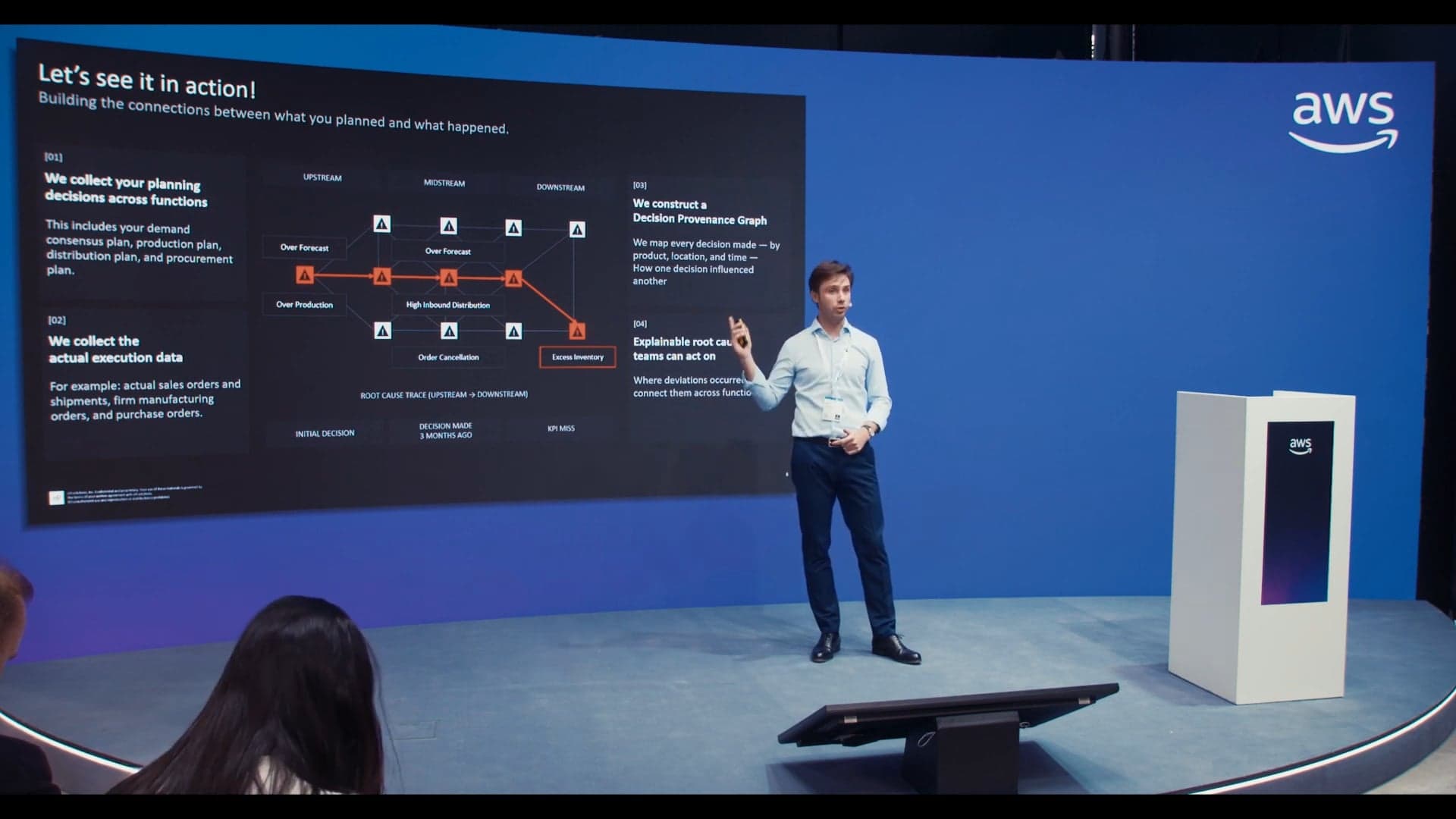
This matters because modern planning requires more than a traditional database. As Gonzalez noted, traditional databases can answer questions such as what sales were for a given product, location, or period. The Graph Cube model is designed to go further by considering the cause-and-effect relationships between plans, decisions, and outcomes.
Automating the Knowledge Lifecycle
One of the strongest themes from the demo was the idea of automating the full knowledge lifecycle. o9’s EKG does not only ingest data. It helps classify it, map it, validate it, and connect it to the planning models that drive decision-making.
The agent can guide users through setting up a new data pipeline, from creating the connection to mapping the data and running exploratory analysis. It can also identify which data is required, which data is optional, and which functional areas the data supports.
As the demo explained, “the agent can facilitate some of these questions. Here we can see exactly where it’s mapping the module that’s applicable to and what is required versus a nice to have.”
This is particularly valuable in complex enterprise environments where data may come from ERP, TMS, product lifecycle management systems, Snowflake, Databricks, Dynamics 365, and other sources. Rather than forcing teams to manually interpret each source, the agent helps standardize and accelerate integration.
Capturing Tribal Knowledge
Perhaps the most important part of the demo was not about structured data at all. It was about tribal knowledge.
In most planning organizations, critical knowledge lives in the heads of experienced planners. They know which suppliers tend to miss in Q4. They know which lead times are unreliable. They know which manual interventions are needed to keep the plan moving. But unless that knowledge is digitized, it cannot be governed, scaled, or reused by the broader organization.
Gonzalez captured this clearly: “Everything that is attained typically lies in the heads of the planners. So it is very important that we also digitize this tribal knowledge so that we can use it efficiently for planning.”
The demo showed a supply planner capturing an observation about a supplier that consistently missed delivery timelines around Q4. The system validated the observation against historical data, showing that while SAP modeled the lead time at 26 days, actual performance in Q4 was closer to 46 days. The agent then recommended follow-up actions, including updating the data model, evaluating alternate suppliers, running what-if analysis, and flagging affected purchase orders as high risk.
From Observation to Action
The power of digitized knowledge is that it does not remain passive. Once a planner logs a knowledge entry, the platform can route it through governance, trigger approvals, update planning rules, and automatically write resulting actions into the system.
This changes the role of the planner. Instead of manually remembering exceptions, checking training documents, updating parameters, and flagging purchase orders, the planner can work through the agent in natural language.
As Gonzalez explained, “by simply instructing the agent in natural language, the agent will automatically create the right rules and parameters for me.”
That is the shift from knowledge as memory to knowledge as an operational asset. Once approved, the knowledge entry can update subsequent rules, identify impacted purchase orders, and flag risks for the broader supply planning team.
Scaling the Best Planner’s Knowledge
The most compelling implication is scale. Every organization has expert planners who carry years of experience in their heads. The challenge is that this expertise is difficult to replicate. It often stays localized to a team, region, supplier, or individual.
With o9’s EKG, that expertise can become part of a governed knowledge library. It can be validated, approved, reused, and applied across planning and execution processes.
As the demo concluded, “imagine that you scale this across the board to all your best planners, where they have the library of all this tribal knowledge that is key for planning and execution.”
That is the real promise of moving to 100% digitized knowledge. It is not only about cleaner data or faster integrations. It is about creating an enterprise planning environment where data, rules, context, and human expertise continuously improve the way decisions are made.
For organizations looking to build more adaptive and intelligent planning capabilities, o9’s EKG provides a foundation for turning knowledge into action and making planning intelligence available at scale.
About the authors

The Editorial Team, o9
A multidisciplinary collective of editors, strategists, technologists, and former executives with experience across Fortune 500 companies and top consulting firms. Grounded in o9’s mission to help enterprises make faster, better decisions through the power of AI-driven planning and execution software, the team shares clear, practical insights on digital transformation, supply chain, and enterprise planning to support business leaders in navigating complexity and driving change.