4 read min
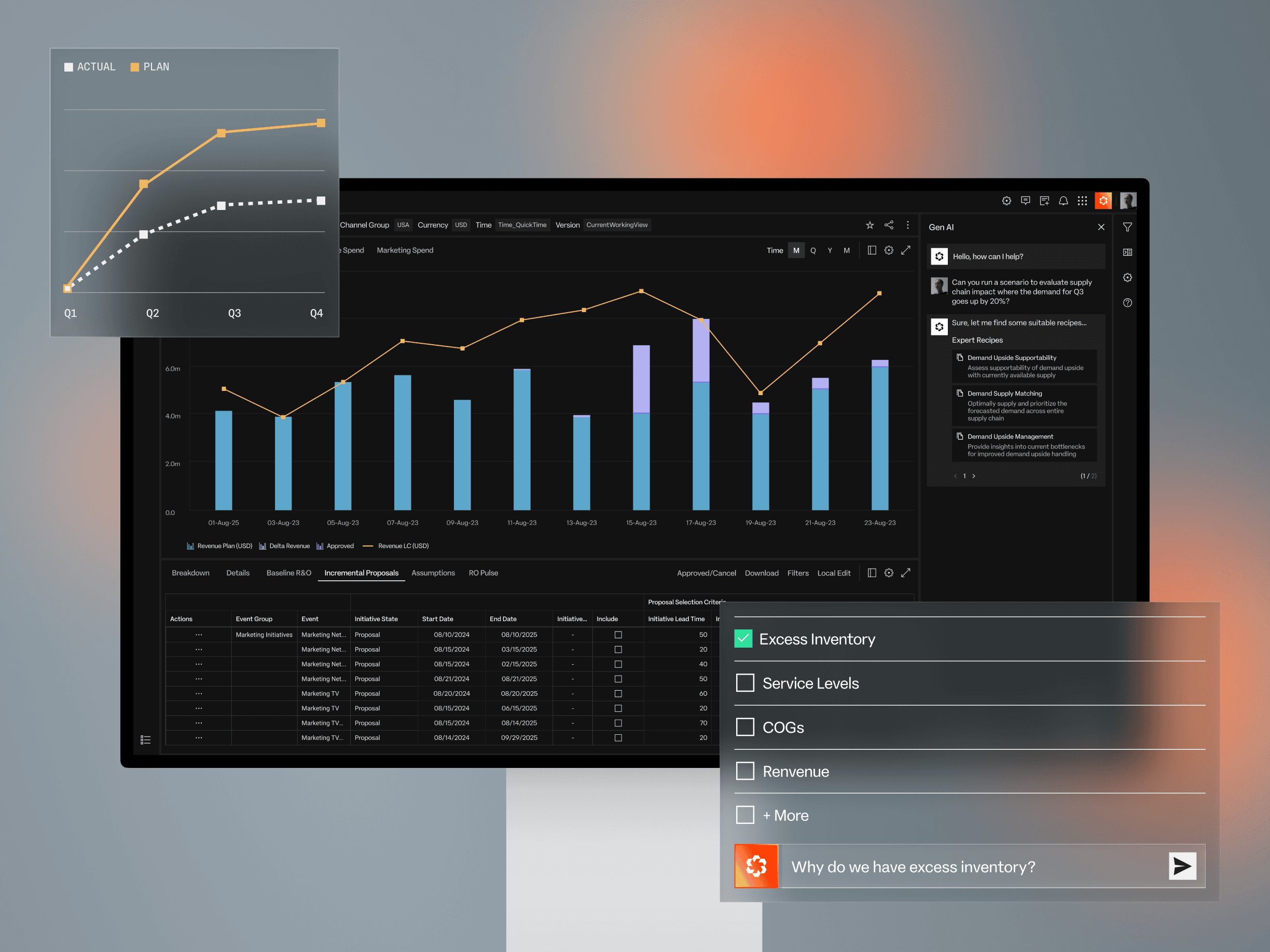
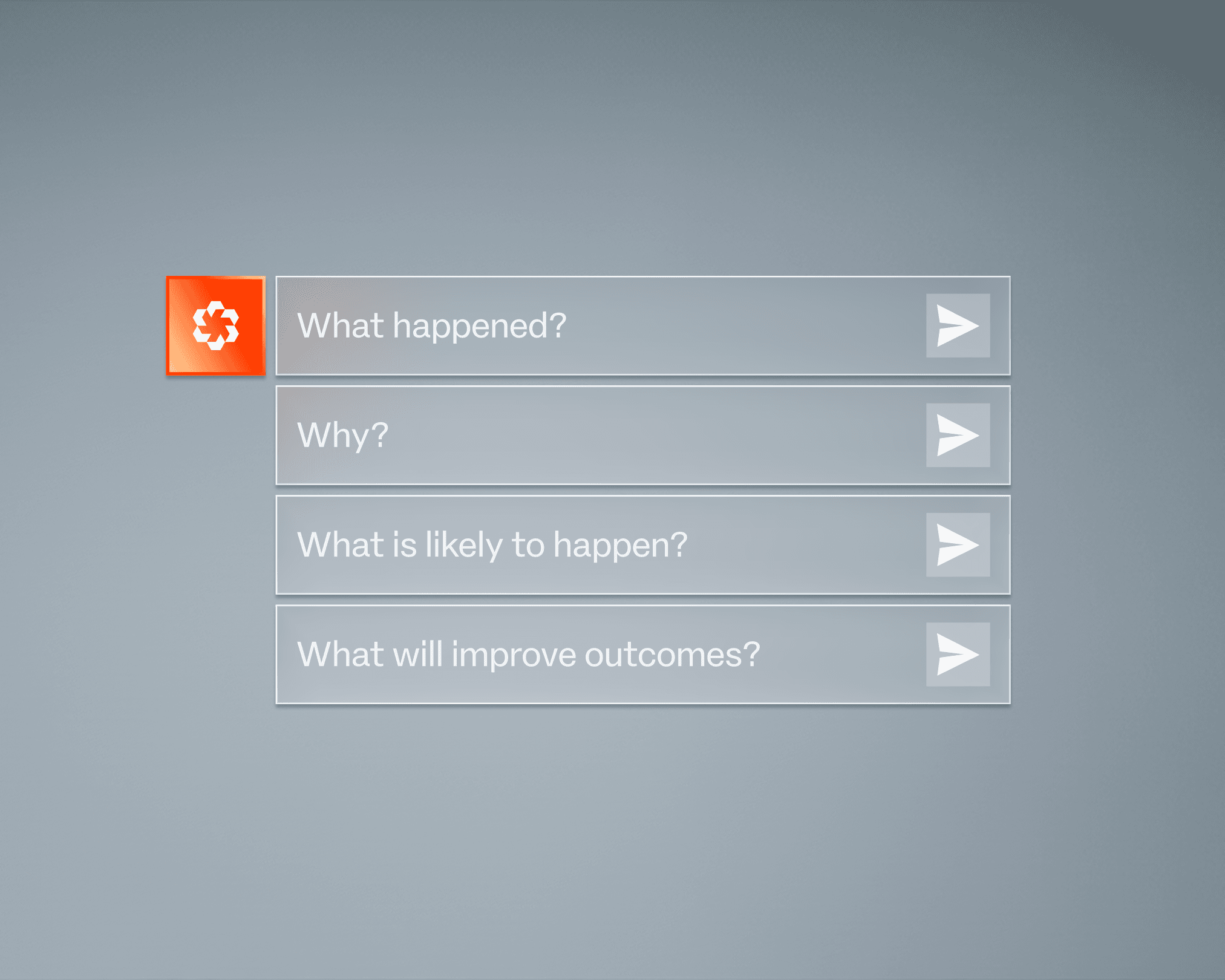
Every planning executive knows the moment: sitting in an IBP or S&OP meeting, staring at a KPI dashboard full of green and red numbers. Inventory is up. Service levels are down. The questions start flying: Why did this happen, and what do we do about it?
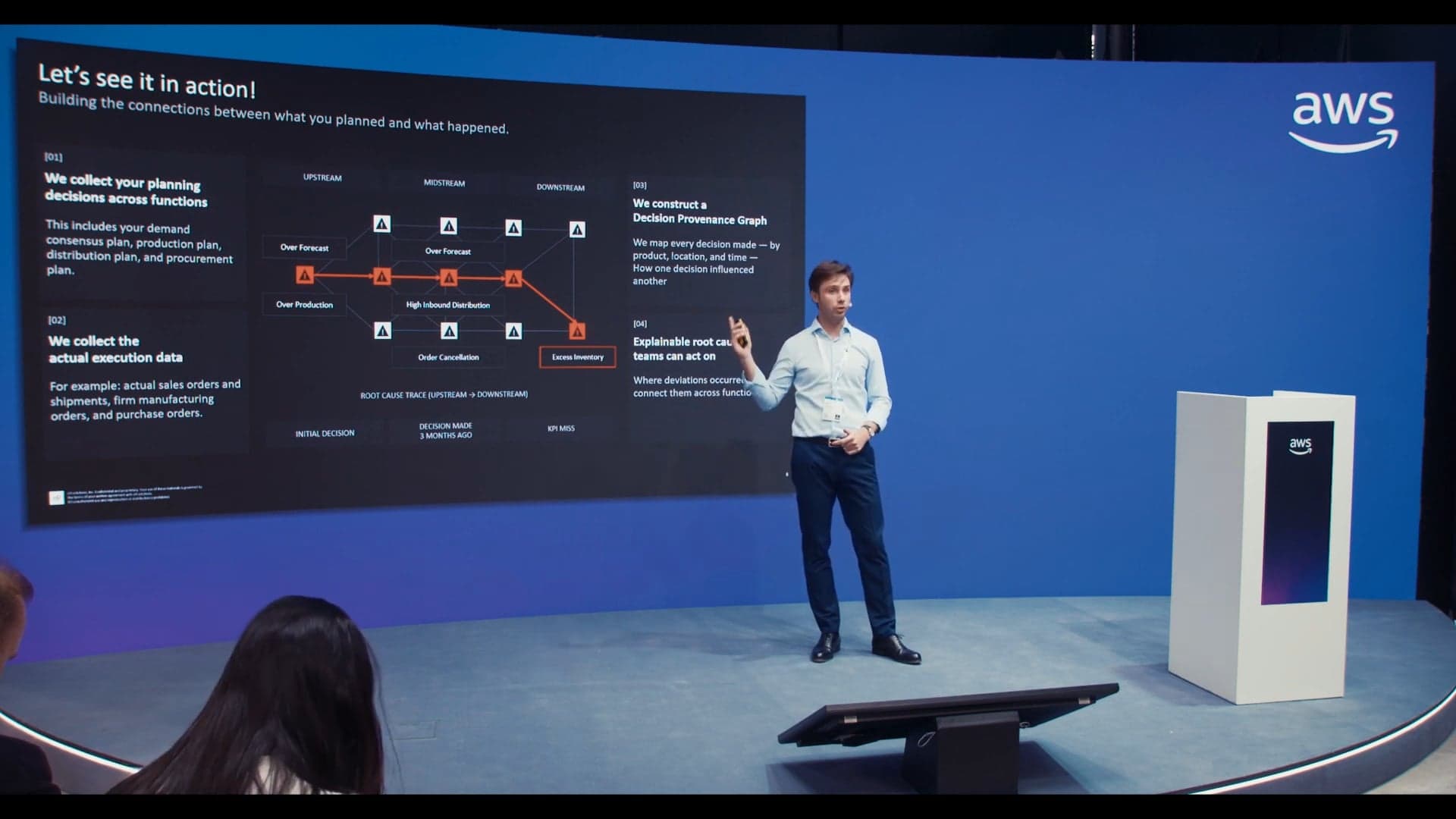
At my recent presentation at Hannover Messe, I put this challenge to the room and the response was instant recognition. Because what follows in those meetings is almost always the same pattern. The demand planner points to forecast accuracy. Procurement cites strategic buys made three months ago at favorable prices. Manufacturing flags batch restrictions that forced higher production runs. And here's the uncomfortable truth: they're all correct.
But there is no connected view of how those decisions combined to produce a $300 million jump in excess inventory. And without that connected view, there is no real learning — just a cycle of diagnosis, disagreement, and the same misses repeating next quarter.
This is the problem that o9 Agentic Post-Game Analysis (PGA) is built to solve.
The Decision Replay Problem
Think about how elite sports teams improve. They don't just look at the scoreboard; they replay every decision on the field. Who passed where, who was out of position, where the sequence broke down. That granular understanding of cause and effect is what separates teams that learn from teams that simply react.
Supply chain planning has never had that. Dashboards show outcomes, not decisions. Root cause analysis lives in the heads of individual planners, shaped by their own biases, their own vantage point, their own slice of the business. That institutional knowledge shifts with personnel changes and never compounds into organizational intelligence.
The question isn't whether your teams are capable. It's whether your organization is learning systematically, cycle over cycle, at the speed the business requires.
From Tribal Knowledge to Systematic Learning
PGA embeds learning directly into the planning process using agentic AI and graph technology. Every decision made in the planning system, who made it, why, and under what conditions, is recorded and connected. When a KPI misses, the system traces the full chain: the over-forecast, the strategic buy, the warehouse capacity issue that triggered downstream distribution, the overproduction that resulted. Not one explanation, but a complete picture of how decisions interacted to produce an outcome.
Over time, those individual traces aggregate into something far more valuable: patterns. In one of our deployments, PGA identified that 44% of excess inventory cases were driven by manual forecast adjustments, where planners were overriding system forecasts in ways that consistently introduced bias. That kind of systemic insight is invisible to any individual in any single cycle. It only emerges when decisions are connected and tracked across time.
From Insight to Action — Before the Next Cycle Begins
Knowing why something went wrong is only useful if it translates into what to do next. PGA generates both: root cause analysis and concrete action recommendations, distinguished by time horizon. Short-term tactical actions such as moving inventory, pausing inbound purchase orders, and reallocating across locations. And longer-term structural changes like adjusting inventory policies, correcting forecast bias, and establishing guardrails so planners stop inadvertently undermining system performance.
Each recommendation comes with context: a narrative grounded in actual decisions and outcomes that can be brought directly into meetings. The "why" and "what next" are no longer a matter of individual opinion; they are documented, traceable, and consistent across the organization.
The results are tangible. Questions that previously took weeks to investigate get answered within the same meeting. The function-by-function blame cycle gets replaced with a shared, objective view of root causes. And as planners build trust in system recommendations, the degree of automation expands considerably. In some of our customer deployments, up to 90% of planning decisions are taken by the system, with planners reviewing and approving rather than intervening.
The Compounding Advantage
The strategic value of PGA is not any single insight. It is the compounding effect of an organization that gets systematically smarter every cycle. Mistakes do not repeat. Policies improve. Behavioral patterns that generate value leakage get corrected before they become structural.
In a world where volatility and complexity are the baseline, the organizations that pull ahead will not necessarily be those with the best planners. They will be the ones whose planning systems learn faster than the competition.
Post-Game Analysis is how that learning gets institutionalized, and it is one of the most significant shifts I see supply chain organizations making right now.
About the authors

Alberto Fabregat
SVP, Strategy & Sales
Alberto is a fervent advocate for the power of planning and decision-making technology to create ripples of positive impact on both society and our planet. Currently Senior Vice President of Strategy & Sales, he brings over a decade of experience in Digital Strategy and Integrated Business Planning, helping companies optimize their supply chains and embrace innovative technologies.