authors

Ashwin Rao
EVP of AI at o9 & Adjunct Professor at Stanford
9 read min
A leadership team enters the monthly business review expecting answers.
Service levels have dropped in a priority region. Inventory is rising in the wrong locations. A promotion that looked strong in the plan is underperforming in the market. Finance sees margin pressure building, while commercial teams are still trying to protect growth.
Everyone has data. Everyone has a dashboard. Everyone has a view.
But the business still does not have a shared answer.
What changed? Why did it change? What happens if the current trajectory continues? What should the business do now?
This is where value leakage begins: not always through one dramatic failure, but through delay, ambiguity, and disconnected decisions. Teams spend days or weeks reconciling data, comparing plan versions, debating assumptions, and building partial explanations from different systems. By the time the organization understands the issue clearly enough to act, the window to recover value has narrowed.
On the whole, companies have enough data, but what they really need is a better way to turn data into decision-ready understanding, quickly, consistently, and with a clear connection to business outcomes.
That is the purpose of the 4Ws.
The 4Ws provide a decision analysis framework for preventing value leakage. They help companies connect variance, causality, projection, and action into one decision loop. When the loop is broken, value leaks through missed service, excess inventory, avoidable cost, lost growth, margin erosion, and cash flow pressure. When the loop is connected, the enterprise can detect issues faster, diagnose them more accurately, understand what they mean for the future, and take action while outcomes are still changeable.
“The 4Ws are easy to understand because they reflect how leaders naturally think. Every performance conversation eventually comes back to the same sequence: what happened, why it happened, what it means, and what to do about it.”
Dr. Ashwin Rao
Executive Vice President, AI Strategy and R&D
The 4Ws Decision Analysis Framework
To enable agile detection, diagnosis, prediction, and response, the model must answer four types of questions for every situation: the 4Ws.
The framework is intentionally structured as two backward-looking questions and two forward-looking questions. The current state is not treated as a separate question category, but embedded within the forward-looking view of likely outcomes and actions.
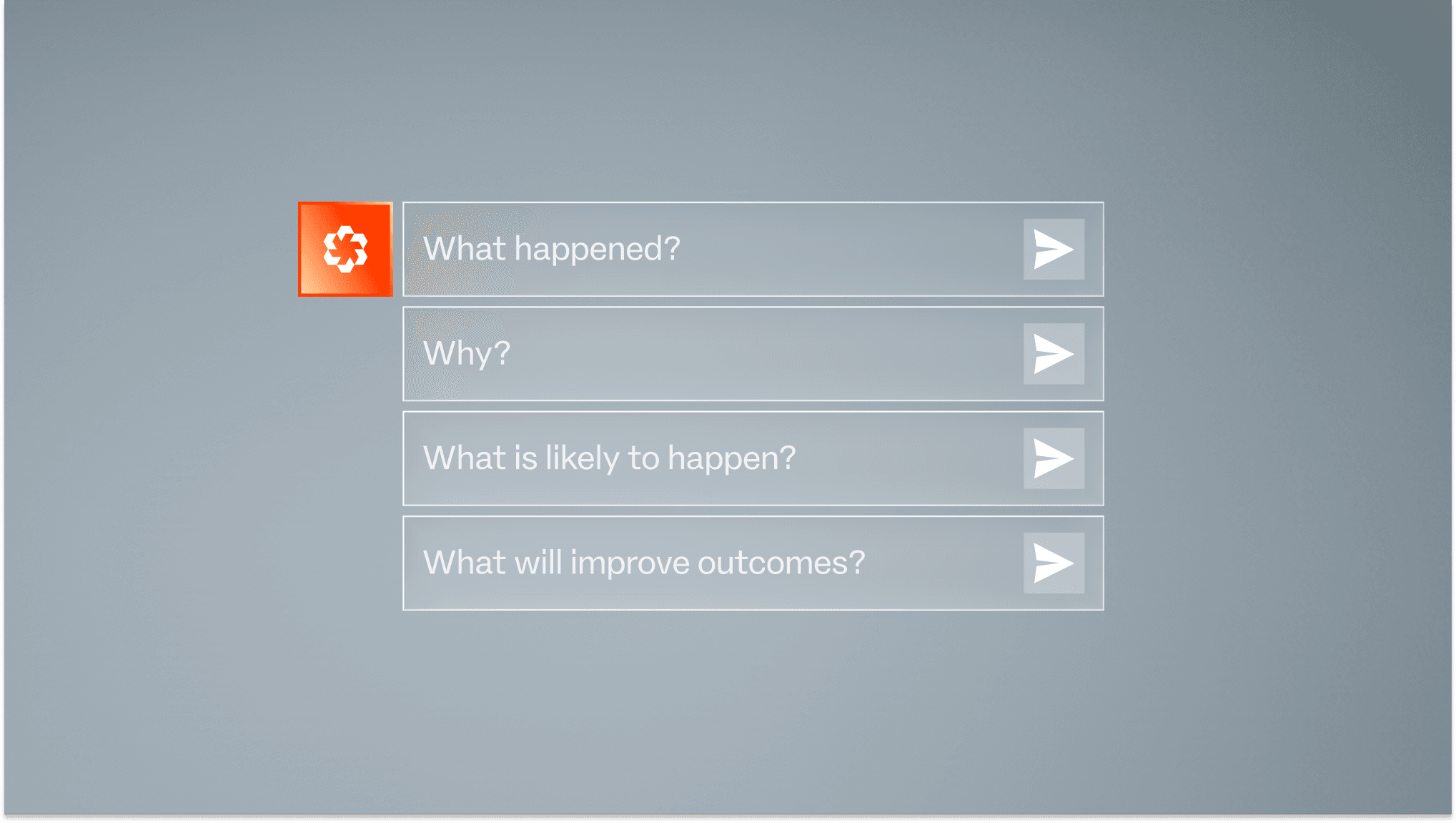
The purpose of the 4Ws is to improve enterprise decision-making and business outcomes across service, inventory, cost, growth, margin, and cash flow.
(Looking Backward - Post-Game Analysis Questions)
W1 - “What happened?”
What happened versus plan, forecast, or target across the relevant levels of the business?
W2 - “Why?”
Why did it happen? What drivers, root causes, and decision conditions created the observed outcome?
(Forward-Looking Predictive & Prescriptive Analysis Questions)
W3 - “What is likely to happen next?”
What is likely to happen to the key input variables, plans, and drivers?
What are the likely operational and financial outcomes?
W4 - “What are the best actions to take?”
What actions will best close gaps, improve the plan, and drive better business outcomes?
Four questions, one decision loop
The 4Ws are easy to understand because they reflect how leaders naturally think. Every performance conversation eventually comes back to the same sequence: what happened, why it happened, what it means, and what to do about it.
But their strategic value is in connecting the questions into one decision model.
Many companies can answer parts of the 4Ws today. Reporting and BI tools can often show what happened. Planning systems can support forecasting and scenario analysis. Optimization tools can recommend actions in specific domains. But these capabilities are frequently separated across systems, functions, and workflows.
That separation creates leakage.
If W1 is disconnected from W2, teams may see a performance gap but misunderstand the cause. If W2 is disconnected from W3, they may diagnose the past without understanding how the issue will compound. If W3 is disconnected from W4, they may see the future risk but struggle to translate it into feasible, governed action. If W4 is disconnected from the earlier questions, actions may be taken without a clear link to the actual drivers of the problem.
The 4Ws prevent this by creating a common structure for enterprise decision-making. W1 identifies the gap. W2 explains the cause. W3 projects the likely impact. W4 defines the response.
In that sense, we can view the 4Ws as a value-protection framework rather than just an analytics framework.
How value slips through the gaps
Value leakage often occurs in the space between insight and action.
It starts when the gap is not seen clearly. Most enterprises eventually know when something has gone wrong, but “eventually” is often too late. A service issue becomes visible after customers are affected. Excess inventory becomes clear after working capital is tied up. Margin pressure appears after commercial decisions have already played out. W1 helps establish what happened versus plan, forecast, or target at the right level of detail, so teams can understand not only that performance missed, but where, when, by how much, and against which baseline.
It continues when teams treat symptoms instead of causes. A service miss may look like a supply issue, when the real driver is demand forecast bias, allocation logic, promotion timing, order behavior, or inventory positioning. Margin erosion may look like a pricing problem, when the true driver is mix, availability, discount depth, freight cost, or substitutions. W2 is often the missing link because root cause is rarely contained in a single dataset. It sits in the relationship between plans, assumptions, constraints, policies, decisions, and execution conditions.
The leakage compounds when the future impact is underestimated. Once a gap appears and its drivers are understood, leaders need to know what happens next. Will the issue correct itself? Will it grow? Which KPIs are at risk? Which trade-offs will become harder if the business waits? W3 brings the forward-looking view into the decision loop, helping teams understand how today’s conditions could affect service, inventory, cost, growth, margin, and cash flow.
Finally, value leaks when insight does not become action. Many organizations are better at analysis than execution. They can identify a gap, debate a cause, and model future outcomes, but still struggle to decide what to do. W4 closes the loop by connecting insight to feasible, governed actions that improve the plan and drive better outcomes.
This is why the 4Ws need to be connected. Each W prevents a different type of leakage, but the real value comes from operating them as one decision loop.
Why traditional systems struggle to close the loop
The 4Ws sound simple, but they are difficult to answer consistently in large enterprises.
The reason is less a lack of tools; most companies have reporting systems, planning systems, spreadsheets, data lakes, workflow tools, and analytics platforms. The issue stems from the fact that these tools often do not operate as one connected decision system.
The business may see what happened in one platform, investigate why through manual analysis, project what happens next in another planning model, and manage actions through emails, meetings, and disconnected workflows. Each step introduces friction. Each handoff creates room for misalignment. Each delay increases the risk of value leakage.
The challenge becomes even harder when decisions cross functions. Service, inventory, cost, growth, margin, and cash flow are connected, but organizational processes often are not. A decision made in one function may create consequences in another. Without a shared decision model, teams can optimize locally while the enterprise loses value overall.
This is why the 4Ws need more than a dashboard; they require an enterprise foundation that can connect data, context, decisions, constraints, and actions. o9’s Digital Brain provides that foundation.
How o9 makes the 4Ws answerable
The Digital Brain is a connected model of how the enterprise works. It links products, customers, locations, suppliers, networks, financial structures, plans, assumptions, constraints, decisions, and outcomes. It gives teams a shared understanding of how value flows through the business and how decisions in one area affect results elsewhere.
The Enterprise Knowledge Graph is the intelligence layer that helps make this operational. It captures not only data, but the meaning of that data in the context of planning and execution. It represents enterprise objects, relationships, rules, constraints, decision logic, computations, and outcomes in a structured way. This is what allows AI agents to reason over the enterprise with context and traceability.
This is where neuro-symbolic agentic AI becomes a game changer, building on the Digital Brain foundation we've invested in for years
Neural AI, including LLMs, makes it easier for people to interact with enterprise systems naturally. Users can ask questions in business language rather than translating every issue into technical queries. Neural AI can also interpret unstructured information, such as emails, notes, exception comments, customer messages, supplier updates, and frontline explanations.
Symbolic AI provides the grounding required for enterprise-grade decisions. It represents the structured reality of the business: plans, constraints, relationships, policies, decision rights, rules, financial guardrails, and workflows. It helps ensure that answers remain traceable, governed, and connected to execution.
Together, these capabilities help companies move from manual investigation to decision-ready insight much faster. Instead of waiting weeks or months for teams to collect data, reconcile assumptions, and build explanations, users can begin asking questions of the business far earlier. Agentic AI can help interpret the intent, assemble the relevant enterprise context, trigger the right analysis, and return insights grounded in the Digital Brain and EKG.
The game changer is not simply speed. In fact, speed without grounding can create risk. The game changer is speed with context, traceability, and a path to action.
“The 4Ws are most powerful when they move beyond leadership questions and become part of how the enterprise learns and acts.”
Dr. Ashwin Rao
Executive Vice President, AI Strategy and R&D
From executive questions to enterprise capability
The 4Ws are most powerful when they move beyond leadership questions and become part of how the enterprise learns and acts.
One important application is Post-Game Analysis. PGA applies the 4Ws to plan-to-outcome gaps, helping companies understand what happened versus plan, why it happened, what the implications are, and what actions or lessons should follow. In many organizations, this kind of analysis can take weeks because teams have to reconcile data, align assumptions, interview stakeholders, and piece together the story manually.
With o9’s digital brain, Enterprise Knowledge Graph, and Agentic AI capabilities, PGA can make this process faster and more systematic, helping companies start surfacing decision-ready insights in weeks rather than months.
This is also where the 4Ws connect naturally to o9’s broader APEX operating model for agile, adaptive, and autonomous planning and execution. The connection is simple: the 4Ws define the decision loop, PGA applies that loop to plan-to-outcome learning, and APEX provides the operating model for using those decisions to respond faster, learn continuously, and execute with the right governance.
Leaders, value leakage is not inevitable
It often happens because enterprises see the gap too late, misunderstand the cause, underestimate what comes next, or fail to turn insight into coordinated action.
The 4Ws help prevent this by giving leaders a simple, repeatable decision loop: understand what happened, identify why it happened, project what is likely to happen next, and determine the best actions to take.
That loop is powerful because it connects the operational and financial realities of the business. It helps teams move from variance to causality, from causality to projection, and from projection to action, with a clear line back to service, inventory, cost, growth, margin, and cash flow.
o9’s Digital Brain, Enterprise Knowledge Graph, and neuro-symbolic agentic AI make this loop practical at enterprise scale. They allow companies to ask questions of their data, understand performance gaps faster, and connect insights to decisions with the context and traceability enterprise leaders require.
For leaders, our message is that value leakage can be reduced when the business has the ability to ask the right questions, understand the answers, and act before the opportunity to recover value slips away.
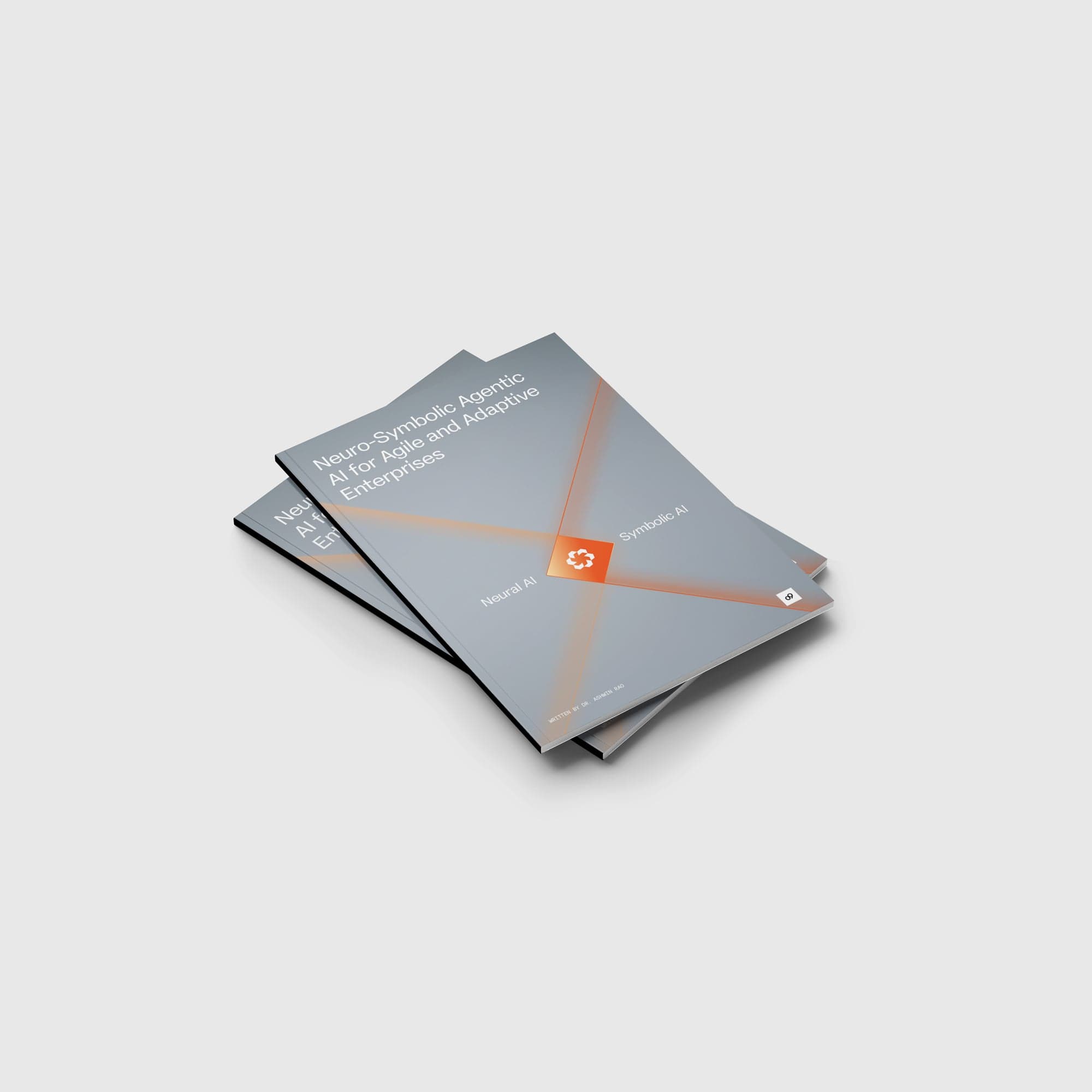
Neuro-Symbolic Agentic AI for Agile and Adaptive Enterprises
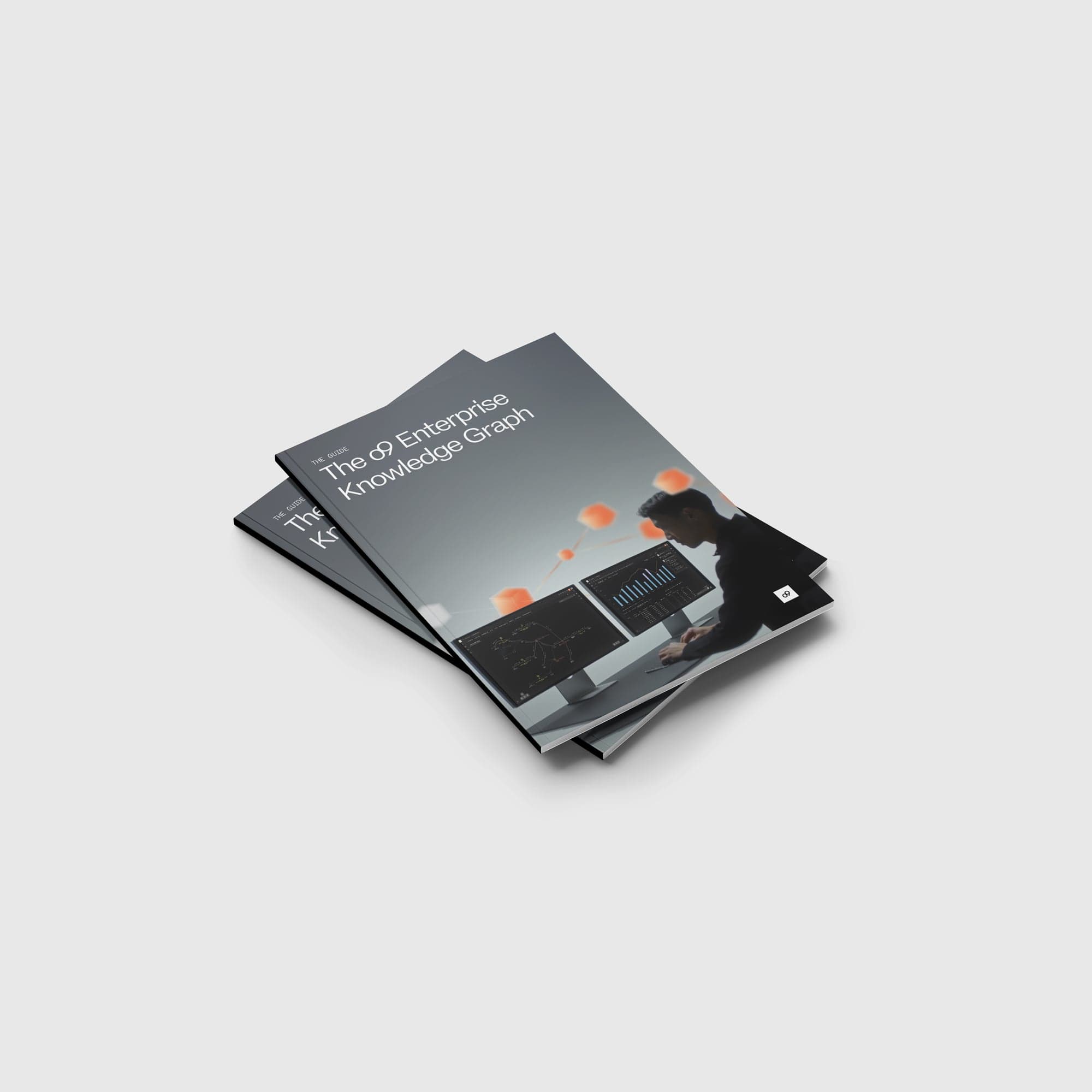
A Guide to the o9 Enterprise Knowledge Graph
“Digital technologies make amazing things possible. We are driving innovations that will transform the art and science of management for decades to come, and that is exciting.”
Chakri Gottemukkala
Executive Chairman, CEO & Cofounder

About the authors
Ashwin Rao
EVP of AI at o9 & Adjunct Professor at Stanford
Ashwin Rao is EVP-AI at o9 Solutions with the responsibility for o9's AI Strategy & Architecture as well as leading o9's R&D team. Ashwin is also an Adjunct Professor in Applied Mathematics at Stanford University, focusing his research and teaching in the field of Reinforcement Learning (RL), and has written a book on RL with applications in Finance, Supply-Chain and Dynamic Pricing. Previously, Ashwin was the Chief AI Officer at QXO, VP of AI at Target Corporation, Managing Director of Market Modeling at Morgan Stanley, and VP of Quant Trading Strategies at Goldman Sachs. Ashwin has a Ph.D. in Theoretical Computer Science from University of Southern California and a B.Tech in Computer Science from IIT-Bombay. Ashwin resides in Palo Alto, CA.