5 read min
Insights from the o9 Performance Gap Analysis (PGA) Agent Demo at aim10x Digital 2026.
Every enterprise has dashboards. Executives review them every week. Planners rely on them every day. Analysts spend countless hours building them. Dashboards are excellent at telling organizations what happened. They can highlight missed service levels, excess inventory, forecast inaccuracies, production variances, and dozens of other performance metrics.
Yet despite the investment organizations have made in analytics, one critical challenge remains. Understanding why those outcomes occurred often requires weeks or months of investigation across multiple functions, systems, and teams.
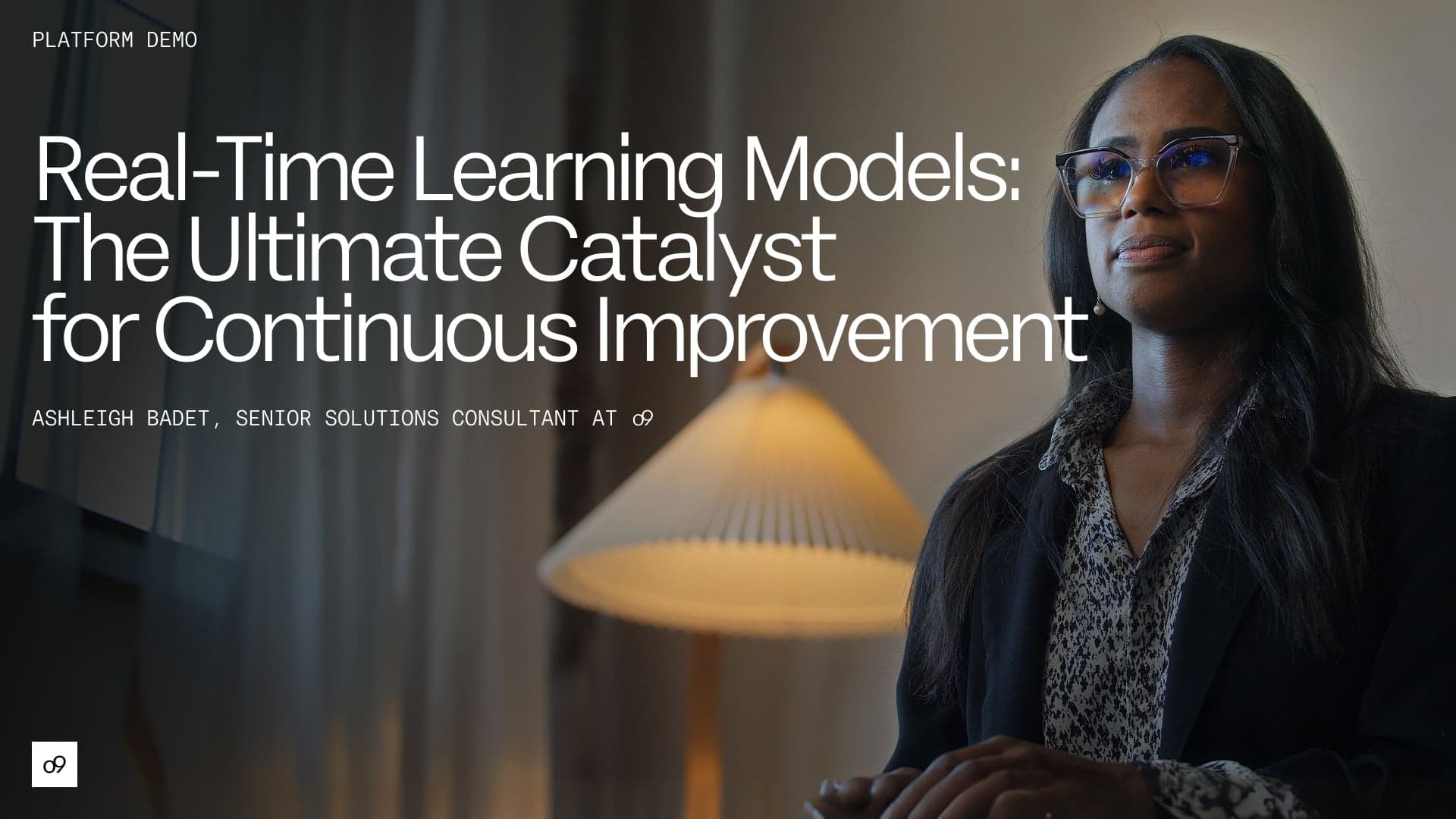
As Ashley Badet of o9 explained during the Performance Gap Analysis (PGA) Agent demonstration:
"Dashboards are great. They can tell us exactly what has happened and they can visualize what has happened as well. But oftentimes we miss the why. And even on top of that, we miss how do we resolve it so it doesn't occur again."
That challenge sits at the heart of enterprise planning today.
What the entire demo below.
From Reporting Problems to Understanding Them
For decades, organizations have relied on reports and dashboards to monitor performance. When inventory levels rise unexpectedly or forecast accuracy declines, teams can quickly identify that something has gone wrong. What happens next is often far less efficient.
Planners pull data from multiple systems. Analysts compare actuals against plans. Teams from demand planning, supply planning, manufacturing, sales, and operations come together to investigate potential causes. Meetings are scheduled. Additional reports are generated. New questions emerge. The process can take weeks before organizations reach a confident conclusion.
According to the demo, tracing a performance issue back to its root cause can sometimes require months of investigation involving multiple departments. The PGA Agent introduces a fundamentally different approach.
Rather than simply reporting performance outcomes, the agent automatically investigates the drivers behind those outcomes, identifies likely root causes, and recommends corrective actions. The result is a shift from descriptive analytics to intelligent analysis.
Turning Data Into Explanations
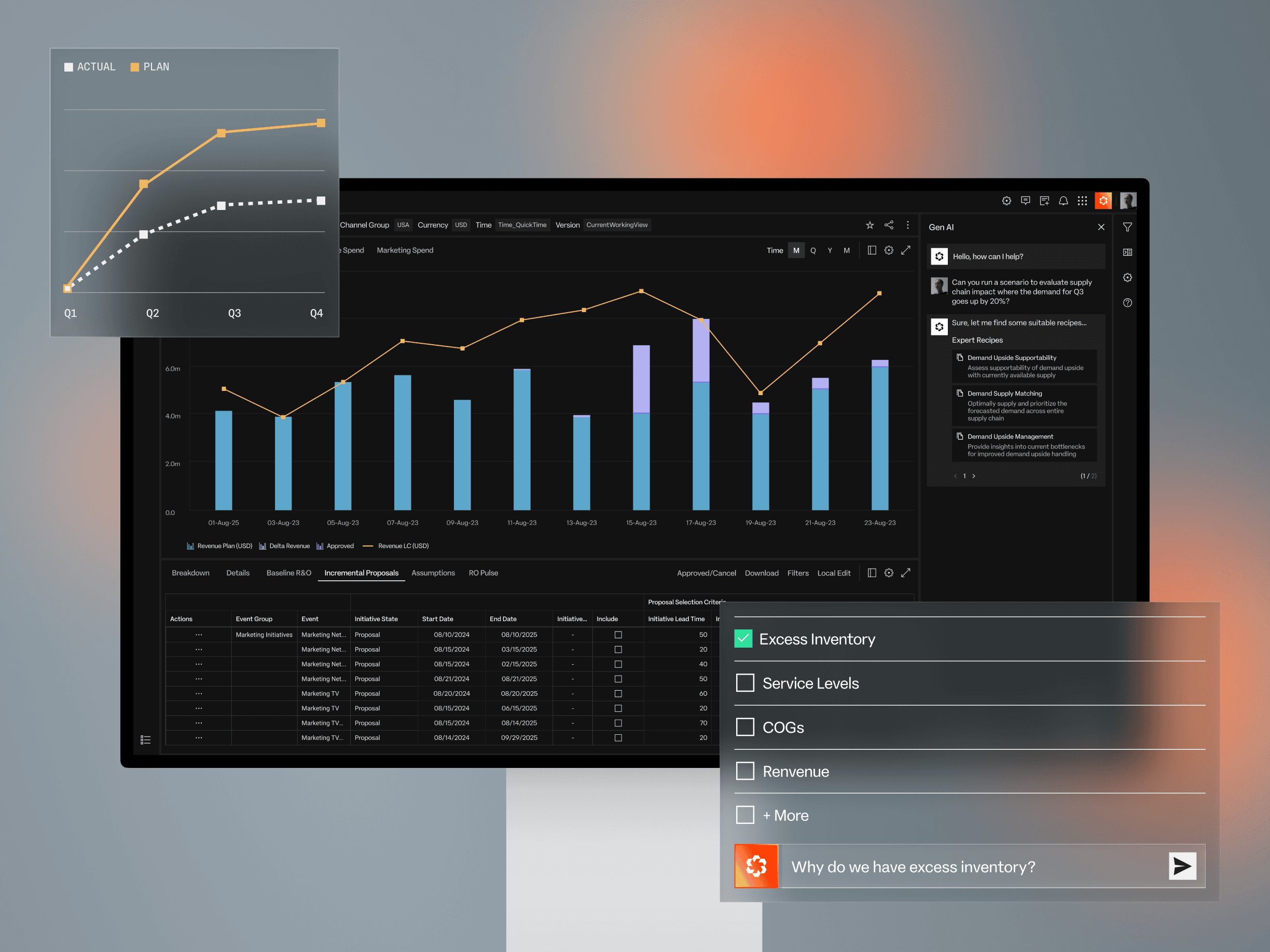
The demonstration began with a common business problem: excess inventory. Traditionally, an analyst might identify excess inventory through a dashboard and then begin a lengthy investigation to determine why it occurred. The PGA Agent approached the problem differently.
Starting from a post-game analysis summary, the agent automatically identified the primary contributors to excess inventory and surfaced the two largest drivers: poor forecast accuracy and overproduction.
“This PGA Agent is able to understand the primary contributors of excess inventory that in a matter of seconds versus hours and hours of analysis.”
Ashleigh Badet
Senior Solutions Consultant, o9 Solutions
From there, the agent guided the user through progressively deeper levels of analysis. Rather than forcing the planner to manually navigate reports and datasets, the system generated a root-cause distribution, identified recurring problem SKUs, and highlighted the specific factors contributing to performance gaps.
As the demonstration showed, what might traditionally require hours of analysis can be completed in minutes:
"This agent is able to do that in a matter of seconds versus hours and hours of analysis," Badet explained.
Moving Beyond Root Cause Identification
Perhaps the most compelling aspect of the demonstration was that the agent did not stop at diagnosis.
Many analytics tools identify problems. Few help solve them.
The PGA Agent moved directly from explanation to recommendation.
In one example, the system identified that repeated manual overrides were degrading forecast accuracy. Analysis revealed that the system-generated forecast consistently outperformed the consensus forecast, suggesting that human intervention was introducing unnecessary variability into the planning process.
The agent then recommended specific actions, including moving the SKU to touchless forecasting, requiring managerial approval for future overrides, and introducing additional forecast performance metrics into the planning process.
These recommendations were not presented as static insights. The user could act on them immediately:
"Now directly from the agent I can act on these insights," Badet noted during the demonstration. The platform provided direct navigation into the relevant workflow, allowing planners to implement changes without leaving the analytical context. This is an important evolution in enterprise software. Insights become actions. Analysis becomes execution.
Creating a Learning Enterprise
The broader vision behind Performance Gap Analysis extends beyond individual planning cycles. At its core, the PGA Agent functions as a learning mechanism for the enterprise.
"The learning agent will show us how to continuously learn from our plans, where we've missed, and how to improve in the future," Badet explained.
This represents a shift away from static planning processes toward continuous improvement. Every missed forecast, every excess inventory event, every production variance becomes an opportunity to learn. The system captures outcomes, identifies recurring patterns, documents root causes, and recommends actions that can improve future performance.
Over time, organizations build institutional intelligence rather than simply accumulating historical data. The objective is not only to understand what happened in the last cycle, but to improve the next one.
The Future of Planning Is Closed-Loop Intelligence
One of the most powerful moments in the demonstration came when the system recommended moving a problematic SKU to touchless forecasting and provided a direct link to implement the change.
The planner investigated the issue, identified the root cause, received a recommendation, implemented the change, and closed the loop within a single workflow. That capability points to a broader transformation across enterprise planning.
Historically, planning systems have helped organizations monitor performance. Increasingly, they will help organizations learn from performance, improve decisions, and automate corrective actions.
The future is faster reporting. And a world where AI-powered agents continuously analyze outcomes, identify patterns, recommend improvements, and help organizations become smarter with every planning cycle. Performance Gap Analysis represents an important step toward that future. Because in the end, understanding what happened is useful.
Understanding why it happened and knowing exactly what to do next is where real value is created.

About the authors

The Editorial Team, o9
A multidisciplinary collective of editors, strategists, technologists, and former executives with experience across Fortune 500 companies and top consulting firms. Grounded in o9’s mission to help enterprises make faster, better decisions through the power of AI-driven planning and execution software, the team shares clear, practical insights on digital transformation, supply chain, and enterprise planning to support business leaders in navigating complexity and driving change.