4 read min
At Gartner Supply Chain Symposium/Xpo 2026 in Orlando, Acuity skipped the slideware and ran a live demo of agentic AI working on top of its planning platform. The session was delivered jointly by Michiel Kruger, Director of Product Management for AYI Tech, Enterprise Planning & Analytics, and Amit Shah, Product Manager for Supply Chain Planning.
The two walked the audience through a working system—not a mockup or a roadmap—using disguised production data to show how the company is moving from AI ambition to scaled execution.
Michiel opened by recognizing o9 as a partner in the work: “I want to do a brief shout-out to o9 Solutions. They have been a great partner to us. They have helped us with this project as well, so we truly value the partnership.”
A foundation built for intelligence
Acuity is a market-leading industrial technology company that uses technology to solve problems in spaces, light, and beyond. That same problem-solving orientation now extends to its planning function.
Amit framed the strategy succinctly. Rather than replacing the planning platform, Acuity is building intelligence on top of it. “What Michiel has just been talking about,” he said, “is how we take all of the data that's coming out of o9 and actually turn it into actions.” The targeted outcomes are clear and measurable: lower inventory and improved forecast accuracy.
Intelligence in action
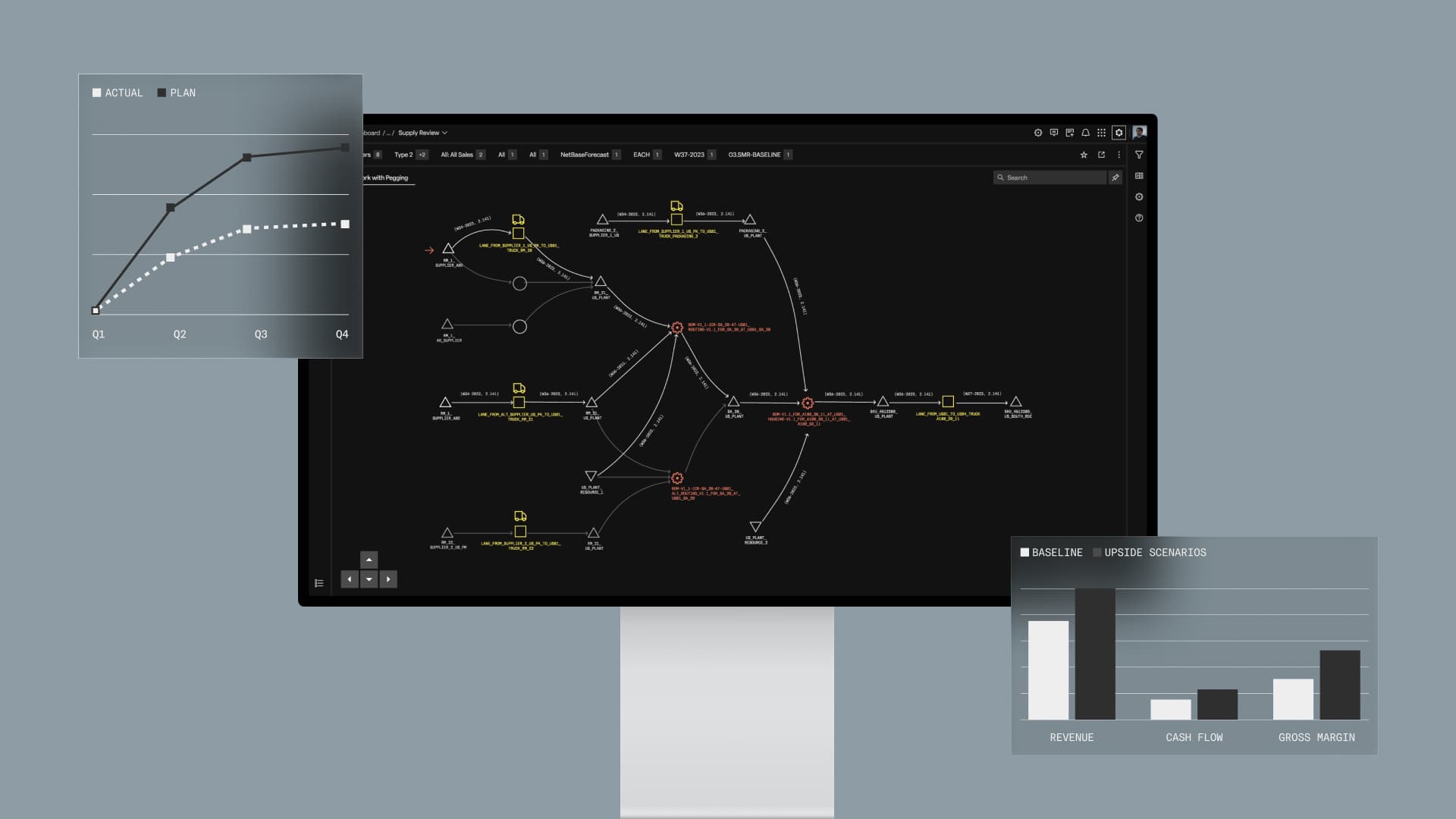
The demo opened with a familiar problem: too much inventory and not enough clarity on why. Acuity already had demand planning, supply planning, and a financialized version of that plan in place—meaning the system understood not just what was on hand today, but also the assumptions made when long-lead-time orders were placed months or even a year earlier.
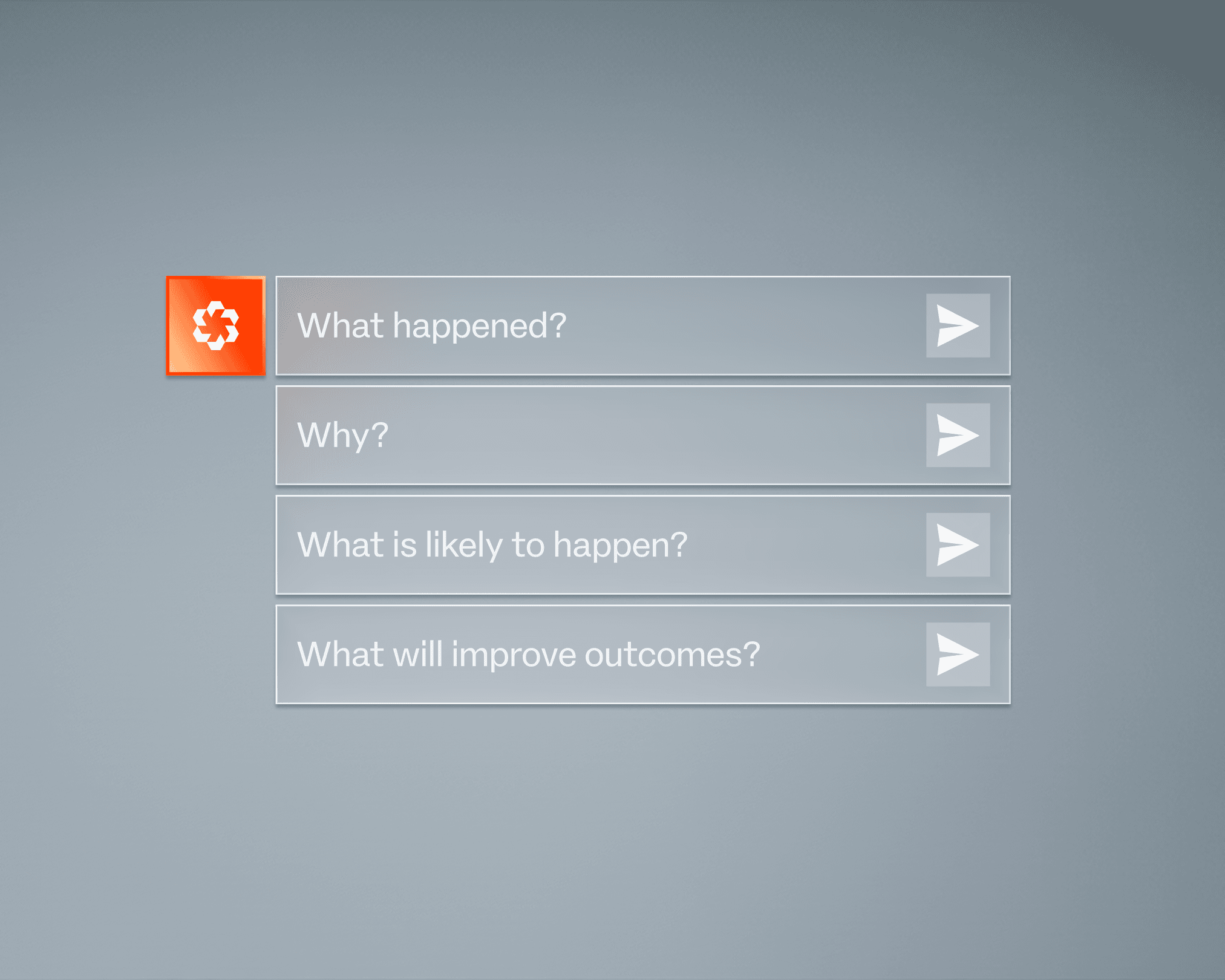
The agentic system works in three phases, all accessible through natural-language conversation:
1. Find it
Amit typed a single prompt—show me where persistent bias exists—and within roughly a minute, the system returned a layered diagnosis: visuals, a supporting table, and commentary distinguishing persistent bias from mixed bias across product groups.
2. Explain it
Drilling into a flagged group, the system narrowed the issue to roughly twenty SKUs, then traced the root cause—whether statistical model parameters were off, demand had spiked, orders were canceled, or manual plan enrichments introduced the error. As Amit put it: “a hundred and fifty thousand different products… you can imagine how difficult it would be for an actual demand planner to go through and figure all this out.”
3. Act on it
With the diagnosis clear, Amit asked what to do. The system recommended specific POs to cancel and identified inventory at one site that could be redeployed to another—avoiding a new purchase entirely.
By the end, what would have been hours of pivot-table archaeology had been compressed into a guided conversation.
Lessons from the pilot
Michiel was candid about what the team has learned, distilling the experience into two principles other supply chain leaders can apply:
- Build on a strong foundation. AI amplifies the planning process beneath it; it does not repair a weak one. “You very much need a strong planning foundation put in place,” Michiel said, “before you try to start layering on different AI technologies.” Acuity’s prior investment across statistical forecasting, procurement planning, and manufacturing planning is what made the agentic layer viable.
- Choose use cases that scale. The team deliberately resisted the pull of AI for its own sake. “We need to be really focused on the use cases that we're trying to get to,” Michiel explained. “What is scalable? What is doable in a pilot? What is actually scalable in a broader sense? Focus on that, as opposed to just coming in and saying we want to use AI for the sake of using AI.”
Where the value compounds
For supply chain leaders evaluating where AI delivers measurable return, Acuity’s pilot experience highlights two core areas:
- Inventory: Identifying overstock and acting on it by canceling unnecessary POs and redeploying stock between sites
- Forecast accuracy: Detecting persistent bias at the SKU level and tracing whether the baseline or manual overrides caused the miss
A partnership built on proven outcomes
What gave the session its credibility was its balance of ambition and honesty. The capabilities Acuity demonstrated in this pilot are real and operating at the scale tested. The team’s disciplined approach to use-case selection, combined with a strong planning foundation and close collaboration with o9, validates the potential of agentic AI in supply chain planning.

About the authors

Jarod Polburn
SVP, North America
Jarod Polburn is Senior Vice President for North America at o9 Solutions, where he leads go-to-market strategy and revenue growth across the region. With over 20 years of experience in enterprise sales, consulting, and procurement, Jarod has a strong track record of helping organizations drive digital transformation across supply chain and operations. Prior to o9, he held sales leadership roles at GEP Worldwide and SAP, following earlier consulting positions at Alvarez & Marsal and Accenture. He began his career in sourcing and procurement at Henkel, giving him a deep, end-to-end understanding of the challenges his customers face.