5 read min
This article was originally published on Forbes Technology Council.
As Intel grew from a start-up to a global leader in semiconductors, the organization's leaders struggled to align thousands of engineers and managers around a core set of critical priorities.
CEO and President Andy Grove's solution was to develop the objective and key results (OKR) approach that gave Intel's leaders a simple process to translate business strategies into measurable outcomes that aligned employees' output across the organization.
While it took decades for OKRs to become commonplace across technology companies, most leaders today understand the need for a structured process like OKRs.
Companies are now facing a similar inflection point. Today's business leaders aren't just aligning people toward specific initiatives—they are also aligning AI agents to achieve these initiatives.
As AI agents enter planning and operations processes, they are tasked with forecasting demand, rebalancing inventory, simulating scenarios and recommending tradeoffs in real time and executing actions within defined parameters.
As AI agents reshape operational processes, the management approach required to align goals and outcomes is not OKRs, but intent engineering.
Why OKRs Are No Longer Enough
The use of OKRs spread gradually over decades because enterprises scaled their workforce gradually by adding people over a span of years.
Leaders had time to adapt to using OKRs as an effective way to manage and align employees' activities to larger business goals. Additionally, OKRs were flexible enough to be applied to any work environment because employees and managers could mutually understand the intent of objectives, realize potential tradeoffs and adapt to ambiguity when required.
As agentic AI capabilities become more commonplace, goal-setting methodologies will need to be adjusted because AI agents are unable to interpret intent in the same way that humans can.
Agents optimize what information is specified. If the wrong metric is defined, the agent will likely optimize the wrong outcome. If managers or employees fail to set guardrails, an agent has the potential to make errors at scale. This is because once agentic infrastructure is built, businesses will begin adding 50 agents—then 500—that operate continuously.
Misaligned automation can amplify risk. For example, a pricing agent that optimizes margin without an awareness of inventory constraints could create stockouts. When agents' actions impact the results of interconnected decisions, the alignment of initiatives becomes a systems problem.
The Role Of Intent Engineering
Intent engineering processes can help resolve these issues.
The concept of intent engineering began gaining traction in 2025 and early 2026 as an evolution of prompt engineering towards a more formal, structured approach. It can be defined as the discipline of translating enterprise strategy into network-wide decision logic that AI agents can interpret.
If OKRs provide the answer to what outcomes we want to achieve, intent engineering provides the answer to how agents should behave to help employees achieve outcomes.
Effective intent engineering involves:
- Defining specific business objectives at decision-level granularity.
- Encoding the potential tradeoffs between cost, margin, service and risk.
- Establishing thresholds to escalate issues and rules for human overrides.
- Synchronizing interconnected agent workflows.
- Auditing outcomes through post-decision analytics.
Through these factors, employees who are responsible for overseeing AI agents can define how they interact with each other across multiple functions (inventory, forecasting, replenishment, allocation, pricing, etc.), determine what variance bands are considered acceptable and monitor for drift.
However, the difference in managing AI agents versus a team of human employees is that feedback loops are tighter, the impact radius of decisions is wider and the speed at which actions compound is faster. Business leaders don't have 20 years to standardize intent engineering across their business; they have five years at most.
Refining Decision-Making
Intent engineering gets to the core of which factors matter most when making decisions across each function within an enterprise.
Demand planning intent could balance statistical accuracy with commercial overrides and promotional intent. For network design, intent could consider how to optimize for landed cost, resilience, carbon footprint or a weighted combination of these factors. In revenue management, intent could consider how an agent should respond when demand signals change faster than a product's supply can adjust.
In each example, supply chain leaders shift from supervising analysts to supervising a set of decision systems, and their role shifts from reviewing outputs to defining decision thresholds and enterprise priorities at the most granular levels.The companies that can align human assessment with machine execution on a shared intent may be able to gain a competitive edge in out-deciding their competitors, as I've written about previously.
Building The Foundation for Intent Engineering
Creating an effective and efficient intent engineering process requires three structural shifts.
The first shift is focusing on developing a unified decision architecture because fragmented systems can cause misaligned intent. For agents to align their task execution to proper intent, they must operate on shared data models and consistent definitions of objectives.
The second shift is developing an explicit tradeoff codification that agents adhere to because many organizations rely on implicit norms that employees understand, but agents don't. For example, employees understand when to favor service over cost, but agents require explicit rules, weighting and escalation paths to achieve similar results.
The third shift is working toward an institutionalized post-game analysis. This allows business leaders and teams to review major decisions and determine how agents executed tasks, why they did so and if the outcomes aligned with strategic intent.
From there, the intent engineering logic is refined continuously.
It's also important to understand that these shifts are not an IT initiative but a management operating model that needs stewardship from a company's leaders.
Andy Grove's OKR approach helped create company-wide alignment for a generation of enterprises.
But today's leaders face a broader alignment challenge: aligning people and agents to strategy, and aligning agents to each other. Intent engineering is the process that can foster a decision-making system across organizations.
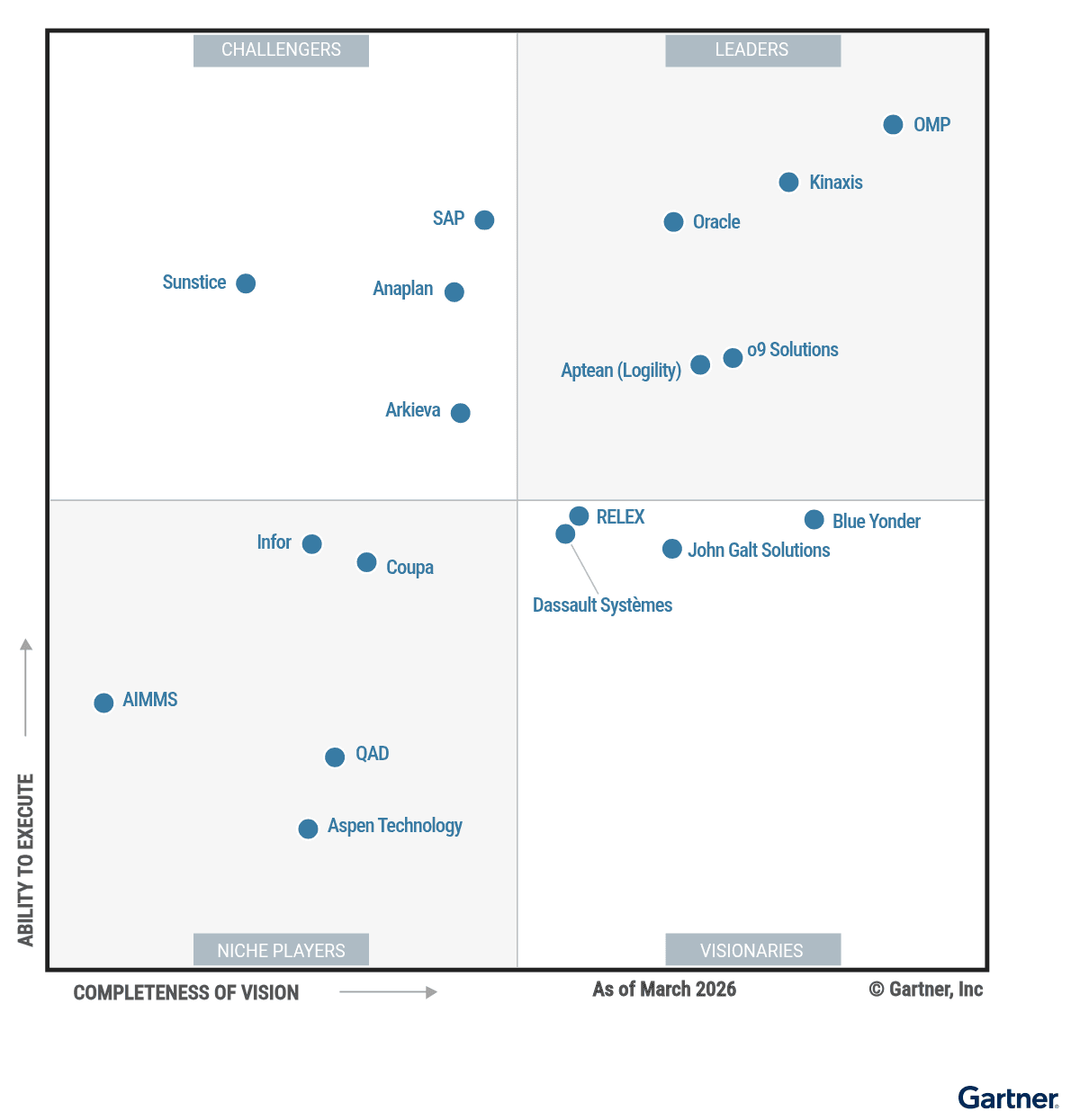
o9 Solutions Named a Leader in 2026 Gartner® Magic Quadrant™ Reports
o9 Solutions Named a Leader in 2026 Gartner® Magic Quadrant™ Reports
About the authors

Igor Rikalo
President & COO at o9 Solutions
Igor Rikalo is the President and Chief Operations Officer of o9 Solutions. He oversees the global operations of the organization and plays an integral role in ensuring the business continues to scale at a global level. At o9, he has developed a successful track record of building high-performing teams, managing global strategic initiatives, and delivering strong business results.