5 read min
With more than 150 years of operations, Kraft Heinz runs one of the most complex supply chains in the food and beverage industry, managing over 5,000 SKUs across more than 30 factories and 100 distribution points in North America alone. In 2024, the company reported $26 billion in net sales, driven by a broad and diverse product portfolio.
But complexity came with challenges. Service risks, lack of visibility, and planning inefficiencies were becoming increasingly difficult to manage with traditional tools and structures.
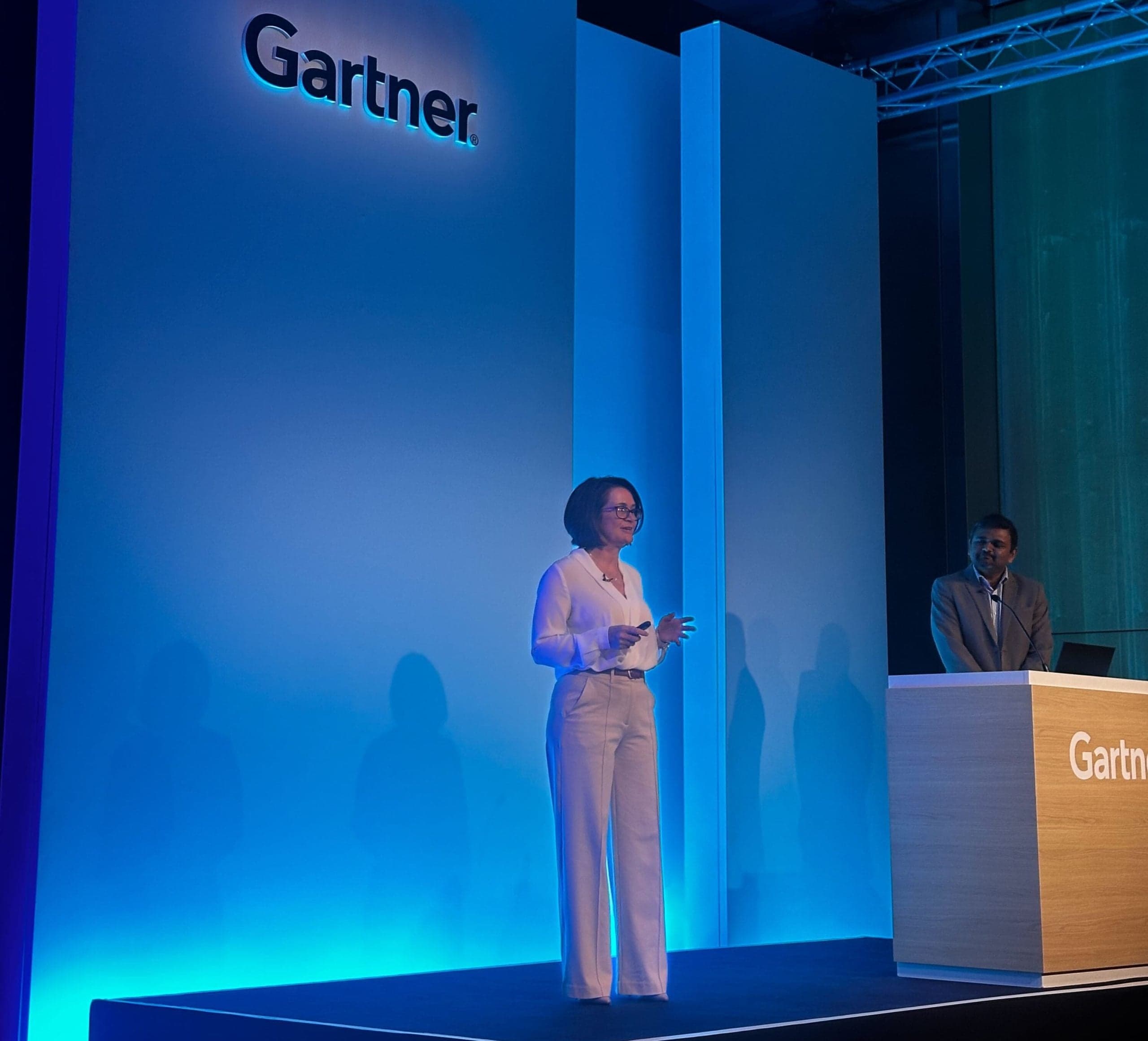
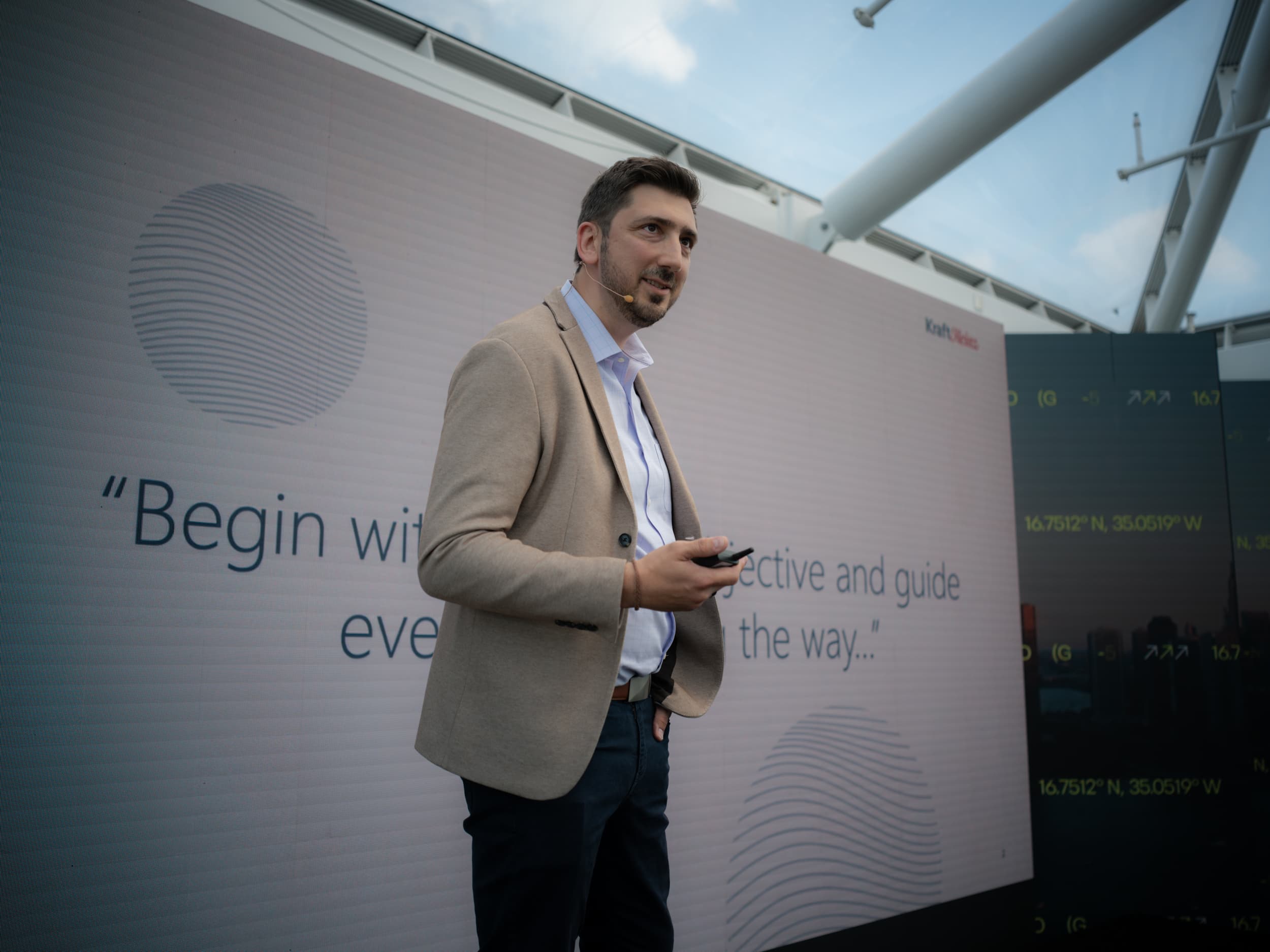
At the Gartner Supply Chain Symposium in Orlando, Adis Sulejmanovic, Head of Digital Supply Chain Transformation and Strategy at Kraft Heinz, shared the company’s multi-year journey to shift from a "reactive to a proactive supply chain"—one that addresses "not just physical waste, but waste in processes, while enabling planners to make better, faster decisions."
To achieve this, Kraft Heinz set out to build what it calls a "self-driving supply chain" by leveraging advanced analytics, machine learning, and automation to enable more intelligent and responsive planning. “Our vision is to build a self-driving supply chain through a connected ecosystem that’s accelerated through digital capabilities,” Adis explained. “We’re connecting the dots from farm to table, using the right tools to support smarter, faster decisions.”
Kraft Heinz's Transformation Timeline
The company’s transformation began in 2019 and followed four structured phases:
1. Proof of Concept (2019–2020): Kraft Heinz tested o9 Solutions’ platform to assess its machine learning capabilities. The entire implementation was conducted remotely during the pandemic. “It was a friction point,” Adis said. “We needed to know: is the solution scalable? Is it usable? Can we implement this remotely? The answer was yes.”
2. Centralization and Capability Building (2021–2022): Kraft Heinz restructured its demand planning operations in North America. “We moved from a decentralized organization to a centralized demand planning structure,” Adis explained. This involved launching a Center of Excellence and setting up agile pods—cross-functional teams responsible for solving forecasting challenges. “The friction point here was adoption. We had to ensure planners were using the tools and not falling back to Excel.”
3. Human-in-the-Loop Optimization (2022–2024): At this stage, the company integrated planners’ expertise into the machine learning lifecycle. “We call this translating tribal knowledge into machine learning,” said Adis. “That helped us improve accuracy and introduce early forms of autonomous planning.”
4. Autonomous Forecasting and Continuous Improvement (2024–2025): By early 2025, Kraft Heinz had reached 48.2% autonomous forecast adoption. “We were virtually non-autonomous in 2022—hands on the wheel the whole time,” Adis said. “But today, nearly half of the forecasts are fully trusted by the business and move straight through the IBP financial call.” The current focus is on improving long-range forecasting and adapting models to changing business needs.
The Quantitative and Qualitative Impact
- +48.2% autonomous planning adoption (2022 → Mar 2025)
- +10.4% improvement in weekly forecast accuracy at SKU-location-customer level. “That’s critical for service execution—getting the right product to the right place, at the right time,” Adis noted.
- +11% improvement in production forecast accuracy two months out, supporting labor and production scheduling.
- +7% increase in Case Fill Rate (CFR)
- ~30% time savings for planners
- $50MM+ working capital released
- 45% reduction in waste (NPD, bias, C-SKU)
- NPS score: 56
The transformation also had a positive impact on the day-to-day experience of planners. “We measure Net Promoter Scores across our agile pods,” he explained. “What we’ve seen is that planners are more confident in the tools, their routines are simpler, and their decision-making is better.”
A Key Transformation Enabler: Agile at Scale
A key enabler of the transformation was a shift from traditional project management to agile at scale. “We moved from projects to products,” Adis said. “That means we’re continuously improving, not just launching one-off initiatives.”
Agile pods include representatives from demand planning, finance, data science, and commercial teams. These groups operate in two-week sprints with daily stand-ups, quarterly reviews, and structured routines. “It’s all designed to remove barriers,” he said. “If something’s not adding value, we pivot fast.”
Kraft Heinz's Three Transformation Pillars
1. People: “Transformation starts with people,” Adis emphasized. Kraft Heinz invested in structured training, skills assessments, and embedded subject matter experts across agile pods, planning teams, and the COE. “Even routine tasks like history cleansing or new product introduction planning look very different now than they did three years ago,” he noted.
2. Process: Processes were standardized and KPIs evolved to support model adoption. “We’re moving away from just measuring forecast value-add. We want our planners focused on model adoption—making sure inputs are right, routines are embedded, and outputs are trusted,” Adis said.
3. Technology: A “tournamenting” model was introduced, where various forecasting models compete to deliver the most accurate results. “We had to build a new process for this,” he explained. “It was new for planners, but it helps us respond faster to changing business conditions.”
Looking Ahead
Looking ahead, Kraft Heinz is focused on several areas of continued development:
- Process discipline: “We’ll continue to be ruthless about getting the basics right,” Adis said.
- Customer collaboration: The company is working to better integrate first-party retail data into its forecasts.
- Decision intelligence: “We’re thinking about how to simplify complex problem-solving using embedded intelligence and better alerts.”
- Consumer-centric planning and GenAI use cases: “We’re also exploring how generative AI can streamline planning workflows and support decision-making.”

About the authors

o9
The Digital Brain Platform
o9 Solutions is a leading Enterprise Knowledge and AI-powered platform helping companies build Agile, Adaptive & Autonomous Planning & Execution Models for transforming enterprise decision-making in environments of rising volatility and uncertainty. Whether it is improving forecast accuracy, matching demand and supply and driving collaboration across the multi-tier supply chain to improve resilience at optimal costs and inventory, or optimizing new product and commercial initiatives to drive revenue growth and margins, decision-making processes from long-range to tactical to execution horizon can be made faster and smarter and connected on o9’s Digital Brain Platform.
o9 brings together game-changing technology innovations — such as innovative enterprise knowledge graph modeling, big data analytics, advanced algorithms for forecasting, demand/supply balancing, scenario planning, real time learning, collaboration, generative and agentic AI, easy-to-use interfaces and cloud-based delivery, and innovative management methods — as well as organization, process and change management best practices to transform decision-making speed and intelligence.