4 read min
Global manufacturers have weathered a series of shocks in the past few years: pandemic-driven shutdowns, shipping bottlenecks, raw material shortages, and a sharp rise in geopolitical risk. Thanks to a wave of reshoring efforts and supply chain recalibration, though, multiple sectors saw much-needed output rebound. Now, just as manufacturers find their footing, the rules are shifting once again.
On April 2, 2025, the U.S. administration announced a new wave of tariffs, referred to as ‘Liberation Day’ tariffs, which include reciprocal and baseline tariffs targeting countries that place tariffs on U.S. goods. A 10% baseline tariff took effect on April 5, followed by reciprocal tariffs impacting a long list of countries starting on April 9. Additionally, a 25% tariff on all car imports was imposed. Notably, Canada and Mexico were excluded from new tariffs in this announcement.
Trade Policy Uncertainty is Now a Strategic Risk
The reintroduction of high tariffs across key trade corridors has already forced companies to rethink global sourcing strategies. Materials that were once cost-effective to import now carry premiums that erode competitiveness. Worse still, policies change fast. Tariffs imposed for political or security reasons can vanish—or escalate—within a single election cycle. This makes long-term investment planning in any one geography highly speculative.
For example, a manufacturer sourcing critical components from Asia may discover that switching suppliers within the same region has little effect on its tariff exposure. Even nearshoring strategies (like shifting operations to Mexico or Eastern Europe) come with complications—be it compliance with origin rules, labor standards, or mounting geopolitical risks at borders.
Across the board, businesses face the same core question: How do you build a cost-effective and agile supply network while preparing for sudden shifts in trade dynamics?
This is where digital transformation plays a key role. A single source of truth powered by platforms like o9 helps with rapidly diagnosing and responding to tariff and policy changes with clarity. So, instead of reacting blindly, companies can model the downstream implications of trade shifts (on cost, service, and operational risk) more confidently.
The True Cost of Tariffs
Tariffs represent more than import fees. They introduce downstream effects across the value chain. Rigid contracts, supplier requalification, retooling, and regulatory compliance delays all create friction. And the financial impact extends well beyond duties into logistics, lead times, inventory buffers, and working capital.
For many companies, the instinctive response is to absorb short-term costs to avoid disruption. But over time, these expenses compound. When tariff-induced pressures stack up against a backdrop of rising wages, material shortages, and climate-related disruptions, the result is a fragile and expensive supply chain that cannot scale.
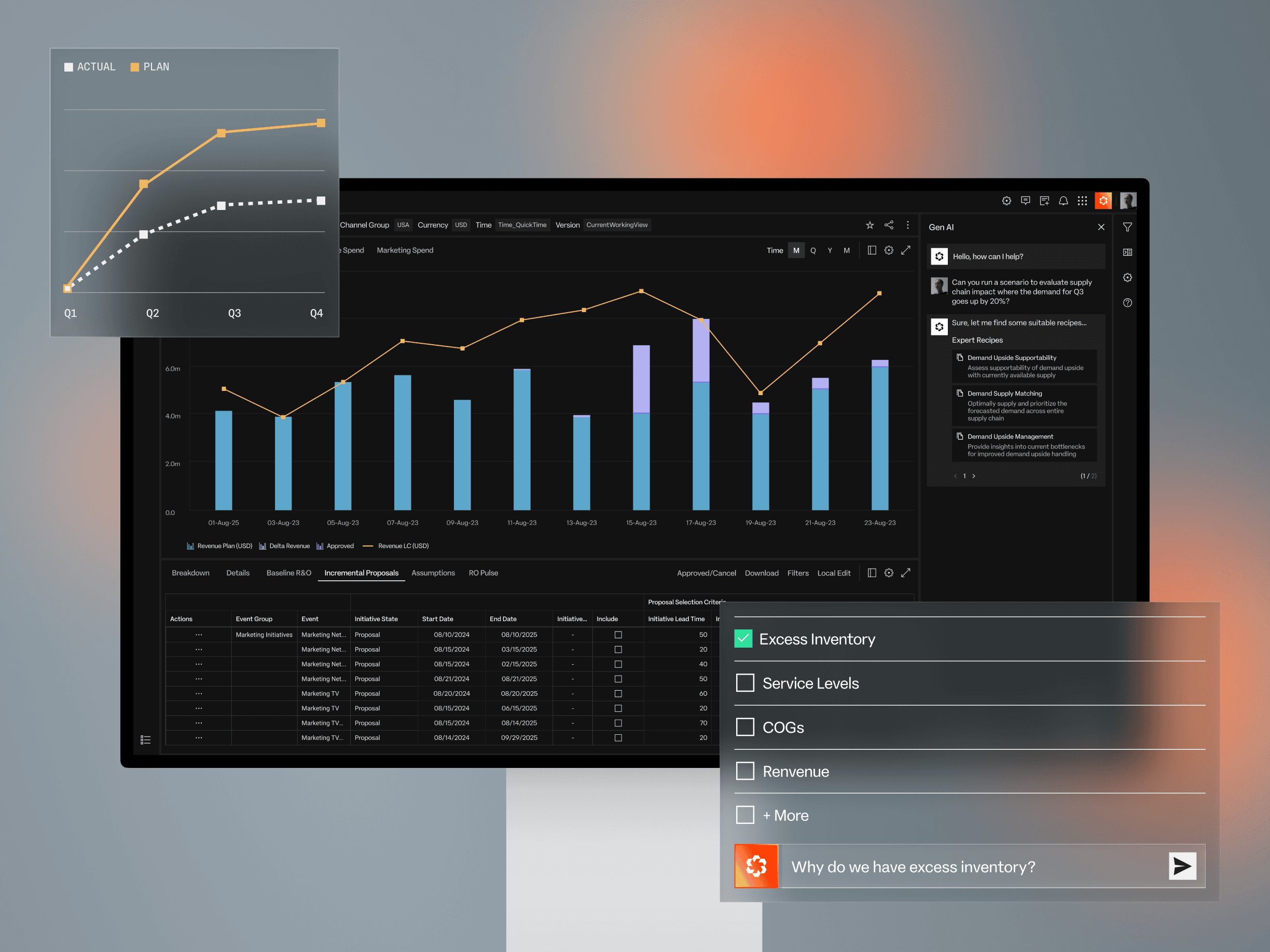
o9’s Enterprise Knowledge Graph is built to address this complexity. It supports rapid what-if scenario modeling, enabling planners to simulate tariff impacts in minutes (not weeks) and test mitigation levers, including pricing changes, inventory pre-builds, alternate sourcing, and mapped multi-tier risk exposure. Instead of making siloed decisions, companies can evaluate interconnected trade-offs across procurement, finance, and supply in real time.
Short-, Mid-, and Long-Term Planning Horizons Must Be Integrated
Tariff-driven disruption doesn’t only affect today’s orders, it has knock-on effects across the entire planning horizon.
- Short-term (0–3 months): Supplier shifts and order reallocations can offer some flexibility, but tooling, contract terms, and capacity availability constrain options.
- Mid-term (3–12 months): Sourcing diversification and renegotiation of terms become more feasible. These actions require coordination between procurement, logistics, and finance to ensure cost-effectiveness and compliance.
- Long-term (1+ years): Major bets, like building regional hubs or relocating production, carry significant capital outlay and risk becoming obsolete if tariffs are reversed. Yet, they may also serve as critical hedges against persistent protectionism.
Why Manufacturers Need Decision-Centric Digital Capabilities
The pace of trade policy changes requires more than what spreadsheets and legacy ERP systems can offer. Manufacturers need digital platforms that support agile, data-driven decision-making.
Platforms like o9’s Digital Brain offer a blueprint for this kind of transformation:
- Integrated view of the business: All the functions of the company (i.e., sales, product, supply chain, manufacturing, procurement, all the way to finance and the general management) need to be all working off the same view of the business. When tariff shocks ripple through the network, cross-functional alignment is essential to respond quickly and cohesively.
- Scenario capabilities: By incorporating tariff schedules, supplier costs, and risk exposure, o9 allows companies to run scenario comparisons across sourcing options, pricing strategies, and lead-time trade-offs—down to total landed cost and service-level impact.
- Real-time collaboration: Changes in trade policy require swift cross-functional alignment. o9 enables finance, operations, and procurement teams to evaluate trade-offs together in real time and respond faster.
- Resilience at scale: Trade shocks are just one of many disruptions—others include natural disasters, labor shortages, and regulation changes. o9 equips organizations to simulate and prepare for multiple contingencies before they unfold.
From Reaction to Resilience
Tariff risk isn’t going away. It’s a litmus test for an organization’s ability to respond to uncertainty. The most resilient manufacturers are not those who wait for clarity—they are the ones who build flexibility into their operations now, using data, intelligent systems, and integrated planning to make trade-offs transparent and decisions faster.
In a world where geopolitical risk is the new normal, efficient supply chains are no longer enough. They need to be intelligent.
By utilizing advanced platforms like o9’s Digital Brain, manufacturers can ensure not just continuity, but also competitiveness.

About the authors

Brent Hasenkamp
SVP, Manufacturing, CPG & Industrial Distribution
Brent is an accomplished supply chain executive with a track record of driving operational and commercial excellence. His experience includes leading operations and procurement transformations for a $2B+ private equity M&A deal in the aerospace and defense distribution sector. Prior to that, Brent held multiple leadership roles at Deloitte, where he led global supply chain transformation initiatives focused on delivering OPEX and CAPEX improvements. He is a certified Lean, Six Sigma Black Belt and IPMA Level D project management associate. Brent holds an MBA from the Ross School of Business and an engineering degree from Kansas State University.