Traversing Supply Chain Complexity: Adaptable Planning in an Uncertain Era

authors

Kristin Tracy
Director of Product Management for Supply Planning suite
5 read min
When supply chains become more complex, companies need to constantly assess and expand their planning capabilities to stay competitive and sustain growth in an uncertain economy.
The Pitfalls of Conventional Planning and the Promise of Unified Solutions
A "one-size-fits-all" approach to supply planning is ineffective. It fails to disrupt the status quo, hindering companies from realizing their projected return on investment. When plan results are consistently at odds with execution (often due to missing capabilities), planning teams will resort to external systems rather than utilizing an advanced technology system that was intended to make their life easier. And since they’re planning a portion of the business manually, they might as well just start planning everything in Excel again. I’ve seen this happen again and again in my previous consulting career - missing capabilities are a recipe for implementation disaster, and are often missed in sales cycles.
Take for example, when different business functions are using different systems to make planning decisions. Often integration between the systems are batched, causing decision latency. Not only can this result in missed opportunities to take responsive actions, it can often push planners outside of the system to a more collaborative tool with quick visibility to the decisions being made by their peers.
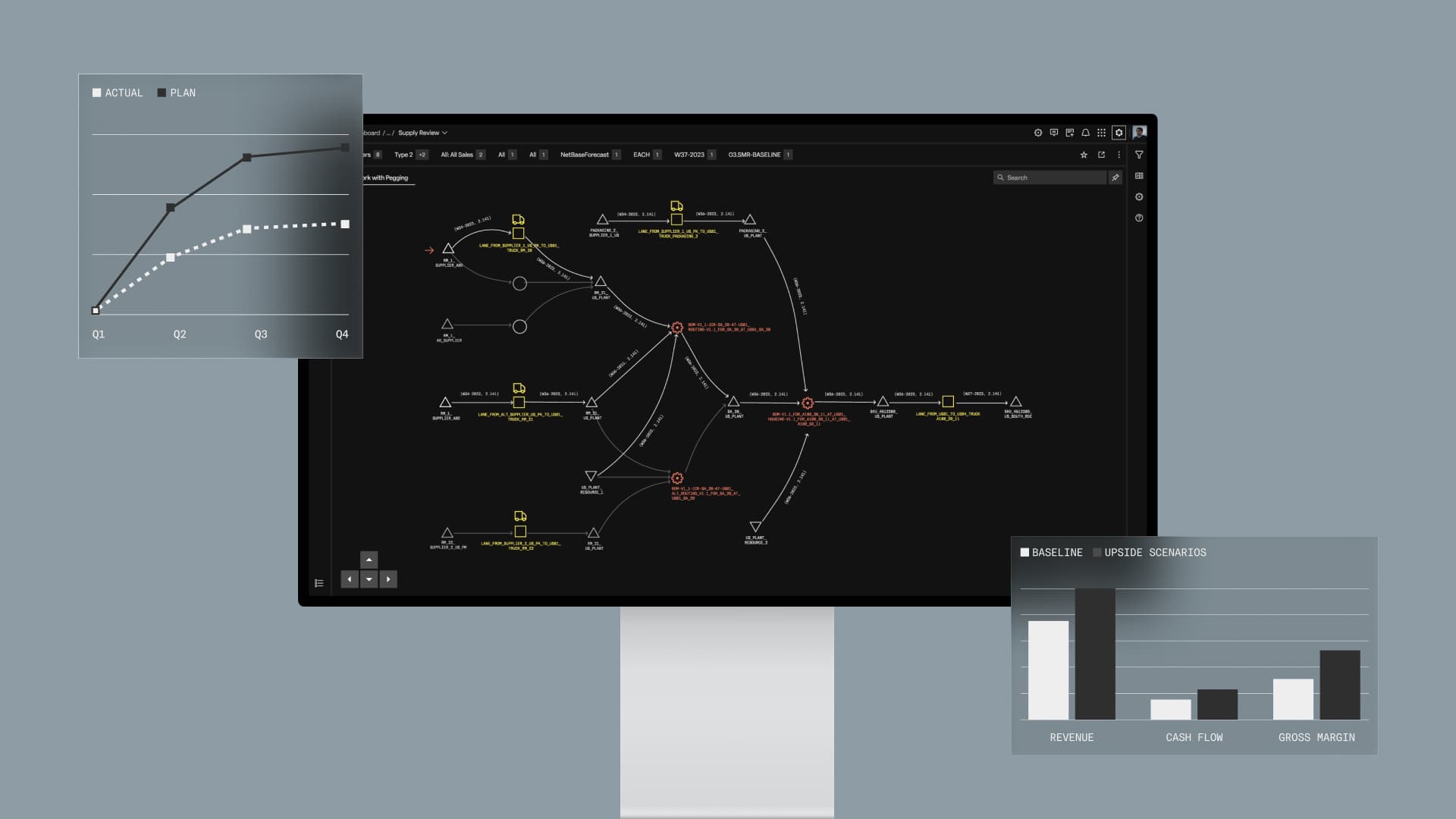
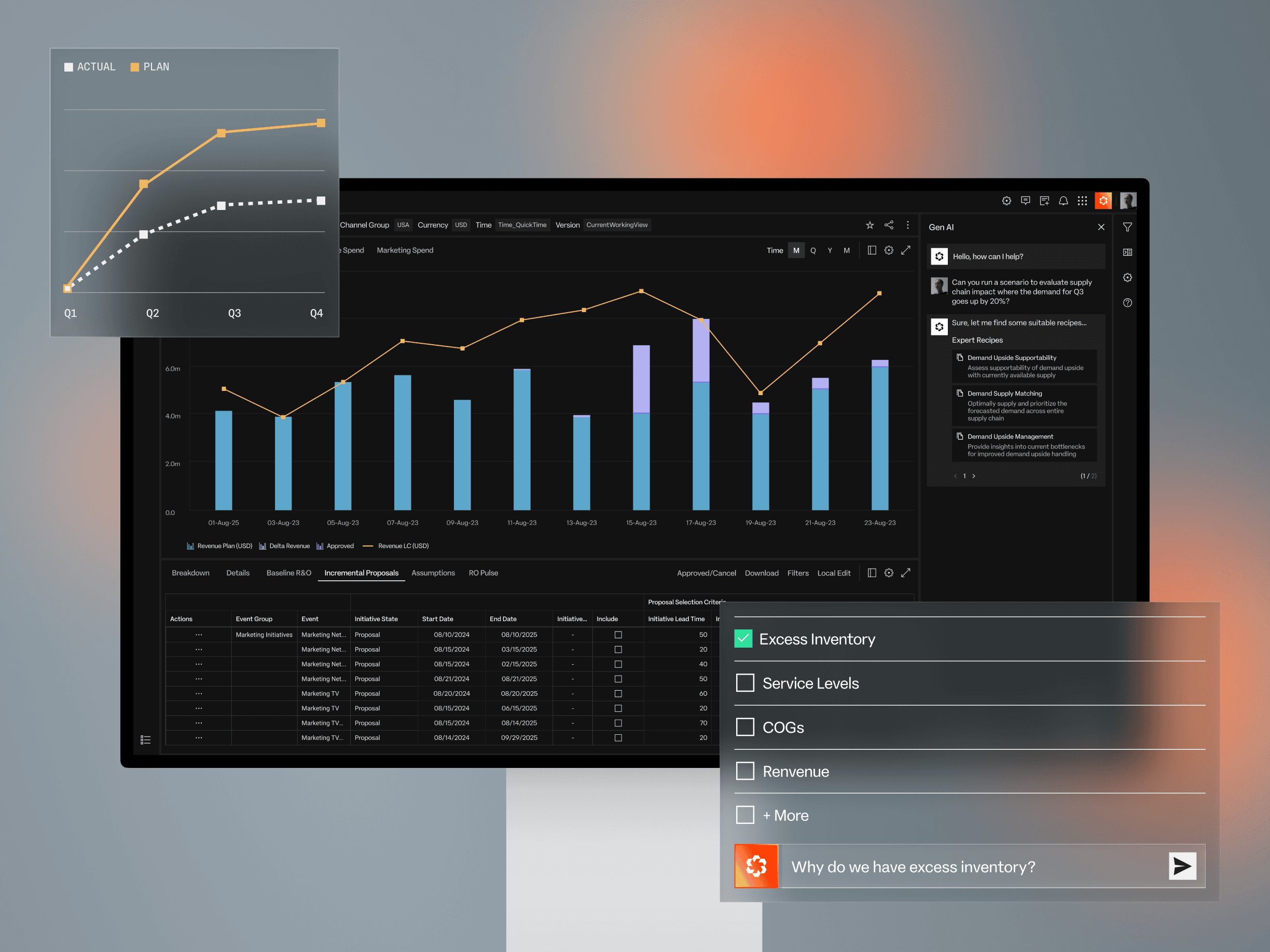
Platforms like o9 ensure that all planning activities converge and operate within a single, unified knowledge graph. This holistic approach ensures that the impact of any action or change is immediately propagated and visible across the entire organization.
This design guarantees that a decision made by a production planner is immediately transparent to distribution and material planners who rely on those plans, as well as to commercial and financial teams tracking specific initiatives. The synchronization of these decisions, driven by the unified knowledge graph, is a powerful catalyst for driving significant efficiencies across the entire enterprise, eliminating delays and fostering a culture of proactive collaboration.
The Criticality of Granular Decision Modeling and Adaptable Technology
While synchronized decisions significantly reduce latency, the challenge of optimal decision-making extends beyond just overcoming functional silos. True supply chain optimization demands that decisions are not only harmonized, but also made at the appropriate level of granularity. Modeling these decisions at their correct granularity is no small feat. For example, in the apparel and footwear industry, effective planning requires decisions at various levels of granularity.
Ensuring sufficient supply to meet demand is typically managed at the most detailed level (size). However, decisions regarding capacity, minimum production lot sizes, and sourcing are made at the style/color level. It is crucial to coordinate these decisions, for example, to avoid sourcing different sizes within a single sales order from multiple factories. When planning systems cannot sustain decisions like these across various aggregation levels, planners end up dedicating excessive time to granular-level planning for the entire network.
Effective planning requires thousands of these types of decisions to be made and recorded at the correct level, but true planner confidence and solution adoption more heavily depend on accurately modeling network complexities. These modeling challenges have proved increasingly difficult for planning technology providers - each industry possesses unique requirements, and even within a single industry, company-specific needs vary considerably.
Therefore, companies investing in supply chain solutions must rigorously assess potential offerings for both industry and company-specific requirements, alongside the technology's ability to facilitate decisions and rapidly adapt to complex customer demands. A flexible, agile platform that can accommodate future changes will be a more valuable long-term investment than a rigid solution, which can quickly become a bottleneck to effective decision-making and growth.
o9's Comprehensive Approach to Complex Planning Scenarios
Common complexities, such as campaign planning in manufacturing, vary widely among organizations. These range from simple production wheels that sequence products to be manufactured, to highly optimized campaign plans based on user-defined cost objectives and changeover penalties. o9 provides support for both straightforward and intricate methods, accommodating all phases of company maturity.
Industry-specific planning variations are also fully supported through specialized solutions for process manufacturing, discrete manufacturing, and retail/distribution. Each solution is meticulously designed by industry experts, encapsulating the unique characteristics of the respective industry and offering a selection of capabilities tailored to those specific needs.
Furthermore, o9's flexible architecture is a key differentiator, enabling companies to achieve the precise level of configurability needed to support their growth. Global organizations specifically choose o9 due to its proven track record of addressing unique and complex requirements. A prime example is a global dairy company that utilizes the platform to optimize milk supply utilization, maximizing profitability across their operations. Similarly, a jewelry company can leverage a digital twin of their craftsman workforce. This allows for optimized scheduling of jewelry production, making the best use of each craftsman's unique skills, while simultaneously preventing bottlenecks and maintaining high productivity.
This adaptability extends beyond specific use cases. The ability to continuously develop new capabilities that align with an evolving company or industry landscape will remain a crucial factor when organizations select technology solutions. o9's architecture is designed with this in mind, offering the agility and scalability required for businesses to not only meet their current needs but also to anticipate and adapt to future demands and market changes, solidifying its position as a vital tool for long-term success.
Conclusion: Embracing Advanced, Adaptable Planning for Future Success
In summary, as supply chains continue to rapidly evolve in complexity, the need for advanced, adaptable planning capabilities becomes paramount. Companies must transcend generic approaches and invest in solutions that offer a unified data model, right-size decision-making, and the flexibility to model unique industry and company-specific requirements.
Platforms like o9 Solutions demonstrate how robust architecture, designed by industry experts, can effectively support diverse manufacturing and distribution models. This ensures that businesses can not only maintain a competitive edge but also confidently scale and optimize their operations within an ever-changing global economy.
About the authors
Kristin Tracy
Director of Product Management for Supply Planning suite
Kristin Tracy, Director of Product Management for o9 Solutions' Supply Planning suite, is a global leader in end-to-end supply chain management. With over two decades of experience in supply chain planning solution application, implementation, and design, she guides the strategic development of tools that optimize business supply chain operations for efficiency, resilience, and responsiveness.