6 read min
Every bottle, can, keg, and crate in AB InBev’s global network depends on thousands of planning decisions happening behind the scenes. From brewing and packaging to distribution and returnable packaging, the company’s supply chain has to keep some of the world’s most recognizable beer brands moving across markets, channels, and continents.
The planning transformation was never centered on implementing a single tool or improving one process. The ambition was instead much broader: connect planning end-to-end across a global business operating at massive scale.
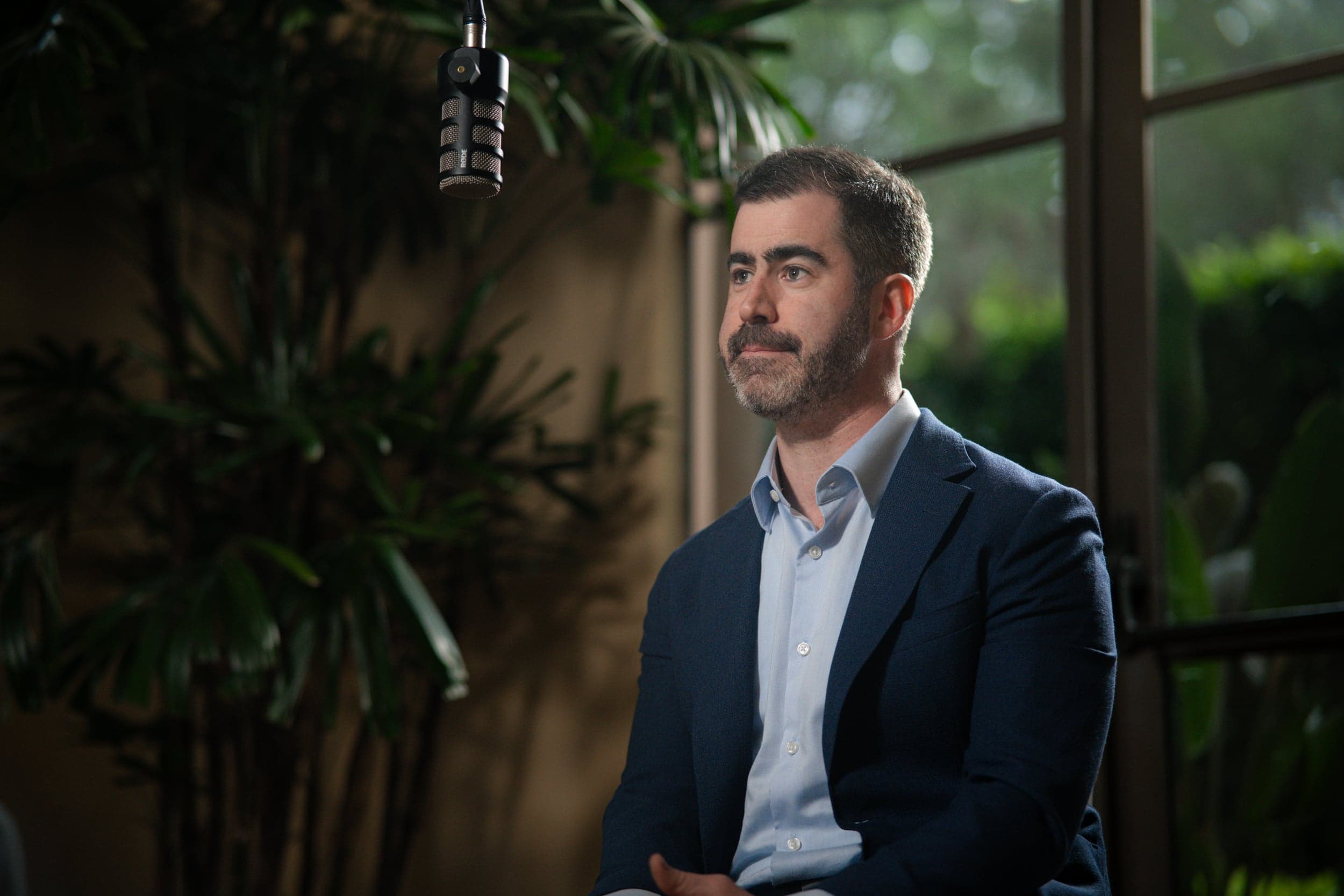
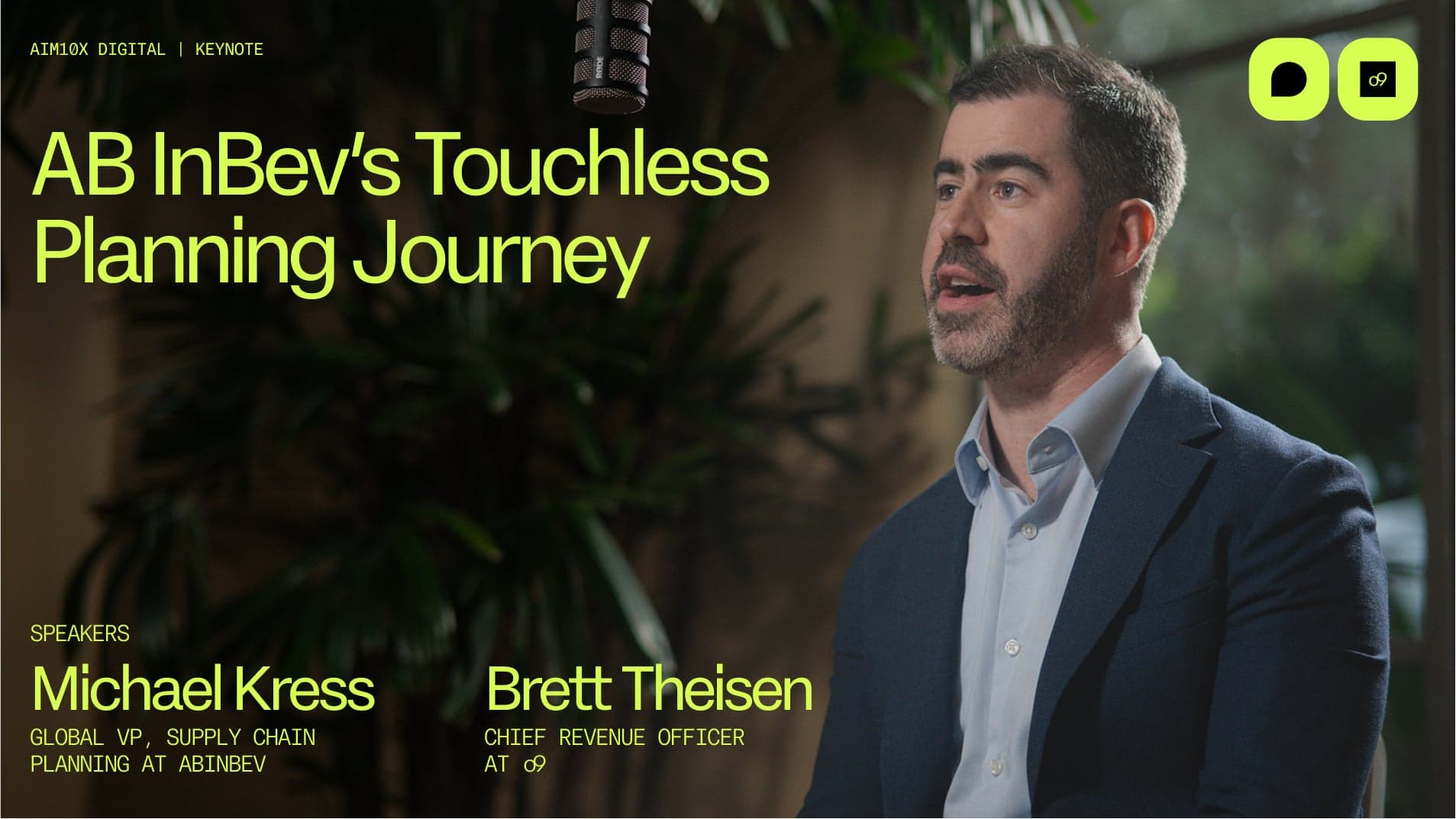
“We really wanted to invest in a platform that gave us end-to-end capabilities and was able to kind of link the full planning journey together,” said Michael Kress, Global VP of Supply Chain Planning at AB InBev.
That journey started in 2019, before the pandemic reshaped global supply chains. Six years later, AB InBev has deployed o9 across more than 20 countries, covering over 90% of its global volume and spanning six continents.
Along the way, the company has fundamentally changed how planning decisions are made, how planners spend their time, and how touchless planning is becoming a practical reality.
“We really wanted to invest in a platform that gave us end-to-end capabilities and was able to kind of link the full planning journey together. We met with a lot of partners, ultimately we selected o9 for the ability that we thought to have one platform to cover the end-to-end. ”
Michael Kress
Global VP, Supply Chain planning, AB InBev
Building a connected planning platform at global scale
AB InBev approached planning transformation with a clear principle from the beginning: planning processes could no longer operate in isolation.
The company wanted one integrated platform connecting forecasting, inventory, deployment, supply planning, materials planning, and supplier collaboration.
“We decided to embark on this journey,” Kress explained. “We met with a lot of partners, ultimately selected o9 for the ability that we thought to have one platform to cover the end-to-end.”
Today, the platform spans statistical forecasting, demand enrichment, monthly and weekly supply network planning, daily deployment planning, inventory optimization, MRP, supplier collaboration, and even returnable packaging management.
The rollout itself became a major transformation effort. AB InBev started in Canada in 2020 before expanding through Brazil, China, the United States, Europe, Africa, and Asia.
“It’s been a big transformation for us,” Kress said. “Lots of implementations, lots of go-lives, lots of learnings along the way.”
Turning planners into decision-makers
For Kress, one of the biggest outcomes of the transformation came before the KPI improvements even appeared.
“I always talk about… we’ve given our planners a high-quality tool that’s enabling them to do their job more effectively day to day,” he said. That shift matters because of the complexity AB InBev planners manage every day across supply, demand, inventory, production, and logistics.
The platform now allows teams to compare scenarios faster, optimize decisions more effectively, and connect planning decisions across the business. Once that foundation was established, measurable operational improvements followed.
AB InBev improved forecast accuracy by roughly 10%, reduced inventories by nearly 25%, improved service levels, and lowered obsolescence, while simultaneously optimizing production decisions to reduce costs.
“We’ve been able to do what we call the triangle of cost, cash, and service,” Kress said. “We’ve been able to optimize that year over year.”
Why touchless planning became a major priority
One of the clearest themes in AB InBev’s transformation journey is touchless planning. For Kress, touchless planning is not simply about reducing planner intervention. It is about improving the quality of the initial solve so planners can focus their attention where it creates the most value.
“We want the platform to be able to have a high-quality solve the first time,” he explained.
Historically, planners often spent large portions of their time adjusting outputs manually. That limited their ability to explore scenarios, compare trade-offs, and focus on more strategic planning work. AB InBev changed that mindset.
The company became “relentlessly focused,” as Kress described it, on improving inputs, codifying planner knowledge into the system, and trusting the optimization engine to generate stronger baseline outputs.
As a result, several markets now operate with touchless rates above 70% or 80% in supply network planning. In forecasting, some markets have reached as high as 80–90%. That has fundamentally changed how planners spend their time.
“By driving that base result of touchless higher and higher, they can spend more time on value-added activities,” Kress said.
Those activities include promotions, new products, volatile SKUs, and scenario analysis, areas where human judgment still matters most. “We’ve given time back for our planners to plan and not just get a plan out.”
The role of post-game analytics
A major part of AB InBev’s touchless planning journey has been creating stronger feedback loops. “We’ve had a lot of focus on understanding what is the nuance of the solve,” Kress explained. “Why is it not giving us what we’re looking for and how to get that feedback loop.”
The company increasingly relies on post-game analysis to evaluate whether planner interventions actually improved outcomes. “If I made changes, did those changes actually help?” Kress said. “Did I just change things for the sake of changing things?”
This approach led AB InBev to build what it calls a “forecast value-add toolkit.” The company evaluates whether planner touches over the previous months improved, worsened, or had no impact on forecast quality. When interventions consistently produce neutral or negative results, those areas become candidates for touchless execution.
“By showing sometimes the report card afterwards, you’re able to say, look, the algorithm’s good enough,” Kress explained. That data-driven approach has accelerated adoption across the organization and increased trust in the platform.
Exploring the next frontier with AI
Kress sees the first major opportunity as helping planners better understand how decisions are being made inside increasingly sophisticated optimization engines. “How can they understand what this system is doing?” he asked. “Solve some of that black box.”
The company is currently piloting AI capabilities with o9 focused on knowledge assistance, planner enablement, and decision explainability. Over time, Kress expects AI to move beyond knowledge support and begin helping planners connect patterns and trade-offs across the business.
“How do I connect the dots across pieces?” he said. “So to really start to break down some of these silos.”
Longer term, the ambition expands beyond supply chain itself. “How do you get finance and commercial and supply to be able to break down some of their silos,” Kress said, “and really make some of these cross-functional, more IBP-like decisions?”
Why collaboration matters more in a volatile world
Kress believes one of the biggest challenges companies face today is not technological, but organizational. “The companies that recognize… our superpower has got to be not collaboration in the word, but collaboration in the process of decision,” he said.
As volatility increases across tariffs, regulations, and global supply conditions, companies need to make decisions faster and more collaboratively. That requires stronger cross-functional understanding.
“Sometimes commercial doesn’t understand what is the supply chain trying to optimize,” Kress explained. “And sometimes the supply chain doesn’t understand the pressures that commercial has.”
For AB InBev, education and shared context became critical parts of the transformation. “Everybody in the company wants to succeed,” he said. “But sometimes there’s this knowledge gap.”
Progress over perfection
After six years and more than 10 global implementations, Kress says one lesson stands above the rest. “Perfection can be the enemy of good,” he said.
AB InBev deliberately adopted what he described as a “bias toward action.” The company focused on getting capabilities live, learning from them, and improving iteratively rather than waiting for perfect solutions.
“There might be a hole or two in the boat,” Kress said, “but we’ll plug it along the way.” That mindset allowed AB InBev to continuously expand capabilities, deploy new modules, and evolve the platform globally without stalling under the weight of complexity.
“Adoption starts from the top,” he said. “You’ve got to believe that you’re doing the right thing strategically.”
For AB InBev, touchless planning was never simply about automation. It became a broader shift toward connected planning, faster learning loops, and giving planners the ability to spend more time making decisions that actually move the business forward.
See the full aim10x Digital 2026 video session below.
About the authors

The Editorial Team, o9
A multidisciplinary collective of editors, strategists, technologists, and former executives with experience across Fortune 500 companies and top consulting firms. Grounded in o9’s mission to help enterprises make faster, better decisions through the power of AI-driven planning and execution software, the team shares clear, practical insights on digital transformation, supply chain, and enterprise planning to support business leaders in navigating complexity and driving change.









![Aim10x digital shurtape [bts] copy](/_next/image?url=https%3A%2F%2Fcms.o9solutions.com%2Fwp-content%2Fuploads%2F2025%2F12%2Faim10x-Digital-Shurtape-BTS-copy.jpg&w=3840&q=75)