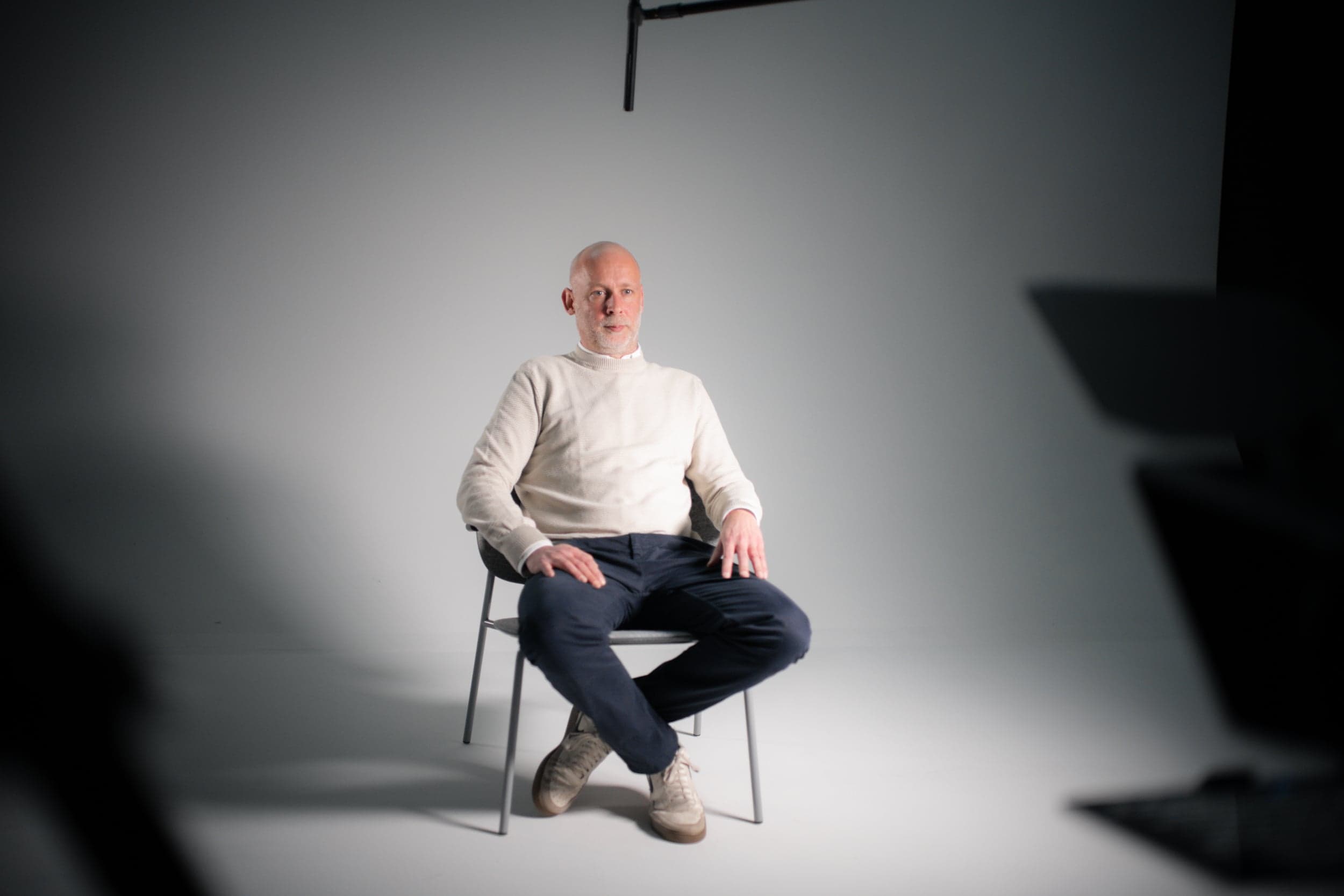
6 read min
When companies talk about supply chain transformation, the conversation often starts with systems. A new platform. Better integration. More visibility. Faster reporting.
Guus Langenhuysen believes that framing misses the real challenge entirely.
“Transformation is about implementing change,” he said. “And doing this successfully needs a lot more than technology.”
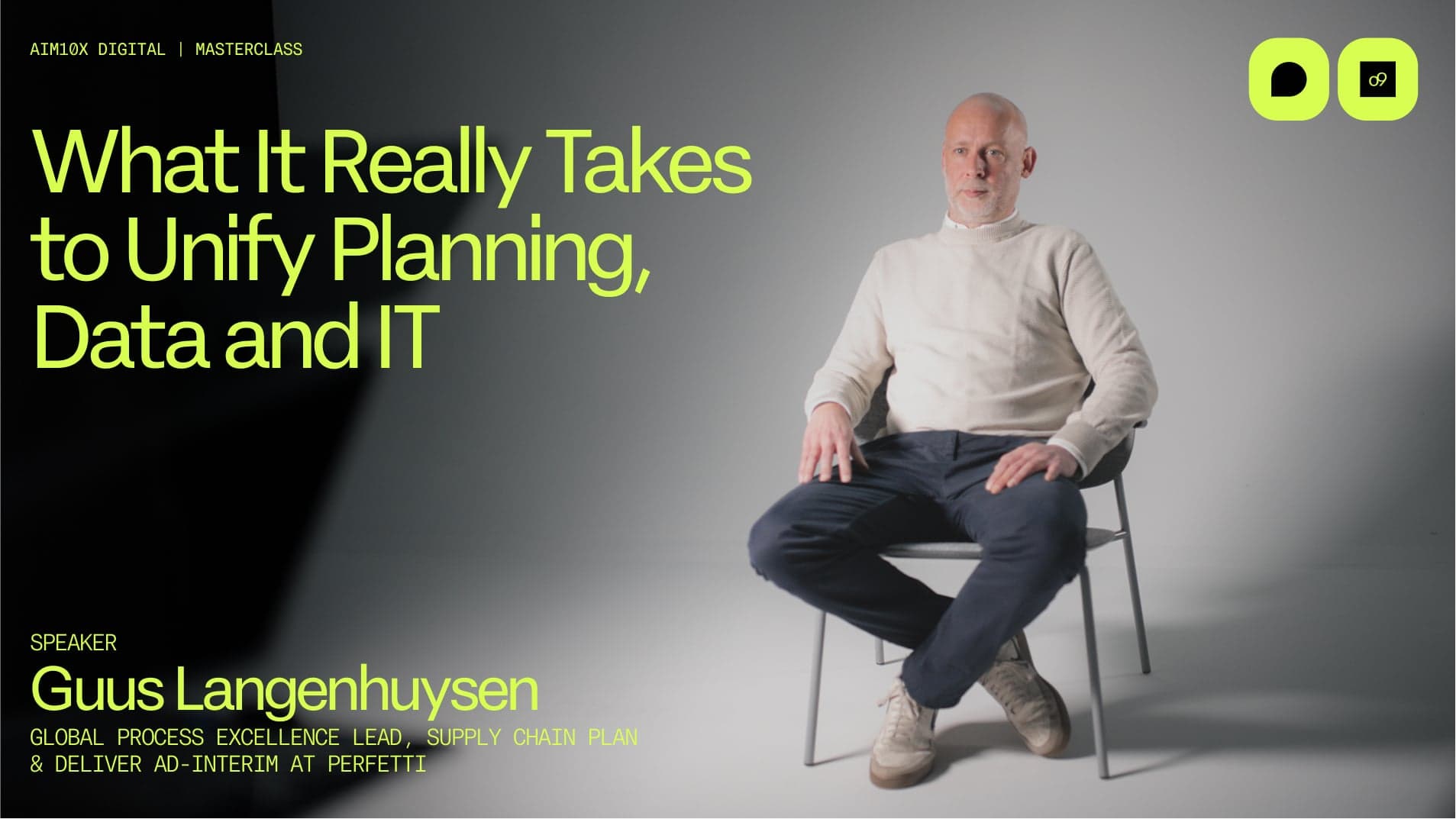
As Global Process Excellence Lead for Supply Chain Plan & Deliver at Perfetti Van Melle, Langenhuysen spends much of his time operating between two worlds that often struggle to fully understand each other: business and IT.
“I would say I’m a translator,” he explained. “I’m there to enable improvements to the operations of our company.”
That role became increasingly important as Perfetti Van Melle worked to unify fragmented planning systems and move toward a single source of truth across its global operations.
Over time, Langenhuysen came to a simple conclusion.
“If you want to unify a fragmented IT landscape into a single source of truth, real progress only happens when business and IT are well aligned.”
The challenge is that alignment sounds much easier than it actually is.
When business and IT speak different languages
According to Langenhuysen, both business and IT are trying to achieve stability, but they approach it from completely different realities.
“The business wants agility and protect OTIF, manage inventory risk, make trade-offs to hit the month-end number,” he said. “IT wants stability. They want clean architecture, harmonised master data, controlled integrations and scalable solutions.”
Even when both sides use the same terminology, they often mean different things.
That disconnect creates friction in nearly every transformation effort. Business teams push for flexibility and speed. IT teams focus on governance, standardization, and scalability. Without alignment, transformation efforts quickly turn into negotiation forums rather than directional change.
“The interesting part is, in the end, we want the same,” Langenhuysen said. For him, supply chain agility and IT stability are not opposing goals. They are deeply connected.
“Supply chain is in its nature a volatile business in which stability can only be achieved if we are flexible enough to maintain stability.”
Why technology alone does not unify anything
One of the strongest themes throughout Langenhuysen’s session was the idea that unification is often misunderstood as a technology implementation.
“When companies talk about building a single source of truth… it unfortunately often gets framed as a technology challenge,” he said.
The problem with that mindset is that systems can change far faster than organizations and people can.
Technology can be deployed through major step changes. Human behavior evolves incrementally. Roles shift gradually. Habits take time to change. Trust takes even longer. “You don’t want a modern platform powering the same old behaviours,” Langenhuysen warned.
He described transformation as operating across three equally important pillars: technology, organization, and people.
Technology includes the platforms, integrations, and architecture. Organization includes governance, KPIs, and decision rights. People include training, adoption, confidence, and habits.
“If you only invest in pillar one, you don’t unify,” he said. “You just modernize the mess. Your job is to help the business run a new operating model through a system.”
The role of ownership in transformation success
One of the biggest risks in large transformation programs, according to Langenhuysen, is weak ownership. “When business ownership is not present at the right level, you enter an endless loop of local optimisation,” he explained.
Teams begin defending existing ways of working. Every local exception becomes critical. IT gets dragged into requirement debates. Scope expands. Priorities blur. “Unification without standardization is simple integration of fragmentation.”
Strong business ownership changes the conversation. It creates the authority to define standards, prioritize trade-offs, and resolve conflicts between local preferences and global design principles.
But IT ownership matters equally. “If IT would be only focusing on managing the deployment, the same thing would happen as if no business ownership would be present,” he said.
For Langenhuysen, successful transformation requires both sides actively engaged in solving the same business problem. “Ownership on both sides keeps the transformation anchored to the outcomes, to the actual problem we’re trying to solve.”
Building the bridge between business and IT
Langenhuysen repeatedly returned to one concept throughout the session: the need for a bridge between business and IT. “The business says IT doesn’t understand us,” he said. “IT says the business doesn’t know what it wants.” Without translation, that cycle repeats endlessly.
The bridge, in his view, is not necessarily a single person. It is an organizational capability built intentionally into process excellence teams, product owners, solution architects, and planning leaders who understand both operational realities and system design.
“The important thing is that you build this capability intentionally,” he said.
One of the most effective ways to create alignment is surprisingly simple: make discussions tangible. Langenhuysen emphasized the importance of visualizing processes and using real operational examples.
“Take a real SKU, a real demand signal, a real capacity constraint,” he explained. “Then walk through how the numbers move through the model.” That changes the conversation from interpretation to shared understanding.
“Words can be interpreted,” he said. “Numbers are clear and can be followed.”
Why data becomes the real operating model
For Langenhuysen, one of the clearest signals that a planning process is failing is not a meeting escalation or user complaint. It is the data itself.
“When planning feels broken, the fastest way to restore control is not to redesign the system,” he said. “It’s to diagnose the data.” He described data as a “breadcrumb trail” that reveals exactly where an operating model is failing.
“The real target of planning is data readiness.” That includes having the right data available, on time, and in the correct state so planning processes can execute reliably. “If the data is wrong, late, or missing, everything else breaks,” he explained.
Langenhuysen pays particularly close attention to anything past due in the planning process.
“Past due transactional data is like a warning light in your car,” he said. “If it exists, something upstream is failing.”
Instead of debating opinions, teams can trace issues directly through demand, supply proposals, requisitions, orders, and execution data.
“When data is spread across disconnected systems, it becomes inconsistent, not comparable, difficult to analyse globally,” he explained. A unified platform changes that dynamic by creating common rules, consistent visibility, and scalable governance.
Why champions and continuous improvement matter
Langenhuysen also stressed that transformation cannot succeed without internal champions. “You need your best people in these programs,” he said.
Those individuals become translators between users, business leaders, and IT teams. They explain why decisions are being made, reduce resistance, and sustain momentum after go-live. “You can’t drive an operating model change with people who have no credibility, no context, or no influence.”
At the same time, organizations need to recognize that go-live is not the finish line. “Go-live is when the real work starts,” he said.
Once systems become unified, visibility increases and hidden inefficiencies become exposed. That can create discomfort if organizations are not prepared for continuous improvement after deployment.
“The story cannot become we switch on the system and now you’re stuck with it,” he warned. Instead, organizations need governance, backlog prioritization, data ownership, and mechanisms for continuous learning across sites and regions.
“After go-live, the operating model has to move through stabilisation, then standardisation, then continuous improvement.”
Unification is ultimately a human problem
Langenhuysen closed with a point that framed the entire discussion. “Unifying a fragmented IT landscape into a single source of truth is not primarily a technical exercise,” he said. “It’s a human one.”
Technology matters. Platforms matter. Data matters. But sustainable transformation only happens when business and IT learn to operate as part of the same operating model, with shared ownership, shared language, and shared accountability.
“Without empathy, you get escalations,” he said. “With it, you get alignment.”
And in large-scale planning transformations, alignment is what ultimately determines whether unification lasts.
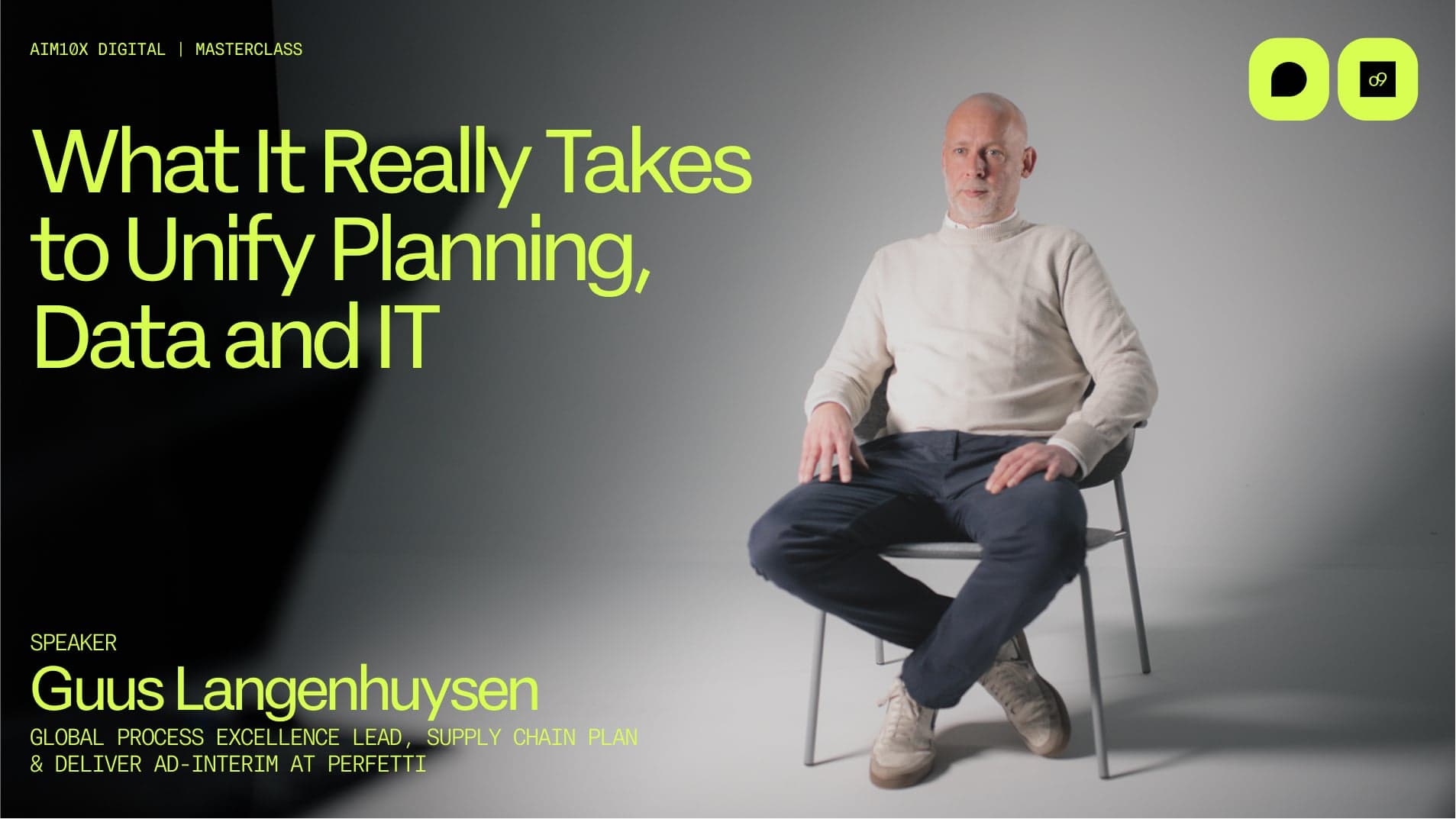
See the full aim10x Digital 2026 video session below.
About the authors

The Editorial Team, o9
A multidisciplinary collective of editors, strategists, technologists, and former executives with experience across Fortune 500 companies and top consulting firms. Grounded in o9’s mission to help enterprises make faster, better decisions through the power of AI-driven planning and execution software, the team shares clear, practical insights on digital transformation, supply chain, and enterprise planning to support business leaders in navigating complexity and driving change.