9 read min
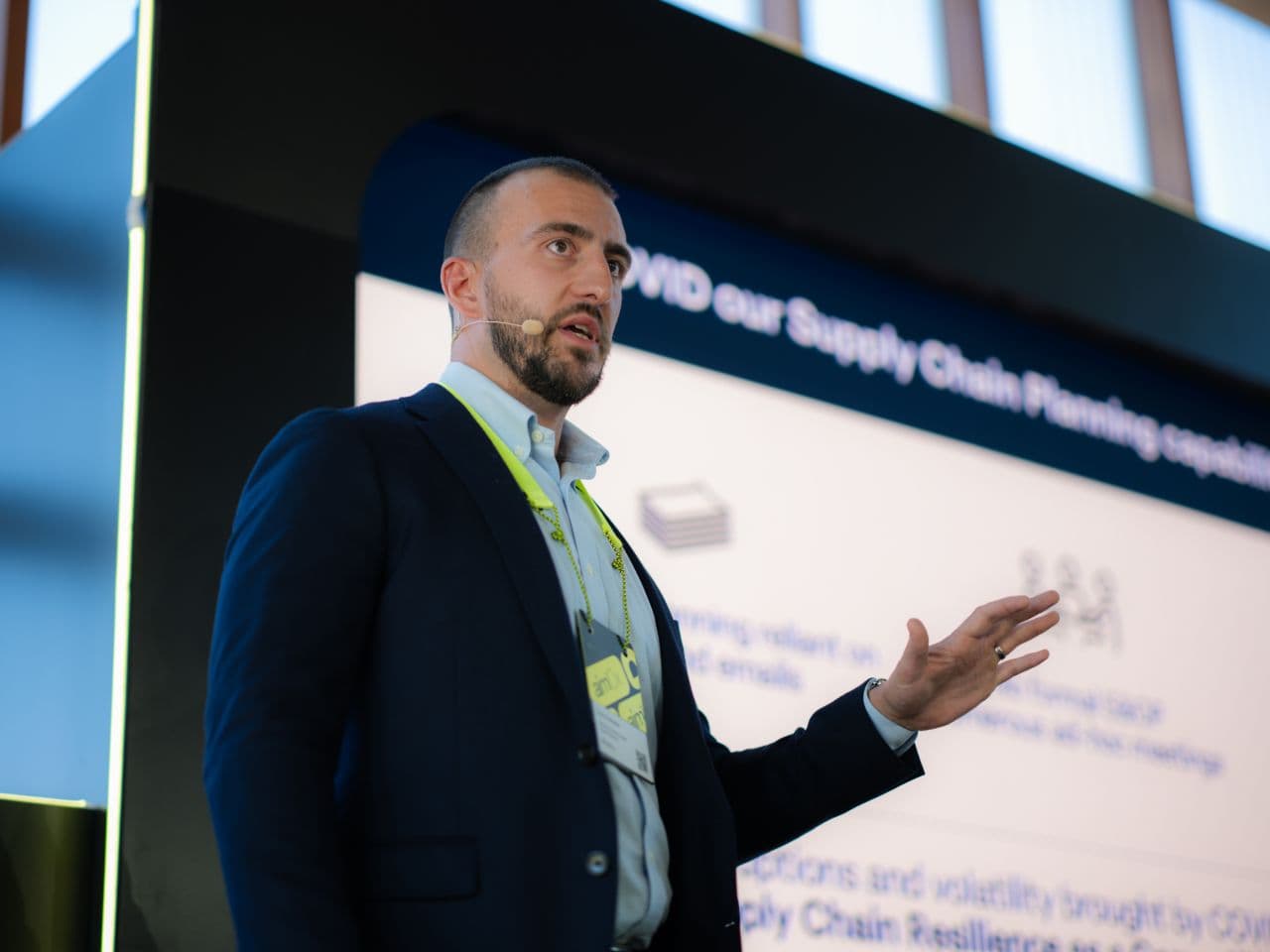
After o9’s Executive Chairman, Co-Founder, and CEO Chakri Gottemukkala introduced the new APEX operating model for a VUCA world at aim10x Digital, consumer products leaders from companies including Bissell, Perfetti Van Melle, and AB InBev shared how they are redesigning their operating models to compete in this new reality.
The message was clear. In modern consumer products organizations, advantage doesn’t come from building a better forecast in isolation. It comes from sensing demand shifts earlier, aligning commercial and supply decisions in real time, and executing with precision across an increasingly complex global network.
How Bissell Rewired Inventory, Planning, and Decision-Making
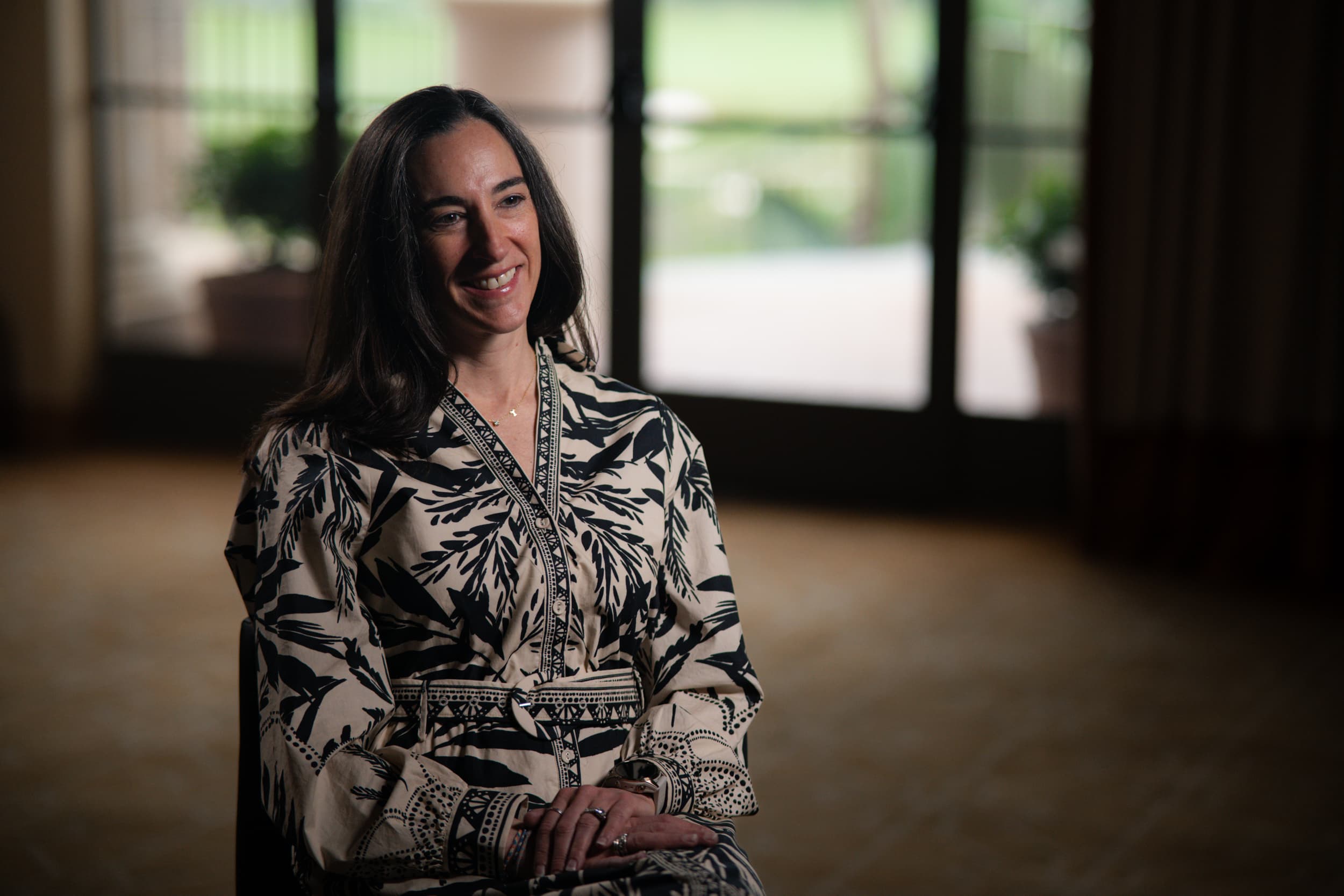
Bissell reduced inventory by roughly 10%—unlocking tens of millions of dollars in working capital—while improving fill rates, lowering chargebacks, and reducing cross-regional and expedited freight. Scenario analysis that once took “weeks and weeks” is now completed “within a matter of hours,” enabling faster, enterprise-wide decisions in the face of volatility.
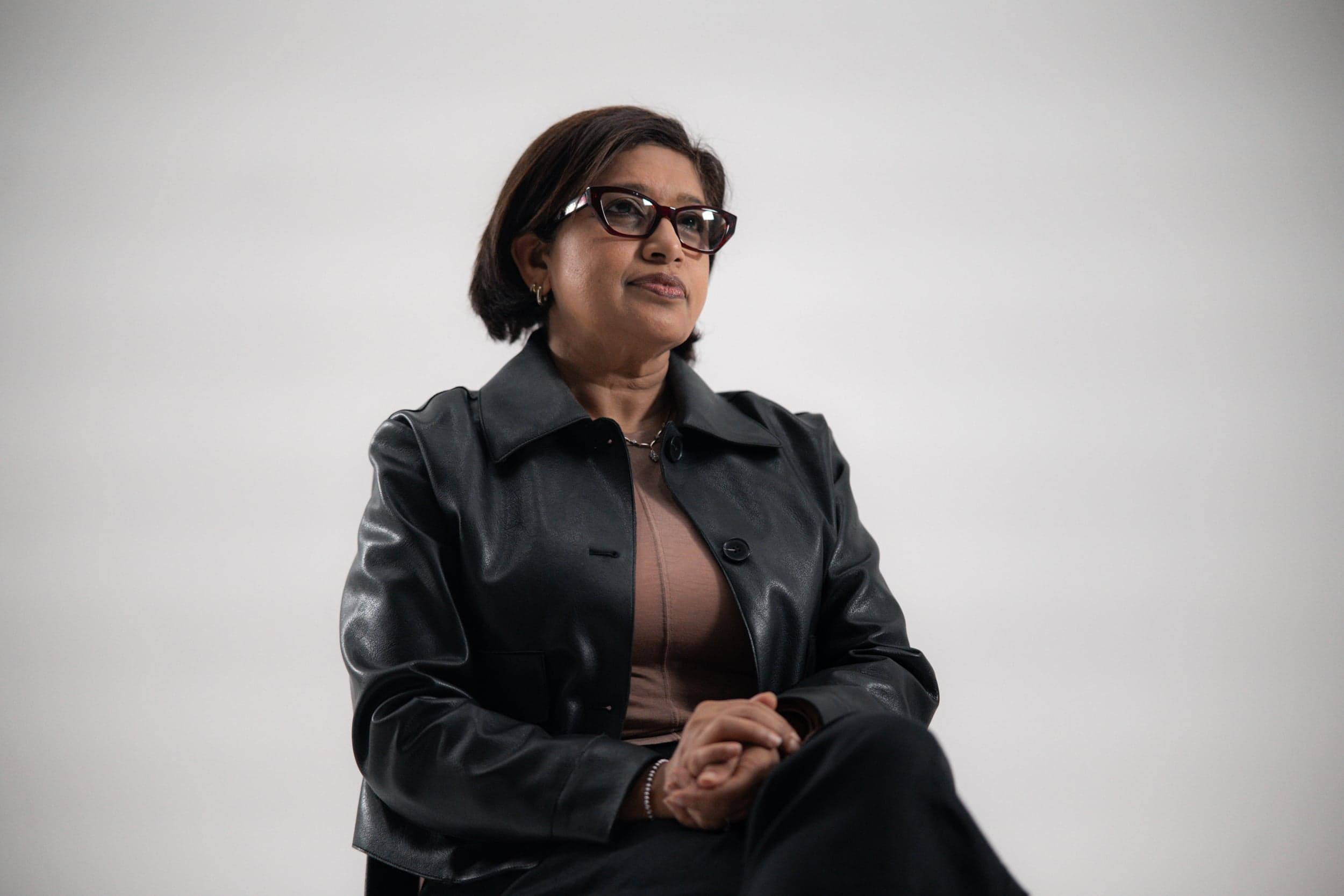
Reaching that point, however, required a significant evolution of the company’s operating model. When Lyndsi Lee, Senior Vice President, Supply Chain & Operations at Bissell, joined “in the middle of Covid,” the organization was navigating disruption with limited integration. “We had component shortages, we had upside opportunities. We had a very fragmented organization,” she explained. Sales teams optimized for individual customers. Regions pursued their own upside. Analysts would spend “two and three weeks” building scenarios, only to revisit the work when new questions emerged.
To break that cycle, the company decided to partner with o9 and insisted on an end-to-end scope rather than another point solution. The goal was to “look inside our suppliers, inventory, manage and constrain from a component perspective, do all of our planning processes,” and, critically, “be able to run scenarios efficiently” with “exception management.” After a “rigorous RFP process” that took “probably about six months,” she explained that “o9 really was the only solution for us that… offered that end-to-end solution that we were looking for.”
Transforming inventory management with MEIO
One of the clearest proof points of that end-to-end transformation has been inventory. Before, the team leaned on rules of thumb—“Let’s carry four to six weeks of supply for this SKU”—using inventory as a broad buffer against uncertainty rather than a calibrated response to variability.
With multi-echelon inventory optimization, that changed. “Very simplistically, we let the system do the work,” she said. The objective was to “take the emotion and the guesswork out of it.” By setting target service levels and allowing the system to “optimize based on the volatility that you have,” safety stock became dynamically aligned to real demand and supply signals.
The result was what Lyndsi called “the magic combination” of “reduced inventory but improved service levels.” Safety stock declined significantly. “Cross regional shipments reduced.” Chargebacks fell, and on-time-in-full improved. Inventory evolved from a broad safeguard to a deliberate, data-driven investment.
Today, scenario planning is also part of the company’s weekly drumbeat. Whether modeling tooling constraints on a “high running SKU” or evaluating tariff responses, the team presents leadership with clear options: “Here are the cost implications… here are the service implications… here are the revenue implications.” Planners have shifted from reactive analysis to proactive insight. “We can trust the data… and make informed decisions.”
Lyndsi's key learnings from the journey
- Move before you’re ready. “Don’t wait for perfection, because perfection just is never a reality.” She emphasized momentum over polish: “You’ve got to just get moving… make progress… test and learn your way into continuous optimization.”
- Create one enterprise truth. Fragmented data meant “you’re not able to truly solve what is most impactful for the enterprise.” A “single source of truth” enables fact-based trade-offs and removes emotion from decisions.
- Let the system challenge legacy thinking. Shifting from “four to six weeks of stock to cover any volatility” required cultural change. By testing SKUs and building confidence, the team proved they could “ratchet up service levels while also driving down safety stocks,” turning volatility into advantage.
How AB InBev Is Pushing Toward 90% Touchless Planning

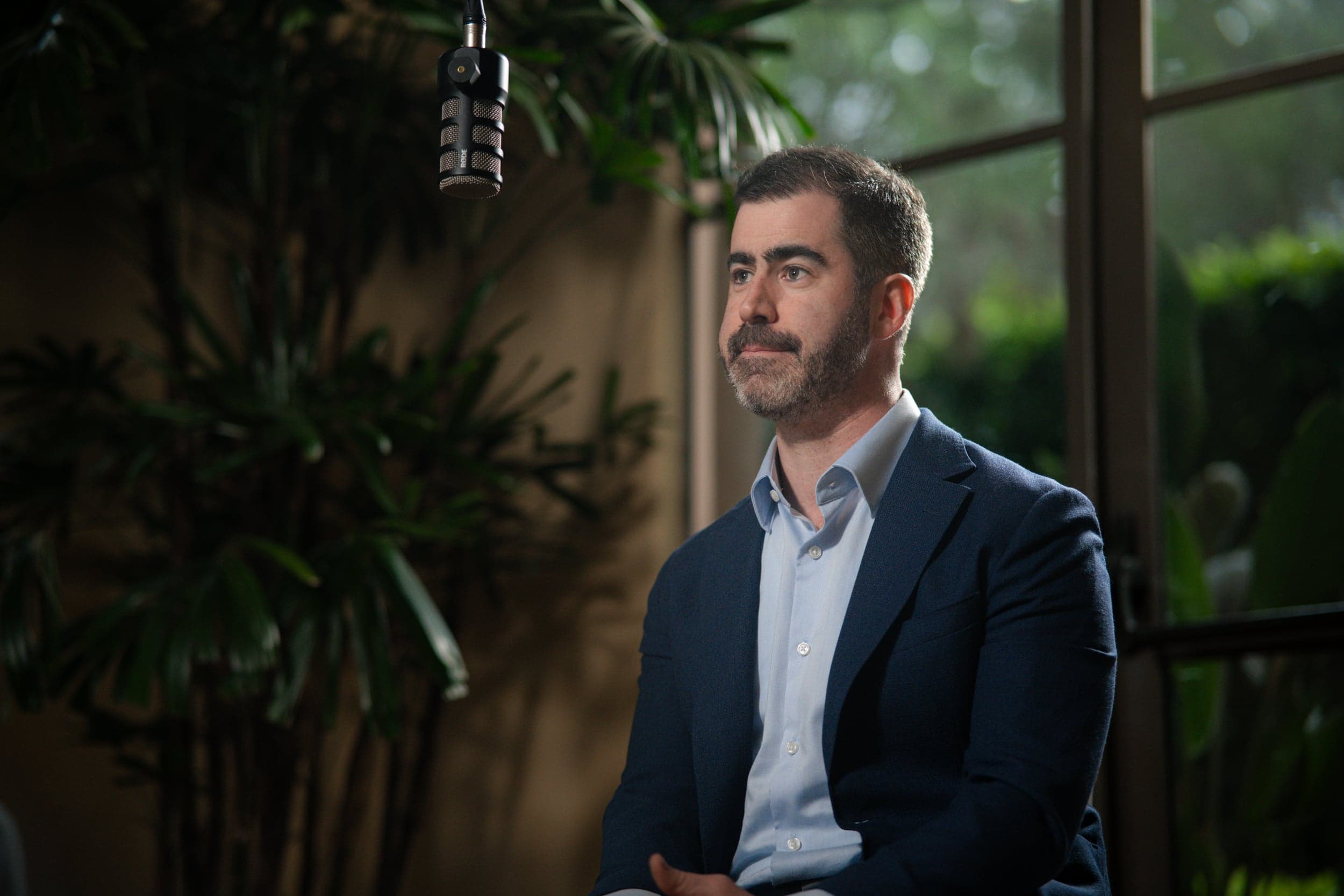
AB InBev has improved forecast accuracy by more than 10%, reduced inventory by nearly 25%, and pushed touchless planning as high as 65% globally—reaching 70–90% in some markets and modules. For Michael Kress, Global VP of Supply Chain Planning at AB InBev, those results reflect the payoff from a six-year transformation of the brewer’s planning capabilities.
Michael explained that the brewer’s scale and complexity demanded a fundamentally different approach. AB InBev needed a system capable of connecting decisions across demand, supply, materials, inventory, and packaging. The goal was to “invest in a platform that gave us end-to-end capabilities” that could “link the full planning journey together.”
Since launching the transformation in 2019, AB InBev has rolled out the o9 platform across more than 90% of its volume in over 20 countries and six continents. But the biggest gain has been the evolution of its operating model. Planners now work with a connected, end-to-end platform that allows them to manage complexity in a fundamentally different way. “We now have a tool that’s capable of handling the complexity of our business,” Michael said. “We’re able to see what’s coming better, compare and contrast scenarios, and optimize decision making.”
Designing for touchless planning
For AB InBev, the shift toward touchless planning has been one of the most important breakthroughs in its journey toward a more agile, adaptive, and ultimately autonomous operating model model.
Michael said the company became “relentlessly focused” on a simple goal: “How do I get a high-quality solve the first time?” Instead of planners spending hours adjusting outputs, the focus shifted to improving inputs, such as cleaner data, better parameters, and capturing planner knowledge directly in the system.
That shift fundamentally changes how planners work. As trust in the platform grows, more decisions can happen automatically. “The algorithms are good enough. We can trust it,” Michael said. In several markets, supply network planning is already running at 70–80% touchless, while forecasting in some markets has reached 80–90%.
The breakthrough gives planners time back to focus on higher-value activities such as promotions, new products, and disruptions that are harder to codify in algorithms. As Michael put it, the goal is “giving time back for our planners to plan and not just get a plan out.”
Continuous learning is also built into the process. AB InBev regularly runs post-game analysis to evaluate planner interventions and improve the system over time. “You go back and say, I made changes—did those changes actually help?” If they did, the logic can be embedded into the platform.
Michael’s key learnings from the transformation
- Progress over perfection. Michael emphasized a “bias towards action,” noting that “perfection can be the enemy of good.” Teams prioritized going live and improving along the way.
- Transformation must be business-led. Success came from placing “the strongest planners” in charge because the change “cannot be something done for the business—it needs to be done by the business.”
- Collaboration must drive decisions. Real cross-functional alignment requires “not collaboration in the word but collaboration in the process of decision.”
Perfetti's Masterclass: Unifying a Fragmented IT Landscape
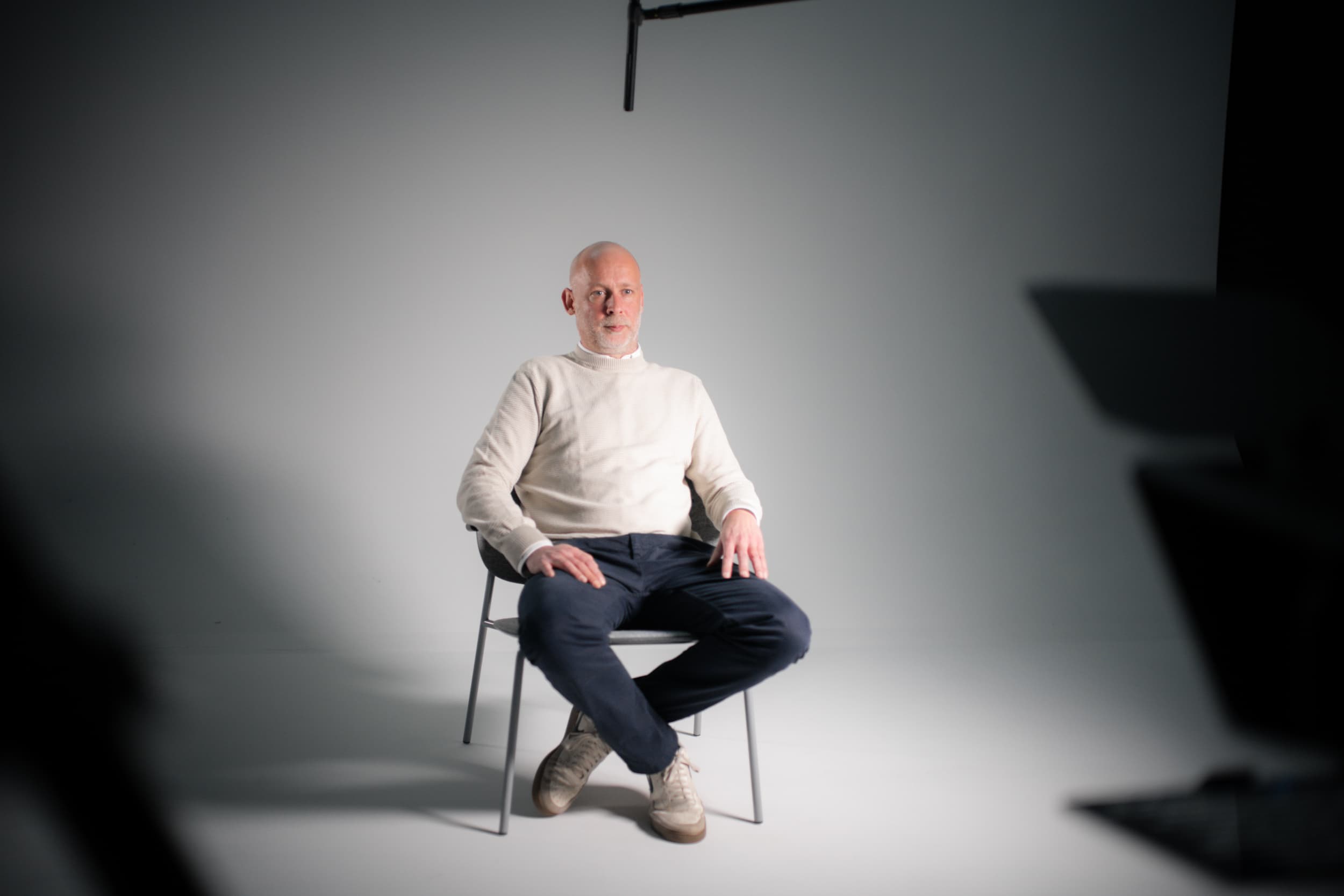
Unifying fragmented IT landscapes into a single source of truth is not a back-office clean-up exercise. It is a business imperative. When companies get it right, they enable faster decision-making, tighter inventory control, stronger service levels and better working capital discipline. When they get it wrong, they entrench inconsistent metrics, local spreadsheets and endless debates about whose numbers are correct.
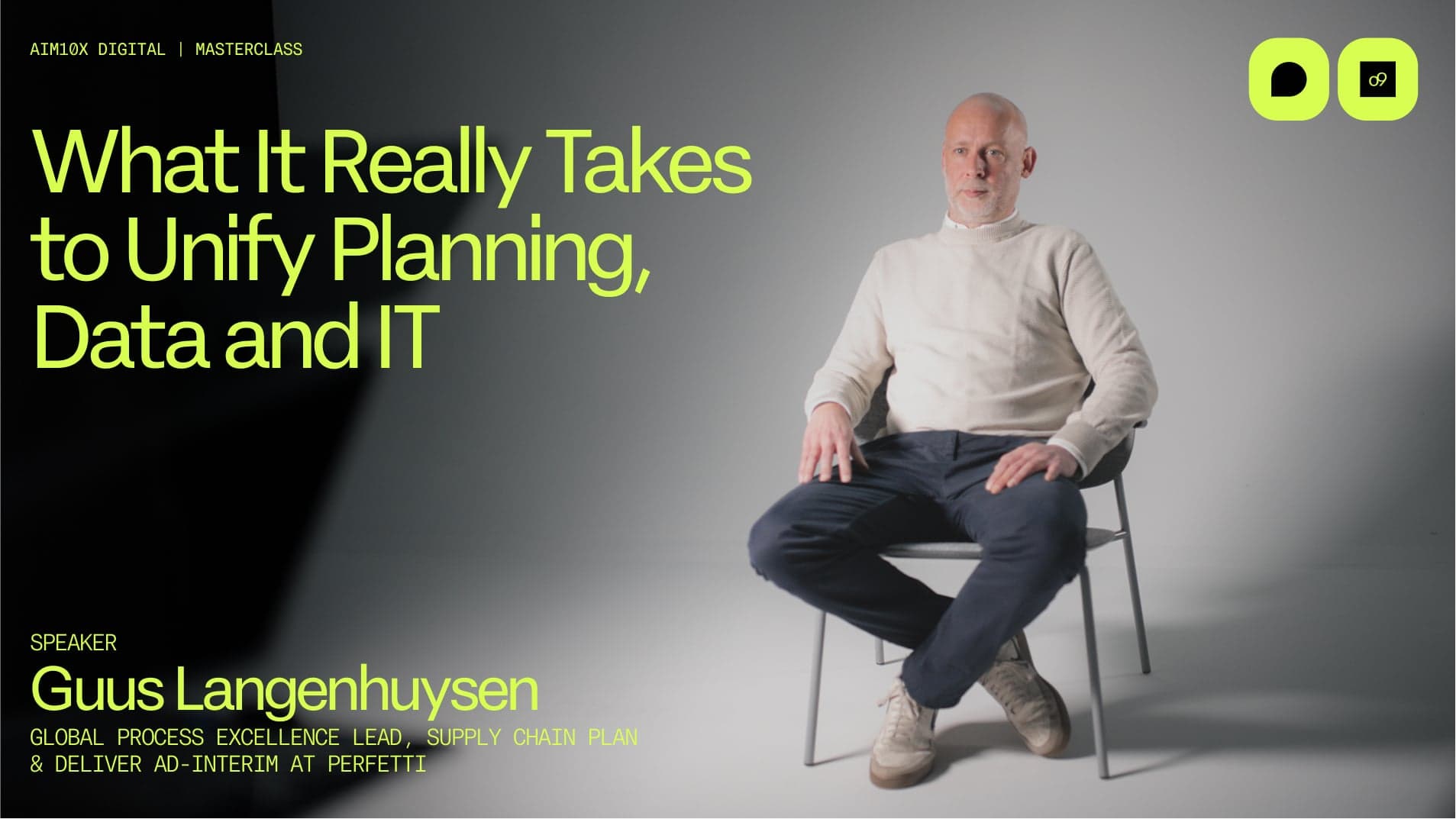
In a candid masterclass, Guus Langenhuysen, Global Process Excellence Lead, Supply Chain Plan & Deliver (Ad-Interim) at Perfetti Van Melle, addressed why this challenge is so often underestimated and why it so often fails. Drawing on years of frontline transformation work across multiple companies, he said unification was not “a technical luxury,” but the backbone of operational performance.
Focus on people, not just platforms
The core problem, he argued, was framing. “The moment you treat unification as a technology implementation, you’re already starting in the wrong place,” he said. Systems could be deployed in a “big step change.” Organisations and people could not. “Roles evolve slowly, habits take time to shift, and trust builds or erodes over months, not days,” he said. If companies focused only on platforms, “you don’t unify. You just modernise the mess.”
Delivering that shift requires more than project management. It requires translation. Guus described his role in direct terms: “I’m a translator… there to enable improvements to the operations of our company,” he said. His task is to bridge business and IT, ensuring “we are combining forces and have a common target,” because “real progress only happens when business and IT are well aligned,” he said.
Guus' lessons to achieve business-IT alignment
- Reframe the mission. A transformation leader’s job was “to help the business run a new operating model through a system,” he said, not simply deliver software.
- Secure ownership at the right altitude. Without strong business ownership, “the transformation turns into a negotiation forum instead of a directional change,” he said. Clear accountability anchored decisions to outcomes rather than local preferences.
- Build a bridge between business and IT. When teams “start talking past each other,” he said they should use “clarity artifacts” such as process maps and “paper models with real numbers.” “Words can be interpreted, numbers are clear,” he said.
- Start with data, not emotion. “When planning feels broken… diagnose the data,” he said. The true objective was “data readiness.” If data was “wrong, late, or missing, everything else breaks,” he said.
- Treat go-live as a beginning. “Unification is not a side project. It’s an operating model change,” he said. Go-live was “a starting line for continuous improvement, not the finish line.”
Continue the conversation at the aim10x Summits
A fundamental evolution of the operating model is underway. The presentations at aim10x Digital made clear that agility, intelligence, and autonomy are fast becoming enterprise imperatives. The next step is understanding what that shift means for your organization, and how to lead it with confidence.
To experience the APEX operating model in action, join us at:
- aim10x Europe, June 4th in Amsterdam
- aim10x Americas, September 23rd in Chicago
Across both events, you will see how leading organizations are redesigning their operating models for a volatile and complex world and what it takes to move from connected and analytical to truly agile, adaptive, and autonomous.
Value for leaders and practitioners
As a leader, you will gain practical insight into modernizing legacy models, aligning teams around faster end-to-end decision-making, and scaling AI across the enterprise. As a practitioner, you will see how AI-powered tools, real-time insights, and agentic planning can elevate your impact and shift focus from manual work to strategic value creation.
Through visionary keynotes, live agentic demonstrations, curated 1:1 networking, and focused tracks for executives and planners alike, you will leave with clear direction, meaningful connections, and actionable next steps.
Register early. Bring your team.
Attendance is free and capacity is limited. Register early, bring your team, and position your organization to lead the next evolution of the operating model.
About the authors

Philipp Aschhoff
Vice President of Sales
Philipp Aschhoff is Vice President of Sales at o9 Solutions, leading consumer products across the EMEA region. He brings a strong track record in driving digital transformation, particularly within complex industries such as Automotive, FMCG, Fashion and Apparel helping market leaders reimagine their supply chains and Revenue Growth Management capabilities for 10x visibility and value improvement. With an entrepreneurial mindset and deep experience in consultative selling, P&L ownership, and cross-functional leadership, Philipp combines strategic vision with disciplined execution across both supply chain and RGM domains. He is passionate about creating measurable business impact while advancing sustainable, planet-positive change.