4 read min
New Policies and Costs
The early days of the new U.S. Administration saw a wave of executive orders and policy proposals that could significantly reshape global supply chains, particularly within the retail industry. Central to Trump’s campaign promises were tariff hikes, tax reforms, and a renewed focus on America First policies, all of which have profound implications for retail supply chains—especially in apparel and footwear, consumer electronics, and home appliances.
Action was taken over the weekend. The White House announced the implementation of a 25% additional tariff on imports from Canada and Mexico and a 10% additional tariff on imports from China. Furthermore, energy resources from Canada will have a lower 10% tariff. Further tariffs are expected to be brought in for the EU and the UK, which will cause greater movement in international markets. The heightened tariffs and stricter trade regulations will impact sourcing strategies, cost structures, and short-, mid-, and long-term supply chain planning.
These changes will create new cost challenges and mainly affect sectors dependent on cost-effective and efficient global supply chains. Such unpredictability in trade policies will add further complexity to decision-making, forcing businesses to build flexibility in their supply chain network and operations.
Diversification strategies
Many companies have already commenced diversifying their supply chains away from China and might need to further these efforts; however, these shifts are not without their challenges. Companies are increasingly turning to Vietnam, Bangladesh, and Mexico as alternative manufacturing hubs, though these regions can have limitations in existing capacity and infrastructure.
Mexico has long been a preferred nearshoring location for Apparel and Consumer Electronics, but new tariffs will add further implications. Apparel companies could look further towards Bangladesh and Vietnam, while consumer electronics firms may explore Vietnam and Taiwan. However, capacity constraints could lead to potential bottlenecks, disruptions, and increased costs during these transitions.
The need for flexibility
To stay competitive, supply chain leaders must prepare for these shifts by enhancing agility and flexibility within their operations on a strategic and tactical level. Strategies could involve establishing multiple suppliers in various locations to mitigate risks associated with rapid changes in tariffs, geopolitical tension, and shifting trade policies. While this diversification could mean higher operational costs, it offers a buffer against supply disruptions.
Scenario planning will be key to proactively and rapidly identifying potential implications, impact, and mitigation strategies. Businesses that simulate multiple sourcing, demand, and pricing scenarios will be better positioned to adapt effectively.
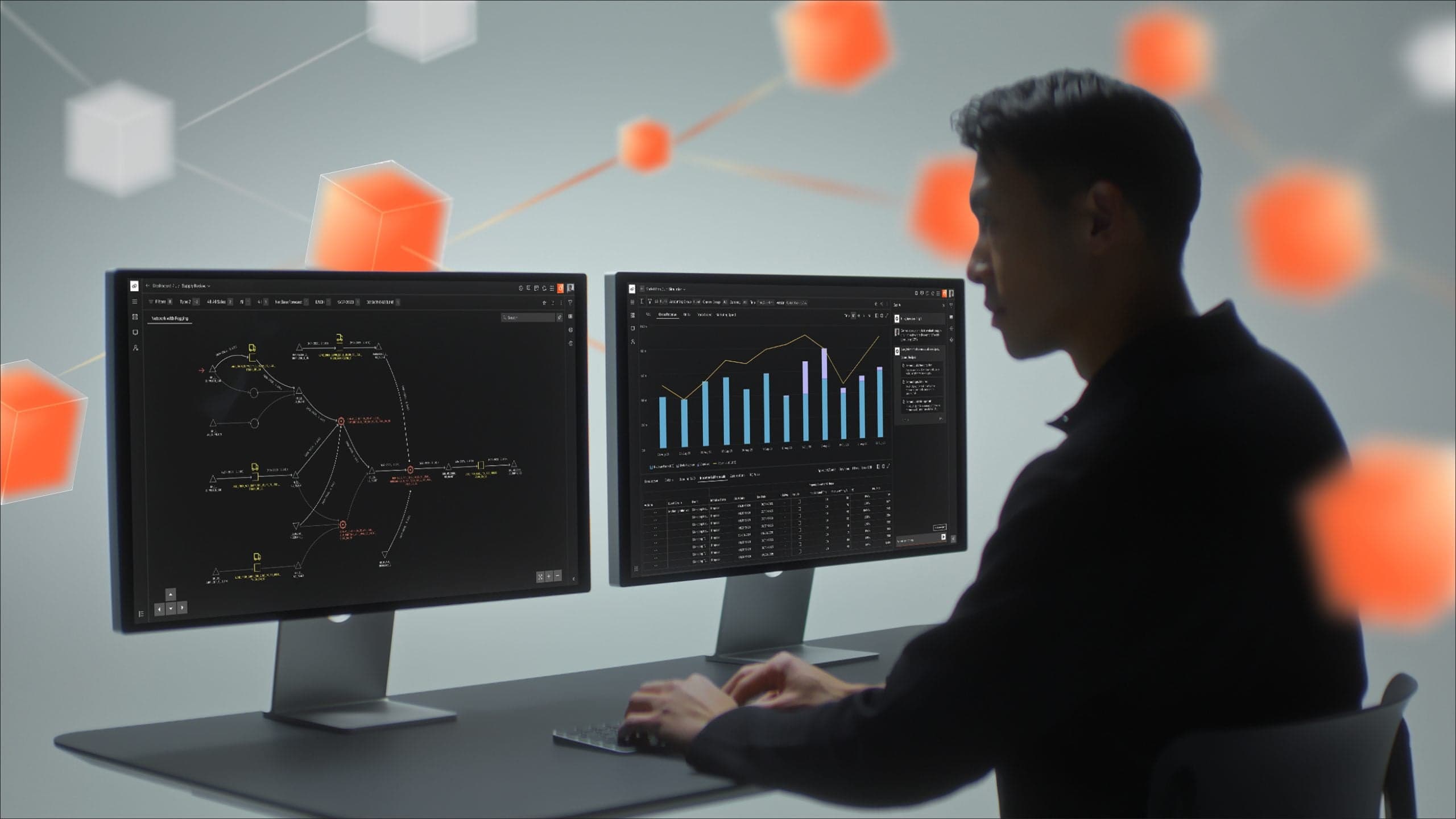
The o9 platform allows for instantly running various scenarios to assess operational and financial implications. The example demonstrates the illustrative impact of changes in tariffs and vendor share (base scenario, increased tariffs, and revised vendor share with higher tariffs).
Challenges in Inventory Management
As retailers adapt to new trade regulations, they must refine their inventory strategies to minimize cost and disruption. Some companies, for example, in consumer electronics, may stockpile inventory ahead of tariff increases to hedge against rising costs. Others may shift towards just-in-time manufacturing to reduce holding costs in an uncertain tariff environment. Both strategies require precise demand forecasting, capacity planning, and supply chain visibility to avoid overstocking or running short on critical products.
The push for reshoring and nearshoring under the new U.S. Administration means businesses must balance demand, cost, working capital, and capacity while navigating ongoing volatility. Strengthening vendor relationships and building robust supply chain risk management frameworks will be essential for mitigating supply chain disruptions.
With regulatory uncertainties on the rise, businesses must prioritize agility and data-driven decision-making. Modeling diverse sourcing, pricing, and demand scenarios will be vital to maintaining competitiveness. Rising costs and shifting consumer price sensitivity will likely affect demand and could drive shifts across categories and product assortments. Companies must refine pricing strategies and optimize assortments to remain relevant and profitable in this shifting trade landscape.
Conclusion
The implementation of new tariffs and the new U.S. Administration trade policies could significantly overhaul retail supply chains, driving companies toward reshoring, nearshoring, and diversified sourcing strategies. Supply chain leaders must proactively balance cost, working capital, efficiency, and compliance while navigating complex global trade dynamics.
o9’s end-to-end planning capabilities enable businesses to model different trade scenarios, optimize sourcing and planning, and maintain resilience in an evolving global trade landscape.
By leveraging AI-driven scenario planning, real-time supply chain visibility, and optimized end-to-end planning, o9 helps supply chain leaders turn disruption into an opportunity, ensuring long-term success despite shifting trade dynamics.

About the authors

William Extra
Senior Director - Industry Solutions for Retail, Apparel & Footwear
With almost two decades of international experience in Supply Chain Management, Strategy and Transformation, William provides an outside-in expertise on the Retail, Apparel and Footwear sectors. He works with client to identify and address value leakage through enhanced supply chain visibility and intelligent decision making through next-generation planning solutions. He holds a MSc in Logistics and Supply Chain from Cranfield School of Management.