9 read min
This piece is part of a series of articles written by Chakri Gottemukkala, CEO & Co-Founder at o9. Stay tuned for the next editions.
Stories from the Frontlines of IBP Transformations, Insights from aim10x Dallas, September 24, 2024
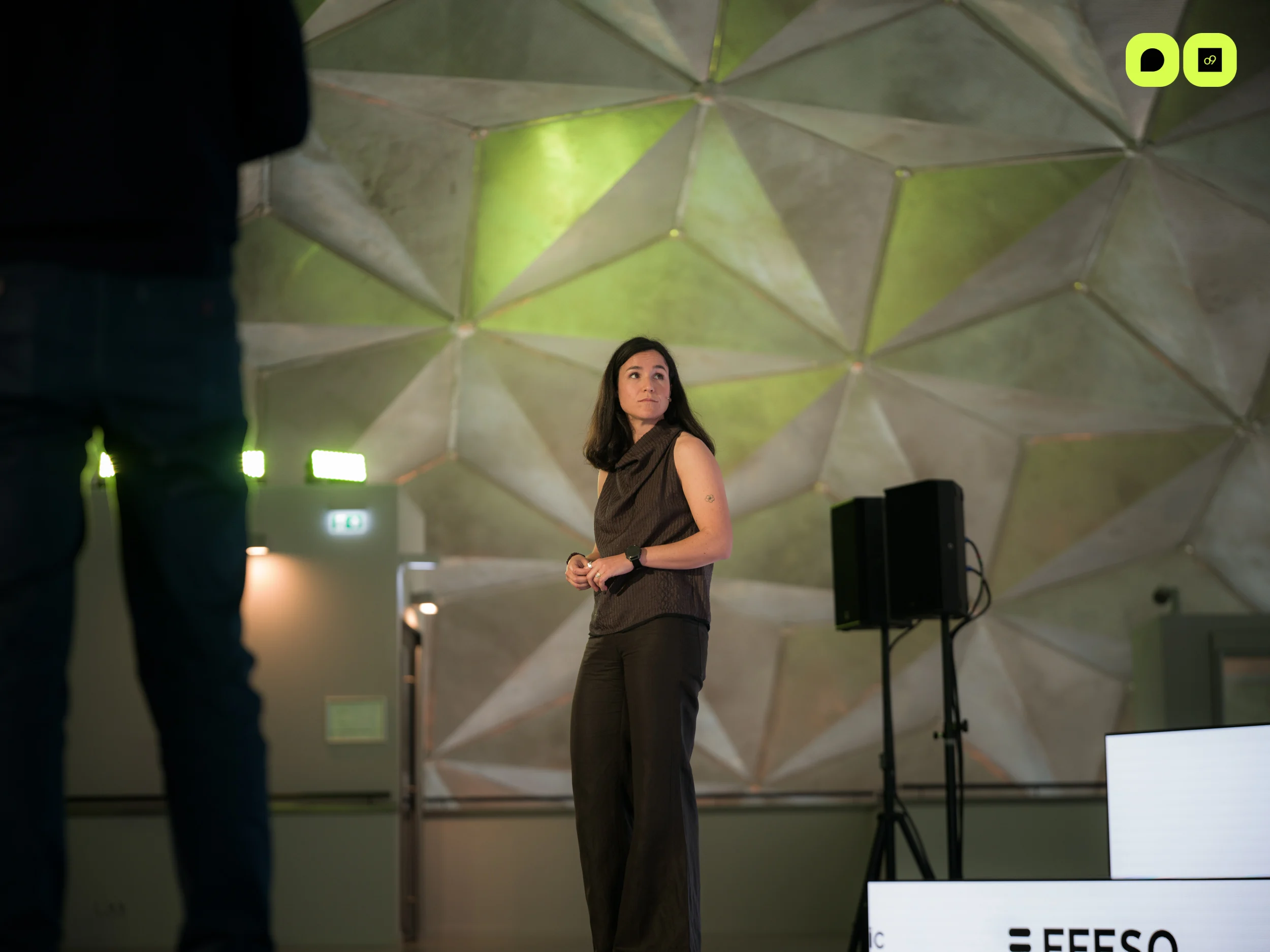
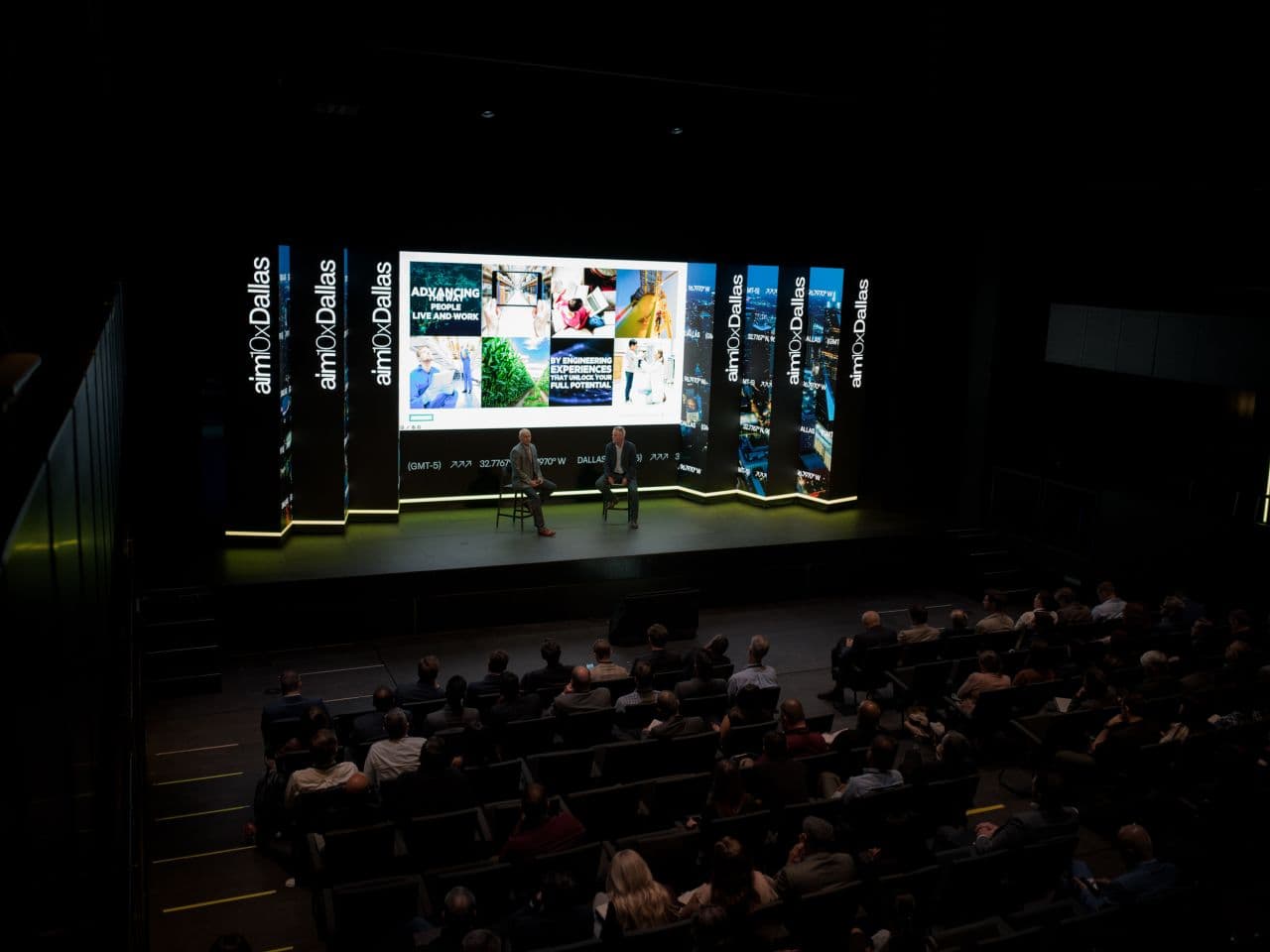
“We freed up $200 million in working capital. Our o9 IBP capability is paying for our entire technology roadmap for the next five years”, a VP from Acuity Brands said on stage at aim10x Dallas, a premier event attended by a select group of executives from o9 clients, prospects, and partners in the last week of September 2024.
This event was different in many ways. At typical conferences and trade shows, executives show a fair degree of skepticism when listening to the speakers, as their experiences of planning transformations do not match the rosy pictures presented. In this regard, we made a conscious effort to make the aim10x event all about o9 clients telling their transformation journeys in their own words while being transparent.
Throughout the day, executives from diverse companies such as Kubota, Resideo, Hewlett Packard Enterprise, Acuity Brands, PepsiCo, Google Hardware, Premier Nutrition, and Urban Outfitters shared their stories of their planning transformation journeys — stories of challenges overcome, lessons learned, and incredible value creation.
The CIO of a global CPG company in attendance told me, “We are experiencing some challenges with our planning transformation, but it was great to see others have worked through similar challenges and are reaping the benefits. It gives me confidence that we can succeed, too.”
I was glad to hear this.
o9 was founded based on the observation that the single largest driver of value leakage in global companies is the many silos of planning and decision-making across the enterprise. But planning transformations to connect these silos are not simple. Challenges related to getting executive support and alignment, solving data issues, managing change, process and adoption challenges, and global rollouts need to be addressed.
The stories I heard at the aim10x Dallas event are a small section of the broader stories I am seeing across the o9 client base. Over 2023 and the first half of 2024, there have been 100+ go-lives of significant integrated planning capabilities in companies across 20+ industry verticals. While not all implementations are smooth, a greater percentage of implementations are going more smoothly. This is heartening to see, as it directly results from the improvements we have been making by listening closely to our customers. As the o9 client base has grown rapidly over the past few years, we have scaled global implementation capacity within o9 and with SI partners, improved our implementation methodologies, and invested heavily in best-practice productization. It is heartening to see the results of this showing in the go-lives and value creation stories.
For those who could not attend the Dallas aim10x event in person, I will summarize the key insights from the stories shared there and the broader set of implementations that have gone live over the last 18 months and are now driving great value. Here is the first critical insight.
Insight #1: Connect the ‘Ys’ to the ‘Xs’ of the value equation to secure and sustain executive support for planning transformations.
o9 was founded based on the observation that the single largest driver of value leakage in global companies is the many silos of planning and decision-making across the enterprise.
C-level executives of global companies that still operate largely with manual, slow, and siloed planning and decision-making processes see the challenge in dealing with growing operational complexity and demand and supply volatility. The silos are resulting in tremendous value leakage in the form of lower customer service and lost sales, excess inventories, higher supply chain costs, lower ROI on new products and sales investments, and misses in financial forecasts.
Why do many executive teams not act faster to fix this leakage?
One reason is that business leaders are skeptical whether there really is a better way than the status quo. Skepticism leads to a lack of urgency and investment in addressing this critical issue. We asked our clients who have been on the journey with o9 to share their stories on how they convinced their executives to embark on planning transformations. There were many different elements, but one common theme stood out.
Clearly, the business needs to believe results will be achieved in bottom-line KPIs to approve investments — what I label as ‘Ys’ in the value equation: customer service, inventory, COGS, and productivity-driven revenue, margin, and cash flow KPIs. But often, skepticism is high when the story is told only through the ‘Ys.’ After all, many initiatives that executives see claim improvements in inventory, customer service, and costs. As one executive told me, "My service level should be greater than 100% if I count all the initiatives that have been approved based on that improvement."
The leaders who can motivate their organizations and drive change are the ones who tell the stories of the ‘Xs’ in the value equation and tie them to the ‘Ys.’
Hewlett Packard Enterprise's (HPE) story is a good example.
As a provider of cloud infrastructure technology to large and medium enterprises, HPE's operational complexity has gone up tremendously in recent years. This is driven by a large portfolio of products that are essentially "configurable to order" by each enterprise customer. The majority of orders received by HPE are for unique configurations. The supply chain is characterized by complex, multi-level bills of materials, thousands of purchased parts, many suppliers, and outsourced manufacturers around the globe.
As cloud infrastructure demand increased, HPE had tens of thousands of deals being generated in their CRM pipeline by the sales organization working with large and medium-sized enterprises. Sales and customers needed intelligent and timely responses from the supply chain on timing of delivery and costs for the requested configurations. HPE had implemented a German software company's IBP system to drive integrated planning but found it challenging to make it handle the complexity. The planning process had reverted mainly to running on spreadsheets.
As a result of these silos and manual processes, there was a crucial deterioration in an X in the value equation — the process could not respond to all the deals in the CRM pipeline. The demand and supply planning process was limited to responding to only large-size deals, and even for those, it took a few days or weeks sometimes to respond, with significant manual effort. By the time the deal response was computed, the supply picture might have changed, making the response invalid.
Furthermore, the manual process meant that intelligence to shape demand to alternate configurations was nonexistent in case the parts required for the requested configuration were unavailable. This was a clear and measurable deterioration in an X—the speed and quality of response to deals—and this had a clear impact on the Ys: lost sales, excess inventory, and excessive supply chain costs. Planner productivity and morale were increasing concerns as complexity increased. This was another X deteriorating.
By telling the story of value leakage through all these deteriorating Xs and the need to fix this to achieve the Ys, HPE leaders in charge of planning made the case to HPE executive leadership that they had to find a solution and got approval to evaluate options. They evaluated and bet on o9 to solve the problem, even though skepticism was high after the issues with the prior IBP implementation.
After implementing o9’s integrated planning and decision-making platform over two years, HPE systematically connected the CRM pipeline, demand forecasting, supply planning, and operational deal response processes onto a single platform. The Xs improved. They can now respond to all deals within 24 hours instead of days and weeks for a limited set of large deals. The quality of the response to sales and customers is also much better, including the ability to shape demand by informing sales teams of alternate configurations and dates based on cost-to-serve information.
Forecasts and supply plans are better informed by the deal pipeline, improving forecast accuracy and supply plan reliability. As a result of all the improvements in these Xs, the company is seeing a marked increase in Ys — deal-win rates resulting in increased sales, inventory reduction, and a reduction in supply chain costs. Another key lesson from HPE is that they measure and report on the above Xs to drive continued executive enthusiasm. HPE executives have acknowledged that the o9 Integrated Planning platform is now seen as a mission-critical platform critical to their business strategy for growth.
So, identify and measure the key Xs and tell the stories of the improvements in the Xs as a means of achieving the Ys. This is key to helping initiate and sustain executive and organization-wide support for the transformation.
In subsequent blogs in this series, I will cover other insights from the stories of the various go-lives and value delivery case studies. Insight topics include:
- Planning data quality challenges are universal. What are the lessons learned from the companies that tackled this well versus not in their transformations?
- Change management is a multifaceted challenge in planning transformations: process adoption, user adoption, siloed behavior changes, and gaining executive support. What lessons have been learned in driving successful change?
- Global companies with diverse product portfolios and markets have many variations in business characteristics. What lessons can be learned from successfully designing and rolling out a global solution and process that drives standardization while accommodating variations where needed?
- Business change is inevitable. Evolving the planning processes and solutions at the speed of business change is key. Otherwise, spreadsheets will pop up, and we’re back to silos. What are the lessons learned from companies in sustaining the change?
The mantra of the aim10x movement is helping business leaders become change agents for pushing transformational value through 10x thinking — how to make processes and capabilities 10x faster, smarter, and more connected. I hope these stories will help transformation-minded leaders draw inspiration from those already pushing the boundaries and driving value.
There are aim10x events scheduled worldwide. If you are a transformation-minded executive, please find an aim10x event near you and attend one if you can to hear these stories in person from change-minded leaders. It will be time well spent.
If you are interested in discussing any of the above topics or other questions related to your transformations directly, please don't hesitate to reach out. I would be glad to share.
Follow me on LinkedIn to stay tuned for the next editions of this blog series.
Chakri Gottemukkala
CEO, Co-Founder, o9

About the authors

o9
The Digital Brain Platform
o9 Solutions is a leading Enterprise Knowledge and AI-powered platform helping companies build Agile, Adaptive & Autonomous Planning & Execution Models for transforming enterprise decision-making in environments of rising volatility and uncertainty. Whether it is improving forecast accuracy, matching demand and supply and driving collaboration across the multi-tier supply chain to improve resilience at optimal costs and inventory, or optimizing new product and commercial initiatives to drive revenue growth and margins, decision-making processes from long-range to tactical to execution horizon can be made faster and smarter and connected on o9’s Digital Brain Platform.
o9 brings together game-changing technology innovations — such as innovative enterprise knowledge graph modeling, big data analytics, advanced algorithms for forecasting, demand/supply balancing, scenario planning, real time learning, collaboration, generative and agentic AI, easy-to-use interfaces and cloud-based delivery, and innovative management methods — as well as organization, process and change management best practices to transform decision-making speed and intelligence.