Retail Transformation Lessons from Fanatics, Comcast, and New Balance

7 read min
At aim10x Americas in Chicago, leaders from Fanatics, Comcast, and New Balance shared how they are using o9 to respond to sudden shifts in demand, reduce inventory, improve service, support growth, and give teams better information to make decisions.
Across the sessions, the story was not simply about implementing new technology. It was about turning more connected planning into measurable business value while building the agility to respond when conditions change.
Fanatics: Planning for the unpredictability of sports
At Fanatics, volatility is not an exception. It is built into the business.
A player trade, playoff run, or major sports moment can reshape demand overnight, while traditional apparel supply chains often require decisions months in advance. Ben Pivar, SVP, Head of Brands & Supply Chain Technology at Fanatics, explained how the company is building a more agile planning model to close that gap.
Ben illustrated the challenge with one example. When Micah Parsons was traded in 2025, Fanatics had 175,000 Dallas Cowboys jerseys bearing his name sitting in warehouses.
That mismatch between long lead times and unpredictable demand is driving Fanatics toward what Ben described as an “agile and flexible” supply chain, combining traditional production with nearshore, onshore, and print-on-demand capabilities.
The foundation is better demand planning.
Fanatics began its o9 journey with a 24-month rolling forecast and a consensus planning process, then expanded into AI and machine learning to improve forecasting and better understand the attributes driving demand.
The results are already significant.
“We had a $20 million reduction in inventory. Improved in-stock rates resulted in a $5 million increase in sales, and because we’re able to react faster and plan on a better cycle, we’re seeing another $3.5 million in revenue from getting product to the right place faster.”
Fanatics is now preparing to extend o9 into inventory and supply planning, connecting forecasts with supplier capacity, factory options, costs, and inventory decisions.
As Ben put it, “The forecast is the foundation for this.”
Comcast: Turning supply chain into a competitive advantage
Comcast’s transformation began with fragmentation.
Supply chain activity had historically been spread across roughly 17 different teams, creating an opportunity to bring planning, processes, and decision-making together more systematically.
Sam McCartt, Vice President, Supply Chain Planning at Comcast, described an ambition that became the north star for the transformation:
“Our supply chain will become a competitive advantage for Comcast.”
Comcast built a C-suite-backed supply chain strategy, created a planning Center of Excellence, introduced more disciplined forecasting and S&OP processes, and moved purchasing decisions from manually circulated Excel files into o9.
“We made our processes systemic, and we leapfrogged about 25 years’ worth of supply chain technology when we did it,” Sam said.
Rather than forcing every business through the same implementation model, Comcast focused on solving the highest-value problem in each part of its supply chain and building momentum from there.
That approach has translated into measurable results.
“In our mobile business, inventory is down more than 10% while service has improved. In another part of the business, we removed 60 days of inventory while increasing service levels from 83% to 95%.”
The impact has also reached the front line. Sam recalled a warehouse employee describing the move to o9 as “the best thing that had happened in the ten years that they had been there.”
But Comcast does not view the transformation as finished.
One of the team’s most-used phrases is “We reserve the right to get smarter.”
That mindset is now shaping the next phase as Comcast looks to build further with AI, automation, and continuous improvement.
New Balance: Putting people at the center of transformation
New Balance entered its transformation from a position of growth.
As the company expanded globally, entered new channels, grew its direct-to-consumer business, and increased the breadth of its product portfolio, the planning processes that had supported the business for years became harder to scale.
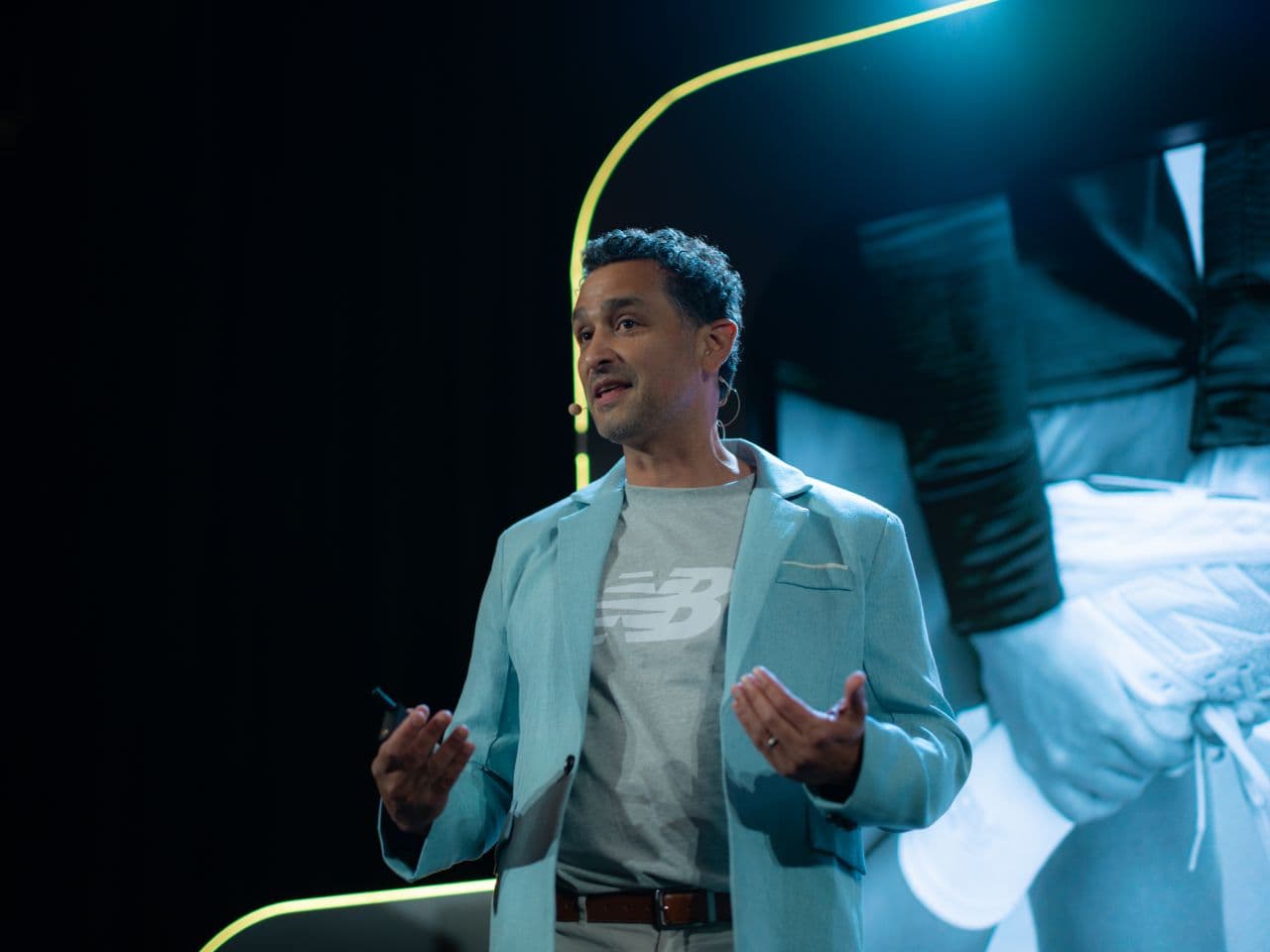
For Nick Lunger, Sr. Manager, Integrated Business Planning at New Balance, that experience reinforced a lesson that extended well beyond technology: successful transformation comes down to priorities, people, and empowering your people.
The complexity behind that growth is significant. New Balance manages more than one million active SKUs across footwear, apparel, and accessories, with demand spread across six global planning regions and more than 120 countries. Its supply network combines owned manufacturing with more than 240 supplier facilities, while products flow through around 40 distribution centers and multiple wholesale, direct-to-consumer, and e-commerce channels.
Each product can vary by style, size, width, color, market, and season, creating a huge number of interconnected decisions across demand, inventory, sourcing, capacity, and fulfillment.
By 2019, much of that complexity was still being managed through Excel and disconnected planning tools. New Balance needed a planning foundation that could support not only the business it had, but also the much larger and more complex business it wanted to become.
That year, New Balance selected o9 for supply chain planning. For Nick, the shared vision was as important as the technology itself.
“What stood out was that they understood that implementing a technology wasn’t about the day that it went live. It was about building a foundation that you could build the future from.”
And this was not a standalone technology implementation.
New Balance undertook its planning transformation while simultaneously rolling out Microsoft Dynamics 365, with the ERP and o9 planning capabilities ultimately going live together. The global deployment brought major planning capabilities and a new enterprise backbone online at the same time, requiring extensive coordination across data, systems, regions, partners, and business teams.
Through Project Dawn, New Balance connected core capabilities including demand, inventory, supply, capacity, allocations, and reservations, creating a more integrated planning environment across the business.
But implementing the technology was only one part of the challenge.
“Success is not a technology project that you’ve deployed. It’s enabling your business to grow.”
That meant committing the right people. New Balance pulled some of its most experienced people out of demand planning, supply planning, inventory, and other business functions and dedicated them to the program full time.
Those experts helped design the solution and ultimately became the change champions responsible for bringing the new way of working back into the organization.
New Balance expected the same commitment from o9.
“We expected our partner in o9 to commit their best people, not more people.”
Nick described a core New Balance and o9 team that worked shoulder to shoulder, including daily scrum calls with many of the same people throughout the program. That continuity helped the teams build trust, work through difficult decisions, and eventually operate as one implementation team.
“That was a relationship that we had for years. And that was one of the biggest reasons that we came out of that project successful.”
For Nick, however, go-live was never the definition of success. The objective was to build a foundation capable of evolving as the business continued to grow.
Today, the planning organization is supporting a New Balance business operating at a dramatically different scale than when Nick joined in 2010.
“Today in 2026, we are probably six times the size of units we were when I started in 2010. We are ten times the revenue for next year that we were when I started in 2010.”
That scale brings more products, markets, factories, suppliers, channels, and disruptions for planners to navigate.
The difference is that teams can now approach those decisions in a more connected way, understanding how a change in one part of the plan affects demand, inventory, supply, and capacity elsewhere.
And that has changed the conversations planning teams can have with leadership.
“We come to our CEO with options and not problems. We come to him with a plan for the future.”
For New Balance, the transformation is still evolving. But the foundation created with o9 has given the company a platform it can continue to build on as the business grows, while Nick’s experience reinforced that technology alone is not enough.
The right priorities, the right people, and the authority to make decisions are what turn technology into lasting change.
Three transformations, one bigger shift
The retail sessions at aim10x Americas showed three different routes to a more responsive business.
Fanatics demonstrated how connected planning can turn volatility into measurable inventory and revenue impact. Comcast showed how bringing fragmented processes together can improve both inventory and service. And New Balance reinforced that sustained transformation depends on the people who own, trust, and use the new way of working.
The broader takeaway is simple: retail transformation is not about creating the perfect plan. It is about building the capability to make better decisions when the plan changes.
About the authors

The Editorial Team, o9
A multidisciplinary collective of editors, strategists, technologists, and former executives with experience across Fortune 500 companies and top consulting firms. Grounded in o9’s mission to help enterprises make faster, better decisions through the power of AI-driven planning and execution software, the team shares clear, practical insights on digital transformation, supply chain, and enterprise planning to support business leaders in navigating complexity and driving change.