7 read min
One of the hardest moments in a planning transformation comes when the new system gives you an answer you do not expect.
At Hormel Foods, that was exactly where old habits started to reappear. Planners and business leaders who had spent years working with familiar spreadsheets and manual overrides were suddenly being asked to trust a different process, one that often surfaced a number they had not arrived at themselves.
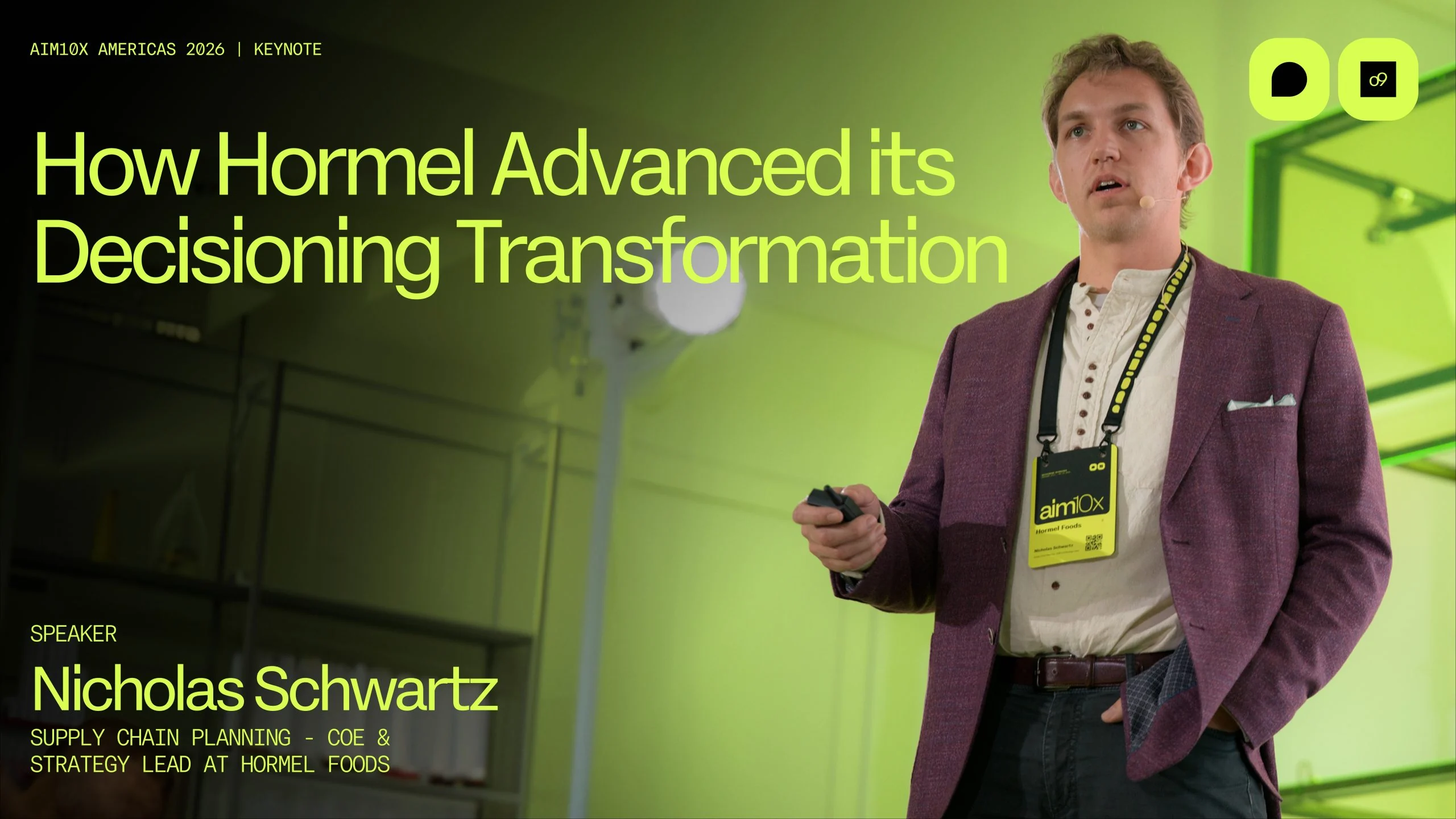
“Just because you don't agree with this number, it doesn't match what's in your spreadsheet, does not mean it is wrong,” said Nicholas Schwartz, Supply Chain Planning - COE & Strategy Lead at Hormel Foods.
That tension became one of the defining lessons of Hormel’s planning transformation with o9.
Over two decades of acquisitions had added brands, plants, SKUs, lanes, planning methods, and data structures across the business. By the time Hormel began its transformation, the company was managing more than 1,700 finished goods SKUs and over 100 weekly lanes across deployment, supply, and inventory planning.
“The complexity had outgrown our operating model,” Schwartz said.
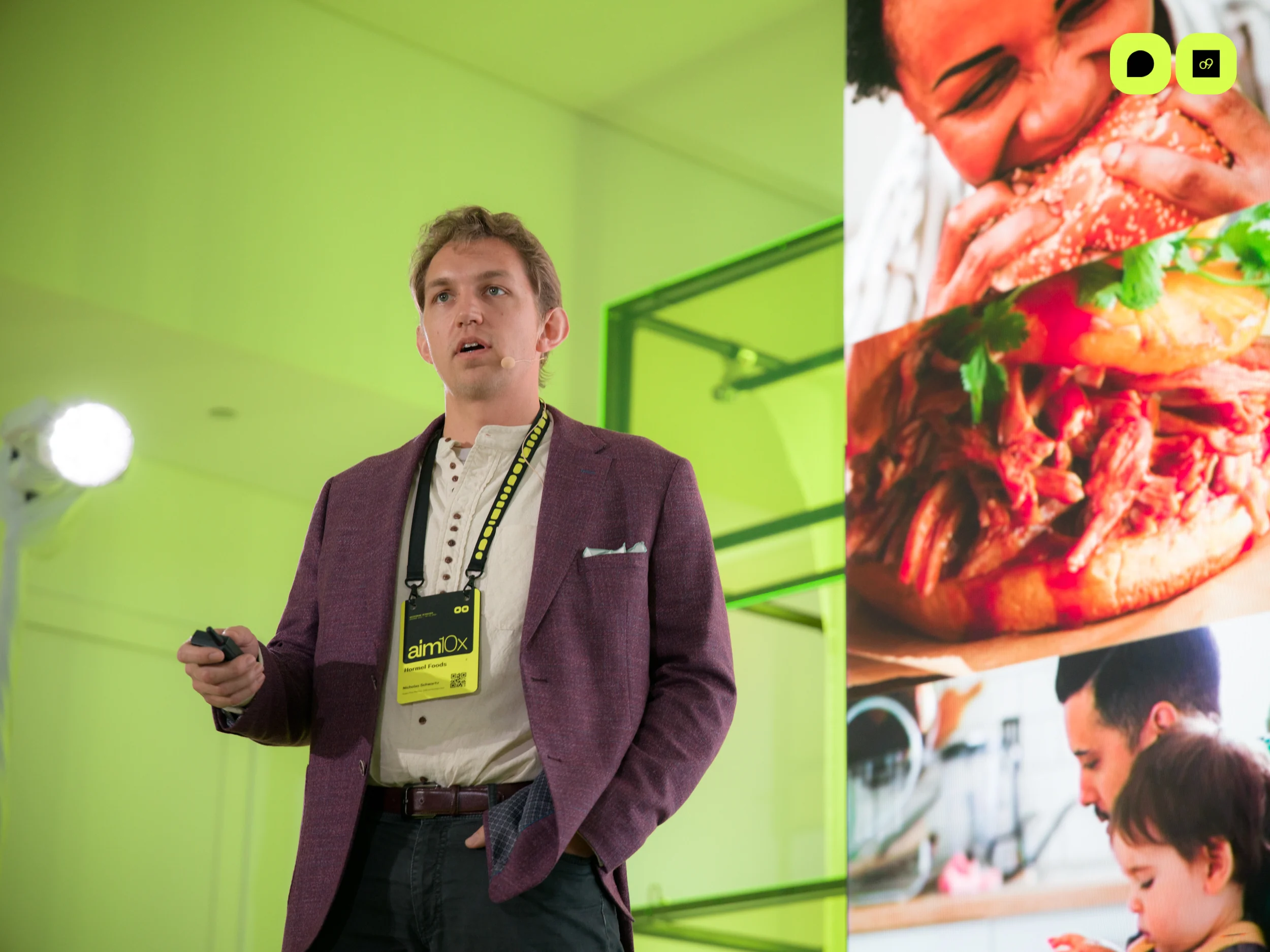
Hormel responded by centralizing planning and moving toward one end-to-end platform with o9. But as Schwartz explained at aim10x Americas 2026, changing the technology turned out to be the easy part.
“o9 itself changing our old tool for our new tool was the easy part. The much more difficult part of the process was changing our team members and the process they were using.”
When the operating model no longer fits the business
Hormel sells products across more than 40 categories and over 80 countries, with shelf lives ranging from around 30 days to more than two years.
The company manufactures in more than 40 locations and distributes through 10 customer-facing distribution centers.
Growth through acquisition had added even more complexity.
Brands such as Don Miguel, Skippy Foods, Applegate, Fontanini, and Columbus came with different operating models, planning methods, data structures, and tools.
That made standardization increasingly difficult.
Hormel’s response was its Transform and Modernize initiative, designed to centralize planning and bring previously siloed processes into one connected environment.
Today, the company is live across North America with demand planning, advanced demand planning, deployment planning, RCCP, MPS, MEIO, and truckload builder capabilities in o9.
Change the process before changing the tool
One of the strongest lessons from Hormel’s transformation was that process change could not wait until go-live.
Before implementing o9, the planning organization was heavily focused on real-time execution.
Inventory was planned once it was already on hand. Production lock windows were driven largely by material availability. S&OE meetings tended to focus on recent events and root-cause analysis, while IBP discussions centered on financial gaps within a relatively fixed horizon.
Hormel deliberately changed those behaviors before the technology arrived.
For S&OE, the company introduced inventory position and supportability thresholds into regular discussions.
The aim was to move the conversation away from what had already happened and toward future service and inventory risk.
“For SNOE, we introduced inventory position and supportability thresholds to all of our meetings to change how those meetings thought about their business,” Schwartz said.
IBP changed too.
Instead of focusing primarily on gaps to financial targets, Hormel began looking at underlying business trends and asking what corrective action was needed regardless of the timeline.
From backward-looking reviews to continuous improvement
Those changes altered the role of planning meetings.
S&OE became part of a continuous improvement process.
“All topics were now on the table because we were focussing on what was going to impact inventory position in the future and service in the future, not what happened in the past,” Schwartz said.
IBP shifted toward longer-term corrections rather than short-term gap filling.
Communication also improved because teams knew where decisions and information would be discussed.
Rather than circumventing the process with ad hoc requests, stakeholders came to meetings prepared with questions and clearer expectations.
But once o9 went live, Hormel discovered that conventional change management alone was not enough.
Why experienced planners can resist a better process
At Hormel, deep business expertise was a source of pride.
Planners had historically owned much of the process end to end and were often only pulled into wider discussions when something had gone wrong.
The new model changed that.
With more topics brought into the planning process, some planners felt they were being challenged unnecessarily.
Schwartz recalled hearing reactions such as:
“We filled this order, why is this being asked?”
At the same time, some stakeholders in IBP felt they had lost control over the numbers they were used to managing themselves.
The system could start to feel like a black box.
“I see, I'm expected to sell this much, why isn't this in the number?” Schwartz said, describing the kind of response the team was hearing.
That tension created a different kind of change problem.
Hormel needed someone who could challenge old ways of working without losing credibility with the people doing the work.
The role of the functional champion
Hormel found its answer in what it calls a functional champion.
This person sits close enough to day-to-day operations to understand how the work is really done, but also has enough credibility with leadership to influence expectations and decisions.
“They are effectively the sales person for your process change for the business,” Schwartz said.
The role is not quite the same as a traditional subject matter expert.
It is also not necessarily a permanent COE position.
What matters is trust.
The functional champion needs enough experience to challenge planners when they revert to old habits, and enough organizational standing to reassure leadership when the new process produces a result that looks unfamiliar.
That became particularly important after go-live.
“People are trusting the recommendations out of the o9 system.”
Nicholas Schwartz
Supply Chain Planning - COE and Strategy Lead, Hormel Foods
Breaking the habit of overriding the system
One of Hormel’s biggest post-go-live risks was a return to legacy behavior.
Planners were increasingly managing the plan through inputs, while leadership often saw only the outputs.
When the number did not match expectations, the easiest response was often to override the recommendation.
The functional champion could step into that discussion.
“Just because you don't agree with this number, it doesn't match what's in your spreadsheet, does not mean it is wrong,” Schwartz said.
That intervention helped change behavior.
Where Hormel had strong functional champions, Schwartz said the company saw significant adoption improvements.
Deployment overrides fell by 52%.
Forecast overrides fell by 49%.
Production overrides fell by 35%.
Those reductions mattered because they suggested users were increasingly trusting the recommendations coming from the system rather than forcing the plan back toward familiar answers.
“People are trusting the recommendations out of the system. Moving forward with the plan and focussing on the analysis and the future forward pieces of their business in their execution.”
What Hormel would do differently now
If Hormel were beginning the transformation again, Schwartz said the company would identify functional champions much earlier.
They would be involved during design and testing before go-live.
At go-live, they would lead change meetings, training, and leadership updates.
After go-live, they would own functional troubleshooting and help set standards for new ways of working.
“Choosing this person wisely and engaging them right off the bat is critical to the success with each of the modules we've rolled out,” Schwartz said.
Hormel is now applying that lesson to new capabilities before they launch.
For demand planning, the right champions may sit across sales, marketing, and demand.
For deployment, they may come from transportation or warehousing.
For supply planning, operations, deployment, and materials may all need representation.
The principle is the same: the people responsible for the change need to sit inside the functions being asked to adopt it.
The next layer of the transformation
Hormel is still expanding the scope of its planning transformation.
The company is evaluating material requirements planning and finite planning, with further opportunities across warehousing optimization, network flow pathing, case fill, and margin optimization.
For Schwartz, that next phase is where deeper synergies could begin to emerge across brands and businesses.
But the lesson from the transformation so far is already clear.
A new planning platform can create better data, better visibility, and better recommendations.
Getting the organization to trust those recommendations and change the way decisions are made requires something else entirely: credible people inside the business who can make the new process feel legitimate.
That is what Hormel found in the functional champion.
About the authors

The Editorial Team, o9
A multidisciplinary collective of editors, strategists, technologists, and former executives with experience across Fortune 500 companies and top consulting firms. Grounded in o9’s mission to help enterprises make faster, better decisions through the power of AI-driven planning and execution software, the team shares clear, practical insights on digital transformation, supply chain, and enterprise planning to support business leaders in navigating complexity and driving change.