From Hypergrowth to Self-Sufficiency: Consumer Products Lessons from WHOOP and Hormel

6 read min
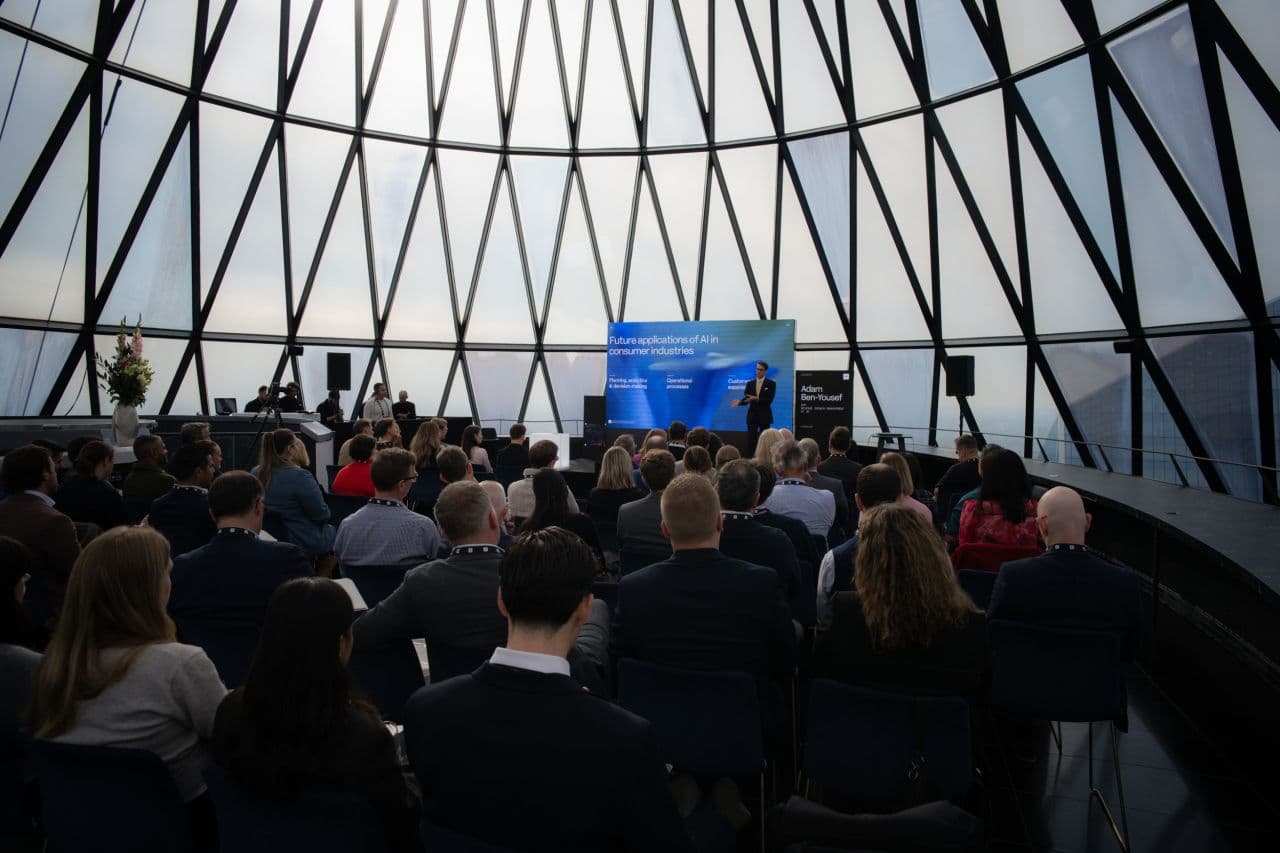
Consumer products companies are navigating faster growth, more markets, more channels, and greater supply chain complexity. At aim10x Americas in Chicago, leaders from WHOOP and Hormel Foods shared how they are building planning capabilities that can keep up.
Their stories were different, but the message was consistent: transformation cannot end at go-live. The real value comes from creating organizations that can make faster decisions, adapt as conditions change, and continuously improve.
WHOOP: Planning for hypergrowth
WHOOP, the human performance brand, helps millions of members make better decisions about their health and performance through continuous data and personalized insights.
The company has scaled rapidly across products, channels, and markets. Marie Fodness, AVP of Global Operations at WHOOP, said membership has nearly doubled year over year and international membership has increased more than 10x since 2023.
But rapid growth also creates operational complexity.
“Growth like this does not come in a clean forecast.”
Marie shared one example in which the commercial organization identified an opportunity for an additional 300,000 units ahead of the holiday period. Determining whether WHOOP could support that demand required nearly a month of work across teams to understand components, capacity, timing, sourcing, and cost.
WHOOP ultimately delivered, but the experience exposed a bigger issue: before accelerating decisions with technology, the company first needed to be clear about how those decisions should be made and who should own them.
That became a central principle of the transformation at WHOOP.
Before selecting a technology platform, the team worked through ownership across demand planning and supply planning, while also strengthening its sales and operations planning process. The objective was to define the processes, decision rights, and responsibilities first, rather than asking software to resolve unclear ways of working.
Marie’s advice was explicit:
“I can’t stress enough how defining your processes and your people before you lead into the implementation will make it a much cleaner process.”
WHOOP applied the same thinking to technology selection. Rather than evaluating vendors primarily against long lists of features, the company brought real business problems into the process and asked prospective partners to demonstrate how they would help solve them.
The initial scope was relatively focused on tactical planning. But as WHOOP worked through what was actually required to answer those business questions, it became clear that the decisions depended on a much broader set of connected inputs.
The resulting vision expanded into an end-to-end planning design spanning demand planning, supply planning, component forecasting, clear-to-build, supplier collaboration, and integrated business planning.
The ambition is ultimately to compress decisions that once required weeks of cross-functional analysis into something far faster.
“It shouldn’t take us a month to evaluate whether or not we can achieve new units and more demand. It should, as we’ve quoted to our board, only take us about a day or so once we have the right software and the right tools.”
Marie recognized that WHOOP needed to build the right team, establish clear ownership, improve its processes, and then use technology to amplify those capabilities once the foundation was in place.
Looking ahead, Marie also shared her perspective on an AI-enabled future for WHOOP.
“I’m not expecting my planners to go anywhere, but I’m going to empower them with tools to move faster, think better, and operate at a higher standard.”
The takeaway from WHOOP is that transformation does not begin with implementation. It begins with clarity: clarity on the decisions that matter, the processes behind them, the people accountable for them, and the business problems technology is ultimately there to solve.
Hormel Foods: Making connected planning stick
At Hormel Foods, the biggest challenge was not simply replacing technology. It was changing the way people worked across a transformation spanning much of the end-to-end planning process.
Nick Schwartz, Supply Chain Planning - COE and Strategy Lead at Hormel Foods, described a planning environment that had become increasingly complex through years of growth and acquisition, adding more than 20 internal nodes, roughly 1,700 finished-goods SKUs, and more than 100 weekly lanes. Different businesses often operated with their own processes, data, and tools.
The company’s modernization effort with o9 is significant in scope. Across the end-to-end decision-making capabilities that are live or going live, Hormel is connecting Demand Planning & Management, Supply Master Planning, Deployment & Truck Load Building, Inventory Optimization, IBP, MPS, and Order Promising into a more integrated planning environment.
The ambition is bigger than replacing individual tools. It is to bring previously siloed planning processes together and create a common foundation for decisions across the business.
But Nick was clear that putting the technology in place was only one part of the transformation.
“Changing our old tool for our new tool was the easy part. A much more difficult part of the process was changing our process, our team members and the process they were using.”
Hormel began changing those ways of working even before go-live. Execution meetings shifted from reviewing past performance toward future inventory and service, while IBP conversations moved from short-term financial gaps toward trends and longer-term corrective actions.
After go-live, however, the company found that traditional change management alone was not enough.
Its answer was the functional champion: an experienced individual close enough to the business to challenge old behaviors and credible enough with leadership to advocate for the new way of working.
And because the o9 scope at Hormel cuts across so many planning decisions, those champions come from across the organization. Depending on the solution, they include leaders and experts from Sales & Marketing, Demand Planning, Supply Planning, Operations, Deployment, Transportation & Warehousing, and FP&A.
Nick described the functional champion as “effectively the salesperson for your process change for the business.”
Where Hormel established these champions, the impact became measurable.
“For deployment, we have seen a 52% reduction in people manually overriding the recommendations.”
And on the production side:
“We’ve seen a 35% reduction in production overrides, meaning we are staying flexible on the production side and allowing the tool to continue to recalculate our plan.”
Nick summed up the broader impact simply:
“Where we have these functional champions, we’ve seen massive ways-of-working adoption and success.”
Hormel is now identifying functional champions before new capabilities are rolled out and involving them throughout design, testing, training, leadership communication, and post-go-live support.
The lesson from Hormel is that the broader and more connected the planning transformation becomes, the more important cross-functional ownership is. o9 provides the foundation to connect decisions across the business, while functional champions help translate that capability into new ways of working that people trust and sustain.
Building planning capabilities that keep improving
WHOOP and Hormel Foods are at different points in their transformation journeys, but their experiences point to the same broader shift.
WHOOP demonstrated why hypergrowth requires dramatically faster decision-making and why clear processes and ownership need to come before technology. Hormel showed that connected planning creates lasting value only when people trust the outputs and change how they work.
That was one of the clearest takeaways from the consumer products sessions at aim10x Americas: the strongest transformations do more than implement a new platform.
They leave the business better equipped to handle whatever comes next.
About the authors

The Editorial Team, o9
A multidisciplinary collective of editors, strategists, technologists, and former executives with experience across Fortune 500 companies and top consulting firms. Grounded in o9’s mission to help enterprises make faster, better decisions through the power of AI-driven planning and execution software, the team shares clear, practical insights on digital transformation, supply chain, and enterprise planning to support business leaders in navigating complexity and driving change.