7 read min
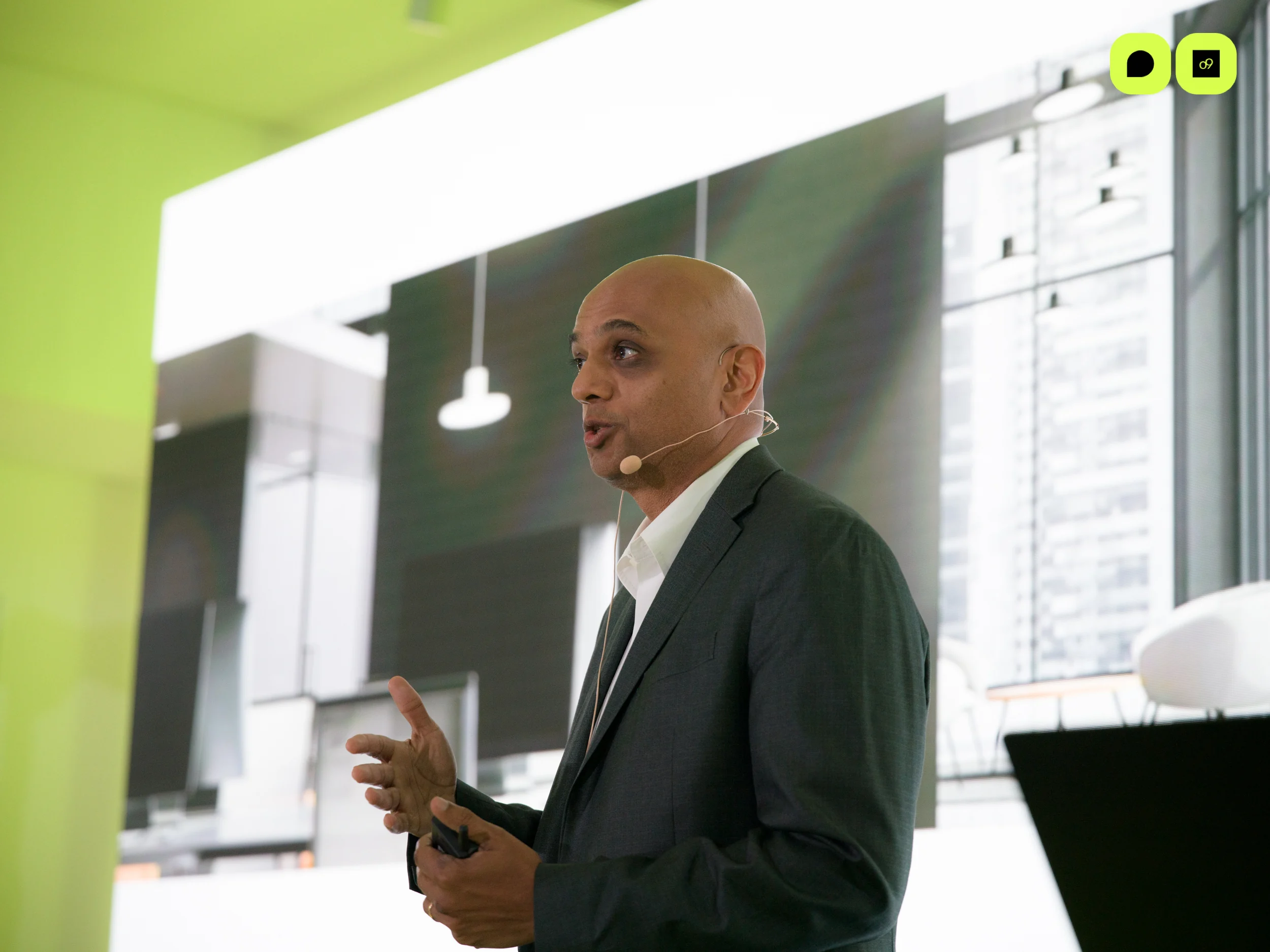
Before joining Acuity, Amit Shah helped sell o9 into the company. Now he has to make good on the promises.
Whenever a planning challenge comes up, his boss can still pull up old videos of Shah confidently saying, “Absolutely o9 can do that.”
Today, as Product Manager, Supply Chain Planning at Acuity, he is one of the people responsible for proving it.
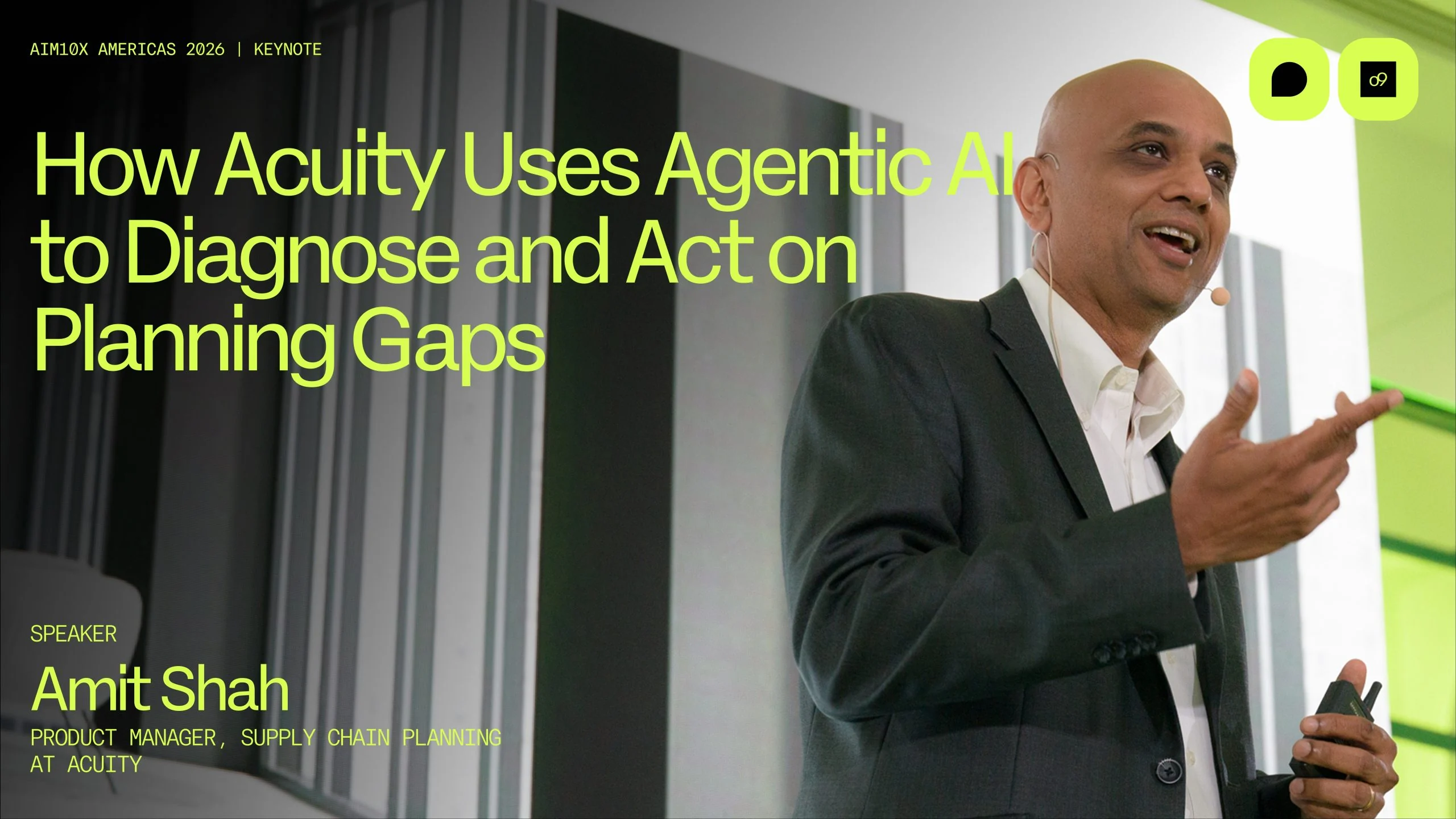
At aim10x Americas 2026, Shah showed how Acuity is using agentic AI to diagnose inventory gaps, understand why they happened, and surface the actions planners should take next.
Planning against a supply chain with millions of moving parts
Acuity’s supply chain is far more complex than the finished products might suggest.
A light fixture can contain LED drivers, PCBA boards, inductors, LED boards, connectors, housings, optics, wiring, and wiring harnesses.
Across the business, Acuity manages more than two million raw material components, more than one million finished goods, around 350 sourcing and destination points, bills of material that can extend to 13 levels, and supply from more than 18,000 vendors.
That complexity is made harder by competition for some of the same components used by major technology companies.
For products such as PCBA boards, Acuity may be competing with companies like Tesla, Apple, or Samsung.
That makes forecasting and timing especially important.
“We need to be able to properly forecast and properly understand what our demand is going to be and when do we need them,” Shah said.
Connecting planning to the business model
Acuity frames its business model around three priorities: grow net sales, turn profits into cash, and avoid growing the balance sheet unnecessarily.
Supply chain planning connects directly to all three.
Having the right product in the right place protects sales. Keeping inventory at appropriate levels helps turn margin into cash. Better planning efficiency reduces the need to carry unnecessary assets.
“o9 is actually a big part of this mantra within supply chain of growing net sales, turning these profits into cash, and then not growing that balance sheet,” Shah said.
Acuity has already implemented foundational capabilities including demand planning and supply planning, and has financialized the plan to understand how supply chain decisions affect revenue and cost.
More recently, the company has also invested in building a Center of Excellence to increase its internal capability and become more self-sufficient in supporting and extending o9.
That foundation is now enabling the next phase: AI agents.
The gap between the plan and what actually happens
Shah describes two types of planning gaps.
The first is an execution gap.
This concerns how effectively planners use the system, the quality of the inputs, supplier performance, and other operational factors that can improve over time as planning processes mature.
The second is more structural.
Planning always involves making decisions before every fact is known.
Forecasts may be wrong. Supplier lead times may change. Manufacturing capacity can shift. Demand can move unexpectedly.
“We have to make a lot of decisions before we actually know what's going to happen,” Shah said.
That means some difference between plan and execution is inevitable.
The challenge is understanding why it happened and what to do about it quickly enough to make a difference.
One inventory exception can trigger dozens of questions
Take a single SKU with too much or too little inventory.
A planner may need to determine whether the forecast was wrong, whether the product mix changed, whether suppliers met expected lead times, whether unexpected demand appeared, and what action can now mitigate the problem.
For one item, that analysis is manageable.
Across two million components, it is not.
“When you think of, again, a component catalog of two million different parts, this is a very difficult question for our planners or any set of planners to answer on a daily basis,” Shah said.
This is where Acuity sees AI becoming particularly useful.
Instead of asking planners to manually search across screens, measures, scenarios, and data sets, an agent can investigate that data directly and return the relevant exceptions.
“What we start to see is that anybody who has access can now just use o9 AI or LLMs to be able to get specific information.”
Amit Shah
Product Manager, Supply Chain Planning, Acuity Brands
Asking the plan a question in plain English
Shah demonstrated an o9 Post-Game Analysis inventory agent using data connected to a copy of Acuity’s production environment.
His first question was deliberately simple:
“I think I have an inventory problem, but I'm not exactly sure. Tell me about it.”
The agent first clarified which planning scenario to use, then analyzed the data and returned a set of inventory exceptions.
From there, it identified items below safety stock, excess inventory positions, future risks, and locations where inventory would take an extended period to burn down.
Historically, getting to that information required knowing where to look in the o9 platform and how to perform the analysis.
“What we start to see is that anybody who has access can now just use this AI or these LLMs to be able to get this information out,” Shah said.
Moving from insight to action
The more important part of the demonstration came next.
Shah asked the agent to focus only on MRP items.
He did not need to explain the internal terminology or teach the agent where the relevant measures sat in the system.
The agent already understood the planning context and filtered the analysis accordingly.
He then asked a more operational question.
Were some SKUs overstocked in one location but understocked somewhere else?
The agent identified the highest-value opportunities to rebalance inventory, showed which sites had excess and which had shortages, and checked whether existing sourcing lanes could support the transfer.
Where no sourcing lane existed, it surfaced that as an exception for the planner to consider.
That changes the task from searching for a problem to deciding whether to act on a clearly defined opportunity.
Prioritizing the actions that matter most
The same approach can be used for shortages.
Shah asked whether understocked SKUs had incoming purchase orders that could be expedited.
With 18,000 vendors and two million components, manually reviewing those possibilities at scale would be extremely difficult.
The agent instead returned a prioritized list of purchase orders that could potentially be pulled forward.
“You have POs, pull them in and pull them in faster,” Shah said, describing the type of recommendation the agent can surface.
The aim is not simply to provide more information.
It is to rank the actions that are most likely to create value.
Turning the analysis into an executive narrative
The agent can also package its findings for other audiences.
At the end of the demonstration, Shah asked o9 to turn the analysis into a PowerPoint presentation.
The system produced an inventory exception review containing an executive summary, excess inventory analysis, shortage analysis, incoming purchase orders, and inventory transfer opportunities.
“All of this information, this PowerPoint and all this other information came just automatically by me asking the questions to that LLM,” Shah said. “Other than that, there was actually no manual input whatsoever.”
That matters because analysis rarely ends with the planner.
Insights often need to be explained to executives, buyers, suppliers, and other stakeholders before action is taken.
Automating part of that narrative can reduce another layer of manual work.
From one agent to a swarm
Acuity is not treating the inventory agent as an endpoint.
The next step is to understand why exceptions happened in the first place.
Was demand forecast incorrectly? Were purchase orders placed too late? Did suppliers miss agreed lead times?
That requires different forms of analysis working together.
“So we're moving from just one specific agent to rather swarms of agents that talk about what happened, why did it happen, and then this agent here as an example, what am I going to do about it?” Shah said.
That progression captures the larger opportunity Acuity sees in agentic planning.
The value is not in replacing planners with another interface.
It is in giving them a faster way to move through the questions they already have to answer every day: what changed, why did it change, and what is the highest-value action now?
About the authors

The Editorial Team, o9
A multidisciplinary collective of editors, strategists, technologists, and former executives with experience across Fortune 500 companies and top consulting firms. Grounded in o9’s mission to help enterprises make faster, better decisions through the power of AI-driven planning and execution software, the team shares clear, practical insights on digital transformation, supply chain, and enterprise planning to support business leaders in navigating complexity and driving change.