Accelerating the Plan: How Garrett Motion Built a More Connected Supply Chain With o9

7 read min
Garrett Motion knows a thing or two about acceleration.
The company produces around 55,000 turbochargers every day, operates a highly integrated global manufacturing network, and has spent decades engineering technologies designed to make things move faster. But a few years ago, its supply chain planning processes were struggling to keep the same pace.
Across 13 manufacturing sites, teams were planning in different Excel files, working with different master data, and responding to demand changes in different ways. Suppliers could receive one signal one week and a different one the next. Globally, Garrett lacked a clear view of where the problems were and what action should come next.
“We didn't have standardized processes across our organization. We didn't have a holistic approach on supply chain,” said Ettiene Devries, Senior Director Global Supply Chain Excellence, Strategy & IBP at Garrett Motion.
Four years later, Garrett has implemented integrated business planning, inventory optimization, control tower capabilities, and a new planning operating model with o9. According to Devries, the transformation has already delivered around 90% of the value set out in the original business case, even as the external environment changed around it.
A supply chain built for a changing business
Garrett Motion is the world’s largest turbo supplier, with approximately $3.6 billion in annual revenue and a global manufacturing and engineering footprint. Its technology portfolio has also been evolving beyond traditional internal combustion applications into zero-emission technologies and industrial markets.
That diversification created a planning challenge.
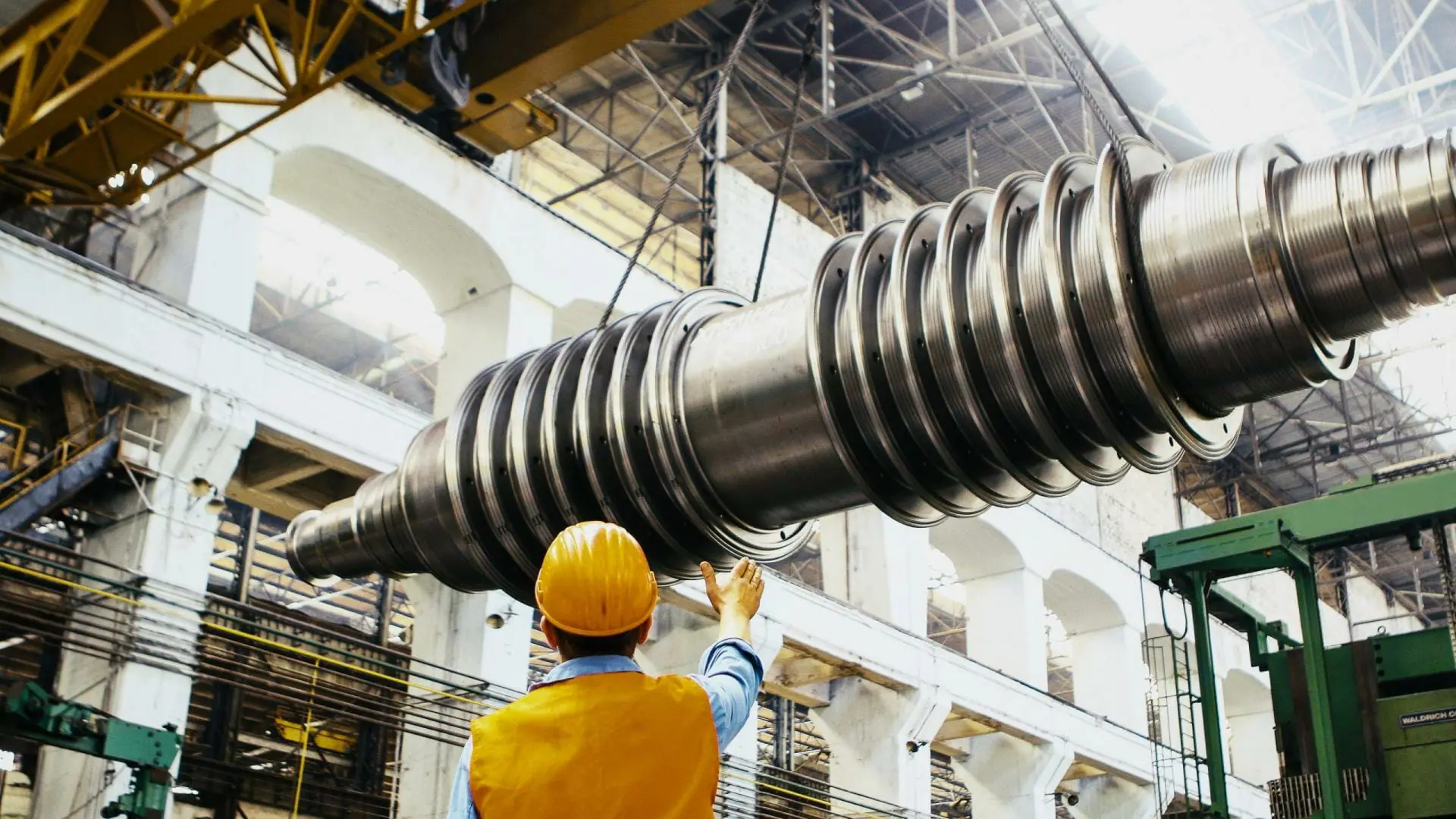
Around 85% of Garrett’s manufacturing capacity is produced internally. Its engineers design much of the machinery used to manufacture its products, and around 100 new applications enter the portfolio every year.
As the business expanded into new technologies and markets, the supply chain needed to become more responsive too.
“Our OEMs were experiencing really volatility in the network, which then translated into volatility in our supply chain,” Devries said. “So we needed to become more agile.”
But the existing planning model made that difficult.
Thirteen plants, thirteen ways of planning
Before the transformation, planning was highly decentralized.
“We had 13 facilities that were doing planning, each with their own Excel, different way of thinking, each with their own SAP,” Devries said.
The impact reached beyond Garrett itself.
“So our suppliers loved us because the signal was this week right, next week not right,” he joked.
Frequent production changes were often attributed to shifting customer demand, but the underlying problem was broader. Processes were fragmented, data was inconsistent, and there was no integrated global view connecting demand and supply.
“From a global perspective, we could never put our finger on where the issues are or what do we need to do next,” Devries said.
Garrett began addressing that problem in 2021.
The company mapped its processes, worked with external partners to understand where value was leaking, and then evaluated the planning technology available in the market.
Eventually, it chose o9.
Why Garrett Motion chose o9
Garrett’s selection process was deliberately hands-on.
The company gave potential technology partners its own data and challenged them with scenarios to understand how their platforms would respond.
It was also thinking beyond the immediate implementation.
“We also internally had a discussion around, are we doing this for the rest of Garrett's life and do we need to make sure it's future proof as we go into the next verticals that we wanted to do,” Devries said.
For Garrett, the decision came down to a combination of culture, flexibility, collaboration, and future vision.
“We saw a clear culture fit, the partnership approach, extremely flexible from an o9 perspective and being collaborative,” he said.
The ability to shape future capabilities also mattered.
Garrett has continued working with o9 on requirements specific to automotive planning, including simplifying detailed scheduling for its manufacturing environment.
That relationship extended into the implementation itself.
Devries described daily stand-ups involving Garrett’s internal team and o9’s project team as an important part of the collaborative model.
“That was the collaborative approach o9 brought to the table and that really enhanced what we were building on there.”
Building the connected planning foundation
Garrett has since implemented a broad set of capabilities across the planning landscape.
That includes integrated business planning, inventory optimization, control tower capabilities, and the Enterprise Knowledge Graph, with additional modules continuing to move through final design and rollout.
The next stage will extend that foundation further.
Garrett is looking at generative AI to support more effective decision-making, alongside deeper supplier relationship management that moves beyond Tier 1 suppliers into Tier 2 suppliers and tooling capacity across both levels.
The aim is to create more visibility into the extended network, not simply Garrett’s own operations.
Measuring the transformation against business value
From the beginning, Garrett defined clear business outcomes.
The company wanted to improve inventory turns, reduce excess inventory, optimize resources, lower premium freight costs, and simplify its IT landscape.
At the time, that IT landscape included four different systems on top of the spreadsheets already being used across the organization.
Four years later, Devries said most of the original business case has been delivered.
“We've delivered 90% of it, even in the environment where the baseline has changed.”
That caveat matters.
The geopolitical and supply chain environment Garrett operates in today is not the environment in which those targets were originally set.
But Devries argues that the visibility created through the transformation has helped the company respond more effectively.
“Because of the visibility we've created with our tools, we were able to respond much more quicker and give the leadership direction on what to do.”
The blueprint should be allowed to change
Garrett began its transformation by defining how planning should work.
The company agreed principles with business leaders, documented detailed processes, and created a blueprint.
Then implementation began.
“It was difficult. It was painful. And it was wrong,” Devries said.
Once the project moved into the real supply chain, previously hidden complexity surfaced.
That forced the team to rethink parts of the process.
Garrett therefore treated its blueprint as a living document rather than a fixed specification.
“We wanted them to understand our blueprint document is not cast in stone. Because you only know what you don't know,” Devries said.
The team repeatedly returned to the same question: what needs to change to deliver the value the transformation was originally designed to create?
That willingness to adjust became part of the methodology.
Sometimes a 'big bang' really is a big bang
Garrett also made a deliberate choice about how some capabilities would go live.
With 13 plants, it could have rolled demand planning out one site at a time.
It chose not to.
“We switched the one system off at 5 to 8 on a Monday morning. And we switched o9 on at 8 o'clock in the morning.”
For demand planning, that big-bang approach worked.
For other capabilities, such as detailed scheduling, Garrett expects to take a plant-by-plant approach.
The lesson is not that one rollout model is always better, but instead that deployment approach needs to fit the process being transformed.
Don’t wait for perfect master data
Devries’ final lesson concerns one of the most persistent obstacles in planning transformations: data.
Garrett knew its master data was imperfect when the program began.
It still is.
“The master data even today is not 100% correct. But if you're going to wait for perfection on master data, you're never going to get started.”
Instead, Garrett identified the critical data needed to begin, put the necessary controls in place, and continued improving quality as the transformation progressed.
That reflects the broader character of the program.
The company did not wait for every process, data point, or requirement to be perfect before moving.
It established the foundation, learned what the real network looked like, adjusted the blueprint, and kept building.
For a company whose products are designed around acceleration, the same principle now applies to its planning organization: create enough visibility to see what is changing, then respond before the problem has moved somewhere else.
About the authors

The Editorial Team, o9
A multidisciplinary collective of editors, strategists, technologists, and former executives with experience across Fortune 500 companies and top consulting firms. Grounded in o9’s mission to help enterprises make faster, better decisions through the power of AI-driven planning and execution software, the team shares clear, practical insights on digital transformation, supply chain, and enterprise planning to support business leaders in navigating complexity and driving change.