6 read min
A sneaker can go from a must-have to yesterday’s news surprisingly fast.
For JD Sports, that matters. Its core customers are young, trend-led, highly connected, and often looking for the latest high-heat products they have just seen on social media or on someone else’s feet. The assortment has to keep up.
Behind that customer experience sits a much harder planning problem: thousands of stores, hundreds of suppliers, short product life cycles, varying minimum order quantities, and increasingly localized demand.
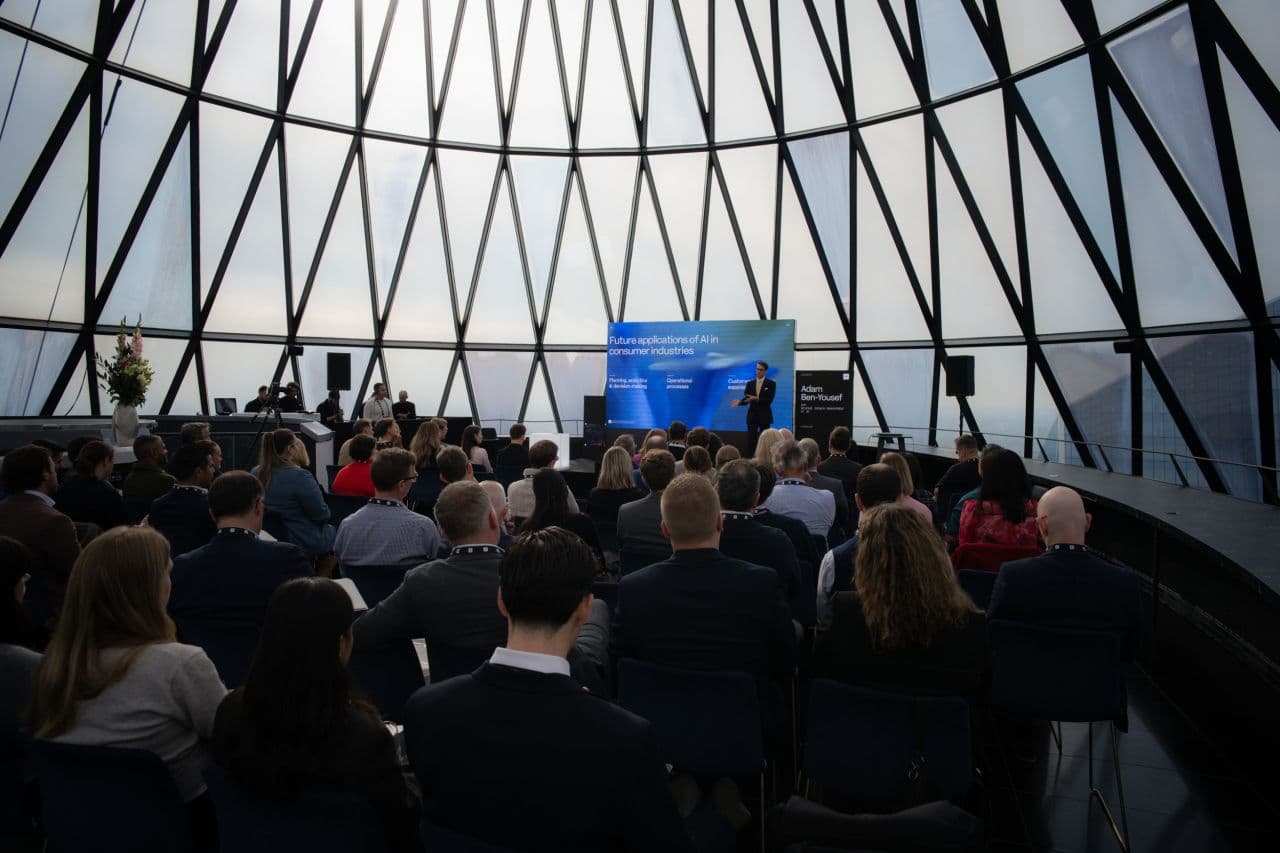
That was the challenge Mark Yates, Programme Manager at JD Sports, and Marta Romero, Project Owner at JD Sports, brought to aim10x Europe 2026 as they shared how the retailer is transforming buying and merchandising planning with o9.
The goal is to move away from spreadsheet-heavy planning and give teams a more scalable way to decide what products should go where, in what quantities, and for which customers.
Planning for a customer who moves fast
JD Sports has grown from a single store in Bury, near Manchester, into a global sports fashion retailer operating across 36 countries and more than 4,800 stores. Around a quarter of its business is online.
Its customer base adds another layer of complexity.
Around three-quarters of JD’s customers are under 40, with strong representation from Gen Z and Gen Alpha. They are trend-conscious, socially connected, and often looking for products with short life cycles and high demand.
That makes assortment planning especially important.
JD needs to balance continuity products with fast-moving styles, while also accounting for significant differences between locations and local communities.
“A key requirement for us was to have hyper-localized clustering,” Yates said. “We want to focus on what those local communities need to offer the best products, best assortment through the best campaigns.”

When more spreadsheets stop being the answer
As JD’s assortment and store network expanded, its existing planning model became increasingly difficult to scale.
Romero described a process heavily dependent on spreadsheets.
The problem was not simply the amount of manual work. It was the growing volume of data that planners were expected to handle.
“You can go wider in your planning and buying team, you are not able to reach the goals because the amount of data starts to go too high in volume, and you are not able even with more hands to reach all the targets,” she said.
That created a clear case for a more structured platform.
In February 2025, JD secured board approval to implement a strategic assortment planning solution designed to digitize planning, support more objective decision-making, and create a stronger data foundation for margin efficiency and customer relevance.
After a vendor selection process, JD chose o9.
“We felt that o9 met our requirements and could deliver against our complex landscape,” Yates said.
Getting the right product to the right place
The first phase focuses on assortment planning across around 1,100 JD stores in the UK and Europe, supporting approximately 120 users.
The business needed a planning model that could reflect the specific realities of sports fashion retail.
That includes localized clustering and size curves, both of which can make a substantial difference to how products are distributed.
The aim, Romero explained, is simple in principle.
“We try to place the product in the best place, at the best time, and also, of course, with the best price to deliver to our customers.”
But achieving that consistently at scale requires more than adding planners.
JD wants to create automated workflows, clearer business rules, and a collaborative environment where buying and merchandising teams are working from the same platform.
That should also give the business stronger governance and traceability over how planning decisions are being made.
Building the foundation before adding intelligence
JD has taken a deliberate approach to the transformation.
The initial objective is not to reinvent every planning process immediately.
Instead, the first phase moves teams from spreadsheets onto a common platform while retaining enough familiarity to prevent change management from becoming overwhelming.
“We are going for a first phase of AP, and what we are trying to do is to move from spreadsheets into a platform but keeping some similarity to the process that we are currently having,” Romero said.
Once that foundation is established, the business plans to add more intelligence and new use cases.
That staged approach reflects a broader lesson from the implementation: transformation rarely follows the blueprint perfectly.
JD originally expected its build phase to take six sprints. It took nine. Romero does not see that as a failure.
“You go for a design phase and a good blueprinting, but you need to be aware that you are going to find some different challenges and struggles during the building phase that you want to achieve as a business,” she said.
The lesson was to leave enough flexibility in the project to adapt as teams learned more.
The data problem hiding inside the planning problem
Another major challenge was data quality.
Some of the most important planning inputs, including clustering and size curves, had previously been managed outside a centralized system.
That meant there was no single source of truth.
“This is a key part of these kinds of projects which are data driven,” Romero said. “We find some inconsistency data, no single source of truth.”
JD’s recommendation is to invest early in strong data analysts and architects who can understand what information already exists, identify gaps, and map those requirements into o9.
The issue is not simply whether data exists. It is whether the granularity, structure, and definitions are good enough to support the decisions the business wants to make.
Change management cannot sit at the end
The technology implementation may have had defined phases, but change management ran alongside the entire program.
Romero described it as the “invisible partner” throughout the project.
That mattered because the transformation touches teams whose primary focus is still running the business.
Subject-matter experts have to support the project while continuing their day jobs. Other users may hear about changes long before they understand what those changes will mean for their own work.
JD used demos, leadership engagement, testing, and regular communications to keep stakeholders involved.
The aim was to make the project feel closer to the people who would eventually use it.
“Make the project close to the people,” Romero said.
Yates reinforced the same point in his closing remarks.
“Change management is something that we talk about all the time, but something that is often forgotten,” he said. “Make sure that you know who your stakeholders are, what makes them tick, and bring them on the journey with you.”
Assortment planning is the opening move
The current project is only the first stage of JD’s wider planning roadmap.
After assortment planning, the business is looking toward forecasting, allocation and replenishment, supplier integration, pricing, markdown, and promotions.
That sequencing matters.
The first objective is to establish a stronger planning foundation. Once users understand the platform and the underlying data becomes more reliable, the organization can build more capabilities on top.
Yates’ final recommendation was to keep the transformation focused on outcomes rather than treating go-live as the finish line.
“Make your transformation outcome-driven,” he said. “Make sure that you're measuring that throughout the project.”
For a retailer built around keeping pace with fast-moving customers, that may be the broader goal of the transformation itself: create a planning organization that can move at the same speed as the market it serves.
About the authors

The Editorial Team, o9
A multidisciplinary collective of editors, strategists, technologists, and former executives with experience across Fortune 500 companies and top consulting firms. Grounded in o9’s mission to help enterprises make faster, better decisions through the power of AI-driven planning and execution software, the team shares clear, practical insights on digital transformation, supply chain, and enterprise planning to support business leaders in navigating complexity and driving change.