8 read min
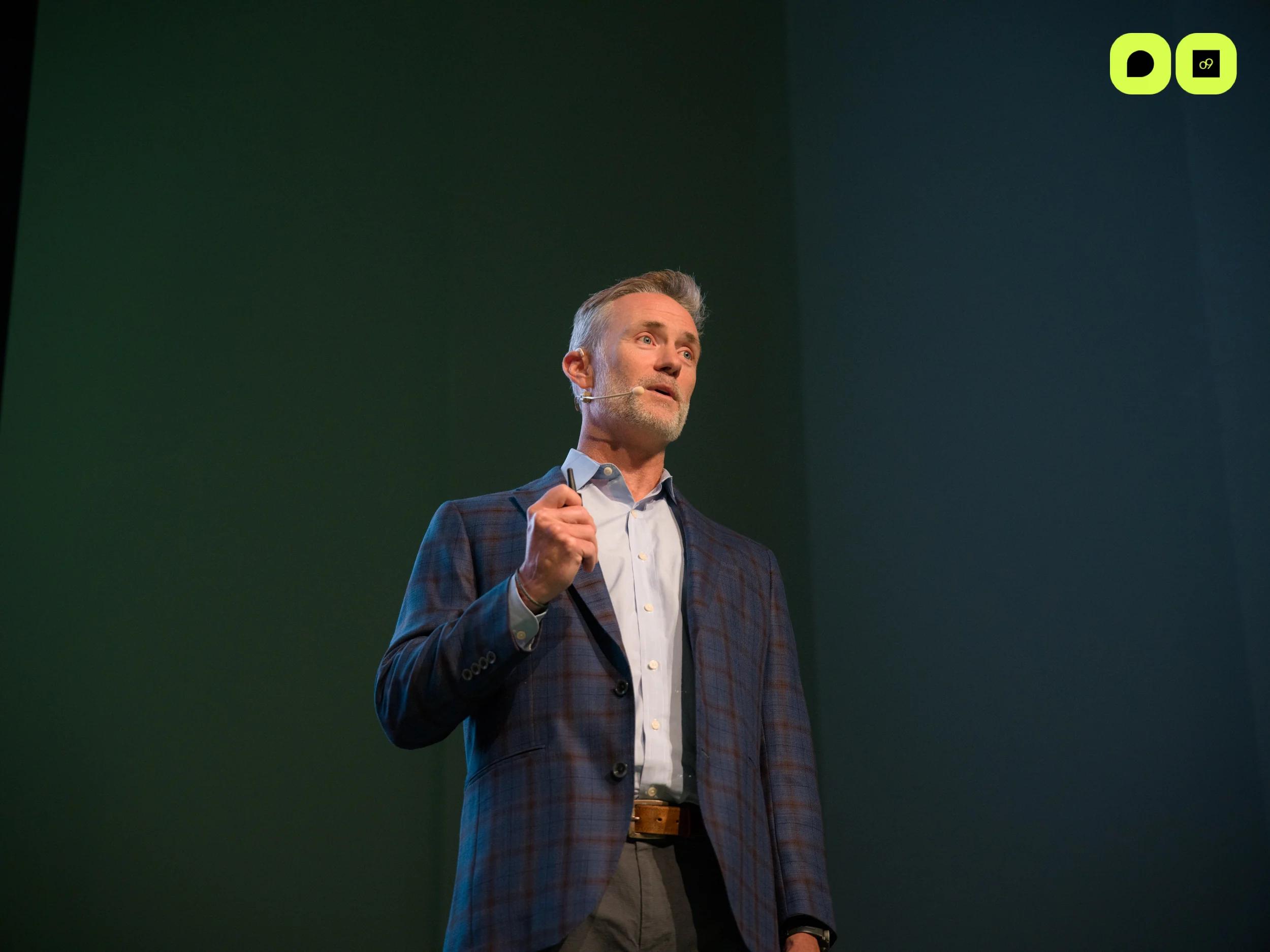
New Balance has changed a lot since Nick Lunger joined the company in 2010.
Back then, as he puts it, the brand was “decidedly uncool.” It sold a familiar gray shoe to a familiar customer, through a familiar set of retailers. The business worked, but it was not built for the scale, speed, and cultural relevance New Balance would eventually pursue.
Over the next decade and a half, that changed dramatically. New Balance expanded into more performance categories, built a stronger fashion presence, partnered with athletes and celebrities, moved further into direct-to-consumer, and grew across more geographies and channels. Its supply chain had to keep up.
By 2019, the company had reached a decision point.
“We needed to build a system that would allow us to not only match the demand that we had, but to grow into the future where we wanted to be,” said Lunger, Senior Manager, Integrated Business Planning at New Balance.
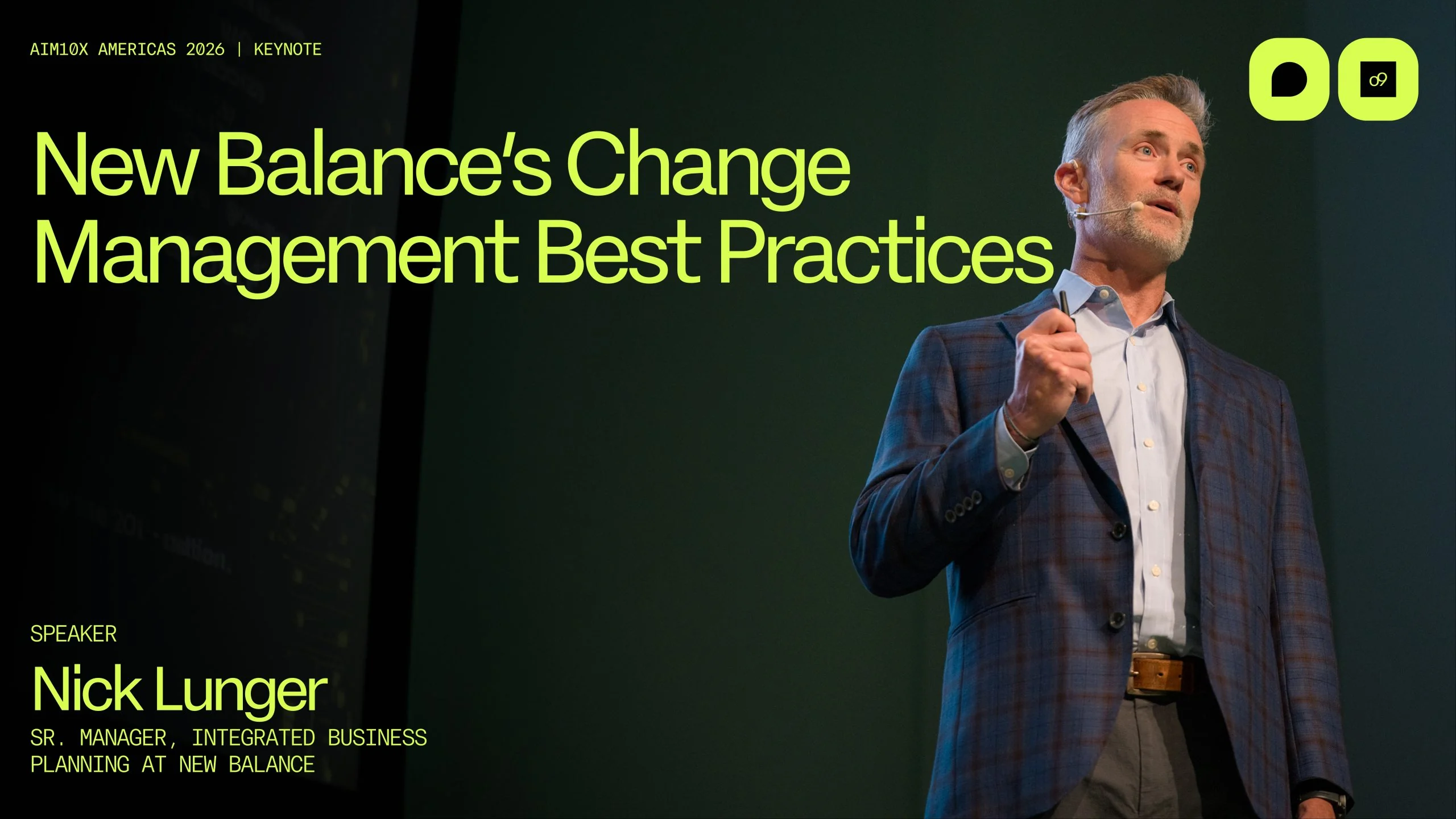
At aim10x Americas 2026, Lunger reflected on New Balance’s five-year planning transformation with o9 and the change management lessons that mattered most: focus on the experience, commit the right people, and give them the authority to make decisions.
Growth changed the planning problem
The New Balance of 2010 was a much simpler business.
At the time, around 80% of revenue came from North America. The company worked with a relatively small number of retailers, wholesalers, factories, and countries.
Then the brand accelerated.
New Balance expanded in baseball and basketball, increased its presence in American football, and developed more technically advanced performance products. At the same time, it became increasingly fashion-led, using limited launches, collaborations, and cultural moments to create demand.
That introduced a different kind of supply chain challenge.
A limited product launch might require coordination across design, development, merchandising, and supply chain to make sure the product arrived at exactly the right time and place, without appearing too early or becoming too widely available.
Sometimes the market moved faster than anyone expected.
Lunger recalled the surge in website traffic after Taylor Swift was photographed wearing New Balance shoes at a Kansas City Chiefs game.
“We didn't respond. We couldn't. I don't think anyone saw the impact,” he said.
Those were the kinds of moments the planning organization increasingly needed to handle.
When Excel stopped scaling
As New Balance grew, so did the complexity behind the scenes.
By 2019, North America represented around 30% of the business rather than 80%. The company had expanded globally, moved into more channels, and increased its direct-to-consumer business.
Forecasting, inventory management, and supply planning all became harder.
“I often joke, I think a lot of my colleagues still deserve Nobel Prizes because we did this on Excel, for the most part, up until 2019,” Lunger said.
That year, New Balance selected o9 as its supply chain planning partner.
The technology mattered, but Lunger said the shared vision mattered more.
“What stood out was that they understood that implementing a technology wasn't about the day that it went live. It was about building a foundation that you could build the future from, that change was the only constant that we knew.”
That became central to how New Balance approached the transformation.
Focus on experiences, not features
One of Lunger’s strongest lessons is deceptively simple: start with the experience you want to create for users.
Technology projects can easily become dominated by features, configurations, and technical requirements.
But end users rarely care about those things in isolation.
“Success is not a technology project that you've deployed. It's enabling your business to grow,” Lunger said.
He compared the idea to marketing a running shoe.
A runner may not care about the density of the foam or the exact weight in ounces. They care about whether the shoe feels lighter, more responsive, and better connected to the ground.
The same principle applies to planning technology.
“Talk to them in their language, meet them where they're at,” Lunger said. “The people that are gonna be using these tools are the most important people that you need to reach with this priority.”
New Balance learned this partly through experience.
The implementation team was deeply engaged with the technology and understood what had been built. Many users outside the project did not.
When the system went live, some were still catching up.
“We were really focused on features,” Lunger said. “But what it didn't do is resonate with the larger masses of the organisation.”
Go-live is the beginning
That leads to another lesson: be realistic about what day one actually means.
A major implementation is rarely finished when the system goes live.
“Day one is not the end of the project. Year one is not the end of the project,” Lunger said. “This is a never-ending project, to be totally honest with you.”
The reason is straightforward.
Technology changes quickly. Business models evolve. Customer behavior changes. New use cases emerge.
The objective is therefore not to build a perfect system for one fixed future.
It is to create a flexible foundation that can continue changing.
“At the end of the day, the best technology in the world, unused, is not useful at all,” Lunger said.
Put your best people on the project
New Balance’s second major lesson was about people.
Lunger argues that transformation programs need the strongest subject matter experts from the business, and they need them full time.
New Balance took key people from demand planning, supply planning, inventory, and other functions and moved them onto the implementation.
“For four years, we took them out of those functions and we put them on this project 100% of their time,” he said.
That was difficult.
The company was still running and growing the business while some of its best people were no longer doing their old jobs.
But splitting people between transformation work and business-as-usual created an even bigger risk.
“If you tell them you're gonna put 60% of your time on the implementation and then 40% of your time back in your old job, guess what? You're putting 100% of your time on the implementation and you're working at night to make up for your other job.”
The result is usually burnout or mediocre performance across both roles.
Dedicated staffing also sends a message.
If leadership says a transformation is one of the most important initiatives in the company, the resourcing should reflect that.
“You can't tell everybody that this is the biggest thing that we've ever done... but we're not gonna put our best people on it,” Lunger said.
“Every single day at 8 a.m. we would start a scrum call with the same o9 people every day. That was a relationship that we had for four years. And that was one of the biggest reasons that we came out of that project successful.”
Nick Lunger
Sr. Manager, Integrated Business Planning, New Balance
Expect the same commitment from your partner
Lunger applies the same principle to technology partners.
New Balance did not simply want more people from o9.
It wanted the right people.
“More resources does not help,” he said. “I don't know anyone that had a meeting with more people in it that it worked better when more people were put into that meeting.”
Instead, New Balance and o9 built a small, consistent working relationship over several years.
Lunger joked that he spoke to some members of the o9 team more often than his wife.
“Every single day at 8 a.m. we would start a scrum call with the same people every day,” he said. “That was a relationship that we had for four years. And that was one of the biggest reasons that we came out of that project successful.”
That consistency helped build trust between the teams and made difficult decisions easier later in the program.
Give the experts room to decide
The third pillar was empowerment.
Once an organization has identified the right priorities and assigned its strongest people, Lunger argues that those people need the authority to make decisions.
Too often, project teams make a recommendation only for it to pass through another review board, committee, or meeting.
“That deflates you,” Lunger said. “Like, why am I here? Then why ask my opinion? It adds time. It adds a lot of bureaucracy.”
That bureaucracy can also undermine change management.
The people building the system are usually the same people expected to become its advocates after launch.
If their decisions were repeatedly overruled, it becomes much harder for them to explain and defend the new process authentically.
“The more power that you give to the teams to make those decisions, the more you give them the agency to decide their future, the faster they're gonna make decisions, the better they're gonna be bought into the programme.”
New Balance and o9 gradually developed clear areas where each side could make the call.
There were moments when New Balance would say a requirement was non-negotiable. There were others where o9 would take the same position on the technology.
“It goes both ways,” Lunger said. “Empower your teams to make the calls that they need to make to build the tool that they want to build.”
750 days after go-live
At the time of Lunger’s presentation, New Balance had been live on o9 for 750 days.
The system was not perfect at launch.
That was never the goal.
“It was to build the foundation for the future,” he said.
The scale of the business today shows why that flexibility mattered.
Lunger said New Balance is now managing roughly six times the unit volume it handled when he joined in 2010, while expected revenue for the following year is around 10 times higher. The company is managing more products, more geographies, more factories, and more external disruption.
The planning organization has changed with it.
In Lunger’s current integrated business planning role, the team can discuss inventory, demand, supply constraints, and external disruption with executives in a connected way.
“We come to our CEO with options and not problems,” he said. “We come to him with a plan for the future and not issues that we need his decision on.”
For Lunger, getting there ultimately came down to a few fundamentals: define the experience you want to create, put your strongest people behind it, and give them enough latitude to make the decisions that move the transformation forward.
Five years into the journey, those lessons may matter more than any individual feature New Balance implemented along the way.
About the authors

The Editorial Team, o9
A multidisciplinary collective of editors, strategists, technologists, and former executives with experience across Fortune 500 companies and top consulting firms. Grounded in o9’s mission to help enterprises make faster, better decisions through the power of AI-driven planning and execution software, the team shares clear, practical insights on digital transformation, supply chain, and enterprise planning to support business leaders in navigating complexity and driving change.