AI-Driven Digital IBP Software for Enterprises


UNLOCKING BILLIONS IN VALUE FOR CLIENTS IN 30+ INDUSTRIES
Align strategy, execution, and financial outcomes in a single, always-on planning system.
At its core, IBP is designed to translate strategic intent into coordinated, financially sound actions across the enterprise. Yet in many organizations, IBP has devolved into a monthly cadence of spreadsheet reconciliation, slide preparation, and functional compromise—producing alignment in theory, but limited impact in practice.
o9 Digital IBP connects Commercial, Supply, and Financial plans into one continuously synchronized system, enabling leadership teams to make forward-looking decisions with full visibility into revenue, margin, service, and sustainability impact.
o9 Digital IBP re-establishes IBP as a strategic management capability, not a process milestone. By connecting commercial, supply, and financial plans into a single, always-on digital system, organizations gain the ability to sense change early, evaluate trade-offs holistically, and act with confidence. Decisions such as portfolio shifts, pricing actions, capacity reallocation, or sustainability trade-offs are no longer debated in isolation. Instead, leaders see their downstream impact on revenue, margin, service levels, working capital, and ESG objectives—before committing.
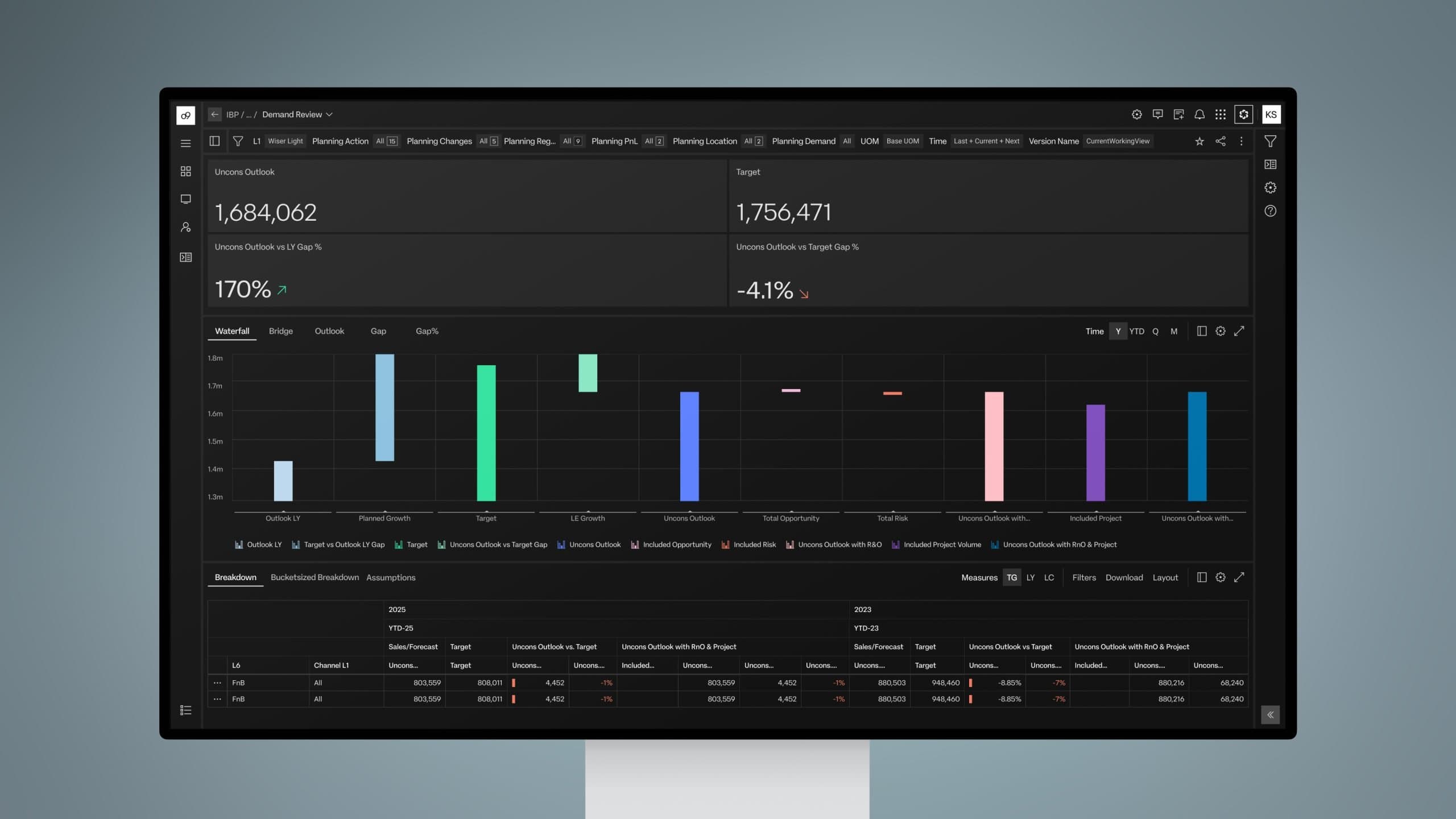
This shift fundamentally changes how decisions are made. Instead of coordinating after the fact like a pit crew reacting to breakdowns, Digital IBP enables a “pit wall” model—where leaders guide the business using real-time signals, simulations, and forward-looking insights.
Business challenges organizations face
Traditional IBP struggles not because the concept is flawed, but because the execution model has not kept pace with the complexity of modern enterprises. In many organizations, IBP remains functionally owned by supply chain teams, with limited commercial and financial integration. This leads to decisions that optimize feasibility or efficiency, but not enterprise value.
Planning cycles are often slow and static. By the time data is consolidated and presented, assumptions have already changed. Teams spend more time debating whose numbers are correct than discussing what actions should be taken. Performance metrics differ across functions, reinforcing silos rather than encouraging shared accountability. Sustainability and resilience considerations, when included at all, are typically handled outside the core planning process.
This fragmentation becomes increasingly costly as volatility becomes structural. Demand shifts faster than planning cycles can adapt. Supply disruptions cascade across networks. Financial targets are set without clear operational pathways.
Digital IBP addresses these challenges by transforming IBP into a continuous, decision-centric capability. Instead of aligning plans once per month, organizations continuously sense change, evaluate trade-offs, and adjust course—while maintaining a single, trusted view of the business.
From Periodic Alignment to Continuous Enterprise Decision-Making
Leading organizations are redefining IBP as the system of record for enterprise decisions. Rather than maintaining separate views for strategy, operations, and finance, they align around a shared enterprise plan that supports decisions across all horizons.
This does not require forcing all teams into the same planning cadence or level of detail. Executives may focus on aggregated outcomes and trade-offs, while planners work at SKU, customer, or location level. Digital IBP ensures these perspectives remain connected, reconciled, and explainable—so decisions scale across the organization without friction.
What this solution enables
What Makes o9 Different
Industries Supported
































Powered by the o9 Digital Brain
Digital Integrated Business Planning runs on the o9 Digital Brain, powered by the Enterprise Knowledge Graph (EKG).
The EKG acts as a digital backbone, connecting data, processes, and decisions across the organization. It breaks down silos by modeling relationships between products, customers, markets, and financials, enabling a shared understanding of demand. This graph-based architecture enables planning at any level of aggregation and across multiple time horizons within a single model. It supports rapid adaptation as business models, strategies, and operating environments evolve.
Built on open standards such as Apache Hadoop and Spark, the platform integrates seamlessly with existing enterprise architectures and supports both structured data and unstructured tribal knowledge.
Modular by design, enterprise by default
o9 accelerates implementation through configurable building blocks that can be tailored to unique business requirements.
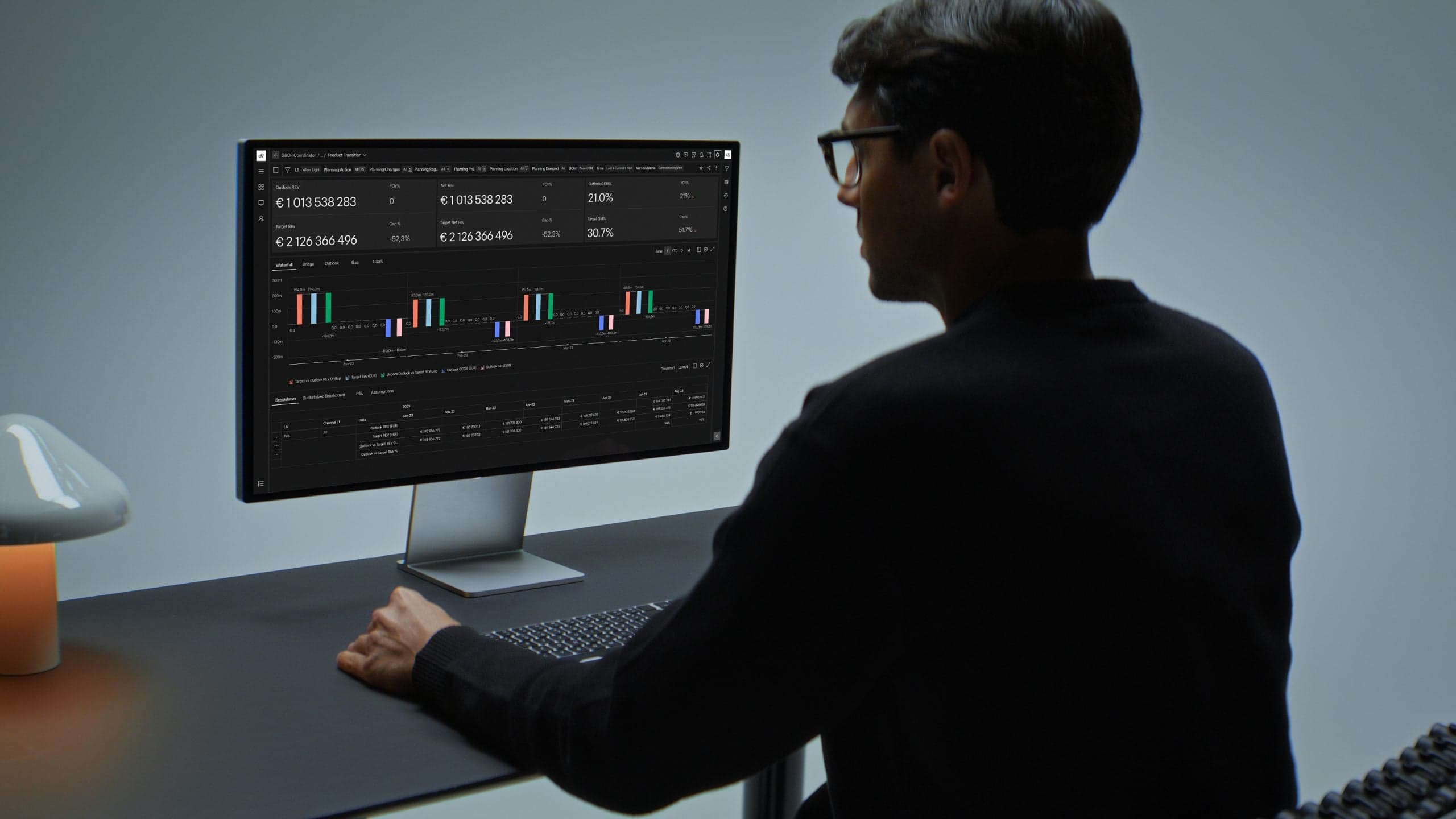
Digital IBP is delivered through modular building blocks, including consensus demand planning, supply and capacity planning, financial reconciliation, scenario management, and executive collaboration. These components operate on a shared foundation, ensuring consistency and speed from strategy through execution.
Core Building Blocks
These foundational components establish shared data, network visibility, and collaborative workflows across the supplier ecosystem.
Advanced Capabilities
Enterprise Knowledge Graph (EKG)
At the core of Digital IBP is the Enterprise Knowledge Graph, which connects data from ERP, CRM, PLM, and other systems into a live network of relationships. Products, customers, suppliers, and resources are directly linked to financial metrics, creating a shared, trusted source of truth.
Unified P&L and Operational Model
Operational decisions are continuously translated into financial outcomes. Changes in volume, sourcing, or capacity instantly reflect in revenue, cost, and margin, ensuring every IBP decision is evaluated through a real-time financial lens.
Advanced Scenario Planning Engine
Cross-functional teams can simulate alternative futures and compare scenarios side by side. Leaders assess the impact of demand shifts, pricing actions, or supply disruptions before committing, enabling proactive course correction.
Live IBP Meetings & Collaboration
IBP reviews move from static slides to live, system-driven conversations. Executives and planners explore data, test assumptions, and capture decisions, actions, and escalations directly in the platform—ensuring transparency and accountability.
Multi-Tier Supplier Network Visibility
Extend IBP beyond the enterprise with visibility into Tier 1 and Tier 2 suppliers. Shared planning and early risk detection improve responsiveness and resilience across the value chain.
ESG & Environmental Integration
Sustainability metrics such as carbon emissions, waste, and water usage are embedded directly into planning and optimization. Teams can balance cost, service, resilience, and environmental impact within a single decision framework.
Generative AI Knowledge Assistants
Interact with plans using natural language. Executives and planners can ask questions, uncover root causes, and surface emerging risks, with AI-generated insights grounded in live data and planning assumptions.

A digital operating model for VUCA conditions
APEX is o9’s AI-powered operating model for enterprises navigating volatility, uncertainty, complexity, and ambiguity (VUCA). It enables organizations to plan, execute, and learn as one connected system.
The o9 Digital Brain powers APEX by connecting enterprise data, knowledge, and decisions through a single intelligent model.

Collaborative Demand Planning is one of the building blocks of the Digital Brain. It contributes domain-specific capabilities into the enterprise-wide model that enables APEX from the ground up—linking this solution to decisions across the entire value chain.
→ Learn how the APEX Operating Model works
Where AI drives real decisions
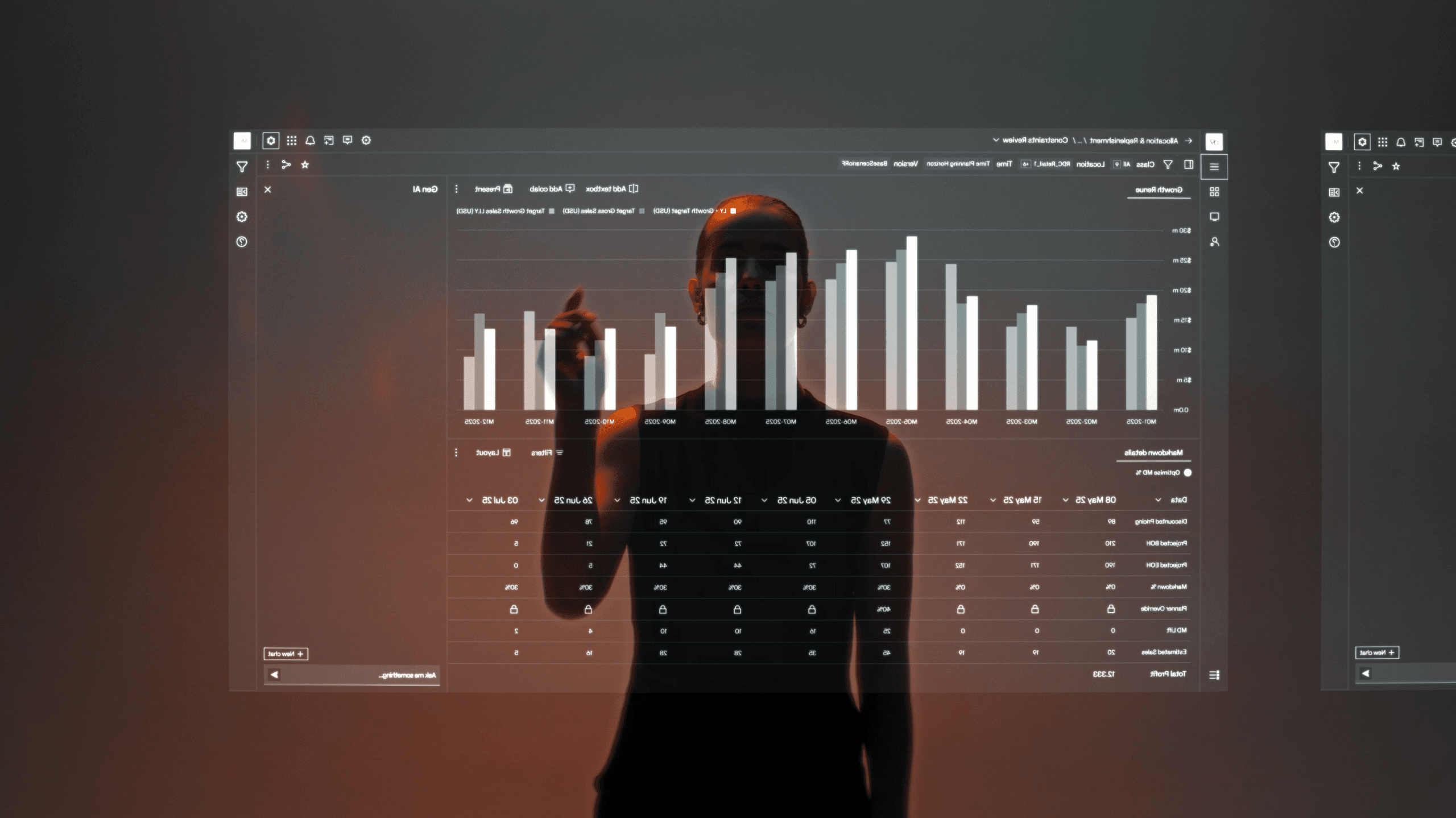
AI enhances Digital IBP by shifting organizations from reactive coordination to proactive decision-making.
Machine learning models improve forecast accuracy using leading indicators.
Prescriptive analytics recommend actions and quantify trade-offs.
Generative AI enables natural-language interaction with plans, while agentic AI automates analysis, monitoring, and reporting.
→ Learn more about o9 AI innovations
Results in real-world complexity
Large Global Beverage Enterprise ($58B Revenue)
By leveraging o9’s integrated planning platform, this company replaced legacy systems such as SAP APO with a single, cloud-native solution, streamlining demand forecasting, supply planning, and inventory management.
60%
Reduction in out-of-stocks
53%
Decrease in inventory losses
30%
Time savings by planners
70-90%
Touchless planning adoption reached 70-90% across key markets.
Multinational Electronics Company ($7B Revenue)
This large-scale Consumer Electronics multinational adopted o9’s integrated planning platform, which brought together supply and demand planning into a single unified system. The implementation introduced advanced capabilities, such as a network-based MEIO, supply planning simulations to increase demand supportability, and constraint-based supply planning.
By consolidating previously disjointed processes and tools and unlocking new capabilities, the transformation enabled this company to improve forecast accuracy, increase service levels , and reduce inventory holdings.
11%
Reduction in Weighted Mean Absolute Percentage Error
$~12.5M
Reduction in safety stock levels
4-month
Forecast bias brought under control
What our customers say
“So with IBP, what we are achieving now is one single source of truth. Everyone aligns behind one number, with the ultimate accountability for IBP being the general manager. So you take the power out of the functions and give it to the general manager to run the business as they see fit, which is unbelievable.”
Dr. Athina Kanioura
Chief Strategy and Transformation Officer
Related solutions

Long Range Planning (LRP)
Build strategic plans for your organization over a longer time horizon. Forward-looking, data-backed insights so your plan is prepared for anything. Translate long-term strategy into an executable, resilient operating model.

ESG & Sustainability
Gain end-to-end visibility and turn it into sustainable action. With the o9 Digital Brain platform, measure your footprint and drive sustainable decisions across the value chain.

Demand Planning
Modular end-to-end planning platform that unifies collaborative forecasting, advanced AI/ML, and cross-functional scenario planning
View our related resources


Frequently Asked Questions (FAQ)
Digital IBP is a continuous planning and decision-making capability that connects strategy, execution, and financial outcomes in a single system.