The 2026 Visibility Trap: Why Supply Chain Control Tower Alerts Don't Become Action
14 read min
A supply chain control tower can surface disruption quickly, but an organization may still take much longer to assess the impact, choose a response, and put it into execution. Gartner research on disruption management reports that more than a third of supply chain organizations spend at least 30% of their time firefighting. In a separate Gartner survey of supply chain leaders who had recently made a significant network investment decision, 72% said final approval had been revisited at least once. Closing the gap depends on connecting an alert to its business impact, response options, accountable owner, and execution in a shared model.
Seeing a disruption is not the same as responding to it
Over the past ten years, enterprise supply chain organizations have invested heavily in technologies such as the supply chain control tower, real-time visibility platforms, and predictive analytics designed to identify disruption earlier.
Those investments have improved the ability to monitor complex supply networks. A delayed vessel, a supplier shortfall, or an unexpected change in demand can now surface much sooner than it once would have.
Earlier detection, however, does not guarantee a faster response.
An alert may identify what has changed without showing which customer orders are affected, how much revenue or margin is exposed, which response offers the most suitable balance of cost and service, or who has the authority to act.
Where planning and execution remain distributed across different systems, planners may still have to assemble that context through spreadsheets, email, and meetings. The time spent doing so can reduce the value of receiving the alert early.
Alert-to-action latency means the elapsed time between a control tower alert and implementation of the approved response in execution systems. That interval includes impact analysis, comparison of the available options, approval, and execution.
With this in mind, the main question is not only how quickly an organization can detect a disruption, but how quickly it can understand the consequences, decide what to do, and carry that decision into the operational plan.
What does 2026 research say about the supply chain decision-making gap?
Two articles published by Supply Chain Management Review in 2026 describe different aspects of this problem.
In April, Corrine Chen argued in “Data isn’t the problem, decision-making is” that supply chains are becoming data-rich without necessarily becoming decision-ready. Chen identifies three recurring sources of delay: conflicting KPIs across functions, unclear decision ownership, and repeated validation before action.
In August, Dr. Rishabh Rana made a related argument in “What comes after visibility?”. Supply chain technology, he writes, has spent more than two decades helping organizations answer “What’s happening?” The next challenge is helping them answer “What should we do next?”
Improved visibility can increase the number of decisions planners need to make. Each alert may involve trade-offs across inventory, service, cost, capacity, and customer priorities. The issue is not only whether the information is available, but whether the organization has the context, authority, and processes needed to act on it.
In Gartner’s research on supply chain disruption management, 44% of survey respondents reported firefighting medium- and high-impact disruptions, and more than a third of supply chain organizations spend at least 30% of their time firefighting.
Decision processes can introduce further delays. In a Gartner survey of 151 supply chain leaders who had recently made a significant network investment decision, 72% said they had revisited final approvals at least once. More than half had revisited those decisions three or more times. The survey was conducted between November and December 2025 and covered companies with annual revenue of at least $250 million.
AI does not remove these constraints on its own. In a survey of 140 senior supply chain leaders, 17% of supply chain organizations were pursuing immediate transformational redesign of processes and workflows with AI. The remaining 83% were applying AI to specific use cases or gradually extending it into integrated processes.
Gartner’s November 2025 survey also identified several constraints on wider adoption, including gaps in data readiness, the need for employee upskilling, fragmented vendor landscapes, master data alignment, incomplete or unreliable partner data, and process maturity.
At the same time, Gartner predicts that 60% of supply chain disruptions will be resolved without human intervention by 2031. Gartner recommends expanding autonomy gradually, starting with low-risk decisions and strengthening data quality and governance before extending automation. Applied to a supply chain control tower, this could mean allowing AI agents to resolve low-risk, high-frequency exceptions within defined limits. A small inventory reallocation within preapproved boundaries is one example. Decisions involving more significant cost, service, or customer trade-offs could instead be routed to a named decision owner.
Taken together, the Supply Chain Management Review articles and Gartner findings point to the same underlying gap. Detecting a change is becoming easier. Establishing its consequences, choosing a response, gaining approval, and carrying that response into execution can still take considerably longer.
Why don’t supply chain control tower alerts translate into action?
A supply chain control tower alert is only the first input to a decision. It may show that a shipment is late, a supplier has missed a commitment, or demand has moved unexpectedly. It does not necessarily show everything the organization needs to do next.
The business impact may not be immediately clear. Planners need to know which products, production runs, customer orders, service commitments, and financial outcomes depend on the event. When those relationships sit across separate systems, tracing the consequences can take time.
The available responses also need to be compared, so expediting supply, reallocating inventory, changing a production sequence, substituting materials, or accepting a delay will affect cost, service, capacity, and risk differently. An alert identifies the exception; it does not automatically resolve those trade-offs.
Decision ownership can create another delay. The person who receives the alert may not have the authority to approve the response, particularly when the decision affects several functions or crosses agreed financial and operational thresholds.
An approved response must then reach execution. If the control tower, planning platform, ERP, and logistics tools are connected point to point or managed separately, the decision may need to be transferred, communicated, or entered again before it changes the operational plan.
There is also the question of what remains after the issue is resolved. If the assumptions, alternatives, decision, and outcome are retained only in meetings, email, or temporary spreadsheets, the organization may have to reconstruct the same context when a similar disruption occurs.
Each of these handoffs adds to alert-to-action latency.
The distinction below describes two control tower design orientations rather than a rigid product classification. In practice, a control tower may contain elements of both.
| Monitoring-oriented supply chain control tower | Decision-centric supply chain control tower | |
| Core question | What is happening? | What should we do next? |
| Primary output | Alert or exception | Quantified impact and evaluated response options |
| Impact analysis | May require tracing across separate systems | Calculated from a connected model of the network |
| Trade-offs | Often evaluated manually across separate tools | Simulated in a what-if context against cost, service, capacity, and risk |
| Decision ownership | May be handled outside the system | Named owner recorded with the decision |
| Execution | May require transfer or re-entry into execution systems | Approved response promoted into the operational plan |
| Learning | Reasoning may remain in email, meetings, or spreadsheets | Decision context and reusable rules retained for future planning |
How does an enterprise knowledge graph connect control tower alerts to decisions?
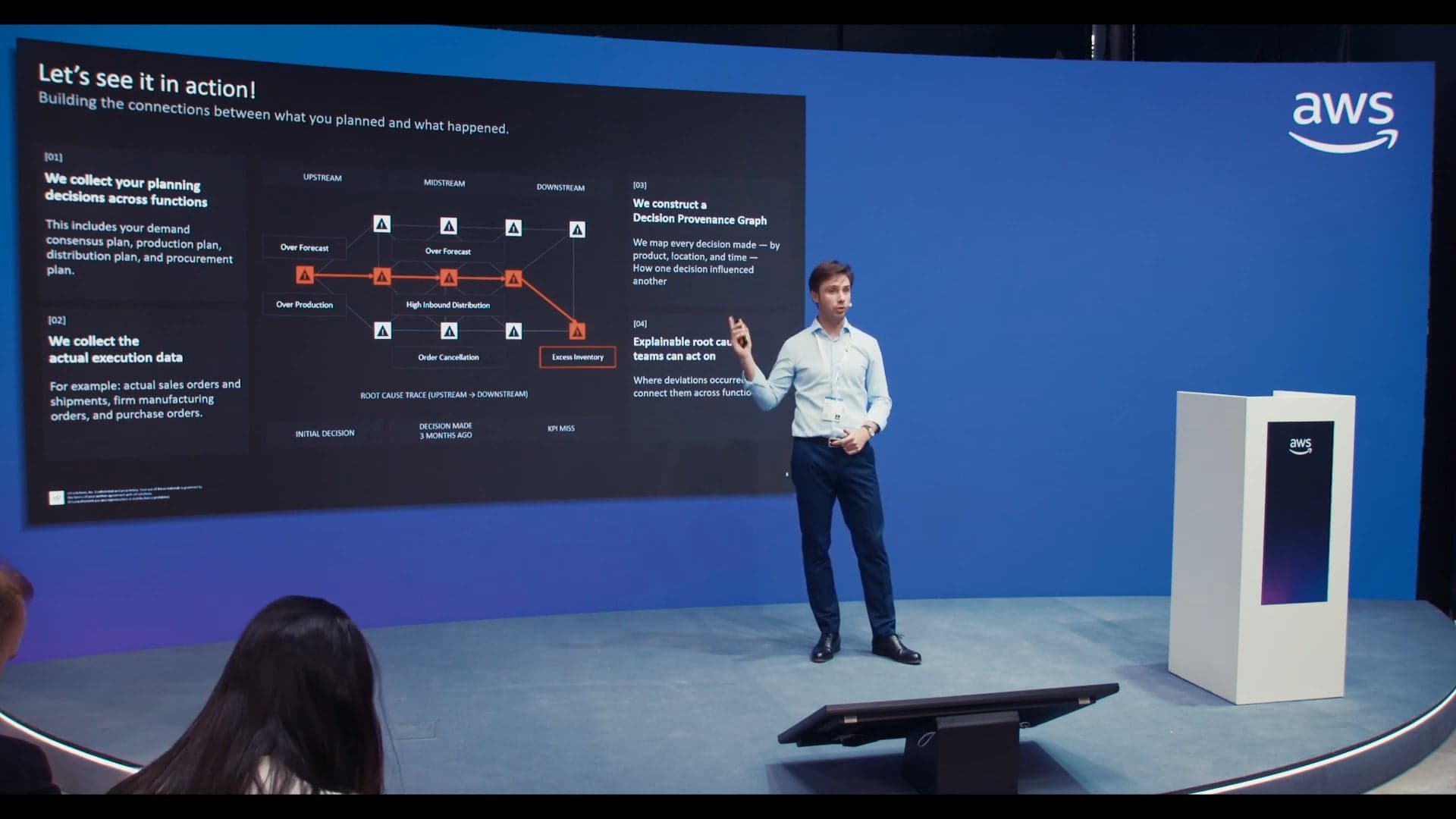
Within the o9 Digital Brain, the o9 Enterprise Knowledge Graph (EKG) connects the structure and current state of the enterprise with its plans, decisions, learned rules, and computational capabilities.
When a supply chain control tower detects a disruption, that context helps establish what is affected, which responses are available, who owns the decision, and how an approved response should change the operational plan.
The EKG has four layers:
| Layer | What it does |
| Value-Chain Graph | Connects enterprise structures, current facts, assumptions, and versioned plans in a shared model of the value chain and its current and projected state. |
| Decision-Context Graph | Records material decisions as structured objects, linked to their accountable owner, timestamp, scope, plan version, supporting facts and assumptions, and the measures used to assess the outcome. |
| Learned-Rules Graph | Uses evidence from plans and past decisions to create summaries, insights, policies, and actionable rules that can inform future planning. |
| Connected-Compute Graph | Connects data pipelines, forecasting models, simulations, optimization algorithms, analytics, and AI agents, while managing the dependencies between them. |
The first three layers provide the business, decision, and learning context. The Connected-Compute Graph puts that context to work.
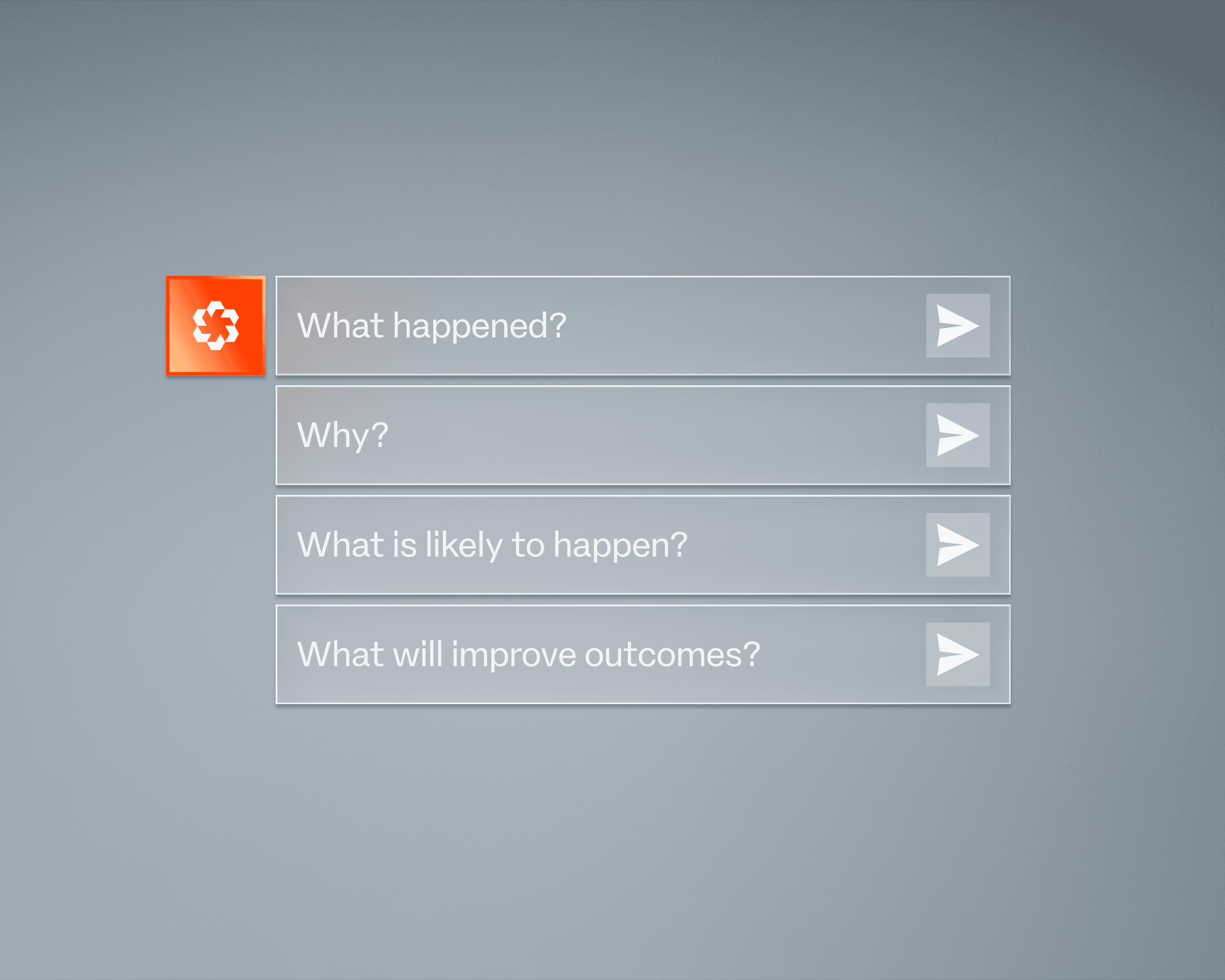
Compute can be triggered by a regular planning cycle, an event such as a demand spike or policy breach, or a question from an executive, planner, or AI agent. Once triggered, it follows a decision-intelligence pathway built around four questions that we call the 4Ws:
Question 1: What happened, and why?
The Connected-Compute Graph identifies variances and analyzes their root causes against the plans and assumptions that were in force.
Question 2: What is the current state?
The Connected-Compute Graph updates the operational and financial picture at the appropriate level of detail.
Question 3: What is likely to happen next?
Forecasting and simulation models project possible outcomes under different assumptions and constraints.
Question 4: What are the best actions to take?
Optimization and recommendation engines generate decision-ready responses, such as reallocating inventory, expediting supply, substituting materials, or revising a plan.
These calculations can take place within the governed planning environment or in a separate what-if context. Teams can compare alternatives without immediately changing the baseline, then promote an approved response into the operational plan.
Because the Connected-Compute Graph understands the dependencies between models, assumptions, and plans, it can also recalculate the parts affected by a change rather than rerunning the entire planning model.
The process does not end when an action is selected. The Decision-Context Graph retains what was decided, who approved it, which assumptions informed it, and what outcome was expected. Once the result is known, it can be linked back to the relevant decision and plan version.
That evidence can then contribute to the summaries, policies, and actionable rules held in the Learned-Rules Graph. In this way, the four layers connect the state of the business, the available responses, the eventual decision, and what the enterprise learns from the outcome.
Example: how a supply chain control tower responds to a nine-day container delay
Imagine a consumer goods manufacturer learns that an inbound container carrying a critical component will arrive nine days late because of port congestion.
The alert establishes what happened and provides an initial explanation. Planners must then determine the current state of the business: which production runs depend on the component, how much inventory is available elsewhere in the network, and which customer orders could be affected.
They also need to understand what is likely to happen if no action is taken. Depending on the component and available inventory, the delay could interrupt production, affect customer commitments, or create additional cost elsewhere in the network.
The next step is to compare the available responses. The manufacturer might expedite alternative supply, reallocate inventory from another location, change the production sequence, substitute a material, or accept the delay. Each option has different implications for cost, service, capacity, and risk.
Where data and planning processes remain fragmented, planners may need to gather this information from several systems and coordinate the response manually. With the EKG, the Value-Chain Graph connects the disruption to the affected parts of the network, while the Connected-Compute Graph evaluates possible outcomes and response options.
Once a response is approved, it can be promoted into the operational plan. The Decision-Context Graph records the decision, its owner, the assumptions behind it, and the expected outcome. When the result is known, that evidence can inform future insights, policies, and rules in the Learned-Rules Graph.
The o9 Supply Chain Control Tower is a control tower on the o9 Digital Brain that senses disruptions such as port congestion, supplier delays, weather events, and demand surges. It translates those signals into affected orders, shipments, and production plans, presents resolution options such as expediting supply or reallocating inventory, and enables users to execute decisions within the platform.
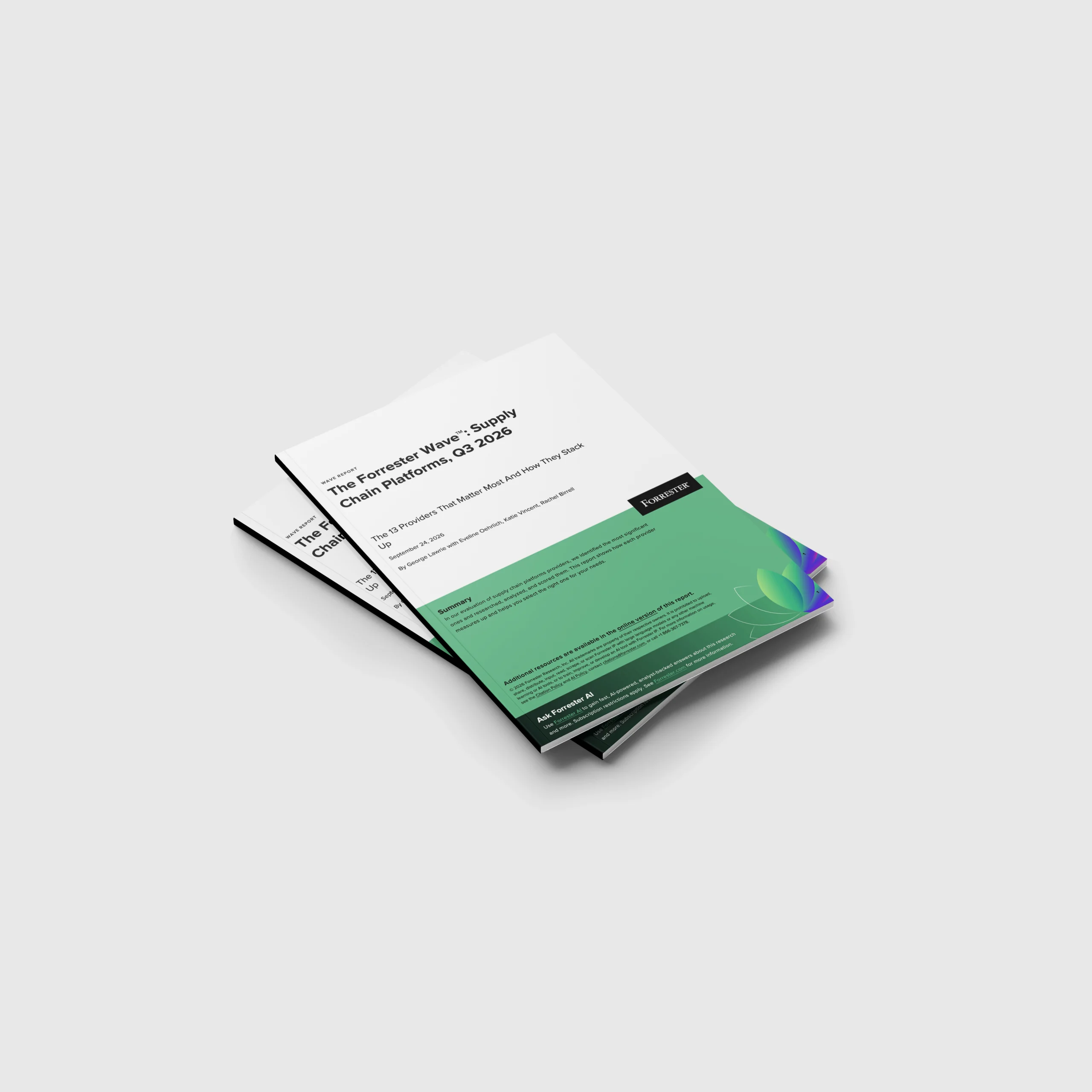
o9 was named a Leader in the Nucleus Research Control Tower Technology Value Matrix 2026, published in September 2026. Nucleus Research reports that control tower ROI is increasingly determined by decision velocity: identifying disruptions, understanding their consequences, and acting while there is still time to improve the outcome.
6 questions to measure your alert-to-action latency
For CSCOs, CIOs, enterprise architects, and planning leaders, these questions can help identify where response time is lost after a supply chain control tower alert:
- How quickly can you identify the business impact? When an alert appears, how long does it take to determine which products, production plans, customer orders, service commitments, and financial outcomes are affected?
- How are response options compared? Are alternatives evaluated against cost, service, capacity, and risk using a connected model of the network, or assembled manually across several tools?
- Who owns the decision?Is there a named decision owner, with clear thresholds for what can be automated, what requires approval, and who has the authority to act?
- Can an approved response move directly into execution?Does the decision update the operational plan, or must it be communicated, transferred, or entered again in another system?
- Do the control tower, planning, and ERP layers share one data model?Or are they connected through point-to-point integrations that require information to be reconciled as it moves between systems?
- Is the decision context retained?Are the assumptions, alternatives, owner, approved response, and eventual outcome recorded in a form that can inform a similar decision later?
These questions are diagnostic rather than a universal maturity score, and alert-to-action latency will vary according to the type, risk, and complexity of the decision. The aim is to identify where time is being lost: impact analysis, option comparison, approval, system handoffs, or execution.
An organization may detect disruption quickly but still respond slowly if each of those stages takes place in a different system or depends on a separate manual process.
Frequently asked questions about supply chain control towers
What is the supply chain visibility trap?
The supply chain visibility trap is the gap between how quickly an organization detects a disruption and how quickly it can decide on and execute a response. Better detection can increase the number of exceptions planners need to address without necessarily reducing the time required to resolve each one.
What is alert-to-action latency?
Alert-to-action latency is the elapsed time between a supply chain control tower alert and an approved response running in execution systems. It includes impact analysis, comparison of the available options, decision approval, and implementation.
What is the difference between supply chain visibility and a supply chain control tower?
Supply chain visibility shows what is happening across the network. A decision-centric supply chain control tower goes further by connecting an event to its business impact, response options, decision owner, and execution. Capabilities vary, and some control towers remain more focused on monitoring and exception management.
Can AI resolve supply chain disruptions without human intervention?
Partly. Gartner predicts that 60% of supply chain disruptions will be resolved without human intervention by 2031. Gartner recommends beginning with lower-risk decisions supported by strong data quality and governance. More consequential decisions involving significant cost, service, or customer trade-offs may continue to require human judgment.
What is the o9 Enterprise Knowledge Graph?
The o9 Enterprise Knowledge Graph, or EKG, is the model at the core of the o9 Digital Brain. Its four layers (the Value-Chain Graph, Decision-Context Graph, Learned-Rules Graph, and Connected-Compute Graph) connect the state of the business with its plans, decisions, institutional knowledge, and computational capabilities.
Supply chain control towers have improved how quickly organizations can detect disruption. The next challenge is reducing the time between an alert and an approved response running in execution systems.
That depends on more than faster notifications. Teams need to connect the event to affected products, orders, customers, plans, and financial outcomes. They must compare the available responses, establish who owns the decision, move the approved action into the operational plan, and retain enough context to assess the outcome.
Within the o9 architecture, the Enterprise Knowledge Graph connects those stages in a single operating model.
The Value-Chain Graph provides the business and planning context. The Connected-Compute Graph evaluates likely outcomes and possible responses. The Decision-Context Graph records what was decided, by whom, and under which assumptions. The Learned-Rules Graph uses evidence from previous decisions to inform future planning.
Together, the four layers create a continuous learning loop in which execution outcomes are connected back to the decisions, assumptions, and plan versions that shaped them.
The practical value of a supply chain control tower therefore depends not only on how quickly it detects an event, but on how effectively the organization can turn that event into a governed, executable decision.
Sources
- Rana, R. “What comes after visibility?” Supply Chain Management Review, 21 August 2026.
- Chen, C. “Data isn’t the problem, decision-making is.” Supply Chain Management Review, 17 April 2026.
- Gartner. “Gartner Survey Shows 72% of Supply Chain Leaders Revisit Final Approvals for Network Decisions at Least Once, Causing Delays.” 14 July 2026.
- Gartner. “Gartner Survey Shows AI Is Not Driving Supply Chain Operating Model Transformation.” 6 May 2026.
- Gartner. “Gartner Predicts 60% of Supply Chain Disruptions Will Be Resolved Without Human Intervention by 2031.” 18 March 2026.
- Gartner. “Manage Supply Chain Disruption Without Firefighting.”
- o9 Solutions. “The Four Layers of the o9 Enterprise Knowledge Graph.” 17 August 2026.
- o9 Solutions. “A Guide to the o9 Enterprise Knowledge Graph.”
- o9 Solutions. “Supply Chain Control Tower.”
- Nucleus Research. “Control Tower Technology Value Matrix 2026.” 1 September 2026.
About the authors

The Editorial Team, o9
A multidisciplinary collective of editors, strategists, technologists, and former executives with experience across Fortune 500 companies and top consulting firms. Grounded in o9’s mission to help enterprises make faster, better decisions through the power of AI-driven planning and execution software, the team shares clear, practical insights on digital transformation, supply chain, and enterprise planning to support business leaders in navigating complexity and driving change.