6 read min
On Monday, April 20th, business leaders gathered at Galvin La Chapelle in London for an evening discussion titled From Uncertainty to Advantage: Accelerating Decisions and Replanning with Agentic AI.
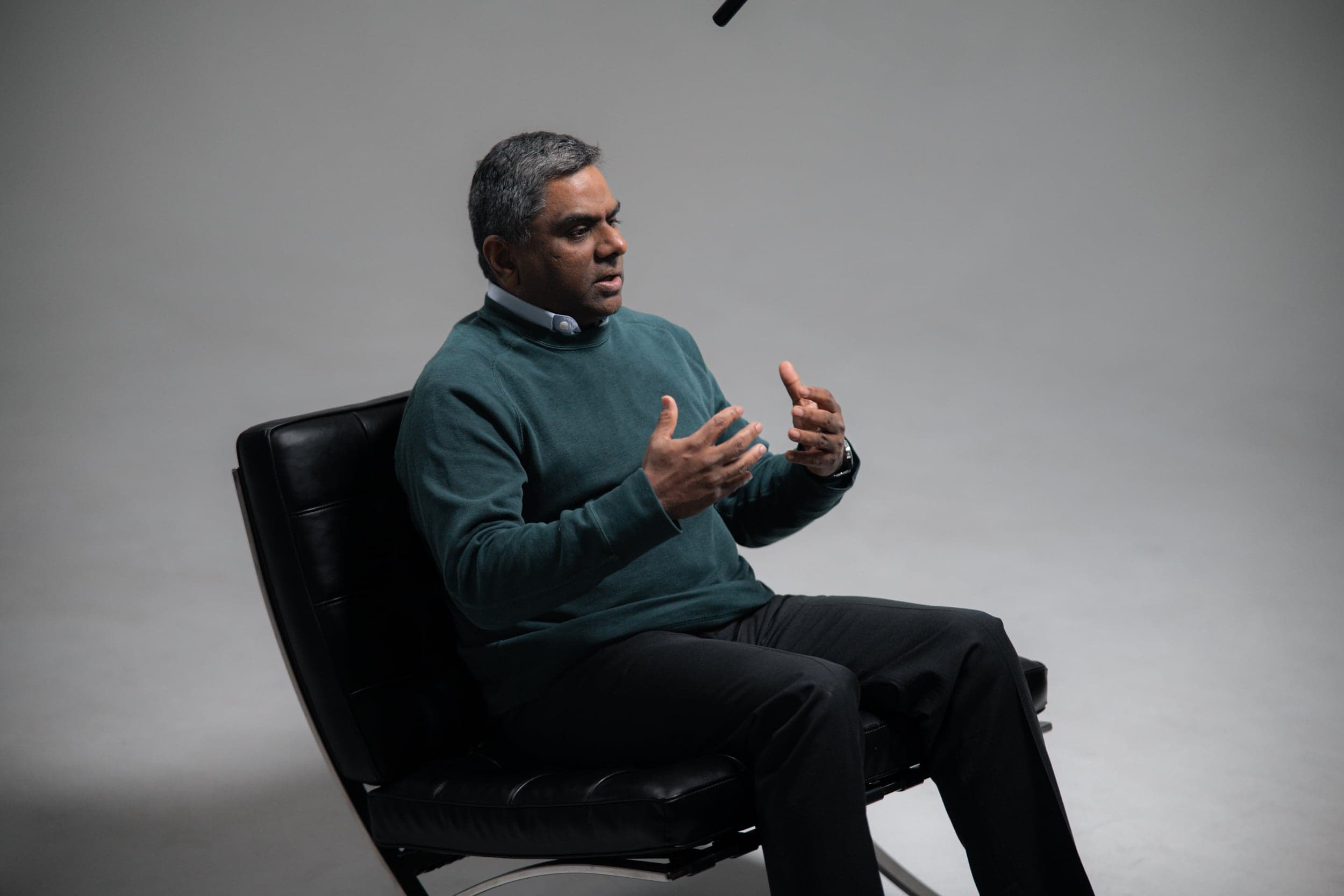
The dinner was guided by three hosts: Paul Polman, business leader, investor, philanthropist, and former CEO of Unilever; Martin Corner, CSCO of Aston Martin; and Guillaume Bothier, VP of Strategic Partnerships Europe at o9.
Around the table sat senior leaders from some of Europe's most recognizable consumer, retail, automotive, food, beverage, telecommunications, and logistics companies, including supply chain, procurement, merchandising, product, and technology executives at the VP, EVP, and C-suite level, alongside transformation veterans who have led change inside several of the UK's best-known retailers.
The conversation provided a step-by-step deep dive into how leading enterprises are rethinking transformation in an environment of structural disruption, covering how to sense change earlier, align around a single view of reality, turn decisions into execution, and protect speed to value during implementation.
The exchange surfaced a clear set of practices that separate companies gaining from disorder from those simply absorbing it.
The Complexity of Today's Operating Environment
Enterprises today operate in conditions shaped by geopolitical realignment, regulatory shifts, supply uncertainty, and faster-moving signals across markets and operations. Disruption is no longer episodic; it is structural. Most leadership teams have already accepted that transformation is necessary. The harder question — and the one the dinner returned to repeatedly — is where transformation should start.
Paul Polman set the scene by pointing to the scale of the shift. Global alliances are realigning. Government action and regulatory change are reshaping the business environment in ways that cut across industries, altering trade flows, investment logic, and planning assumptions far beyond the control of any single enterprise.
At the same time, many of these disruptions are at least partly visible in advance. Government and regulatory moves rarely emerge without signals. Geopolitical escalation often comes with observable indicators, such as aircraft carriers moving toward the Red Sea.
The implication is that while companies cannot eliminate volatility, they can improve their ability to anticipate it.
Before the New Approach: Reactive Decisions and Fragmented Views
The discussion opened with a candid look at why so many enterprises still struggle in volatile conditions. Functions inside large organizations frequently work from different assumptions, different data, and different interpretations of the same reality. Decisions break down not because leaders lack intent, but because collaboration depends too heavily on perception rather than shared facts.
Martin Corner highlighted the issue directly: "When collaboration depends too much on perception instead of shared facts, outcomes suffer." In that environment, planning becomes reactive. Insight arrives too late, decisions are made under pressure, and the gap between recognizing a disruption and acting on it grows wider.
The challenge, the group agreed, is not resilience alone. It is whether the organization can sense change early enough to prepare, decide, and act with confidence.
The End State: A Repeatable Operating Model for Volatility
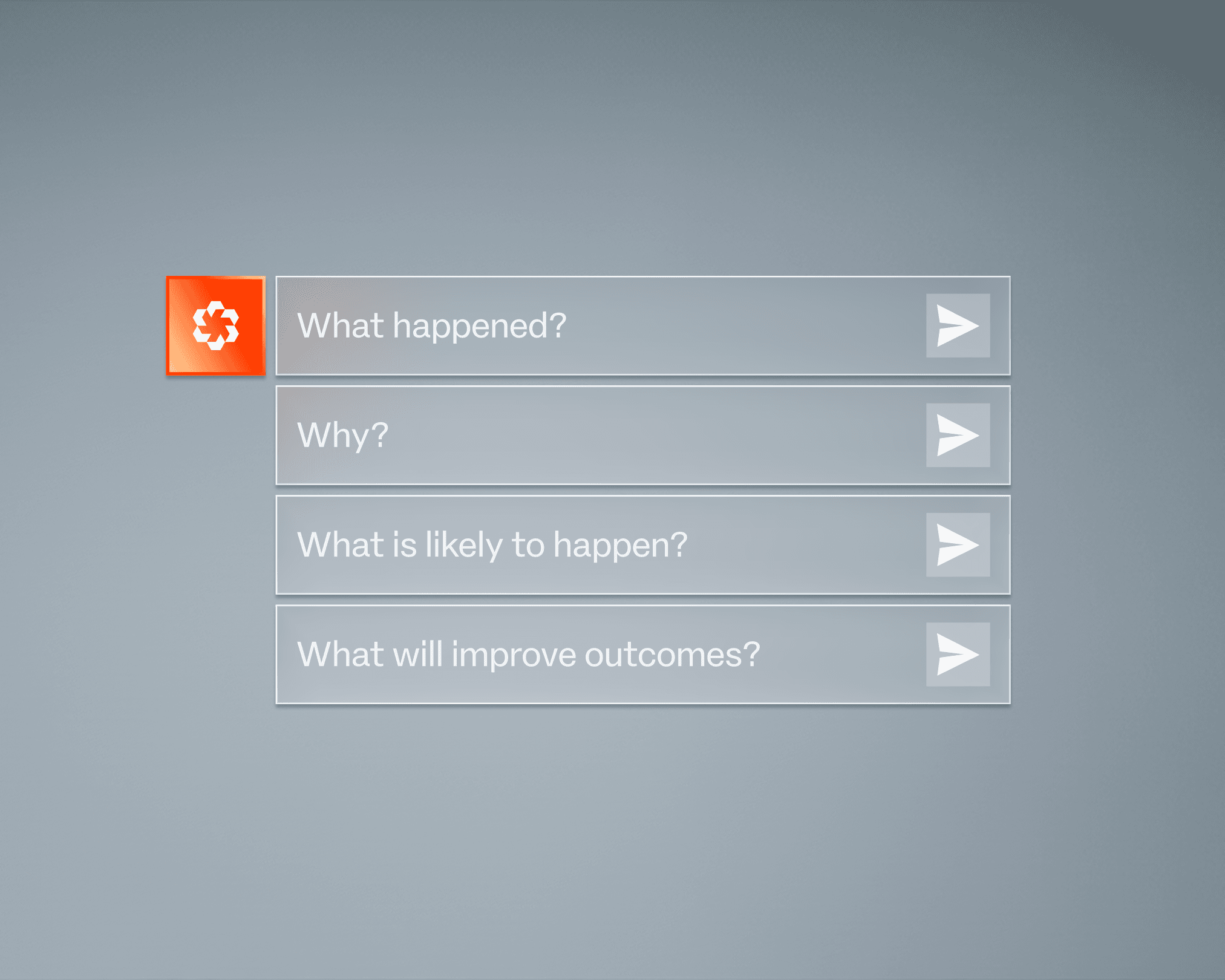
Building on Paul's framing, Martin Corner argued that if disruption is now constant, the strategic question is no longer whether volatility exists. It is who manages it better. That requires a repeatable operating model built around four capabilities — a closed loop that turns disruption from a threat into a competitive opportunity.
Increasingly, agentic AI is the technology making that loop viable at enterprise scale, accelerating the pace at which organizations can sense, decide, and replan.
The impact of designing around this loop was described across the conversation:
- Earlier sensing: Enterprises must sense change early enough to act with intention rather than react under pressure. "That means making disruption sensing a priority, supported by leading indicators and scenario thinking," Corner explained.
- One view of reality: Better alignment requires a common dataset, a common system, and the ability to compare scenarios consistently across functions. As Corner put it, the goal is to move collaboration off perception and onto shared facts.
- Decisions that flow into execution: Insight alone does not create value. A decision only matters if it flows into processes, systems, and day-to-day operations.
- Faster learning between cycles: Comparing actuals against forecast and plan, then using those gaps to improve the next decision, turns learning speed itself into a strategic capability.
From the o9 perspective, Guillaume Bothier added that this operating model only delivers if transformation programs are designed to protect value from the start. "Value leakage often starts before implementation begins," he noted. Many organizations spend months defining detailed requirements for a future solution. That may appear rigorous, but in fast-moving technology markets — especially in AI — it often slows momentum and locks companies into assumptions that quickly become outdated.
Lessons Learned
The conversation surfaced several lessons that applied across industries and starting points.
- Begin with the pain, not the requirements document. Guillaume urged leaders to ask where the business is struggling, where decisions are too slow, where uncertainty is eroding service, margin, or working capital, and where teams are spending more time reconciling than improving outcomes. "Starting with pain creates a better dialogue with partners," he explained. "It helps enterprises explore what is truly possible, challenge what is only being marketed as possible, and distinguish real partners from vendors focused mainly on selling."
- Pilot early, with real data. In a crowded market, many software evaluations become compliance exercises in which multiple vendors claim to meet the same requirements and the process turns into a comparison of presentations rather than capabilities. Piloting reveals more than technical fit — it shows how a partner works, whether the data is ready, and whether the business has the process maturity to scale. In that sense, a pilot is also a readiness test for transformation.
- Protect the first value wave. Even after selection, scope drift can quietly erode momentum. New technology creates new visibility, new visibility creates new ideas, and new ideas generate new requests. The issue is rarely that the ideas are bad. The issue is that they are addressed at the wrong moment. Guillaume emphasized the discipline required across the enterprise and the partner ecosystem to "focus on value, not capabilities."
- Run waves in parallel. Leading organizations do not wait for wave one to finish before preparing wave two. One group delivers the current scope while another tests what comes next, turning implementation into a platform for scaling value rather than just deploying software.
Key Principles for Where to Start
To close the discussion, the speakers returned to a shared set of principles for leaders deciding where their transformation should begin:
- Anticipation over reaction: Build the muscle to sense disruption early, using leading indicators and scenario thinking rather than waiting for shocks to arrive.
- One source of truth: Align functions around a common dataset and a common system so decisions are debated on facts, not perceptions.
- Closed-loop execution: Connect sensing, alignment, execution, and learning into a single, repeatable cycle.
- Pain-led partner selection: Start conversations with where the business hurts, not with a requirements list, and pilot early with real data.
- Disciplined scope: Protect the first value wave, capture new ideas without diluting it, and run continuous improvement in parallel.
- Near-term EBITDA, long-term foundation: Stay focused on measurable near-term impact while building the foundation for the next waves of value.

About the authors

The Editorial Team, o9
A multidisciplinary collective of editors, strategists, technologists, and former executives with experience across Fortune 500 companies and top consulting firms. Grounded in o9’s mission to help enterprises make faster, better decisions through the power of AI-driven planning and execution software, the team shares clear, practical insights on digital transformation, supply chain, and enterprise planning to support business leaders in navigating complexity and driving change.