4 read min
I’ve always admired organizations that don’t just adapt to change but lead it. When I first spoke with a multinational beverage company about their plans to replace SAP APO and embark on a global, end-to-end transformation, I quickly realized this would be one of the most forward-looking initiatives I’d ever seen.
A Truly End-to-End Vision
I remember the company’s core challenge being more than just swapping out a legacy system. They wanted a unique platform that could scale to meet the exploding complexity of their portfolio and networks. Their portfolio complexity was set to grow exponentially as they moved into premium categories and global brands, while their networks and channels themselves were becoming more diverse, covering new routes to market (RTMs), localizing production of global brands, and requiring more sophisticated collaboration across the entire supply chain.
The stakes were further heightened by the need to mitigate risks accelerated by events like COVID-19 and rising inflation, all while harnessing the power of advanced tools and algorithms (machine learning statistical forecasts, advanced heuristic solvers) to optimize service and cost.
I’ve seen many companies aim to modernize pieces of their supply chain in isolation, but their ambition was bold and broad: Demand Planning, Supply Networking Planning, Multi-Echelon Inventory Optimization (MEIO), Returnable Packaging, Deployment, and even annual budgeting and CAPEX management. They wanted these capabilities unified in a single, end-to-end platform rolled out across 32 countries, creating the most customer-centric supply chain in the industry with the highest product availability across all channels and the lowest inventory and cost.
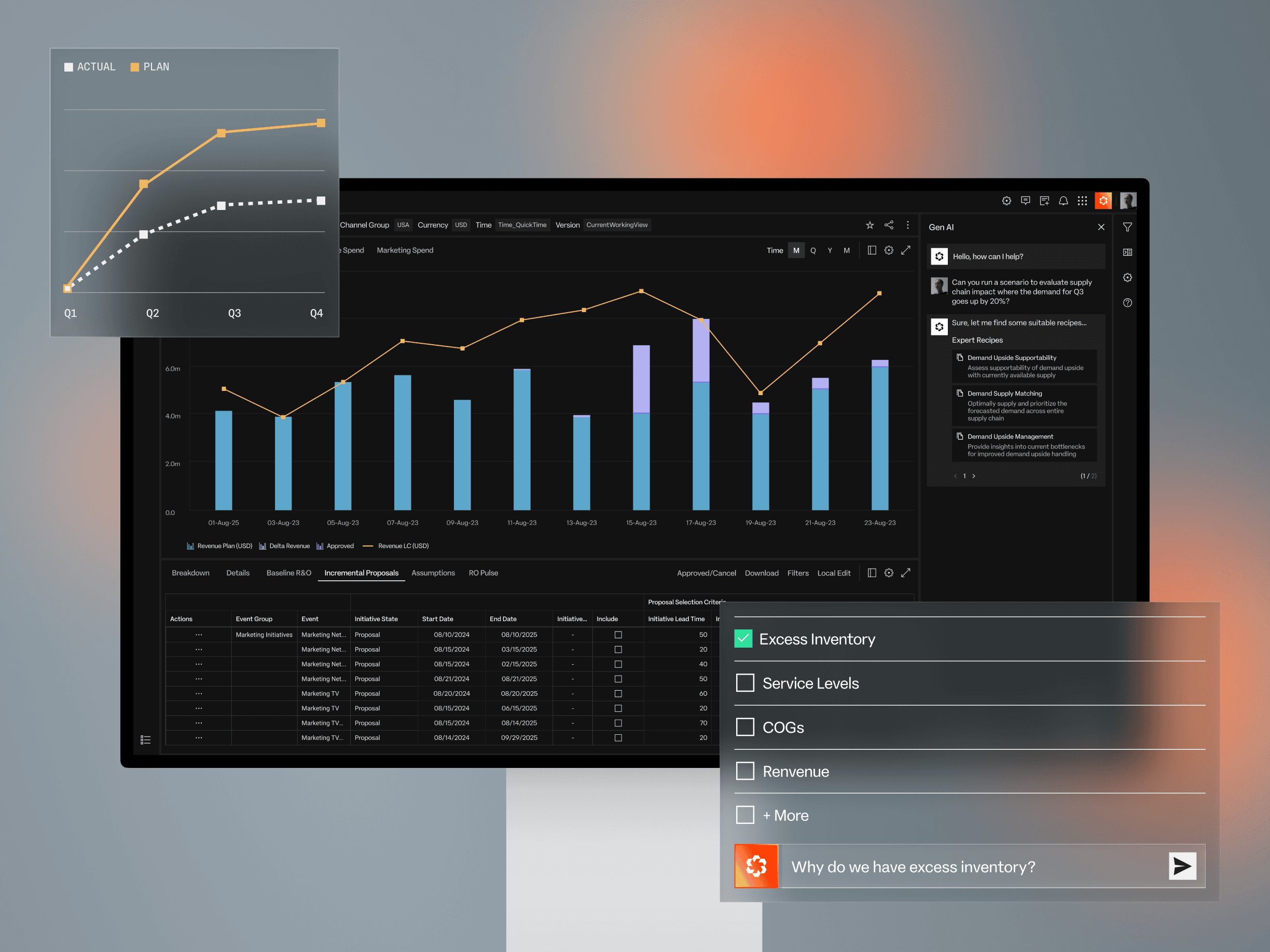
Touchless Demand Planning
Achieving a transformation of this scope is never just a technology play; it requires the right mindset and culture. And that’s where their commitment to touchless planning comes into play. In my view, touchless planning is the future of planning and decision-making. It means allowing advanced algorithms and data-driven logic to handle routine decisions automatically so planners can focus on solving exceptions to the forecast and ensuring cross-functional alignment. Typically, the sheer number of daily forecast adjustments in demand planning can overwhelm even the most experienced teams. Traditionally, planners are constantly “touching” every forecast, manually enriching or overriding numbers to account for promotions, seasonality, or sudden spikes in demand.
Why does this matter so much? This company makes hundreds of millions of hectoliters of beverages and beyond, catering to diverse consumer preferences across multiple continents. At that scale, the volume and frequency of decisions are enormous, particularly for Demand Planning, where each SKU, brand, and market can have its own unique patterns and drivers. These are precisely the decisions that directly impact bottom-line results for a company of this size.
When the right elements of this are automated, planners can focus their brainpower on solving more complex exceptions and improving forecast accuracy, which can greatly improve. With thousands of products being shipped and sold daily, even a small improvement in forecast accuracy can translate into significant cost savings and revenue gains when multiplied by the sheer scale of operations.
Hyper-Automation
By adopting hyper-automation in Demand Planning, planners are being empowered to focus on exceptions, like outliers, new types of promotions, or unforeseen market events that truly need human insight. The system handles routine forecast updates, quickly processes historical data, and applies advanced ML algorithms that continuously learn from new information. The result is faster planning cycles, improved demand accuracy, and the ability to refine the system over time by systematically capturing and coding the “tribal knowledge” of the best planners.
The most exciting part for me is watching how quickly this concept of touchless planning has taken hold across the organization. They’ve significantly increased the proportion of forecasts that are generated and updated without manual intervention, and that percentage keeps climbing.
It’s not just a one-and-done project; it’s a continuous improvement cycle, where every iteration further reduces manual touches and frees up more planner time for strategic tasks—like analyzing market trends, coordinating with sales teams, or refining the product mix. Now, they’re achieving all-time highs on several core supply chain KPIs, from forecast accuracy to inventory efficiency.
Hear Their Story on March 13th
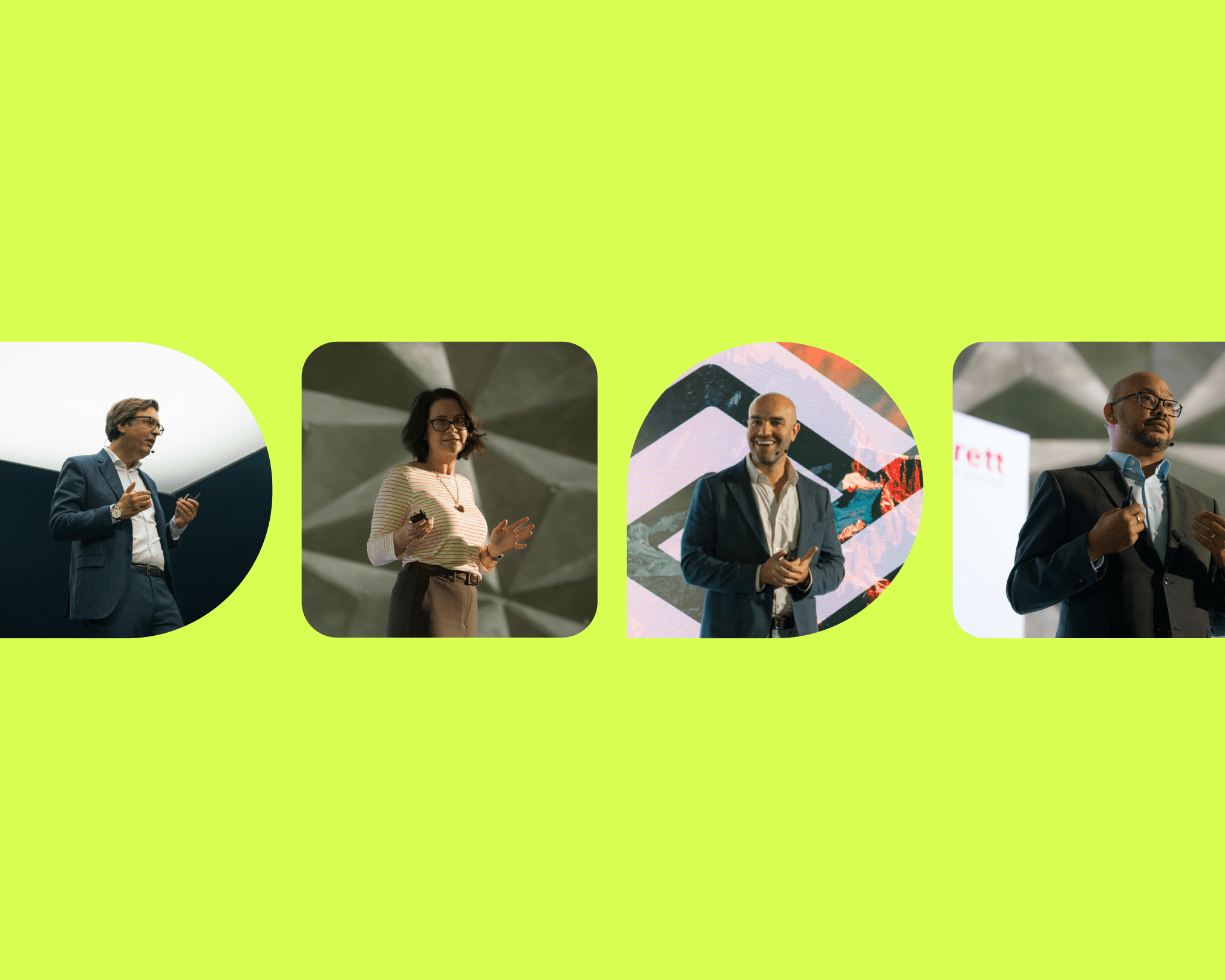
If you’re interested in the full story of this multinational beverage player, and lots of other great transformation stories, I’d like to invite you to join us at our 5th annual online event, aim10x digital, on March 13th.
We’ll be featuring inside stories from the digital planning transformations of companies like Citizen Watch America, Hugo Boss, Kubota Tractor, Smurfit Westrock, AB InBev, Mankind Pharma, Estée Lauder, Indorama, Shurtape Technologies, Amway, and many more.
This is a chance to hear business leaders share their digital transformation experiences, lessons, and strategies in their own words. I’ll be logging in from my laptop on the 13th, so I hope to see you there digitally. I love to get my steps in at the office, so this is a great chance to connect my wireless headphones and listen to the exciting insights while I try to hit my 10k daily step count.
You can register for free here. Even if you can’t make it, if you sign up anyway, you’ll get on-demand access to the recordings afterward.
Let’s keep pushing the boundaries of what’s possible in supply chain planning together!
About the authors

Igor Rikalo
President & COO at o9 Solutions
Igor Rikalo is the President and Chief Operations Officer of o9 Solutions. He oversees the global operations of the organization and plays an integral role in ensuring the business continues to scale at a global level. At o9, he has developed a successful track record of building high-performing teams, managing global strategic initiatives, and delivering strong business results.