26 read min
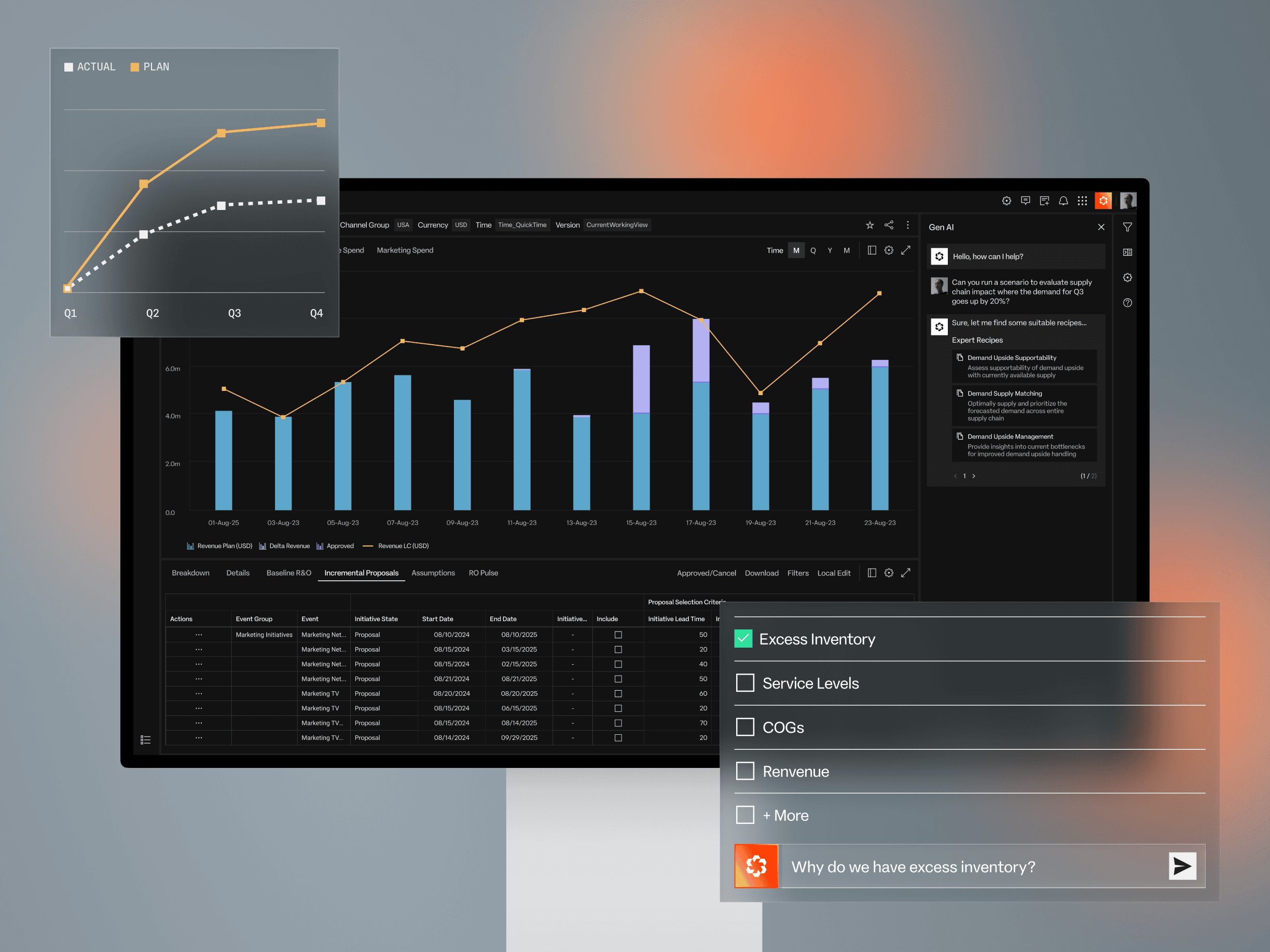
The average human brain makes an estimated 25,000 to 35,000 decisions daily, but that still pales in comparison to the vast complexity within large, global companies—where hundreds of millions of “atomic” decisions occur every day across supply chain, product, commercial, and finance domains.
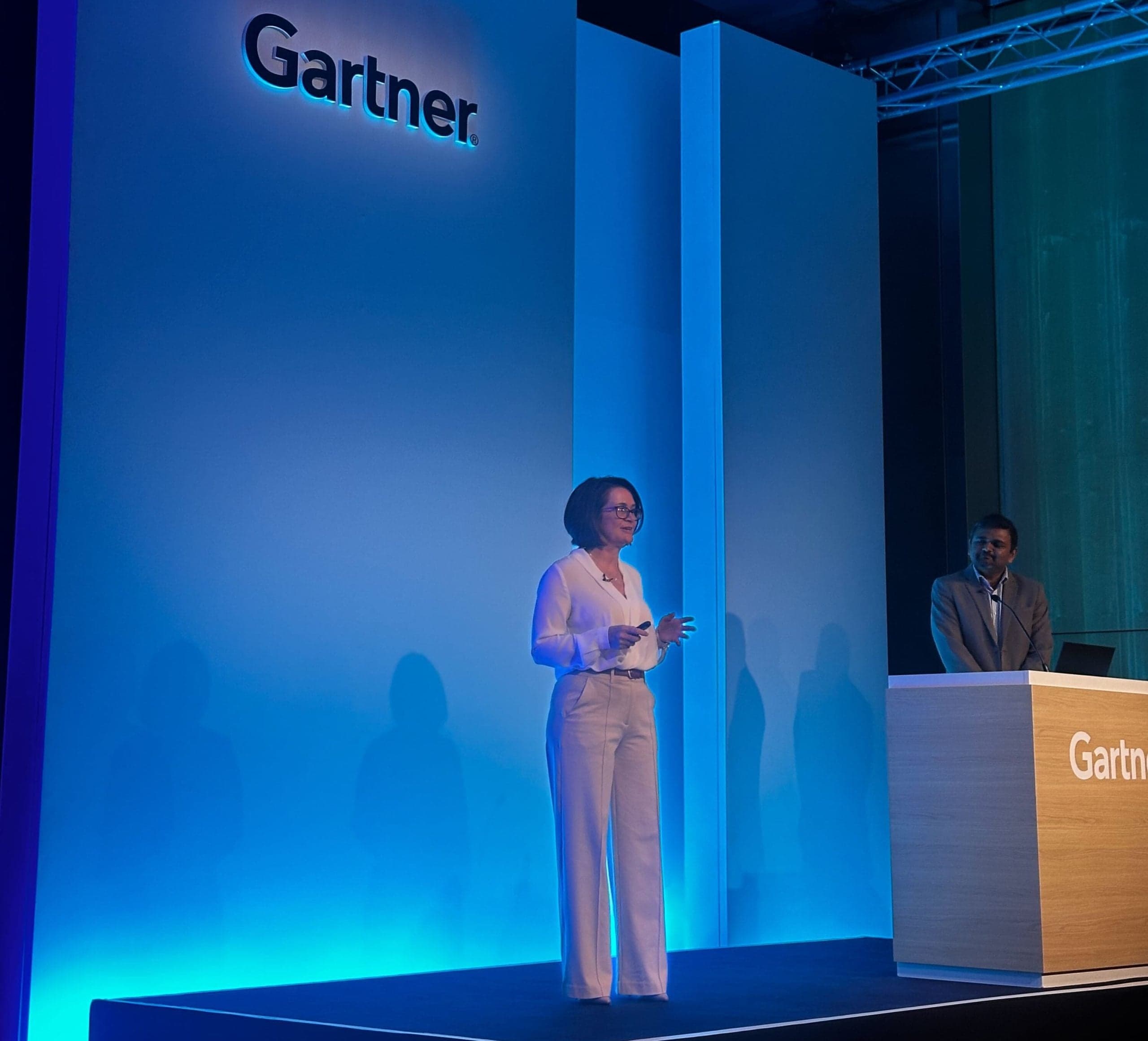
But what happens when each of those decisions is made in silos, too late, and without the right information? According to o9 CEO and Co-Founder Chakri Gottemukkala, the consequences show up on the balance sheet as “the largest source of business value leakage within enterprises.” Such complexity—and the urgency to leverage AI-driven technology to optimize it—took center stage during aim10x digital, o9 Solutions’ largest annual online event.
The event featured industry-leading companies, including Hugo Boss, AB InBev, Pandora, Marelli, Estée Lauder Co., Citizen Watch America, Indorama Ventures, Mankind Pharma, Amway Corp., HD Hyundai Infracore, TDK Corporation, Kubota Tractor Corporation, and many others. These companies shared stories of how they are leveraging the o9 Digital Brain platform to optimize the millions of atomic yet business-critical decisions they make every day and the qualitative and quantitative value they’re achieving as a result.
(If you missed the event, you can sign up for free and replay all the sessions on demand until May 13th. If you already signed up but want to re-watch a session, just visit the platform using the original access link we emailed you.)
Opening Keynote: o9 Co-Founder and CEO
“‘aim10x’ is an innovation mantra,” stated Chakri Gottemukkala, CEO and Co-Founder of o9 Solutions, as he kicked off the virtual event. “That’s why we’re here today—to see firsthand how industry-leading companies are breaking down functional and process silos that slow decision-making, reduce effectiveness, and create misalignment.”
He highlighted how the o9 platform has helped global organizations unlock hundreds of millions of dollars in incremental value by dismantling these silos and automating business-critical activities like demand forecasting and scenario analysis. Traditionally managed through Excel spreadsheets shared across departments—with little visibility into data and differing assumptions—these processes are now seamlessly optimized through AI-driven technology.
Over the next two years, AI-driven technology will continue advancing, particularly in digitizing an organization’s “tribal knowledge”—the expertise dispersed among planners, executives, and other teams—turning it into a scalable digital knowledge base. He also emphasized the role of Agentic AI in improving management structures, predicting that AI-powered agents with advanced analysis and execution capabilities will help create more efficient and effective leadership models.
He ended with a clear message for executives: “If AI-powered transformation isn’t already a priority, it should be—it’s set to become a defining factor for enterprise success.”
Mankind Pharma: Strengthening Supply Chain Resilience in a Volatile World
Mankind Pharma, one of India’s top five pharmaceutical companies, recently completed a sweeping transformation of its extensive supply chain, which supports over 1,500 SKUs across more than 15 therapeutic areas. The initiative addressed longstanding silos that hindered efficiency in a highly regulated industry, ultimately delivering significant gains in inventory management and service levels.
According to Bharat Bhushan Rathi, the company's Head of Distribution and Logistics, the company’s complexity stems from its “manufacturing-heavy, distribution-deep” model, supported by 30+ plants across India. “We wanted a solution that could help us standardize industry best practices while also handling the fine nitty-gritty of pharma,” he said. Recognizing the need for an end-to-end platform, Mankind Pharma selected o9 to modernize planning, logistics, and distribution under one unified solution.
On the demand planning front, AGM Demand Planning Lead Arun A. highlighted the breadth of Mankind’s product portfolio, which ranges from common multi-specialty medications to more specialized oncology and nephrology drugs, plus animal health items and agricultural inputs like pesticides. “When you’re dealing with 200–250 suppliers—and those products are governed by regulators—you can’t just switch vendors at a moment’s notice,” he explained. “You need a gestation period for developing a product for your alternate vendor, and you need to remain operationally agile.”
The company began seeing results soon after deployment. “Right from the design and design validation stage, we started getting excellent outcomes,” Arun shared. “We reduced inventory by 20% and cut our service losses by 80%. It was phenomenal—senior management appreciated it. Twenty percent is a big number in any company, and these are just the early results.”
Bharat praised the partnership with o9, noting that while Mankind Pharma worked with a separate implementation partner, they continued to consult as well with the solution provider for industry-specific best practices. “The collaboration with o9 has been fantastic. They’ve helped us overcome challenges and even configured certain requirements in a bespoke manner,” he said.
Having stabilized its “univariate forecast,” Mankind Pharma now plans to embrace advanced analytics and AI to factor in promotions, weather, and other real-world variables. “Technology can only do wonders if you understand your processes and how they can be adopted by your teams,” Arun concluded.
HD Hyundai Infracore: A Digital Planning Transformation in Complex Manufacturing
HD Hyundai Infracore, a global leader in heavy construction equipment, recently embarked on a multi-phased digital planning transformation to solve persistent supply chain challenges. “The biggest challenge was that we could not establish a reliable supply plan based on actual market demand,” said Jaehun Noh, General Manager at HD Hyundai Infracore.
Before partnering with o9 Solutions, the company relied on manual forecasting and supply allocation at its manufacturing facilities. This approach not only created operational inefficiencies and distorted demand signals but also led sales teams to inflate forecasts in order to secure inventory amid shortages. “We depended on individual knowledge and experience rather than a structured, rule-based system,” Jaehun explained.
To overcome these issues, HD Hyundai Infracore adopted the o9 platform, shifting from a supply request model based on factory shipments (Factory Out) to a Sell-In-based approach aligned with dealer demand. “Previously, capacity and component availability were checked manually, causing delays and inconsistencies,” said Jaehun. “Now, the system generates shortage reports and provides network insights, allowing planners to identify potential bottlenecks and resolve issues proactively.”
Aligning supply planning with accurate demand signals was also critical to the transformation. “Previously, supply planning wasn’t built around sell-in demand,” Jaehun noted, “but today, everyone understands that an inaccurate demand plan affects the entire business.” To ensure consistent adoption across its global footprint, HD Hyundai Infracore established Power Users in each of its global business units, held monthly conference calls to review planning reports, and focused on ongoing knowledge transfer.
By rolling out the platform in careful stages—starting with a pilot in 2020, followed by full implementation in its Korea plant in 2021 and China in 2023—HD Hyundai Infracore mitigated risk and boosted system acceptance. According to Jaehun, “This shift ensures all stakeholders view the same real-time data, enabling a more aligned and efficient decision-making process.”
Leadership has taken notice, with Jaehun adding, “Our leadership, including our CEO, now fully recognizes the importance of demand planning.”
TDK: The Journey to Seamless SCM in a Fast-Changing World
TDK Corporation, a leading Japanese multinational specializing in electronic components, materials, and data storage solutions, has launched an ambitious transformation initiative to unify and modernize its supply chain.
General Manager Yoshihiro Saito outlined the company’s vision, emphasizing the critical need to adapt in an increasingly volatile global market. “We live in a complex and uncertain era,” he remarked. “Companies must develop the ability to adapt to these changes quickly.”
Over the years, TDK has expanded significantly across international markets, but its legacy planning systems have struggled to keep pace. This challenge spurred the launch of the “seamless SCM project,” a comprehensive effort to integrate every facet of the supply chain—from the factory floor to suppliers and customers—within a unified digital ecosystem.
At the core of this transformation is a commitment to data integrity. “Building a new house on an old foundation just doesn’t work,” Yoshihiro explained, underscoring the importance of establishing a strong data foundation before layering on advanced technologies. The initiative prioritizes eliminating data silos by equipping all key functions—manufacturing, sales, finance, and logistics—with shared data and solutions. “When everyone uses the same solution, we avoid fragmented efforts,” he added, stressing that a common digital language fosters faster and more efficient collaboration.
A key element in this strategy is the company’s master data management, which TDK is considering placing under the oversight of a dedicated task force. “If even one piece of master data is wrong, the entire supply chain plan can be thrown off,” he cautioned, highlighting the critical role of data accuracy in operational efficiency.
While the vision is bold, TDK is approaching the transformation with pragmatic expectations. Yoshihiro acknowledged the natural tendency for different departments to seek tailored solutions but warned against excessive customization. “Everyone wants a solution tailored just for them,” he said, “but then we end up with individual optimizations that don’t serve the company as a whole.” Instead, the company is focused on implementing a solution that meets approximately 70% of core requirements while ensuring scalability and alignment with broader organizational goals.
Beyond technological advancements, TDK’s transformation also serves as a proactive measure against Japan’s looming demographic challenges. With a shrinking labor force expected to strain operations by 2030, the company is taking decisive steps today to secure its future.
“We must prepare today so we’ll still be here thriving tomorrow,” Yoshihiro concluded.
Indorama: Why Transforming Planning and Decision-Making Is Key for Growth
Indorama Ventures, a leading sustainable chemical company with operations in 120 plants in over 30 countries, has embarked on a transformation to unite all of its core enterprise planning activities on one next-generation platform.
According to Chief Digital Officer & Business Transformation Leader Eric Delattre, the company’s rapid expansion created operational silos and complexity, prompting the need for what he calls “Indorama 2.0”—a move toward becoming a “connected, unified, data-driven” enterprise.
A central pillar of this transformation is the adoption of an Integrated Business Planning capability that aligns finance, sales, supply, and operations on one platform. “At the heart of this program, we have the IBP implementation, which is truly the nervous system of all our different functions,” Eric explained.
One crucial enabler of this shift has been the partnership with o9 Solutions. Working together, Indorama has rolled out a phased approach, implementing a global SAP ERP solution and building a data platform to improve data consistency and availability. Although the company is still refining data accuracy, Eric is clear that waiting for “perfect” data is not an option. “We cannot wait to get the data perfect to get started,” he noted.
Eric expressed excitement and how the new IBP capability will facilitate a fundamental evolution in how the company thinks and operates. “The shift from volume to value is crucial,” he emphasized, pointing to the expected ability to run ‘what-if’ scenarios that measure supply, service, and financial implications in tandem. He also sees the shift as an opportunity to elevate employees’ roles by automating repetitive tasks and encouraging cross-functional collaboration. “The end goal is to free up our talent to focus on navigating future changes rather than analyzing past activities,” he said.
Ultimately, Indorama plans to expand its IBP program across all business units, transitioning from a volume-driven approach to a value-centric mindset. However, Eric emphasized that true success depends on securing buy-in across the organization. As he put it, the real measure of Indorama’s success will be “measured by user satisfaction.”
Citizen Watch: Transforming Supply Chain Strategy with o9
Citizen Watch America, the global watchmaker's largest market outside Japan, is facing what Glenn M. Pascrell, the company’s EVP of Merchandise Planning and Allocation, calls a “channel shift.”
New and younger consumers are now buying watches online in greater numbers, forcing the global watchmaker to balance an intricate mix of distribution to department stores, e-commerce giants like Amazon, and its direct-to-consumer websites.
To navigate these challenges, the company went on a “mission to find a provider where we could connect merchandise financial planning, top-down, bottom-up forecasting, and supply planning,” Glenn emphasized. “We loved that o9 offered one solution in the cloud that can connect these different functions.”
According to Glenn, Citizen Watch America’s decision to work with o9 is already delivering measurable benefits, including improved forecast accuracy and a significant reduction in inventory. “We migrated to a point-of-sale (POS) model, which has much higher accuracy than we did in the booking model,” he noted.
Another major win involves automated inventory allocation across different distribution channels. Four years ago, Citizen Watch managed more than 400 separate “allocation locations,” which resulted in excess inventory being locked in specific channels. “Today, we have less than ten locations,” Glenn pointed out. “o9 is providing a rebalancing of inventory based on the forecast and how important the account is. This is dramatic.”
Beyond the technical capabilities, the o9 team’s hands-on approach has made a lasting impression. “I’ve never worked with a company that had a better group of people,” Glenn said. “They’re very invested in our solution and making sure we see a return on investment. It’s a continual improvement process. Our win, they look at as their win.”
Hugo Boss: Elevating Planning Excellence in Fashion
Hugo Boss, a global luxury fashion brand known for its sophisticated, modern tailoring, premium casualwear, and timeless elegance, has a vision “of becoming the leading tech-driven fashion platform,” explained Ivica Maric, the company’s EVP of Business Operations.
“That means we have to increase transparency and use data for better decision-making along the entire end-to-end value chain,” he continued. “We want to have one version of the truth for planning and use the data out there to get a better plan to increase product availability and optimize our inventory position.”
Ralf Kromer, Hugo Boss’s VP of Business Planning & Analysis, echoed this focus on data integrity and the need for clarity in decision-making. “Currently, we are living in a very volatile market, and we need data, and we need a decision-finding process that everybody can trust,” he said.
To increase user adoption, Hugo Boss has involved over 100 team members across functions and regions in the transformation to drive the initiative from the bottom up. “We have now over 100 people cross-functionally involved here—from supply, from business units, from the markets, but also from finance,” Ralf said. “Our people are building this project from the bottom up. We’ve only given basic guidance, frameworks, and guardrails.”
Reflecting on Hugo Boss’s choice of the o9 Digital Brain, Ivica explained that they appreciated how “value-focused” o9 is, how it “brings together all planning capabilities on one platform,” and that it felt like “a real partnership approach from o9.”
Eduard Spitz, Hugo Boss’s SVP of Global IT, concurred, praising the platform’s alignment with Hugo Boss’s unique business and IT requirements. “We chose o9, first of all, because of your deep fashion knowledge,” he explained. “Whenever we looked at o9, we saw our language and processes.”
Pandora: Crafting a Consumer-Centric Future in Retail
In the view of Kristofer Löhmos, Pandora’s Senior Vice President of Global Merchandising, the pandemic accelerated a move toward greater consumer-centricity. This shift has required Pandora to address the lack of integration across its planning systems.
Kristofer referred to this lack of integration as a “systematic disconnect,” saying, “We’re buried in a thousand Excels when we want to be spending more time actually responding to what the customer is telling us.”
Despite the company’s vertical structure, in which it owns and operates its own retail outlets and produces most of its jewelry in-house, its planning systems have existed in silos. He recalled a story about one of Pandora’s manufacturing plants in Thailand still producing a product that had been discontinued. “It wasn’t because of a faulty production plan,” he explained. “It was because the systems just didn’t connect.”
To bridge these silos and become more consumer-centric, Pandora is rolling out an end-to-end retail planning transformation with o9 that will integrate sales data with manufacturing in real time. “That is the true unlock,” Kristofer emphasized. “We’re looking to integrate our full value chain because Pandora is ambitious, and so is o9.”
When asked which KPIs he expects to improve from the initiative, he cited “product availability, driving an efficient inventory setup in terms of how much inventory we invest in relation to top-line, and then sub-KPIs for forecast accuracy, user adoption rate, forecast value add, response rate, and fill rate.”
He closed the interview by emphasizing that the company’s commitment to a thorough change-management process has been a critical element of success so far. “Whether you are the actual hands-on planner or our executive leadership team, we all have commonalities in KPIs and how we measure them,” Kristofer noted. “This makes us all move in the same direction.”
Siemens Gamesa: A CIO's Perspective on Planning Transformations
Siemens Gamesa operates at the forefront of the global renewable energy industry, managing an intricate, end-to-end supply chain that spans the design, manufacturing, and deployment of highly complex wind turbine systems across diverse geographies. Such operational complexity—combined with recent geopolitical volatility—created a pressing need for “not only a tool but a transformation” of its S&OP processes, according to Mark Ghibril, the company’s Chief Information Officer.
Early on, Mark and his team concluded that a single planning platform was essential to “harmonize our S&OP processes globally.” After extensive research, they selected the o9 platform. “After analyzing the market for the best technology, process, and flexibility fit, we decided to go with o9 for our implementation,” he explained.
Today, Siemens Gamesa is leveraging o9 for S&OP across its various business units. “We have one tool that can be used by everybody in the organization,” he said. “The real value we're getting is that we’ve harmonized our processes, we have better data, and, of course, we have a tool that we can rely on to build our future.”
According to Mark, having a single platform for S&OP has also helped drive adoption by “allowing us to have super users helping each other” and “enabling management and operations to run things globally within one tool and one process.”
Looking back on his lessons learned from the journey so far, he advised against waiting for "perfect data" before beginning a transformation initiative—a sentiment echoed by many digital transformation leaders, often compared to “waiting to be in shape before going to the gym.”
“Do not wait for perfect data before you start,” he explained. “Accept that the road will be bumpy.”
Marelli: The Story of a Tier-1 Automotive Supplier's SIOP+ Transformation
When tier-one automotive supplier Marelli realized that planning in Excel couldn't effectively balance the demand for electronics with long supply lead times, it decided to transform its Sales, Inventory, and Operations Planning (SIOP) processes with the o9 platform.
Marelli is a poster child for complexity, operating six divisions that produce a vast range of automotive components—everything from headlamps and electric motors to shock absorbers and exhaust systems. These products are manufactured in 100+ plants across 21 countries, each using different ERP systems while supplying 50,000 finished goods built from 350,000 components.
Thanks to the o9 platform, Marelli now integrates data from multiple ERPs, EDI feeds, and key account managers to create a real-time, global view of demand and supply. Its 100+ manufacturing plants now act as “antennae,” continuously collecting this data and updating visibility into customer demand trends for the next month, explained Carlo Chiarle, Head of Global Manufacturing Operations and Supply Chain at Marelli.
So far, with SIOP, Marelli’s team has seen several measurable outcomes, including a 30% reduction in premium freight costs, reduced labor losses, and improved inventory turns, Carlo explained. “This proved to us that SIOP would be not just a supply chain tool, but a company-wide tool,” he noted.
Looking ahead, Carlo sees o9’s Supplier Relationship Management (SRM) capabilities as a “natural extension” of the SIOP journey. “We need to extend this collaboration to suppliers and work with them to anticipate potential issues, such as obsolete technologies or regional supply disruptions,” he said. With this new capability, instead of “reacting to shortages at the last minute,” the company will “work proactively with suppliers to listen to their challenges, explore opportunities, and create synergies—taking a true ‘one company’ approach.”
Ultimately, with the o9 platform, Marelli aims to adapt quickly to the rapid changes in the automotive industry, particularly the evolving mix of electric and combustion vehicles. “Our world will change,” said Carlo. “We need to be ready to adapt ourselves quickly and always be clear on what the trends are.”
RHI Magnesita: Uniting a Global Network Through Digital Planning
“A lot of our datasets were compartmentalized,” explained Adnan Shahid, RHI Magnesita’s VP of Planning and Procurement. “Teams were talking different numbers, different versions of the truth.” Orders were also frequently modified—“even after being accepted by the customer, they were touched around 40 times.”
These challenges led RHI Magnesita—a global leader in refractory products—to begin an earnest search for an integrated solution. But Adnan and his team “weren’t looking for a partner who’s very good in demand planning or operations planning,” he explained. “We already had tools for that.” Instead, they needed a “solution that could integrate everything—from demand forecasting to order promising” and that could “make us successful across the spectrum.”
That solution soon materialized in the form of the o9 Digital Brain. “One of the key things we were also looking for was the order promising part. That was the full scope, and that’s where we felt o9 is a very strong platform.”
In practical terms, the o9 platform will enable RHI Magnesita to move from Excel-based processes to a single, centralized “version of the truth” for demand and supply. The pilot in North America has already demonstrated the potential to reduce manual “touch points” on orders by up to 90 percent, freeing teams to focus on serving customers rather than fixing data errors.
The company also anticipates a significant inventory reduction—a core success metric—in the realm of €80 million once the solution is fully deployed. Adnan was also clear that the qualitative value lies in evolving the organization’s culture and workflows. “We want our sales teams to focus on their markets, on their customers, leaving the internal challenges for the planning team and for the tool to resolve,” he said.
For Adnan, the key lesson from the journey with o9 is simple: start now. “You need to face this,” he stated. “Only then will you realize how bad planning in spreadsheets really is.”
Kubota: Customer-Centricity Driving Digital Planning Transformation
Kubota Tractor Corporation has grown rapidly, distributing equipment to roughly 1,200 dealers across the United States. According to Andrew Duyvejonck, the company’s Associate Director of Supply Chain Operations, this expansion has started to outpace its internal planning capabilities.
“We had lots of Excel usage, silos of information, and tribal knowledge,” he explained. Dealers were also “flying blind” because the system was “too complex for SAP and our internal software to give our dealers good expected delivery dates.” Excess stock would pile up while dealers lacked visibility into incoming shipments. “We knew if we were going to sustain this type of growth and be a major brand, we needed software capabilities that aligned with the excellence of the products we sell,” Andrew explained.
Kubota’s quest for such capabilities led them to choose the o9 platform to help transition from reactive, manual supply chain management to a real-time, AI-driven, predictive planning system that optimizes inventory, improves dealer confidence, and automates order management.
From the start, Kubota set ambitious value targets for its transformation. By leveraging the o9 platform to automatically calculate each dealer's “discrete inventory environment” based on sales history and evaluating inventory daily, orders will be prioritized based on need rather than on a first-come, first-served basis. This ensures inventory is directed where it's needed most, reducing excess stock and preventing shortages.
This automation processes and analyses “hundreds of thousands of sales orders with 10 to 20 lines each,” Andrew noted. “That’s too much for a human to manually track as they change daily. We want to get to exception management—let the software do the bulk of the heavy lifting and let our people handle the corner conditions.”
As a result, the company expects to see a “10–15% reduction in inventory in the first six to 12 months,” he revealed. “When our dealers gain more confidence in our ability to deliver, they’ll feel more comfortable carrying less inventory.”
Looking ahead, Andrew is excited to roll out more advanced capabilities to Kubota’s sales network. “Soon, we’ll be able to diagnose what’s going on in real-time and start making better, more predictive decisions,” he said. “We’ll run our business in a way nobody at Kubota has ever seen or thought possible.”
AB InBev: A Journey to Touchless Planning
With over 100,000 suppliers, 270 plants, 600 distribution centers, and 500 brands, global brewing giant AB InBev realized it needed to “think differently about how to connect day-to-day operations to bring overall improvement,” according to Elito Siqueira, the company’s Chief Supply Chain & Distribution Co. Officer for North America.
The sheer complexity of AB InBev’s supply chain demanded a renewed focus on planning. This led the brewer to choose the o9 Digital Brain platform nearly five years ago—part of a larger initiative to optimize decision-making across everything from demand planning and supply network planning to reverse logistics and materials planning.
Elito highlighted how adopting o9’s capabilities has helped AB InBev balance cost, cash, and service all at once—an especially challenging trio for CPG companies operating at scale. “Out-of-stocks have reduced by half in the last three to four years. Inventory holdings have gone down by 20%. Our forecast accuracy by country and SKU is above 87%, an improvement of more than 11 percentage points.”
One of the most eye-catching metrics is what Elito calls “touchless” planning—how often the system’s plan requires no manual intervention. “I’m quite obsessed with that,” he joked. “Eighty-five percent of our demand planning output in the U.S. is now touchless, which means people only touch or change 15% of it.”
With out-of-stocks hovering around just 0.5%—a 99.5% service level—AB InBev’s investment in planning technology appears to be paying off.
Estée Lauder Co.: Elevating Beauty Through Intelligent Planning
The Estée Lauder Companies is a rare combination of “fast fashion” and “your traditional CPG-type company,” explained Raj Nakum, SVP Enterprise IBP & Value Chain Optimization at Estée Lauder Co.
“We manage over 40,000 SKUs and a large manufacturing footprint that includes in-house plants and more than 200 third-party manufacturing suppliers,” he added. The brand’s diverse channels—freestanding stores, department stores, perfumeries, online retailers, direct-to-consumer platforms, and travel retail—add further layers of operational complexity.
According to Raj, the company was historically “very much focused on the tactical horizon, with a fragmented approach to planning that limited our understanding of the end-to-end network.” The transformation, which involved 2,500 team members across commercial, sales planning, GMs, customers, and suppliers, began when the company established “one supply chain planning operating model,” partnering with o9 to implement a next-gen Integrated Business Planning capability.
He cited a “20-point lift in our weighted forecast accuracy at the code-market combination level,” with fill rate performance “in the mid-90s.” The company also reduced inventory by “85 days to sell” since launching the new planning platform and has boosted productivity by reallocating resources to more value-added activities.
Supply chain planning is also now “a key enabler” of the company’s business, providing “a much better understanding of our constraints and how to navigate across those constraints.” The transformation has also given the supply chain planning team a renewed sense of purpose and impact.
“This investment has really elevated the profession of supply chain planning at The Estée Lauder Companies,” Raj said. “I really question how we navigated the business before.”
Shurtape: Driving Customer Satisfaction with Collaborative Planning
When the pandemic hit, Shurtape Technologies, a family-owned adhesive tape manufacturer, observed two major shifts: its retail side saw a sales surge as people tackled home improvement projects, while the industrial side dipped.
This volatility highlighted the need for a more agile demand planning solution. According to Kyle Stephens, Demand Manager at Shurtape Technologies, the company realized it “needed to do something different to react quicker and create a vision of where we want to be.”
For Kyle and the Shurtape team, o9 stood out as the technology partner to help achieve this vision—particularly for its “ability to have multi-echelon forecasting and create forecasts within o9.” Equally important was finding a partner that could “instruct us where we could be better, not just be a software vendor,” he explained.
Shurtape has already seen remarkable improvements. With o9’s demand planning capabilities, forecast accuracy has jumped from 30–40% to around 70%. “We feel like best-in-business is running around 70% at lead time, and we’re hitting that now,” Kyle said.
Service rates have also soared. Shurtape’s goal is consistently maintaining a 98% fill rate—a milestone that’s now within regular reach. “It’s unheard of to hit 98% fill rates for a given month. But to continuously do it month over month really speaks volumes to how well the forecast is getting the right inventory to the right places,” he explained.
Kyle emphasized that o9 isn’t just a vendor—it’s a partner helping Shurtape achieve both digital and organizational transformation. “They’re not in it to sell us something… I don’t feel like that’s what we’re after. They’re there to help us, answer our questions, and support us,” he said.
Amway: AI-Powered Planning Transformation
Amway Corp., a multinational direct-selling company specializing in health, beauty, and home care products, operates across 28,000 SKUs, 65 markets, and 80 distribution centers.
Its transformation journey with o9 began when it realized its homegrown legacy planning systems were preventing it from being “much more agile, working with greater speed, and integrating more deeply with our commercial counterparts,” said Andrew Sawhill, the company’s Director of Global Planning and SC Analytics.
Jessica Morel, Amway’s Director of Supply Chain Technology, led the evaluation of technology partners and saw o9 as “flexible enough to work within our unique Amway way of doing business,” she explained. “They also brought in best practices from their past experiences and helped us think through a better approach.”
Andrew cited a notable improvement in demand forecasting metrics. “We’ve seen a four to five-point improvement in both accuracy and bias,” he reported. “Those are significant numbers that help justify this project for the company.” He added, “o9 is able to handle a lot more of the heavy lifting for us. That means we can focus more on higher-level strategic decisions rather than manually tuning forecasts or wrestling with incomplete data.”
Both Jessica and Andrew emphasized how quickly the transformation is taking root. One key advantage of the o9 implementation is how it connects traditionally siloed teams in near real-time. “We can now have asynchronous batch runs, incorporate data from multiple sources, and deliver it where it needs to go almost instantly,” Jessica explained.
“That’s been a true step forward.”

About the authors

Igor Rikalo
President & COO at o9 Solutions
Igor Rikalo is the President and Chief Operations Officer of o9 Solutions. He oversees the global operations of the organization and plays an integral role in ensuring the business continues to scale at a global level. At o9, he has developed a successful track record of building high-performing teams, managing global strategic initiatives, and delivering strong business results.