10 read min
In Amsterdam, over 200 supply chain and IT leaders gathered to explore what success looks like at each stage of digital planning transformation. The event provided a platform for industry professionals to hear experiences from companies that have undergone digital change.
The co-hosts for the event were Sean Zonneveld, Global Vice President at o9 Solutions, and Joao Guarisse, Vice President of Industrial Manufacturing at o9 Solutions.
Throughout the day, Sean and Joao led attendees through a comprehensive framework for achieving a successful digital planning transformation. Through a series of presentations and panel discussions, they unpacked each key stage in the transformation journey—from pinpointing specific business needs to realizing measurable outcomes and scaling the transformation to maximize value.
Attendees explored practical insights from real-world case studies, gaining a deeper understanding of each phase and the tangible impact of a well-executed digital planning strategy.
Coty on Identifying the Business Need for a Digital Transformation
Embarking on a digital planning transformation is no small feat. It requires a clear and compelling business need—something that addresses the pressing concerns of senior management, not just a generic desire to digitize processes. Understanding this, Coty, a global beauty company, took a methodical approach to identifying its "why" for transformation.
Dan Smith, Vice President of Supply Consumer Beauty & E2E Planning Transformation at Coty, shared insights into the company's journey. By zeroing in on specific capability gaps and seeking a solution that could deliver immediate value, Coty positioned itself to overcome the challenges inherent in such large-scale initiatives. Their strategic approach underscores the importance of a well-defined business need in achieving a successful digital transformation.
“We identified 15 key missing capabilities and started engaging with many solution providers. Here’s why we chose o9: They closed most of the capability gaps, and we needed something from day one to go and deliver value.”
Dan Smith
VP, Supply Consumer Beauty & E2E Planning Transformation, Coty
Pandora on Building a Strong Value Case
After recognizing the need for digital transformation, the next crucial step is constructing a compelling value case. This involves directly linking planning challenges to their impact on both top-line revenue and bottom-line costs. Effectively communicating this value to the executive team and the board is essential for securing and maintaining their support.
Anders Frandsen, Vice President of Global Supply Chain, and Simon Radoor, Vice President of Supply Chain Technology at Pandora, shared their approach to this critical phase. Anders explained the strategic reasons behind Pandora's partnership with o9 Solutions, emphasizing the company's shift from a sell-in (supply-focused) to a sell-out (demand-driven) model.
“80% of our distribution is sourced internally, and a key focus is shifting from being sell-in driven to becoming sell-out driven. That’s why we see great value in a large-scale transformation with o9.”
Anders Frandsen
VP of Global Supply Chain, Pandora
By aligning more closely with actual consumer demand, Pandora aims to enhance efficiency and responsiveness in a dynamic market. Anders highlighted that o9's platform provides the capabilities needed for this significant transformation, enabling the company to optimize internal distribution and manufacturing to better meet customer needs at optimal costs.
Their continuous efforts to refine and communicate the value case have been pivotal in maintaining executive-level support. By clearly demonstrating how the transformation aligns with corporate objectives and positively impacts financial performance, Pandora has secured ongoing backing from senior leadership.
To conclude their presentation, Anders and Simon illustrated how Pandora's digital transformation journey is underpinned by a value case that aims for a 10x return on investment (ROI) based on credible improvement targets. By focusing on key planning improvements, Pandora will drive top-line improvements and bottom-line efficiencies that directly support the company's financial objectives.
Accenture on Selecting the Right Platform
Advancing to the third step of the framework—selecting the right technology to support your digital planning transformation—it's essential to ensure that the chosen platform aligns with your organization's end-to-end vision. Focusing solely on the supply chain can limit the potential for true transformation.
Frank Meuwissen, Managing Partner at Accenture, took the stage to share his expertise in this critical phase. He emphasized the importance of considering how all business functions are interconnected when selecting a platform. "When choosing a platform, it's essential to look beyond just the supply chain. You must take an end-to-end approach that includes finance, procurement, and commercial operations. Only with this full perspective can you select the right platform to support your vision," Frank explained. From his presentation, several key takeaways emerged:
- Start by pinpointing the essential capabilities required, considering the broader tech landscape and your specific decision criteria.
- Employ a systematic approach to assess platforms, ensuring clear visibility into their functionalities and how they meet your organizational needs.
- Focus on solutions that promote collaboration across departments, offer scalability, have strong data foundations, and encourage user adoption—all while recognizing that no solution will be perfect.
A Female Perspective on Securing CEO and Executive Alignment
Securing buy-in from CEOs and top executives is the next critical step in a successful digital planning transformation. To shed light on this essential phase, a female-led panel—part of o9's Minerva initiative—took the stage, offering unique perspectives on how to engage the C-suite effectively.
Moderated by Lara Pedrini, Senior Vice President and Global Head of Sales at Exiger, the panel featured distinguished leaders:
- Alison Jones, Former Chief Operating Officer at Canyon Bicycles
- Roxane Desmicht, Former Vice President of Global Supply Chain at ams Osram
- Angela Qu, Chief Supply Chain Officer at Iveco Group
The panelists emphasized that executive buy-in is crucial for driving meaningful change within an organization. They highlighted the importance of communicating the benefits of digital planning transformations in a language that resonates with top executives. By doing so, organizations can ensure alignment and support at all levels.
Alison Jones underscored the need to involve C-level executives early in the process. "Get the CxO involved. Help them dream along with you about the benefits of digital planning transformations in a language they can relate to. The C-suite are also employees, so it’s critical to sell the concept to them as well," she stated.
IVECO Group on Implementation
Transitioning from preparation to implementation is a critical phase in any digital transformation. Addressing this pivotal step, Federico Baiocco, Vice President of Supply Chain and Head of Global Logistics and S&OP at IVECO Group, shared valuable insights into Iveco's approach to designing and implementing their digital planning transformation.
IVECO Group recently achieved a significant milestone by going live with Supplier Collaboration (SRM). However, Federico had more exciting news to share. In addition to going live with SRM, they have also launched their Sales and Operations Planning (S&OP), Demand Planning (DP), and Integrated Business Planning (IBP) initiatives with o9 Solutions—all in just nine months.
"We didn't start with forecast accuracy, but with how to make the supply capable of satisfying whatever demand we got," Federico explained. This customer-centric approach led Iveco to transform its operations end-to-end. "We decided to transform end-to-end; that's why we decided to join o9's demand planning program. We are customer-centric, and we want to follow our customers. So, if a product cannot be delivered on time, we know in advance and can inform the customer."
He acknowledged the extensive scope of the program, noting that while they've made significant progress, there's more work ahead. "This was not a short program; there are two more years in front of us where we're going to expand all our business units, plants, and markets. But we're on time and on budget."
The Importance of Change Management
As the journey toward digital transformation continues, the importance of effective change management cannot be overstated. Addressing this crucial aspect, a dedicated panel discussed the often-overlooked human element in such initiatives. Moderated by Chinmay Joshi, Senior Manager of Global Strategic Alliances at AWS, the panel featured industry leaders:
- Colin Tozer, Global Integrated Business Planning Process Design Lead at PepsiCo
- Celine De Lavallaz, Director of Category Planning at Philip Morris International
- Vineet Khanna, Vice President and Former Global Head of Supply Chain at Nestlé
- Oksana Van den Berg, Business Consulting Senior Manager at NTT DATA
The panelists underscored that neglecting the human factor can lead to challenges in adoption, resistance to change, and ultimately, the failure of transformation initiatives. Colin Tozer emphasized the necessity of initiating change management early in the process, stating, "Don't wait until the product exists to start the change management process. It's not just about the product; it's about understanding what process you want."
“Don't wait until the product exists to start the change management process. It's not just about the product; it's about understanding what process you want.”
Colin Tozer
Global Integrated Business Planning Process Design Lead at PepsiCo
They shared insights on the importance of effective change management strategies that prioritize employee engagement, clear communication, and comprehensive training. Oksana Van den Berg highlighted the common oversight in digital projects: "When we look at digital transformation projects, the focus is usually on the digital aspect. Unfortunately, equal attention is not often given to the people’s side."
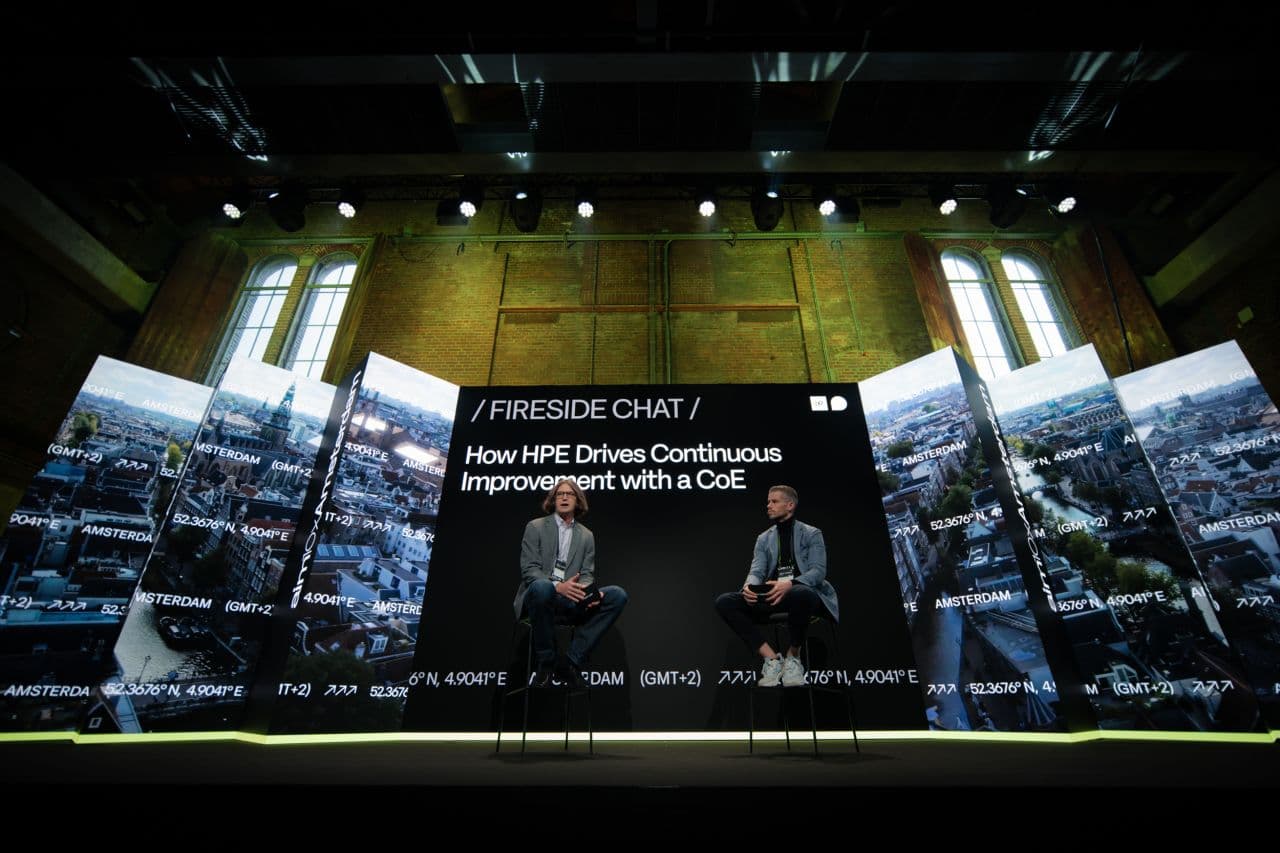
HPE on Driving Continuous Improvement with CoEs
Hewlett Packard Enterprise's (HPE) Configure-to-Order (CTO) business is highly complex. 90% of order configurations are new, causing significant challenges in demand forecasting due to a lack of sales history. This complexity leads to substantial value leakage from lost sales, rooted in the lack of connectivity between HPE's commercial and supply chain teams. Additionally, managing 200,000 multi-level Bills of Materials (BOMs) adds another layer of complexity.
To address these challenges, HPE has partnered with o9 Solutions to leverage its advanced planning platform. By integrating commercial data from Salesforce into the o9 platform, HPE applies advanced analytics to improve demand forecasting and decision-making. This integration bridges the gap between the commercial and supply chain teams, enabling better alignment and responsiveness to market demands.
“Deal assessment became 75% more efficient, allowing our planners to focus more on addressing constraints—a significant value for us. End-to-end planning also improved by 10 to 15%, enabling our planners to accomplish more with fewer resources, make focused decisions, and strengthen our supply chain. As a result, we’re seeing fewer shortages and less need for inventory rebalancing. Overall, a lot of positive changes are happening.”
Marcin Fic
VP, Digital Transformation & Analytics, HPE Operations
However, the digital planning transformation journey doesn't conclude at implementation; it's an ongoing process that requires continual refinement to sustain and increase value.
Marcin highlighted that treating the transformation like a product—with iterative improvements—allows organizations to adapt their processes to evolving business needs. Marcin emphasized the significance of the CoE in effectively integrating business processes with technological capabilities. "We decided to invest in a CoE, setting it up by combining business process knowledge with technical knowledge. As our business evolves, the CoE helps us keep planning and decision-making aligned and drives digital adoption," he explained.
By merging expertise from business and technical domains, HPE's CoE ensures that planning and decision-making stay in sync with the company's evolving objectives, directly addressing the complexities of its CTO business. Key insights from HPE's approach to continuous improvement include:
- Emphasizing collaboration among all stakeholders and adopting a high-touch approach with significant onsite presence were crucial to the CoE's effectiveness.
- HPE set up a CoE to continuously improve its supply chain planning process, making it more agile and cost-effective.
- The success of the CoE required robust leadership and oversight from both HPE and o9 Solutions, ensuring alignment with strategic goals.
A Panel on Realizing and Expanding Value
Concluding the event, a panel discussion centered on value realization and expansion highlighted the transforming role of planners within organizations. Moderated by Kaushik Vedpathak, Associate Partner at McKinsey, the panel featured industry experts:
- Vineet Khanna, Vice President and Former Global Head of Supply Chain at Nestlé
- Martin Hagger Kirk, Vice President of Global Supply Chain & Service Excellence at WS Audiology
- Brian King, Former CIO at T-Mobile
The panelists emphasized that planners are no longer just number crunchers but have evolved into key communicators who translate complex data into strategic insights for leadership. By effectively conveying user experiences and analytical findings, planners can significantly influence decision-making and drive value across the organization.
Martin Hagger Kirk highlighted the importance of involving users and understanding their perspectives to fully leverage digital tools and foster continuous growth. "Remember to talk to the users: the role of the planner has changed from just running pivot tables on macros to being a storyteller. You need to bring their stories to senior management," he stated.
“Remember to talk to the users: the role of the planner has changed from just running pivot tables on macros to being a storyteller. You need to bring their stories to senior management.”
Martin Hagger Kirk
VP of Global Supply Chain & Service Excellence, WS Audiology
Closing Thoughts
The event shared a comprehensive framework for organizations undertaking digital planning transformations. Industry experts dissected and explored each stage, from the initial steps of identifying a compelling business need and building a robust value case to the crucial phases of selecting the right technology and securing executive alignment.
Ultimately, the key takeaway is that successful digital transformation hinges on collaboration, alignment, and a relentless focus on delivering tangible value. By embracing these principles, organizations can not only navigate the challenges of digital planning transformations but also position themselves for success in an increasingly volatile and complex business environment.

About the authors

o9
The Digital Brain Platform
o9 Solutions is a leading Enterprise Knowledge and AI-powered platform helping companies build Agile, Adaptive & Autonomous Planning & Execution Models for transforming enterprise decision-making in environments of rising volatility and uncertainty. Whether it is improving forecast accuracy, matching demand and supply and driving collaboration across the multi-tier supply chain to improve resilience at optimal costs and inventory, or optimizing new product and commercial initiatives to drive revenue growth and margins, decision-making processes from long-range to tactical to execution horizon can be made faster and smarter and connected on o9’s Digital Brain Platform.
o9 brings together game-changing technology innovations — such as innovative enterprise knowledge graph modeling, big data analytics, advanced algorithms for forecasting, demand/supply balancing, scenario planning, real time learning, collaboration, generative and agentic AI, easy-to-use interfaces and cloud-based delivery, and innovative management methods — as well as organization, process and change management best practices to transform decision-making speed and intelligence.