Overview
Sustainability Solutions
Embed sustainability into supply chain decision-making — without sacrificing performance or resilience.
Sustainability Solutions on the o9 Digital Brain enable organizations to move beyond compliance-driven reporting and treat sustainability as a core business dimension. By integrating Environmental, Social, and Governance (ESG) metrics directly into planning, collaboration, and execution workflows, companies can balance margin, service, risk, and environmental impact in every decision they make.

Sustainability has evolved from a regulatory obligation into a competitive necessity.
Customers, investors, and regulators increasingly expect transparency and accountability across global supply chains. At the same time, organizations face significant practical challenges in operationalizing sustainability at scale.
A common issue is data homogeneity. Suppliers — particularly small and mid-sized enterprises — operate at varying levels of digital maturity. They are often overwhelmed by fragmented requests for data related to carbon footprint, forced labor, water usage, and regulatory compliance. Internally, sustainability data is scattered across departments, systems, and formats, making it difficult to trust or act on.
From Reporting Compliance to Double Materiality
Leading organizations are shifting toward double materiality — managing not only the risks sustainability issues pose to the business, but also the risks the business poses to the world.
Recent trade disruptions have highlighted the tension between cost, service, and sustainability. For example, expediting shipments to avoid tariffs or shortages often requires air freight, dramatically increasing carbon emissions. Managing these trade-offs requires a system that treats carbon, water, and social impact as first-class decision variables alongside margin and revenue.

Mixing Sustainability with Risk Management: a Recipe for Long-Term Success
What this solution enables
ESG Data Collaboration Across the Network
Sustainability Solutions enable structured, multi-tier collection of ESG data directly from suppliers. Suppliers can provide data on carbon emissions, water usage, waste, and social compliance through a shared platform. This creates consistent, auditable ESG inputs while reducing the administrative burden on both suppliers and buyers.
Compliance and Certification Management
Regulatory requirements continue to evolve. o9 supports tracking and validation of certifications and compliance indicators related to environmental standards, labor practices, and safety. This includes readiness for frameworks such as CSRD, CBAM, EUDR, and other regional mandates, ensuring compliance is continuously monitored rather than addressed through periodic audits.
Sustainable Sourcing and Supplier Scorecards
Sustainability is embedded directly into sourcing decisions. o9 incorporates ESG metrics into supplier scorecards alongside cost, reliability, and service performance. This enables organizations to evaluate and select suppliers based on total value — not just price — and incentivizes sustainable behavior across the network.
Carbon Footprint and Trade-Off Modeling
Sustainability Solutions allow organizations to model the environmental impact of supply chain decisions. Planners can compare scenarios such as air freight versus sea freight, alternate sourcing locations, or production shifts, with each option evaluated across margin, service, and carbon emissions. This makes sustainability trade-offs explicit and measurable rather than implicit and reactive.
What Makes o9 Different
Integrated Double Materiality
o9 does not treat sustainability as a standalone function. Environmental and social risks — such as water scarcity, Labor issues, or regulatory exposure — are integrated with operational and financial planning. This ensures sustainability considerations directly inform decisions that affect continuity, profitability, and reputation.Reduced Supplier Fatigue Through Platform-Based Collaboration
Instead of issuing multiple, disconnected data requests, o9 provides a single platform where suppliers submit sustainability data once. That data is then reused across compliance reporting, risk management, sourcing decisions, and scenario planning — reducing duplication and increasing data quality.
Incentivized, Scalable Collaboration
Sustainability Solutions help larger enterprises support suppliers with lower digital maturity. By simplifying data collection and sharing requirements, organizations turn compliance into a shared capability and competitive advantage rather than a one-sided mandate.
Industries Supported



Powered by the o9 Digital Brain
Sustainability Solutions are powered by the o9 Digital Brain, which models the entire value chain from raw materials to finished goods.
This end-to-end traceability is essential for accurate Scope 3 emissions tracking, forced labor compliance, and origin-based reporting. Sustainability data is embedded into the same digital twin that supports planning, risk management, and execution.

The o9 Digital Brain
The digital brain is powered by our patented Enterprise Knowledge Graph (EKG)

Take a tour
See how the o9 Digital Brain unifies planning, forecasting, and execution through AI-driven intelligence.
A digital operating model for VUCA conditions
APEX is o9’s AI-powered operating model for enterprises navigating volatility, uncertainty, complexity, and ambiguity (VUCA). It enables organizations to plan, execute, and learn as one connected system.

The o9 Digital Brain powers APEX by connecting enterprise data, knowledge, and decisions through a single intelligent model.
Collaborative Demand Planning is one of the building blocks of the Digital Brain. It contributes domain-specific capabilities into the enterprise-wide model that enables APEX from the ground up—linking this solution to decisions across the entire value chain.
→ Learn how the APEX Operating Model works
Where AI drives real decisions
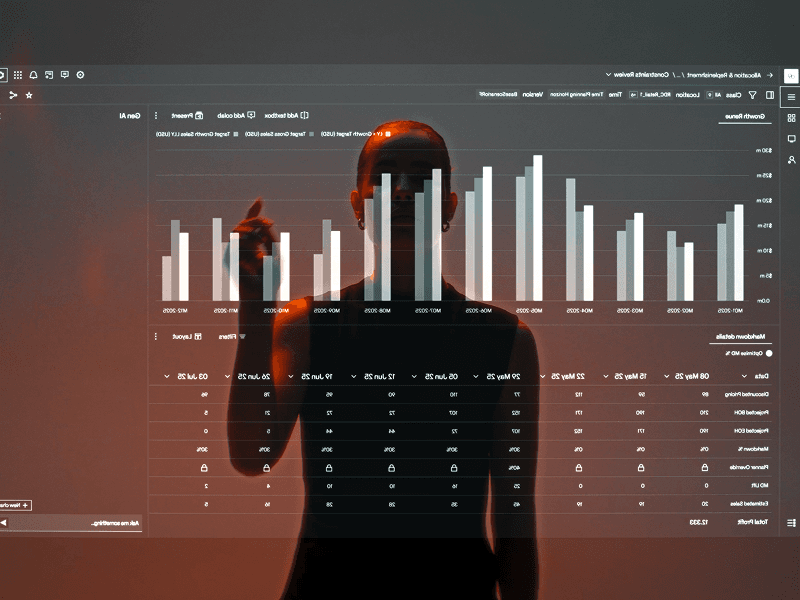
Artificial intelligence enables sustainability at scale.
Automated data validation harmonizes diverse ESG data formats received from suppliers, addressing data quality and consistency challenges.
Generative AI interfaces simplify interaction for less digitally mature suppliers, making it easier to share operational constraints and sustainability information through conversational workflows.
Risk and impact simulation models use AI to forecast environmental risks such as droughts, floods, or regulatory changes and quantify their operational and financial impact on the supply chain.
→ Learn more about o9 AI innovations
Procurement and Supply Chain Planning: Two Functions, One Problem
Ask a procurement leader and a supply chain planner about their biggest priorities, and you’ll likely hear two very different answers. Procurement teams are focused on securing supplier agreements, managing costs, and mitigating risks. Planners, meanwhile, are looking ahead—adjusting to demand shifts, balancing inventories, and keeping production on track.
Results in real-world complexity

Automotive OEM
An automotive OEM needed to respond to new tariffs while balancing cost and sustainability objectives.
Using o9’s AI-powered scenario planning, the company evaluated alternative supply chain responses — such as expediting via air freight or absorbing cost increases — with each scenario displaying both financial impact and carbon emissions.
This enabled leadership to make informed trade-off decisions that protected margins while limiting environmental impact, ensuring sustainability goals were embedded into core business decisions.
What our customers say

Take a tour
See how the o9 Digital Brain unifies planning, forecasting, and execution through AI-driven intelligence.
Related solutions
Frequently Asked Questions (FAQ)
Sustainability solutions embed ESG metrics into planning and execution processes, enabling organizations to manage environmental and social impact alongside cost and service.