16 read min
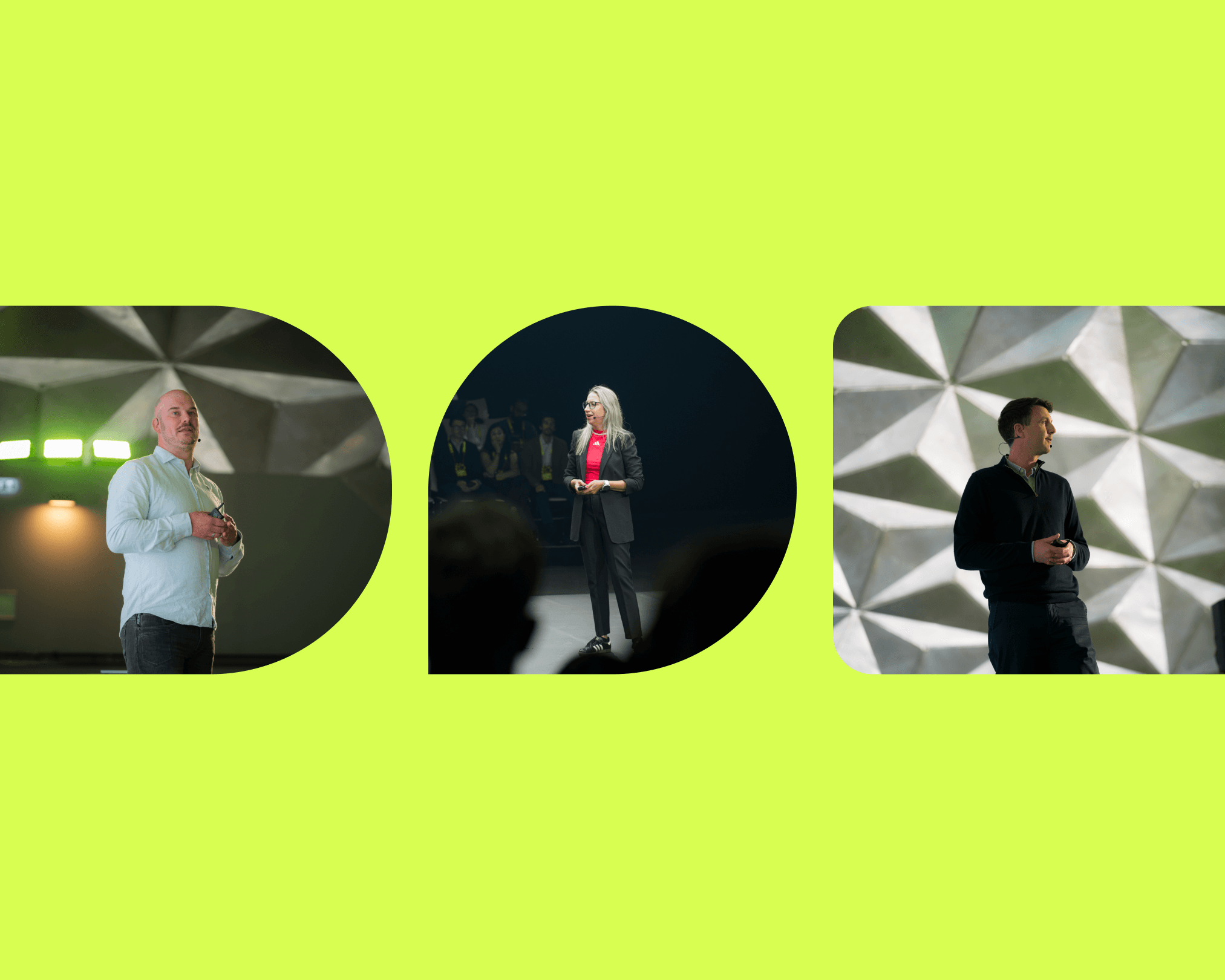
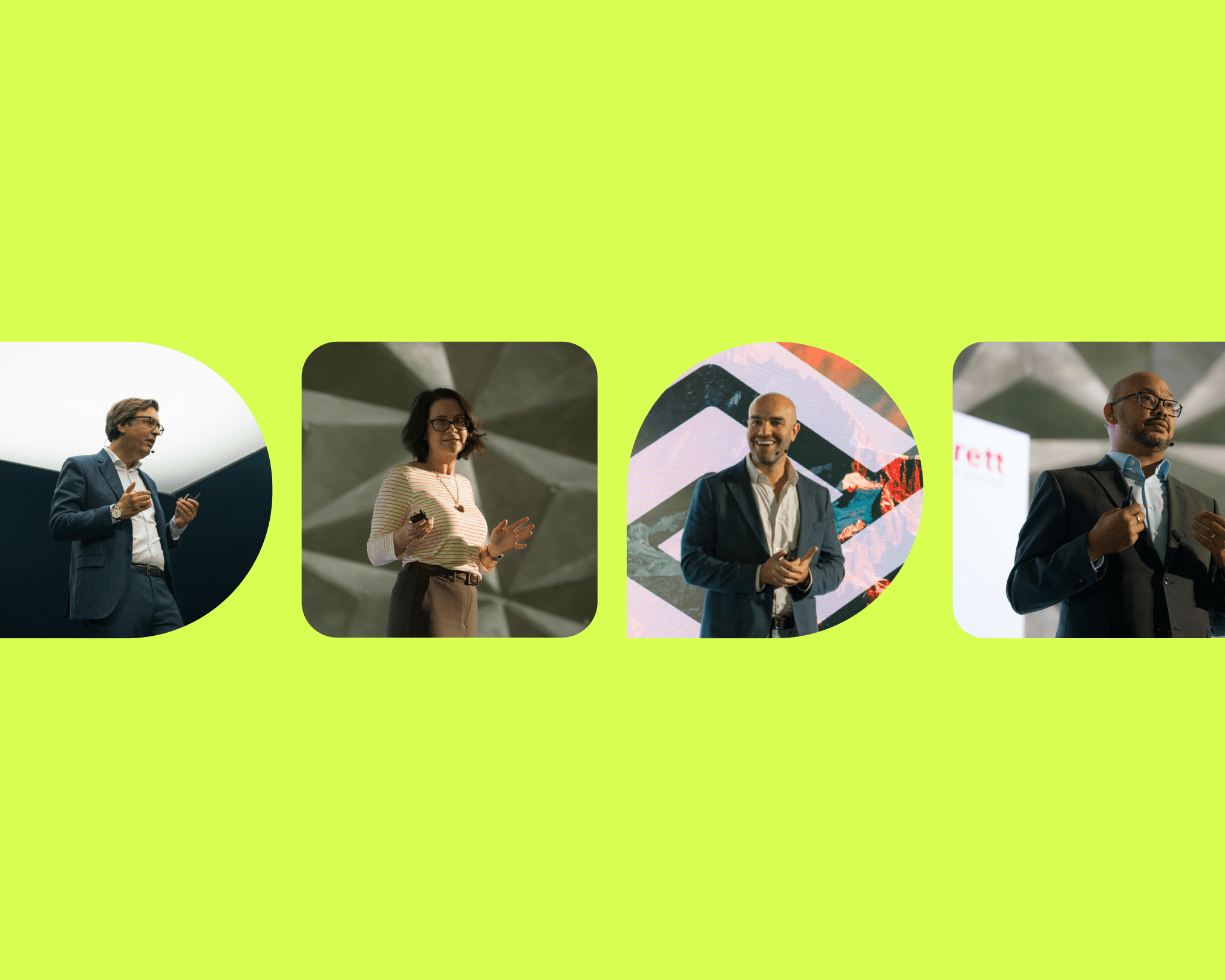
On June 18th, over 150 senior supply chain and IT leaders gathered at a venue near Chicago’s famed Navy Pier to hear executives at global enterprises share insights, learnings, and the results of their planning and decision-making transformation initiatives. The event, which PwC and Google sponsored, featured current and former business leaders from WestRock, Kraft Heinz, Shurtape, LIXIL, Medline, Ralph Lauren, Walmart, Constellation Brands, and o9. Each speaker detailed how their organizations are leveraging new technology and ways of working to address the challenges facing their global supply chains.
1. Next-Gen Supply Chain Planning with WestRock and PwC
"The old ways of doing things are not going to work.”
PwC Supply Chain Consulting Leader Brian Houck set the tone for aim10x Chicago with a call to action for attendees. He challenged them to rethink how their companies plan and make decisions in the face of what he called “the dawn of next-gen supply chain.”
According to Brian, this “dawn” requires supply chain planning to transcend conventional boundaries and integrate with various business functions. "The next generation of planning is less about planning as a function and more about connecting to functions and how we react," he said.
Connecting with these functions, including Sales, Commercial, and Finance, requires what Brian called a “data-driven” supply chain, going as far as to say, "businesses won’t be viable” without one. He also advised companies not to "underinvest in getting your organization ready," calling for a well-designed program that balances long-term vision with immediate value opportunities.
Mike Brodsky, a Supply Chain Transformation Leader at WestRock, spoke next, sharing insights from the packaging giant WestRock's digital transformation journey, particularly its adoption of the o9 platform. Mike explained that, before the transformation with o9, the company was “working in silos” with “no connection between processes and too much software in place.” He explained that the company realized it needed to do things differently to serve its customers better.
To prepare for implementation, he explained that WestRock took the time to define “where they wanted to be long-term.” They also took the time to define the team that would help “bring them there.” As the implementation progressed, the team learned they needed to “leverage data, connect to legacy systems, and drive value faster at the same time the new ERP system was being implemented.” He also noted that driving careful data management from the outset was crucial, as it prevented the need for costly reworks later.
Early successes, which Mike called “quick wins,” helped build confidence and support within WestRock and maintain the transformation's momentum. But it wasn’t always easy. Achieving—and, more importantly, sustaining—the transformation’s goals requires an intensive, ongoing commitment to excellence. "[Supply chain digital] transformations are not part-time jobs," he said.
Mike concluded the presentation by summarizing WestRock’s key lessons for effective change management:
- Engage and Educate Employees: Implementing new tools or processes isn't enough. Engage the workforce at all levels, encouraging curiosity and questions to ensure understanding and buy-in.
- Effective Communication through 'Lunch and Learn' Sessions: Use informal yet informative sessions to explain new processes and tools. These gatherings allow employees to learn comfortably and express their concerns and suggestions.
- Strategic Staffing: Place the right people in critical roles to facilitate smooth transitions and maintain operational continuity. Having the right talent in the correct positions is crucial for driving change.
- Correct Data Management from the Start: Ensure data is harmonized and correctly transformed from the outset to avoid costly corrections later.
2. Adopting a Digital-First Approach to Retail Planning
Consumer expectations and behaviors are rapidly shifting, with a greater demand for convenience, speed, personalization, and seamless omnichannel experiences.
In response, retailers are increasingly adopting next-gen software planning platforms that help them meet the demands of the digital-native consumer. However, as Director of Global Strategic Industries at Google Cloud Paula Natoli pointed out during the event's first panel, “Creating a digital transformation can be difficult; there is not a straightforward path.”
Despite lacking a one-size-fits-all path, certain retailers, such as Ralph Lauren and Walmart, have shifted to digital-first planning and are achieving outsized returns. Their success has left lessons other retailers can leverage for their transformations.
Jason Malyil, a Business Transformation Program Lead at Ralph Lauren, shared his experiences at the famed fashion retailer, where aligning a massive organization around digital objectives required a balanced approach between ambitious goals and practical realities. “You can never make everyone happy, so it’s important to shoot for very good; perfection is too hard to achieve," Jason explained. He spoke about the importance of communication—up to leadership and down to users—to ensure alignment and support across the board. "A lot of effort in change management has led to the success of the digital transformation," he said.
Ash Eisa, a former Senior Vice President of Global Sourcing at Walmart, addressed the high failure rates often associated with digital transformations. He pointed out that “Strategically selecting who to lead these initiatives” and “understanding the key outcomes the teams want to achieve” are essential for driving the desired outcomes, a key learning shared earlier by WestRock’s Mike Brodsky.
Both Jason and Ash discussed the pivotal role of data in digital transformations. Jason remarked on the necessity of having a central authority responsible for data integrity. “Have the core system own the integrity of data,” he recommended.
The conversation concluded with Jason's advice about tackling large retail planning transformations. He recommended a modular approach to project execution, which, he argued, allows for easier adjustments and mitigates the risks of large-scale failures.
“Think of the project as a whole pizza, plan it together, and execute it in slices,” he advised.
3. Comcast’s Digital Transformation Journey
Global media and technology powerhouse Comcast has diverse business units, which include over 600 retail stores, network construction and maintenance, and consumer equipment. It also delivers ten million devices to its customers annually.
Despite its supply chain’s complexity, most of Comcast’s planning and decision-making was performed “almost 100% in Excel,” according to Sam McCartt, Vice President of Supply Chain Planning.
Sam explained that the company decided to “modernize” its planning with o9. The goals included reducing spend and inventory, improving customer service, and increasing internal engagement.
To prepare for the transformation, the company created a planning team and implemented process enablers, such as S&OP, S&OE, and CPFR. The last piece was choosing a planning tool. Comcast chose o9 due to its need for flexibility to meet the demands of its various business units. "We knew what we needed, and that was flexibility given our very different business models; that’s why we selected o9," Sam shared.
The company launched two simultaneous o9 implementations, one for Apple products and another for construction materials. Each was designed to cater to different operational needs and use cases. Sam shared that the construction materials part of the implementation has already produced “immediate savings.” She also shared that Comcast has moved forward with the second phase of the implementation for Xfinity Mobile.
When asked what Comcast has learned from its transformation journey, Sam explained that “a phased release with o9 was much more lucrative. It built momentum and helped the teams understand what they were getting step by step.”
"Nothing builds momentum like progress,” she added.
4. Constellation Brands' E2E Planning Transformation
Every level of the organization, from boardrooms to planners, is tired of digital initiatives' high failure rates.
There’s a growing awareness that new technology is only half the equation. The other half are people who must embrace technology. However, successfully driving a digital transformation equation requires a culture change—not just a technology change.
That’s why Constellation Brands, a Fortune 500 producer and marketer of beer, wine, and spirits, focused first on “people and mindset” during its planning and decision-making transformation with o9, according to Natalie Burbidge, its Senior Vice President of Integrated Business Planning.
“The historic view of ‘we’re going to transition from one system to another system’ isn’t our world anymore—this is a cultural shift,” she added. Natalie was also joined on stage by Constellation’s VP of Digital Business Acceleration, Cora Conklin. According to Cora, the initiative began in 2021 and was a strategic “rethinking of how Business, Digital, and IT organizations operate to encourage a more holistic approach to business planning.”
She also highlighted the need for clear and consistent communication before, during, and after the transformation. "Communication was a surprising challenge with all the moving parts and aligning everyone,” she said. “From there, we have improved our governance structure so that as problems arise, there’s a clear path to resolution across all functional areas."
Natalie agreed, saying, “Structure is critical in a transformation. How we build this into our cadence was a big lesson learned.”
She also pointed out that such projects do not have a definitive end but require ongoing evolution and improvement. "We call it a transformation and not a project because there isn’t an end date, she said. “If we want to continue to drive success and results in the organization, we must continue pushing for end-to-end planning.”
Cora also touched upon the collaborative learning aspects of the transformation, where technical teams gain deeper business insights and vice versa. "One of the things I love about transformation is how both IT and the business learn what it takes to do this,” she said.
“Everyone gets more excited by seeing what boots on the ground look like and their impact on the business."
5. Manufacturing and Distribution Collaborating on Core Planning Activities
Friction between manufacturing and distribution rarely leads to win-win outcomes and often leads to suboptimal value for the end consumer.
Global companies Shurtape, Medline, and LIXIL have been digitally transforming their planning and decision-making capabilities with o9 to enable collaborative processes with their customers, improving efficiency and service delivery to the end consumer.
Transformation leaders from these manufacturers spoke about their journeys during a panel moderated by former Corning Chief Supply Chain Officer Cheryl Capps. The discussion centered on the shared value these capabilities are generating.
Philippe Libert, Director of Supply Chain at Shurtape Technologies, spoke first about the importance of proactively engaging with customers. In particular, he shared how Shurtape’s digital transformation with o9 to optimize sales and margin performance of its omnichannel and multi-region product portfolio helped drive better collaboration. "Collaboration with customers is super important. With the o9 implementation, we’ve delivered 12-15% forecast accuracy improvement," he noted. “Last year, we left $27M on the table. This year, that’s down to $8M.” He explained that since the implementation, “Every functional team has the same objectives: Service, Terms, and Velocity.”
Elizabeth Destefano, Leader of Demand Planning, Insights, and Analytics at LIXIL, spoke next about the structural changes within LIXIL’s demand planning function and how these facilitated better communication across departments. "Through organizational change, we’ve been able to better communicate with sales, marketing, and supply chain," she explained. During the pandemic, they faced significant shifts in demand, which led to more refined strategies for handling market fluctuations, "The statistical model is showing higher than we thought we would be, driving more conversation [between functions]."
The panelists also explored data management challenges, a common theme throughout the presentation. Each speaker acknowledged their data was “less than perfect” before beginning their digital transformations.
Cheryl explained that the C-suite is often reluctant to invest in advanced planning systems if data isn’t perfect. However, she disagreed with this approach, saying, “Master data gets better during the journey, not necessarily before.”
“Everyone has a master data issue, but don’t let that stop you from moving forward with the transformation,” she added.
6. AI-Powered Demand Planning & Forecasting at Kraft Heinz
Adis Sulejmanovic, Head of Digital Supply Chain Transformation and Strategy at Kraft Heinz, joined next to share the story of the food-and-beverage company's journey to a ‘Self-Driving Supply Chain’—a journey enabled by the o9 platform.
Early in the transformation process, Kraft Heinz defined “operational stability and cost optimization” and “breaking down internal and external silos for better collaboration” as key objectives of its digital transformation. “When you think about digital transformation, the most important part is the beginning,” he said. “It’s important to take the leap.”
With the company's value case clearly defined, the transformation team began building the data foundation for the ‘Self-Driving Supply Chain.’ “Data and process go hand-to-hand,” he said. “Once you have those foundations, you can be disruptive.” Once the team had the data foundation, it implemented a “Command Center” to resolve ecosystem problems through autonomous configurations. The foundation proved critical, providing the structure required to build more advanced and complex capabilities. As Adis pointed out, “You can’t fix your foundational principles using AI.”
The company also invested in an Integrated Business Planning (IBP) transformation to shift its focus from mid- to long-term planning. It adopted Agile@Scale methodologies, which he referred to as “our superpower” of dedicated product-oriented delivery groups, or "pods," which focus on specific issues along the value chain.
As the company’s vision began to come to fruition, it began realizing significant results:
- 11% increase in monthly forecast accuracy
- 14.2% increase in weekly FA
- 20% reduction in excess inventory
- 15% reduction in losses
- Increased autonomous planning by 21%
- NPS Score of 56
Adis concluded his presentation by sharing several guiding transformation principles:
- Transparent Governance, Maintenance, and Ownership: Recognizing data as a strategic asset is fundamental. Effective governance and clear ownership ensure data is accurately maintained and securely managed, enabling reliable decision-making and operational efficiency.
- Clarity on Process and Problem-Solving: Ensuring process excellence involves clearly understanding existing processes and their specific challenges. This clarity allows for targeted improvements and more effective problem-solving, which is essential for maximizing digital transformation's benefits.
- Discipline and Perseverance: The journey towards a 'Self-Driving Supply Chain' is marked by the need for discipline and the ability to respond to setbacks rapidly. The 'failing fast' philosophy allows the company to learn and adapt quickly. At the same time, strong executive support and clear milestones keep the transformation on track and aligned with the company's strategic goals.
The journey to a self-driving supply chain is long and complex. But having the right partners can make all the difference. “You don’t have to do the transformation alone,” he said.
“Identifying strategic partners like o9 can help tremendously."
7. Supplier Relationship and Risk Management
As global supply chains become more destabilized, supply chain resilience has again risen to CEOs’ agendas.
Leveraging technology to digitally map a company’s supplier network and run advanced analytics to identify risks and opportunities throughout the network is fundamental to building this resilience, according to experts Karolina Tuttle, the Go-to-Market Lead for Supplier Relationship Management at o9, and Fred Brown, the Chief Revenue Officer at Resilinc.
Fred began the penultimate discussion of the day by sharing that Resilinc—o9’s official partner for supply chain mapping, disruption sensing, and resilience analytics—has seen an uptick in global enterprises’ adoption of Supplier and Risk Management capabilities, particularly since the pandemic. Significant disruptions like the global chip shortage have also spurred companies to improve their risk management frameworks.
He shared a success story of a client of o9 and Resilic who, facing significant weather-related disruptions, strategically mapped their suppliers to mitigate risks effectively. "They looked at revenue impact and over 650 suppliers and found they had a significant number of them in the affected region,” he explained. “They secured supply ahead of time and took it to a state that didn’t have as many regulations."
Karolina asked Fred if he could share other best practices for building more resilience in the supply chains. "Prioritize the parts of your bill of material (BoM), look at what impacts revenue, and prioritize based on that with ongoing collaboration," he responded. Fred also touched on the role of artificial intelligence in streamlining these processes. "AI becomes an essential part of the equation,” he said. “It has to go into what we call supplier developer mapping. It helps get the snapshot across the supply chain."
He shared another story about a client measuring spending by supplier, looking at revenue impact and site risk. “They found out that they had a component in a few categories that generated 500 million in revenue for one supplier,” he said. “They needed to diversify.”
Toward the end of the session, Karolina asked Fred if he had any lessons learned regarding collaborating with suppliers.
“Suppliers are essential to all of our success,” he responded.
Risk management is a win-win situation.”
8. The Executive Vision for IBP
IBP has become an essential planning process for Consumer Products companies, enabling them to make faster, data-driven decisions in a rapidly evolving market.
For the final session of aim10x Chicago, senior planning leaders from Johnsonville Sausage, Danone, and Keurig Dr. Pepper shared their unique perspectives on Integrated Business Planning during a panel moderated by Advantage Solutions Chief Digital Officer Francesco Tinto.
"IBP can mean different things depending on the business segment,” said Navin Chandler, Vice President of Sales & Operations Planning and Customer Service at Keurig Dr. Pepper. IBP can differ significantly across various business segments due to their unique operational needs, market demands, and strategic goals.
However, despite the difference in perception, from a leadership perspective, the panelists mostly agreed that their vision for IBP is singular: “develop an end-to-end planning process that could serve as a platform for our users to make better, faster decisions.”
While the panelists agreed that technology is a powerful lever for enabling an effective IBP process, they were clear that people ultimately make it successful. Navin explained that people—particularly planners—must be empowered for IBP to work effectively. However, this requires getting planners out of a reactive mindset and into a proactive one. "Today, the planners are busy planning all the time, but it's reacting, not planning,” Navin explained. “How do we make that pivot where planning becomes more about actioning than reacting?”
Andrea Castle from Danone described empowering people as a "crawl, walk, run" journey that “standardizes processes, taking low-hanging fruit to leverage the technology, and exposing people to the bigger picture." This approach ensures the workforce is prepared to handle increasingly complex tasks and decision-making scenarios as processes evolve. As the journey progresses, Tucker Reimer from Johnsonville stressed the importance of focusing on immediate gains and long-term strategic objectives, "Track the short-term benefits, but don't lose track of the long-term strategic goals.”
Looking to the future of IBP, Navin shared an optimistic vision: "When we get this right, the things we're doing today that are very complex will get simplified." Such a vision means a future where planning is not just a specialized skill but a fundamental aspect of general management training, potentially transforming planners into future general managers of business units.
The panel concluded with Francesco highlighting the central role of IBP in driving business success. "Real success is when IBP is the heartbeat in the center of the business,” he said.
“The concept of a planner becoming a GM is exciting."

About the authors

o9
The Digital Brain Platform
o9 Solutions is a leading Enterprise Knowledge and AI-powered platform helping companies build Agile, Adaptive & Autonomous Planning & Execution Models for transforming enterprise decision-making in environments of rising volatility and uncertainty. Whether it is improving forecast accuracy, matching demand and supply and driving collaboration across the multi-tier supply chain to improve resilience at optimal costs and inventory, or optimizing new product and commercial initiatives to drive revenue growth and margins, decision-making processes from long-range to tactical to execution horizon can be made faster and smarter and connected on o9’s Digital Brain Platform.
o9 brings together game-changing technology innovations — such as innovative enterprise knowledge graph modeling, big data analytics, advanced algorithms for forecasting, demand/supply balancing, scenario planning, real time learning, collaboration, generative and agentic AI, easy-to-use interfaces and cloud-based delivery, and innovative management methods — as well as organization, process and change management best practices to transform decision-making speed and intelligence.