5 read min
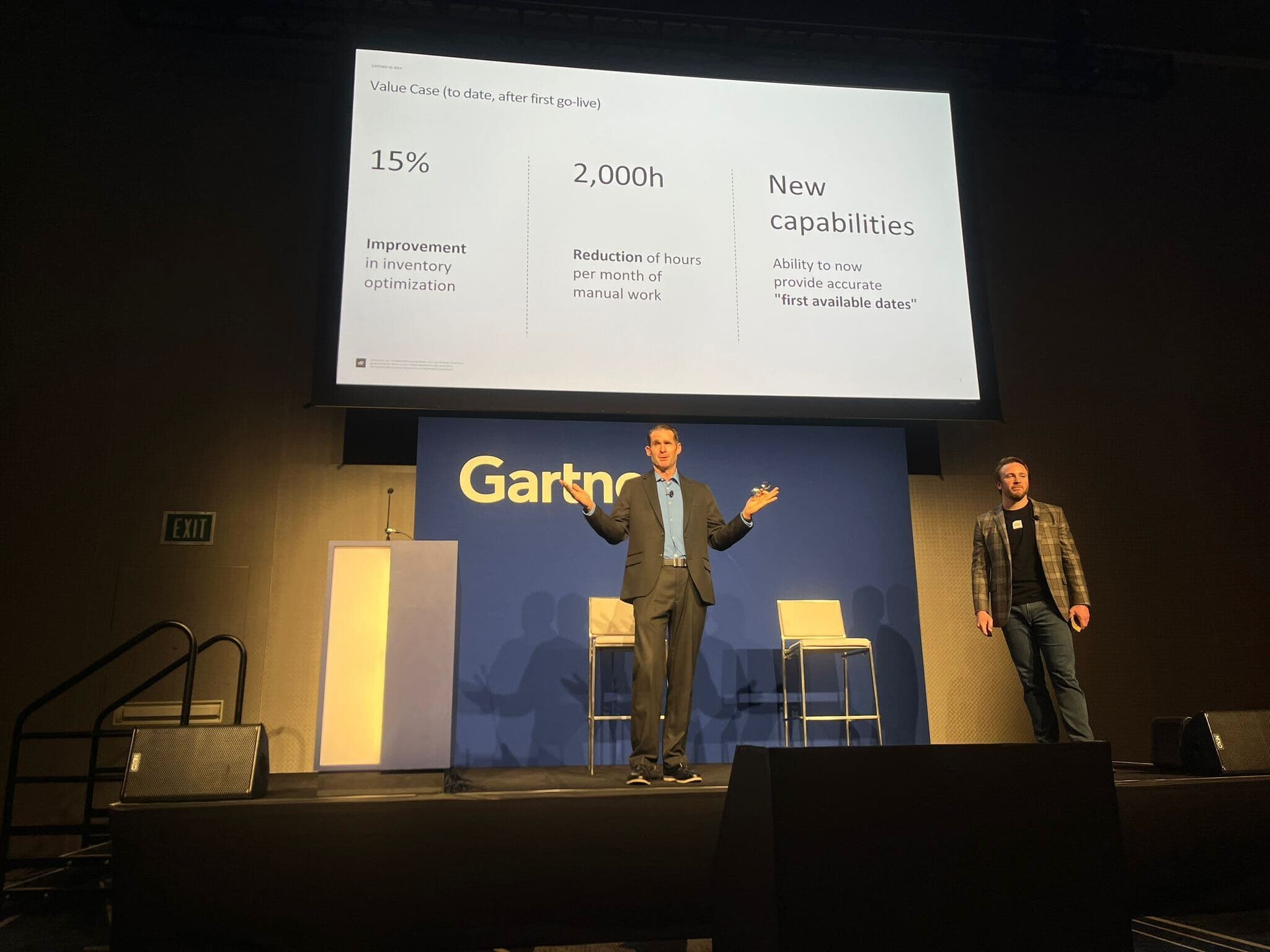
At the Gartner Supply Chain Planning Summit in Denver, Andrew Duyvejonck, Associate Director of Supply Chain Operations at Kubota Tractor Corporation, and Jarod Polburn, Vice President of Sales in North America at o9 Solutions, shared insights into Kubota’s ongoing journey to modernize its supply chain. Using the o9 platform alongside SAP S/4HANA, Kubota is addressing long-standing challenges and delivering new capabilities to its extensive dealer network.
Challenges Leading to Transformation
“If demand exceeded expectations, we ran short. If demand fell short, we filled warehouses.”
Andrew Duyvejonck
Associate Director of Supply Chain OperationsKubota Tractor Corporation
Historically, Kubota managed its supply chain using Microsoft Excel and a top-down, push-oriented approach. The company estimated market size, determined its market share, and set manufacturing plans accordingly, regardless of actual demand fluctuations. "If demand exceeded expectations, we ran short. If demand fell short, we filled warehouses. It was not an optimal approach—it was entirely push-oriented," Andrew noted.
The COVID-19 pandemic highlighted the limitations of this method, especially given Kubota's long lead times—manufacturing most equipment in Japan requires a three-to-four-month lead time. Realizing the need for a more responsive system, Kubota sought to introduce pull mechanics into its supply chain.
Partnering with o9 Solutions
“The flexibility of o9's team to adapt to our SAP timeline has been critical to our success.”
Andrew Duyvejonck
Associate Director of Supply Chain OperationsKubota Tractor Corporation
To address these challenges, Kubota partnered with o9 Solutions to implement a suite of next-gen planning capabilities. The goal was to develop a solution that was so intuitive and effective that users would naturally prefer it over familiar Excel spreadsheets. "Our goal was to build a tool so simple that even my 85-year-old dad—who's notorious for sending selfies with his thumb in the frame—could use it," Andrew shared.
A significant shift in their strategy involved directly involving dealers in the forecasting process. "We decided to do something crazy: ask our dealers what they think they'll sell. Twice a year, we'll gather sales forecasts from them," Andrew said. This move from a push to a pull-oriented supply chain allows Kubota to align production and distribution more closely with actual market demand.
Implementing o9's platform alongside SAP S/4HANA presented its own challenges. Kubota's CFO approved the project with two conditions: "Don't touch the front-end order entry mechanism, and don't disrupt the SAP S/4 program." This required careful coordination to implement both systems simultaneously without causing disruptions. "The flexibility of o9's team to adapt to our SAP timeline has been critical to our success," Andrew emphasized.
Key Capabilities and Early Results
The o9 platform now calculates each dealer's "inventory environment" based on sales history and evaluates inventory daily. Orders are prioritized based on need rather than on a first-come, first-served basis. This ensures inventory is directed where needed most, reducing excess stock and preventing shortages.
To prevent dealers from gaming the system by over-forecasting, the platform self-corrects as their inventory levels rise, deprioritizing future orders if necessary. Kubota also conducts consensus reviews, comparing dealer forecasts against internal models to identify and address discrepancies.
Since the first phase of the o9 implementation went live in August, Kubota has achieved measurable results:
- 15% Improvement in Inventory Optimization: The o9 platform ensures that stock is directed to where it is needed most, reducing excess inventory and stockouts.
- 2,000 Hours Saved Monthly: Kubota has eliminated significant manual work, allowing sales teams to focus on selling rather than managing spreadsheets. “If your salespeople are tied to their desks, they’re not out selling,” Andrew pointed out.
- New Capabilities: Dealers can now rely on accurate delivery dates, a functionality that was previously unavailable.
Lessons Learned
“Adoption shouldn't feel like an edict—it should feel like an obvious choice.”
Andrew Duyvejonck
Associate Director of Supply Chain OperationsKubota Tractor Corporation
Andrew closed his presentation by offering valuable advice for organizations embarking on similar transformation projects:
- Involve Stakeholders Early: “We had all our stakeholders, especially on our sales side, involved from the beginning. This ensured the solution met their needs,” Andrew emphasized.
- Don’t Wait for Perfect Data: “You can’t wait for your data to be perfect to launch a project. Once you’re live, the system will highlight errors, and you can address them as you go,” Jarod added.
- Stay Focused: Andrew cautioned against trying to solve every problem at once. “Stay laser-focused on the problems you want to solve, or you risk poorly solving a bunch of them.”
- Choose the Right Partner: “Pick a partner who understands your problem as well as you do. We spent a year interviewing vendors to make the right choice,” Andrew said.
Kubota's collaboration with o9 Solutions showcases the impact of leveraging advanced technology to modernize supply chains. By moving away from outdated, Excel-based processes and involving dealers directly in forecasting, Kubota has enhanced its ability to match supply with demand, improving operational efficiency and dealer satisfaction.
"Our guiding principle has been to design a solution so intuitive and effective that people naturally prefer to use it. Adoption shouldn't feel like an edict—it should feel like an obvious choice," Andrew concluded. With this new approach, Kubota is well-positioned to continue delivering value to its dealers and customers alike.
About Kubota Tractor Corporation
Kubota Tractor Corporation serves as the North American sales and distribution arm of the global Kubota Group. Headquartered in Grapevine, Texas, the company operates three distribution centers and supplies a network of approximately 1,100 to 1,200 dealers across the United States.
Annually, Kubota moves between $6 and $8 billion worth of agricultural, construction, and recreational equipment in the U.S., proudly known for its signature orange products. As a wholesaler and distributor—not a manufacturer—Kubota's value lies in efficiently predicting where inventory is needed and ensuring timely delivery. "Our value comes from how efficiently we predict where inventory is needed and get it there," Andrew explained.

About the authors

o9
The Digital Brain Platform
o9 Solutions is a leading Enterprise Knowledge and AI-powered platform helping companies build Agile, Adaptive & Autonomous Planning & Execution Models for transforming enterprise decision-making in environments of rising volatility and uncertainty. Whether it is improving forecast accuracy, matching demand and supply and driving collaboration across the multi-tier supply chain to improve resilience at optimal costs and inventory, or optimizing new product and commercial initiatives to drive revenue growth and margins, decision-making processes from long-range to tactical to execution horizon can be made faster and smarter and connected on o9’s Digital Brain Platform.
o9 brings together game-changing technology innovations — such as innovative enterprise knowledge graph modeling, big data analytics, advanced algorithms for forecasting, demand/supply balancing, scenario planning, real time learning, collaboration, generative and agentic AI, easy-to-use interfaces and cloud-based delivery, and innovative management methods — as well as organization, process and change management best practices to transform decision-making speed and intelligence.