5 read min
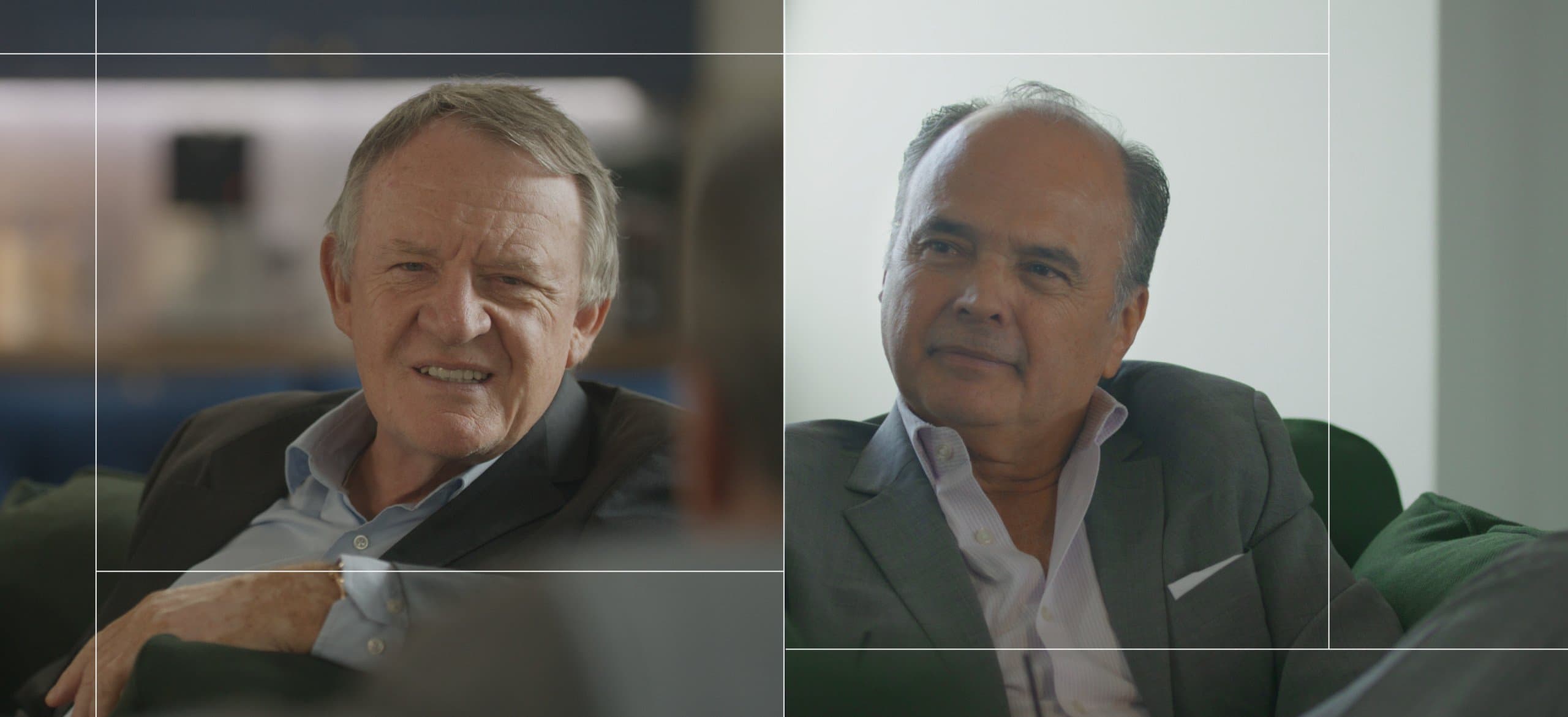
Two seasoned supply chain leaders, Chris Tyas and Gustavo Lopez Ghory, recently shared their insights on the evolving challenges and opportunities in the Consumer Packaged Goods (CPG) industry.
Chris Tyas speaks from a rich background encompassing roles in procurement, manufacturing, and supply chain, having served as the Global Supply Head of Nestle before retiring in early 2019. Since then, he has focused his expertise on key areas of interest, namely sustainability, traceability, and collaboration within supply chains. His insights, particularly in navigating challenges such as COVID and Brexit, underscore his commitment to fostering resilience and efficiency in the industry.
Having dedicated thirty-five years to working with Procter and Gamble, Gustavo Lopez Ghory is a veteran in the CPG industry. His journey culminated as the Chief Supervisor of Kimberly Clark in the realm of supply chain corporate life. Since concluding his corporate tenure, Gustavo has been on a mission to share his wealth of experience globally - whether through teaching or aiding companies and emerging talents - he focuses on enhancing their capabilities in operations and supply chain management. His passion lies in guiding manufacturers toward embracing transformative technologies essential for success in the evolving marketplace.
The pair’s conversation examined the pivotal role of supply chain leaders in steering the ship through turbulent waters, with a keen focus on collaboration, resilience, and efficient growth.
Watch the discussion in full length here:
The shift towards omnichannel solutions
The conversation was kicked off by highlighting the transformative shift towards omnichannel solutions. The traditional model of supply chain management, geared towards mass production and uniformity, is evolving to meet the demands of a more diverse and dynamic market. The key lies in collaboration across the entire supply chain - from manufacturers to retailers and distributors.
They emphasized the need for a responsive and flexible supply base, extending beyond the first-tier supplier, as well as the importance of systems and processes that enable collaboration and transparency across all tiers of the supply chain. The lesson here is clear: to succeed in the modern era, supply chain leaders must foster collaboration, share data, and build a responsive supply chain network.
“To me, today, [you need] a network organization. It's not a simple supply and demand equation to meet consumer demand. To manage a network there are very different requirements in terms of systems and data compared to managing an old adversarial buy-sell relationship.”
Chris Tyas
Former Senior VP Global Supply Chain at Nestlé SA
Efficient growth and the transformative role of tech
Chris added another layer to the discussion by addressing the challenge of achieving efficient growth while maintaining innovation, with the pair discussing the capabilities and systems available today, and contrasting them with the earlier stages of their careers. Technology has become a game-changer, providing visibility tools and data-driven insights that empower supply chain leaders to make informed decisions.
They also highlighted the critical role of planning offices in this technological evolution and that manufacturing flexibility and reliability are imperative for success. Efficient growth is not only about having the right systems but also ensuring that manufacturing stays ahead of the game, ready to adapt to changes in the market. In short: technology, when harnessed correctly, enables efficient growth by optimizing the entire supply chain.
Financial implications and collaboration for resilience
Gustavo and Chris then steered the conversation towards the financial implications of supply chain decisions, namely, that the traditional method of cost allocation based on manufacturing no longer suffices. The focus shifts instead now to total delivered cost, incorporating environmental and carbon costs into the equation.
There is a clear need for financial systems that can accurately reflect the true costs of various supply chain options, and this transition is not only about modernizing accounting methods but also aligning them with the complex, interconnected nature of modern supply chains. Supply chain leaders must therefore understand and communicate financial implications beyond traditional cost models.
The importance of resilience should not be underestimated. Both leaders stressed the need to measure not only financial costs but also environmental and carbon costs. The interconnectedness of supply chains demands a holistic view that goes beyond the bottom line.
Gustavo recalled a shift towards collaboration with the concept of Collaborative Planning, Forecasting, and Replenishment (CPFR) from earlier years. The modern version, Integrated Business Planning (IBP), emphasizes real-time data exchange, continuous collaboration, and shared decision-making. The lessons from facing crises like COVID-19 extend into the long-term need for efficient, collaborative, and sustainable growth strategies.
The evolving role of planning offices
In the past, planning offices were often relegated to the background, dealing with internal matters. However, the recent supply chain challenges have thrust planning offices into the spotlight. Once the engine room, the planning office is now at the helm of the ship. It orchestrates the entire supply chain, serving as the heart of operations. This shift in perspective emphasizes the need for a more strategic approach to planning. The planning office must not only resolve issues and ensure visibility but also contribute to strategic decision-making at the executive level.
The conversation concluded with a reflection on the need for a collaborative mindset and a new breed of leadership. Supply chain leaders must break free from siloed thinking, bringing external factors into their decision-making processes. The traditional definition of an expert is evolving - depth of understanding in a silo is no longer sufficient. An expert must comprehend the broader implications and connections within and beyond the supply chain.
Both leaders advocate for a mindset shift across the industry, aligning with the changes brought about by recent global challenges. The boardroom agenda is changing, with supply chain issues taking center stage. The call to action is clear - supply chain leaders must speak the language of business, drive strategy, and be integral contributors to the overall success of the enterprise.
In this era of constant change, the wisdom shared by Chris and Gustavo serves as a compass for supply chain leaders navigating uncharted waters. The lessons learned from evolving technologies, financial complexities, collaboration imperatives, and the newfound importance of planning offices are guiding lights for those steering the ship toward a future of resilient, efficient, and collaborative supply chain management.

About the authors

o9
The Digital Brain Platform
o9 Solutions is a leading Enterprise Knowledge and AI-powered platform helping companies build Agile, Adaptive & Autonomous Planning & Execution Models for transforming enterprise decision-making in environments of rising volatility and uncertainty. Whether it is improving forecast accuracy, matching demand and supply and driving collaboration across the multi-tier supply chain to improve resilience at optimal costs and inventory, or optimizing new product and commercial initiatives to drive revenue growth and margins, decision-making processes from long-range to tactical to execution horizon can be made faster and smarter and connected on o9’s Digital Brain Platform.
o9 brings together game-changing technology innovations — such as innovative enterprise knowledge graph modeling, big data analytics, advanced algorithms for forecasting, demand/supply balancing, scenario planning, real time learning, collaboration, generative and agentic AI, easy-to-use interfaces and cloud-based delivery, and innovative management methods — as well as organization, process and change management best practices to transform decision-making speed and intelligence.