4 read min
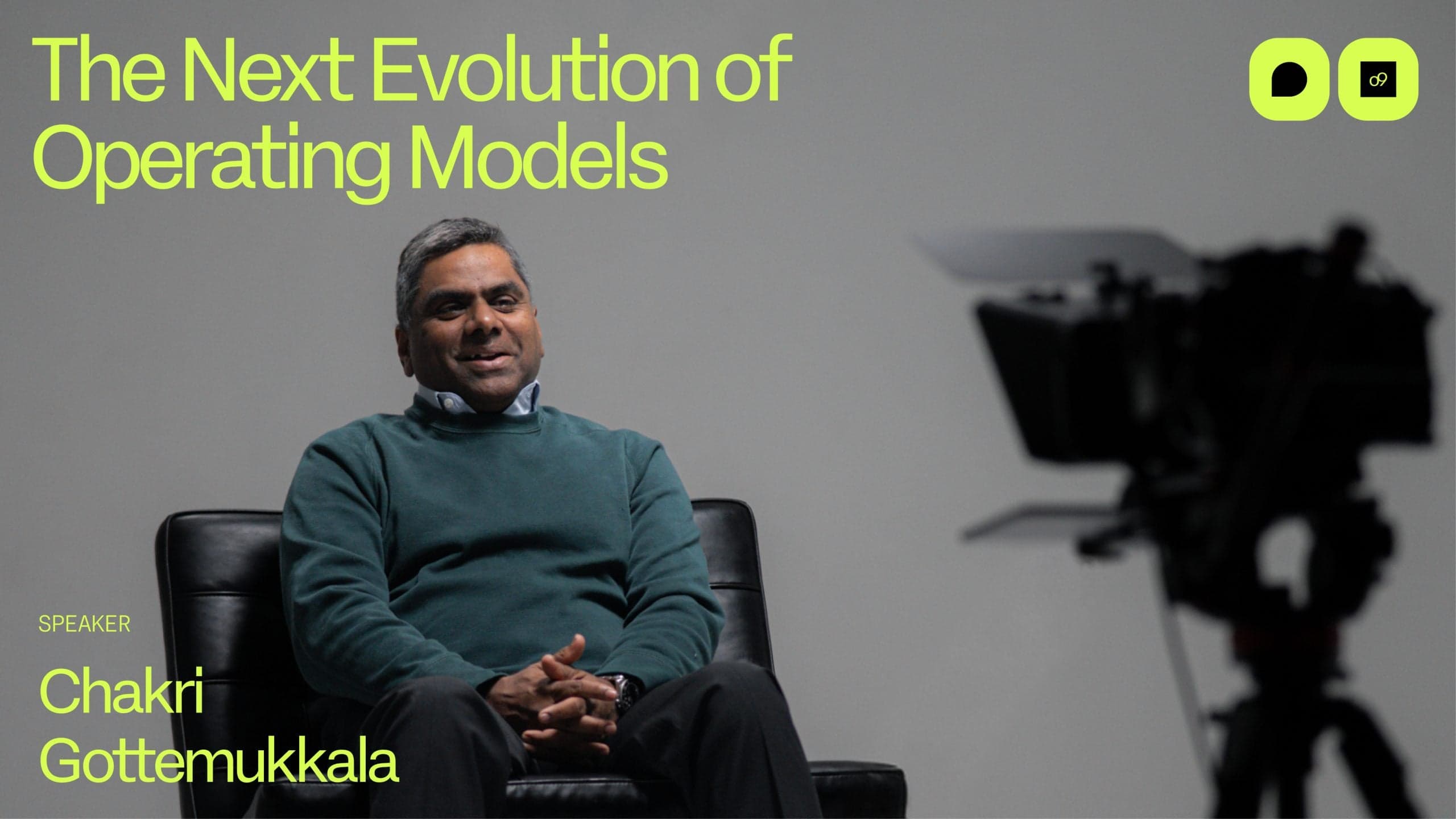
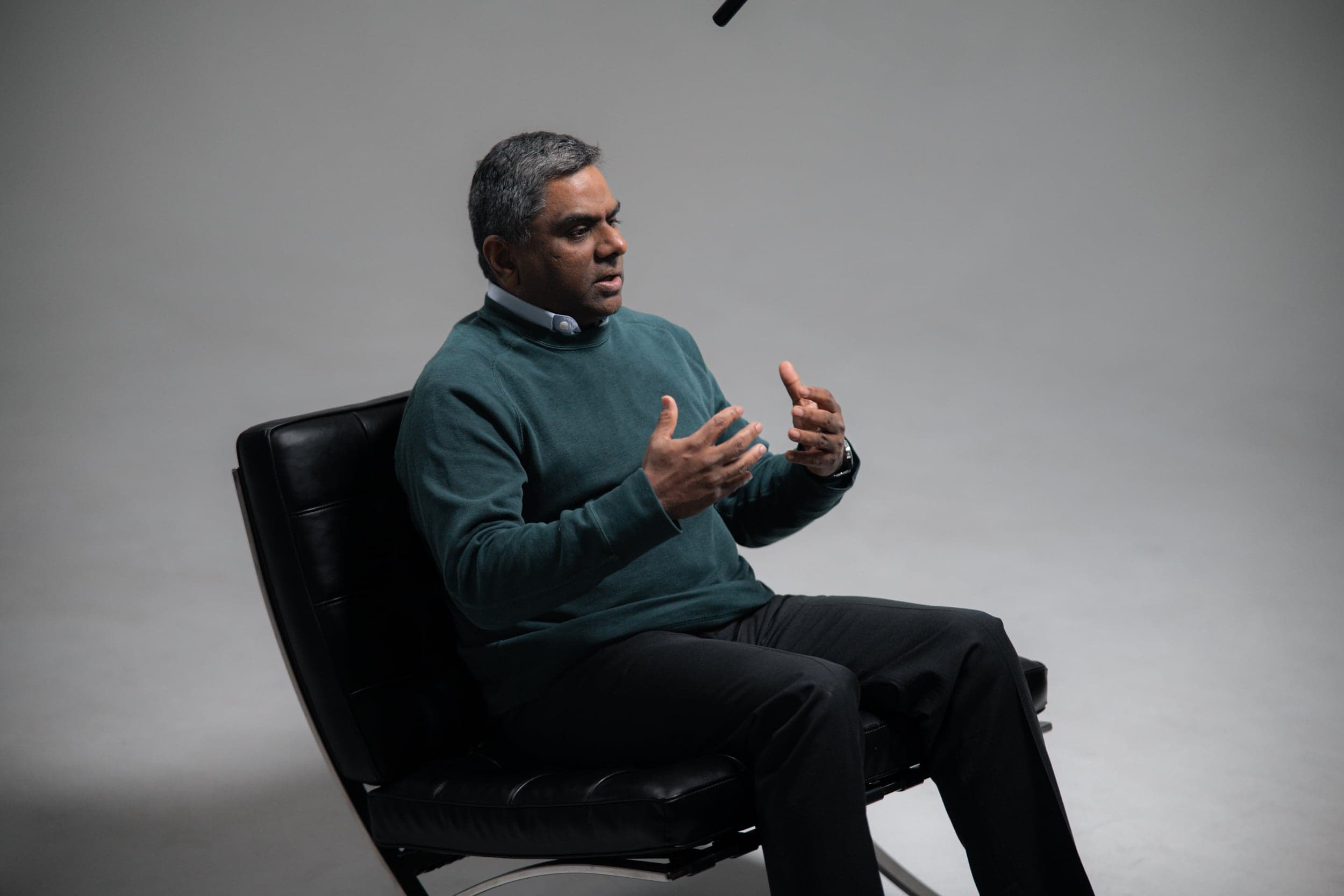
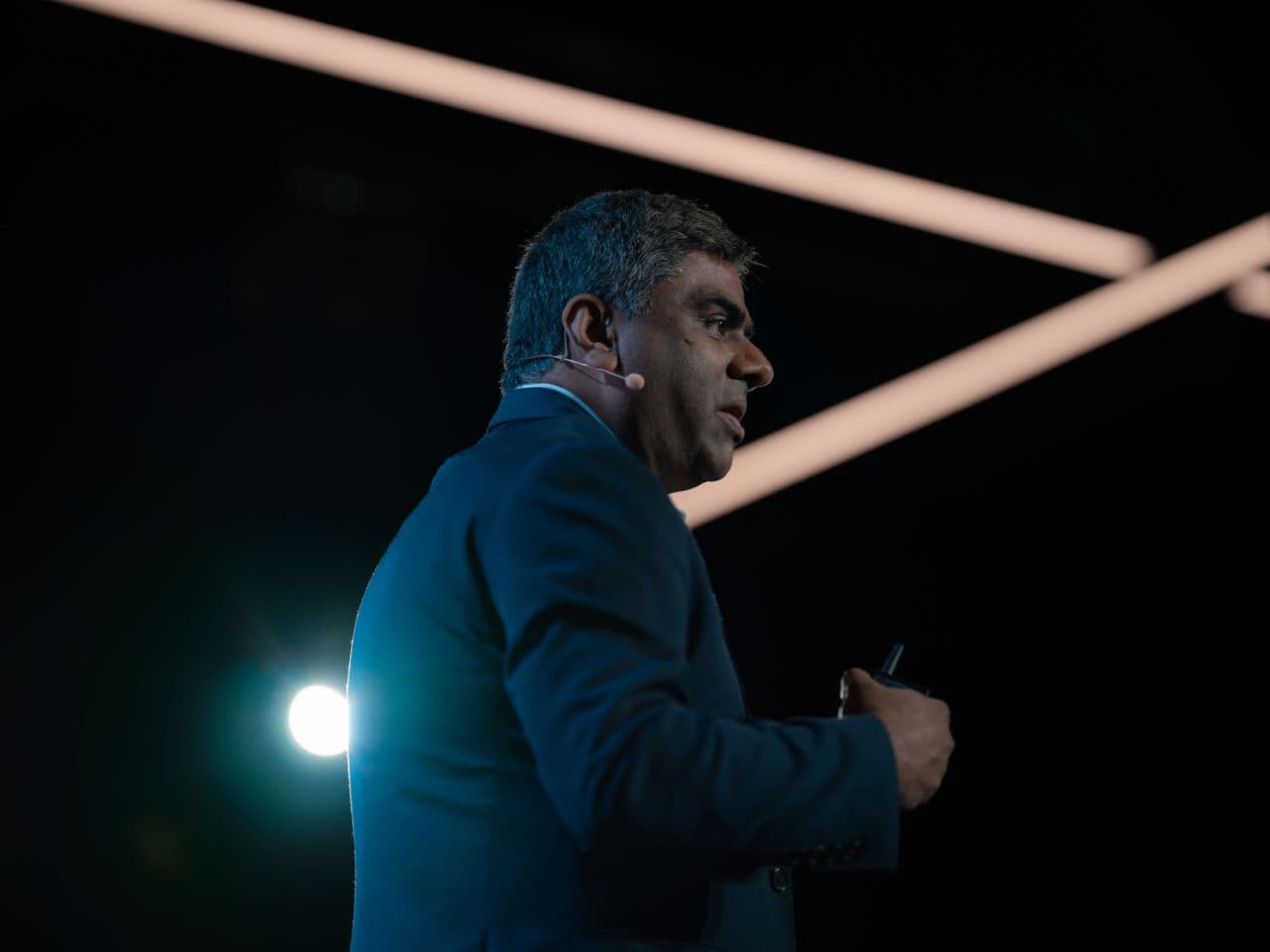
When Chakri Gottemukkala took the virtual stage for his opening keynote at aim10x Digital, he didn’t open with a product demo or a sweeping vision of AI-driven utopia. Instead, he posed a seemingly simple question:
“Can AI solve the complexity and change management challenge that leads to value leakage in enterprises?”
It’s a question born of direct experience. As CEO and Co-Founder of o9 Solutions, Chakri Gottemukkala has spent the last 25 years at the intersection of planning, execution, and enterprise transformation. His answer to that question wasn’t just yes, it was a resounding call to rethink how we build the management systems of the future.
The core challenge: complexity and silos
According to Chakri, the biggest obstacle to value creation isn’t lack of technology or ambition. It’s the way decisions are made, or rather, not made, across siloed functions.
In this fragmented setup, value leaks in predictable ways: excess inventory, missed forecasts, poor synchronization. Even when digital planning systems exist, they often hit a ceiling due to the complexity of managing change and embedding knowledge across a large enterprise.
The biggest constraint? Expertise.
“Driving value requires knowledgeable leadership. Sustaining value means knowledgeable process and tech teams,” he said. “But what if AI could reduce the burden of that expertise?”
Turning tribal knowledge into digital intelligence
In o9’s view, one of the most powerful opportunities lies in converting tribal knowledge into digitized knowledge models; codifying the insights, heuristics, and learnings that today live in spreadsheets, slide decks, or someone’s head.
That’s where generative and agentic AI can shine. Combining large language models (LLMs) with enterprise-specific knowledge graphs, companies can create digital representations of planning expertise that grow smarter over time.
Chakri urged CXOs to get aggressive: “Set a goal to move from 80% tribal to 80% digitized knowledge in two years or less. In the future, companies will compete based on the quality of their digital knowledge models.”
Enter the agents: Answering the “what,” “why,” and “what next”
In this new paradigm, AI agents will become central to how businesses plan, learn, and act. According to Chakri, three kinds of agents will emerge:
- Post-game agents – Analyzing what happened and why.
- Baseline forecasting agents – Predicting what’s likely to happen next.
- Scenario planning agents – Recommending cross-functional actions to improve the plan.
These agents will operate across planning horizons, from real-time operational decisions to long-term strategic bets, and across functional silos. They’ll offer performance summaries, decision support, and automated actions.
“AI agents will help answer management’s three W’s: what happened, what’s likely to happen, and what should we do about it,” Chakri explained. “And they’ll do it with more scale, speed, and consistency than any human team could.”
Of course, this changes what we expect from managers and planners. But far from replacing them, Chakri sees this as an opportunity to elevate their roles. “Done right, it frees people up to create higher-value impact—shaping strategies, influencing the market, and driving innovation,” he said.
Faster innovation, not more transformation
One of the most important takeaways from the keynote was a subtle shift in vocabulary. In many companies, 'transformation' has become a tired and intimidating word. “There’s almost a kind of transformation trauma,” Chakri joked. “The word creates fear. People think, ‘Oh no, not another three-year program.’”
Instead, he advocated for continuous innovation, meaning shorter, faster cycles of change made possible by modular technology, digitized knowledge, and agentic AI.
Companies like Amazon have embraced this model. For every process, they assign a product manager. They treat planning as a living system that evolves, learns, and scales. “Traditional companies need a bit of a software DNA,” Chakri said. “Not five-year plans, but continuous loops of improvement.”
Building capabilities at the speed of strategy
The ability to adapt (what Chakri calls 'capability innovation') is becoming the defining factor of enterprise competitiveness.
When a company launches a new strategy, say, moving from indirect to direct channels, it doesn’t just need a new plan. It needs new operational, commercial, and technological capabilities.
In the past, companies filled those gaps with headcount, spreadsheets, and ad hoc workarounds. But in the AI-first era, they’ll increasingly rely on platforms like o9’s Digital Brain, which is augmented by agents that can help configure and extend new capabilities dynamically. “AI agents can learn, reason, and even help build new systems,” Chakri said. “The organizations that master this continuous capability innovation will outpace their peers.”
Final call to action: think like a software company
Chakri closed the keynote with a simple but urgent message to executive teams.
As AI matures and agentic systems become standard, the difference between leaders and laggards won’t come down to who has the most data or the biggest tech stack. It will come down to mindset, speed, and the ability to turn knowledge into action at scale.
In short, don’t make transformation your only goal. Aim to learn fast, act fast, and build the systems that let you do it again and again.
About the authors

o9
The Digital Brain Platform
o9 Solutions is a leading Enterprise Knowledge and AI-powered platform helping companies build Agile, Adaptive & Autonomous Planning & Execution Models for transforming enterprise decision-making in environments of rising volatility and uncertainty. Whether it is improving forecast accuracy, matching demand and supply and driving collaboration across the multi-tier supply chain to improve resilience at optimal costs and inventory, or optimizing new product and commercial initiatives to drive revenue growth and margins, decision-making processes from long-range to tactical to execution horizon can be made faster and smarter and connected on o9’s Digital Brain Platform.
o9 brings together game-changing technology innovations — such as innovative enterprise knowledge graph modeling, big data analytics, advanced algorithms for forecasting, demand/supply balancing, scenario planning, real time learning, collaboration, generative and agentic AI, easy-to-use interfaces and cloud-based delivery, and innovative management methods — as well as organization, process and change management best practices to transform decision-making speed and intelligence.