6 read min
Read the article on Forbes Technology Council.
For over a decade, large organizations have invested billions in technologies to optimize their businesses—everything from data platforms and analytics to AI. Investment in enterprise technologies is poised to continue growing and is projected to reach a $116.54 billion market size by 2035.
The promise of what software can deliver has always been the same: increased productivity and better, faster decisions. Teams can generate forecasts in seconds, run numerous scenarios and deploy AI copilots across various business functions. And yet, many companies feel stuck when it matters most. As volatility or business disruptions arise, the same debates resurface, the same expectations are argued and the same trade-offs are decided.
The issue isn't a lack of business intelligence; it's a lack of memory and institutional knowledge.
Context Is Key
Most enterprise planning platforms excel at recording transactions and storing records of final plans, inventory targets, approved forecasts and expected service levels. However, such platforms are unable to record and store the reasons behind specific decisions made in certain scenarios and the outcomes that resulted. For example, they can’t explain why demand was overridden in one market but not another. This type of essential context lives in your workforce's minds and experiences and may be shared in meetings and email communications, but it isn't necessarily shaping the critical decisions that rely on business intelligence. However, the context that comes from employees' experience and institutional knowledge is key.
For decades, the traditional integrated business planning cadence was effective because volatility was episodic and enterprises had time to analyze the situation and correct course when needed. Today, business risks are continuous, and changes in decisions within a single function can affect plans across the entire enterprise. Failure doesn't stem from not planning fast enough; it comes from starting the planning cycle with partial amnesia. Enterprises repeatedly rework problems that they've solved previously, but now they're doing so under greater constraints, increased pressure, less context and higher stakes.
From Systems Of Record To Systems Of Decisions
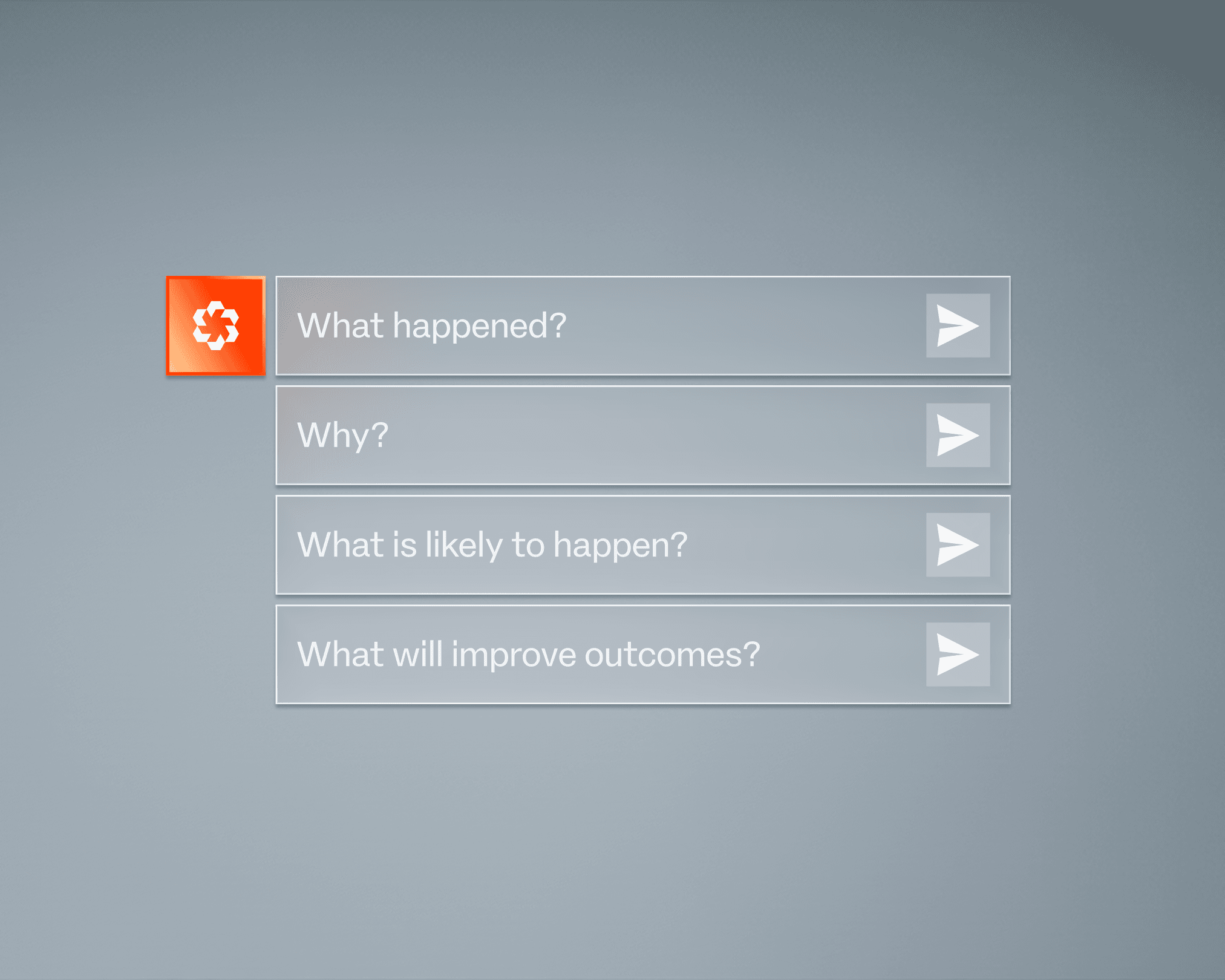
Historically, enterprise software was built upon maintaining a system of record. For example, enterprise resource planning (ERP) software was designed to maintain transactions, while customer relationship management (CRM) systems were built to maintain client interactions. What's missing is a system of record for decision making. And not just a system of record for the final decision made—one that also tracks the alternative decisions considered and why, as well as any constraints, trade-offs, approvals and exceptions involved in the decision and its outcomes.
This system of record isn't an audit log or workflow history. It's what I like to call a "decision memory," or a structured, persistent record of how an enterprise reasons over time. When organizations preserve decisions and the context that informs them as first-class assets, intelligence compounds rather than resets.
Decision memory can't be built through documentation. It must be embedded into planning and execution workflows. In practice, this means instrumenting high-impact decision points such as forecast overrides, scenario selections and cross-functional trade-offs with lightweight, structured context. This context should capture the intent (the outcome prioritized), constraints, alternatives considered and any human judgment applied. Over time, this creates a structured record of how the enterprise reasons, not just what it decides.
The key is to focus on the signal, not the narrative. Organizations don't need to capture everything. They need to capture the rationale behind decisions that materially shape outcomes. When this context is treated as a first-class data asset and stored alongside plans and results, AI systems can begin learning from enterprise judgment rather than blindly optimizing for outcomes alone.
While most organizations do not explicitly call this process “decision memory,” many leading enterprises are already building it in practice, albeit mostly manually. For example, some global manufacturers and consumer goods companies capture why demand or supply plans are overridden in volatile conditions and link those decisions to outcomes. In other cases, retailers explicitly tag decisions where margin is sacrificed to protect service or customer commitments.
What distinguishes these organizations is not more data or more advanced models, but a deliberate effort to preserve decision context as an institutional asset. As a result, their intelligence compounds instead of resetting with every planning cycle. When this is systematized through a platform, it will allow them to create AI agents that can recognize similar conditions in the future and recommend actions aligned with enterprise intent.
Why Decision Memory Changes Everything For AI
AI agents are only as trustworthy as the context in which they operate. Without decision memory, autonomy becomes a greater risk. For example, in automated processes, an AI agent may recommend actions without understanding precedent, or exceptions could be interpreted as noise instead of a signal to pay attention to.
Decision memory changes the dynamic significantly, as AI can:
- Recognize when a situation is familiar versus truly novel.
- Align recommendations with prior judgments and enterprise intent.
- Escalate decisions only when context has materially changed.
- Explain its reasoning in business terms, not in probabilities.
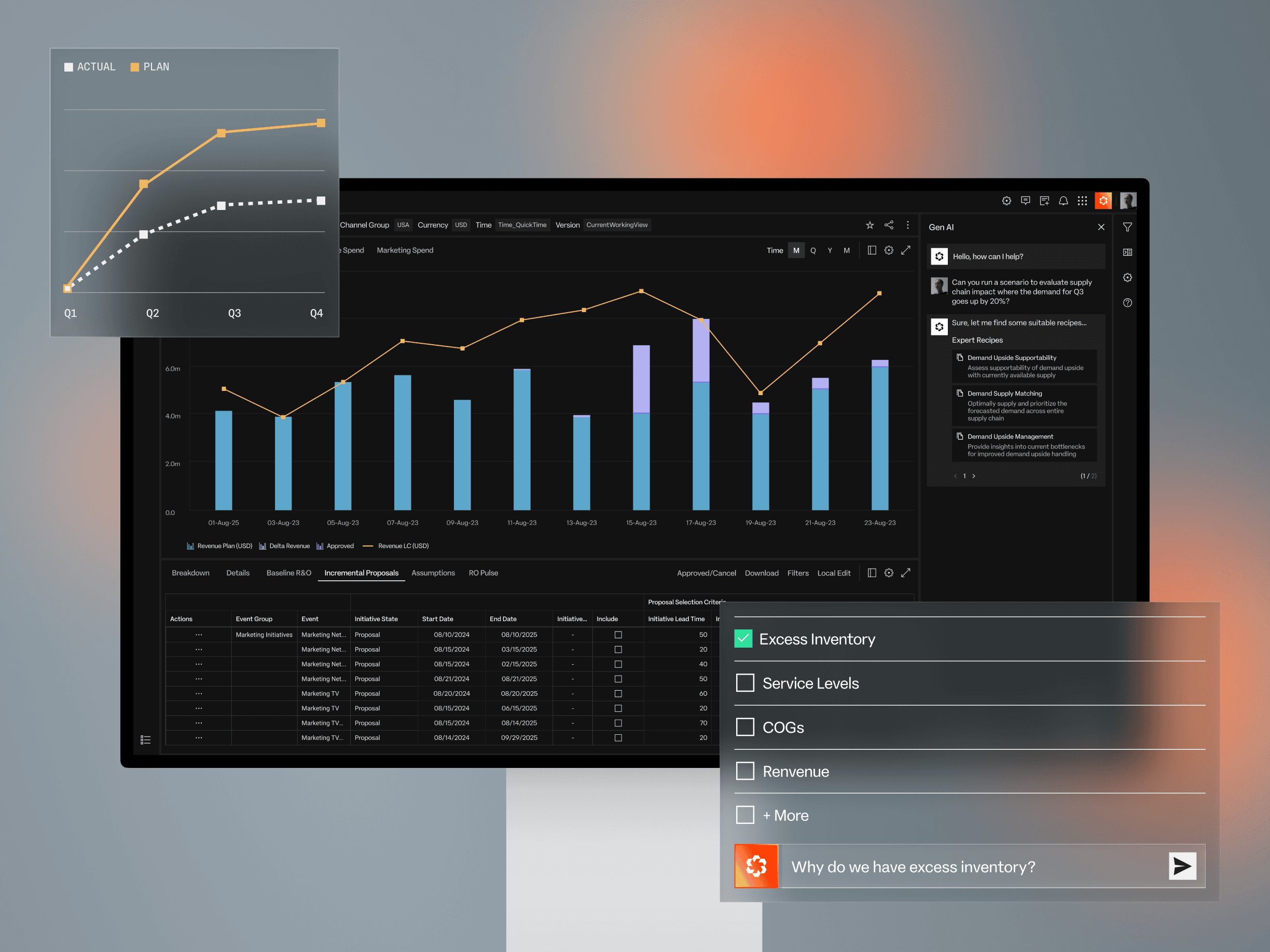
- If this is systematized within a planning platform with agentic AI capabilities, businesses can create AI agents that recognize similar future conditions and recommend actions aligned with enterprise intent.
If this is systematized within a planning platform with agentic AI capabilities, businesses can create AI agents that recognize similar future conditions and recommend actions aligned with enterprise intent.
Implementing The Decision Memory Approach
Organizations should approach decision memory incrementally, starting with the highest-priority decisions.
First, identify high-frequency, high-impact decisions that span multiple functions and are sensitive to volatility. Next, embed lightweight context capture directly into those decision workflows so that rationale, constraints and human judgment are recorded during execution. Additionally, treat overrides, escalations and exceptions as learning signals rather than failures. When linked to outcomes, these signals help AI systems understand where autonomy is appropriate and where human stewardship is required.
Finally, organizations should close the loop by continuously comparing decisions and outcomes, allowing AI agents to recognize familiar situations, escalate only when context changes and explain recommendations in business terms. Over time, this enables a controlled shift from AI-assisted decisions to AI-trusted decisions without increasing risk.
Improved Decision Making As A Differentiator
Over the past decade, companies have focused on gathering access to robust data to strengthen their business insights and inform decisions. However, organizations that also focus on finding ways to capture the context from previous recommendations and preserve it as an institutional asset that can inform future business decisions are building a mechanism that allows them to make critical decisions more quickly and more accurately in an evolving business environment.
About the authors

Igor Rikalo
President & COO at o9 Solutions
Igor Rikalo is the President and Chief Operations Officer of o9 Solutions. He oversees the global operations of the organization and plays an integral role in ensuring the business continues to scale at a global level. At o9, he has developed a successful track record of building high-performing teams, managing global strategic initiatives, and delivering strong business results.