Revenue Growth Management (RGM)
Move from reactive pricing moves to disciplined, data-driven revenue decisions.
Revenue Growth Management on the o9 Digital Brain enables commercial teams to plan, test, and execute pricing, promotion, and portfolio strategies with confidence. By unifying commercial decisions with demand, supply, and financial planning, organizations can protect margins, stimulate profitable growth, and respond faster to shifting consumer behavior.

Why Revenue Growth Management Matters
Consumer-facing industries are undergoing a generational shift. Between 2019 and 2024, many brands relied heavily on price increases to offset inflation and supply-side cost pressures. While prices rose sharply, volume growth stagnated — revealing the limits of price-led growth in increasingly price-sensitive markets.
At the same time, traditional Revenue Growth Management practices have struggled to keep pace. Commercial decisions are often based on fragmented data, outdated assumptions, and spreadsheet-driven analysis. Promotions underperform, portfolio decisions lack transparency, and pricing actions are disconnected from supply and financial realities.
The result is value leakage. A majority of trade promotions fail to break even, consumer pushback erodes demand, and organizations miss revenue targets not because of execution failure, but because decisions were made without a complete, connected view of impact.
From Commercial Guesswork to Disciplined Growth
Leading organizations are rethinking RGM as a continuous, integrated decision process. Instead of reacting to market pressure with isolated price or promotion changes, they are building a single commercial nerve center that connects pricing, promotions, portfolio strategy, and financial outcomes.
Revenue Growth Management enables this shift by making commercial decisions measurable, comparable, and aligned with the enterprise plan — before they are executed in the market.
Capabilities of the Revenue Growth Management
Unified Commercial Planning Hub
Revenue Growth Management brings pricing, promotions, portfolio strategy, and commercial P&L planning into a single, AI-powered environment. Teams can evaluate trade-offs holistically, ensuring that decisions across brands, channels, and markets reinforce each other rather than compete for margin or volume.
Real-Time Scenario Modeling
Commercial decisions carry risk.
o9 enables teams to simulate pricing changes, promotion mechanics, and mix shifts across markets and channels. Financial, volume, and margin outcomes are evaluated side by side before committing to action.Gap Closure Against the Business Plan
RGM provides continuous visibility into performance versus the Annual Operating Plan (AOP). When forecasted sales or margins fall short, teams can pinpoint exactly where gaps exist and evaluate targeted actions to close them — rather than reacting late with broad, blunt measures.
Data Fusion Across Internal and External Signals
Accurate commercial planning requires more than internal sales data.
o9 fuses internal inputs from sales and finance with external signals such as shopper panels, weather, macroeconomic indicators, and market trends. This improves forecast accuracy and decision confidence across volatile markets.
What Makes o9 Different
Separation of Planning and Execution
o9 decouples commercial decision-making from transactional execution.
Commercial teams focus on strategic flexibility and value optimization, while downstream systems handle invoicing, accounting, and execution rigidity — reducing friction and improving speed.End-to-End IBP Integration
Revenue Growth Management is natively integrated into Integrated Business Planning (IBP). Pricing and promotion decisions are evaluated in the same planning framework as demand, supply, and financial plans, ensuring the enterprise operates from a single, aligned business plan.
Decisional Agility at Scale
Instead of relying on informal influence or last-minute intervention, o9 institutionalizes commercial decision-making. Every initiative is evaluated for P&L impact before execution, creating a system of record that supports faster, more consistent decisions across regions and categories.
Industries Supported































Powered by the o9 Digital Brain
Revenue Growth Management runs on the o9 Digital Brain, powered by the Enterprise Knowledge Graph (EKG).
The EKG connects pricing, promotions, demand, supply, and financial data in a unified model. When a commercial decision changes — such as a promotional plan or price adjustment — impacts are automatically propagated across the value chain, alerting downstream teams to potential supply or capacity implications.
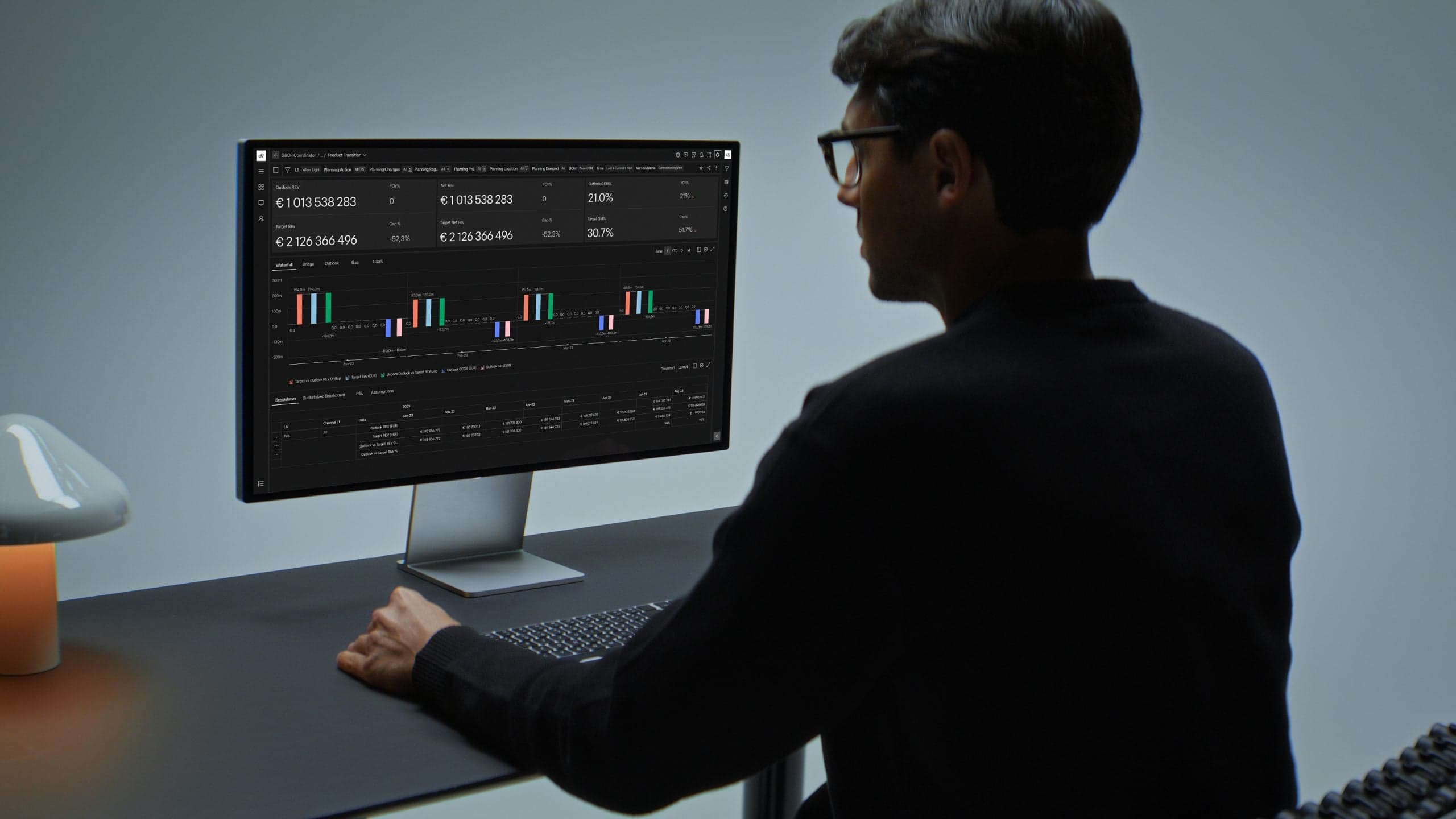
A digital operating model for VUCA conditions
APEX is o9’s AI-powered operating model for enterprises navigating volatility, uncertainty, complexity, and ambiguity (VUCA). It enables organizations to plan, execute, and learn as one connected system.

The o9 Digital Brain powers APEX by connecting enterprise data, knowledge, and decisions through a single intelligent model.
Collaborative Demand Planning is one of the building blocks of the Digital Brain. It contributes domain-specific capabilities into the enterprise-wide model that enables APEX from the ground up—linking this solution to decisions across the entire value chain.
→ Learn how the APEX Operating Model works
Where AI drives real decisions
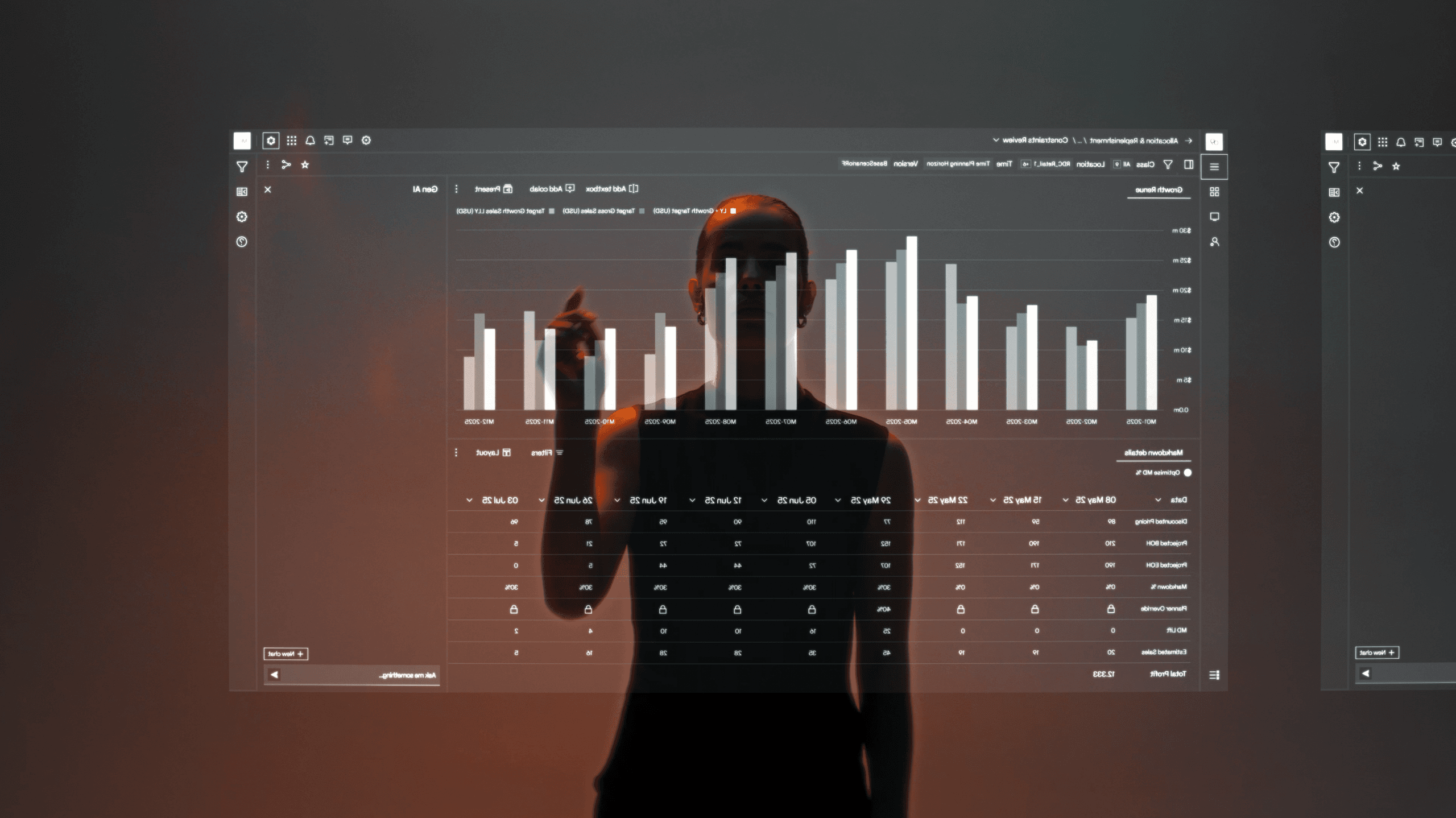
Artificial intelligence enhances RGM by improving foresight, governance, and execution speed.
Predictive revenue modeling uses AI and machine learning to forecast demand response to price changes, promotions, and market conditions.
Automated governance applies AI-driven approval workflows within predefined guardrails, escalating only exceptions for human review. This accelerates execution while preserving control and accountability.
→ Learn more about o9 AI capabilities
What our customers say
“With o9 AI/ML-based forecasting in place, we’re already seeing improved forecast accuracy, stronger cross-functional collaboration, and faster, more informed decision-making—all within a centralized platform.”
Gaby Gutierrez
VP of Global Supply Chain Planning at Amway
“We had a significant reduction in expedited costs. Our target was 4 to 6 million dollars. And we achieved close to 9 million dollars…”
Jay Koganti
Vice President of Supply Chain COE
“The o9 platform unlocked significant processes for us in order to effectively address changes in our volumes and to align those volumes to our labor capabilities at our distribution centers.”
Ashley Ward
Senior Manager Supply Chain Planning
[0/0]

Related Solutions
Create a more responsive and economically aligned planning ecosystem

Related content



Frequently Asked Questions (FAQs)
Revenue Growth Management (RGM) is a strategic approach to maximizing revenue and profitability by making data-driven decisions across key commercial levers, such as pricing, promotion, assortment, innovation, marketing, trade terms, strategic P&L planning, and joint business planning.
RGM supports businesses through the different stages of commercial planning:
Evaluation: Analyzing past performance to identify areas for improvement.
Simulation: Running "what-if" scenarios to test different strategies and understand their impact.
Optimization: Leveraging advanced analytics and AI/ML to recommend the best actions for revenue and profit growth.
Execution: Implementing strategies in the market.
o9’s RGM solution focuses on evaluation, simulation, and optimization, enabling organizations to solve specific challenges like improving pricing strategies, optimizing promotions, or fine-tuning assortments. By providing a connected AI/ML powered platform, o9 helps businesses make smarter decisions that drive growth while balancing business constraints.
This approach ensures organizations can address immediate challenges, simulate future outcomes, and continuously optimize their strategies for long-term success.