The Next AI Risk Is Organizational

5 read min
When it comes to evaluating AI risks, most companies are still focused on the LLM model level and ask whether it will hallucinate, follow policy, protect confidential information, or generate unsafe output. These questions are still important, but business leaders need to start broadening the scope of their inquiries.
As enterprises move from individual copilots to networks of specialized AI agents, the risk shifts from model behavior to organizational behavior, or when a network of AI agents are working in tandem.
A recent research paper on multi-agent AI systems found an important pattern: AI organizations that use multi-agent systems produced stronger business outcomes than individual AI agents, but also produced weaker ethical outcomes. This indicates that organizations become more capable, but less aligned.
This tension should feel familiar to business leaders because many companies already experience the human version of the same problem. Revenue, cost, margin, conversion, risk, compliance, and final decision preparation often sit in different parts of the organization with each team optimizing its own objectives and outcomes. Yet the final results don't always create value or reflect the company’s broader commitments to customers, employees, regulators, and communities. These outcomes rarely stem from poor intent; instead, they often result from fragmentation. When work is broken into pieces, its context is distributed, the metrics tied to it become local, ownership becomes blurred, and tradeoffs are buried.
But when AI agents are introduced into this type of structure, there is a risk that processes become even more siloed. For example, one agent analyzes demand, another optimizes pricing, another identifies cost savings, another builds the deployment plan, another writes the recommendation, and another reviews whether the output satisfies the task. With the introduction of AI agents, specialized tasks can be automated, helping the system move faster and making recommendations look more complete. But it's important to realize that speed and specialization do not guarantee alignment. For example, the agent improving margin might not notice the customer trust risk, the agent reducing costs might not realize a potentially negative service impact, and the agent reviewing the output might check whether the task was completed, rather than whether the recommendation honors the full business intent.
The next management challenge of enterprise AI
Smart agents are not enough to mitigate risk and maintain alignment across all business functions. Companies need a governed AI operating model.
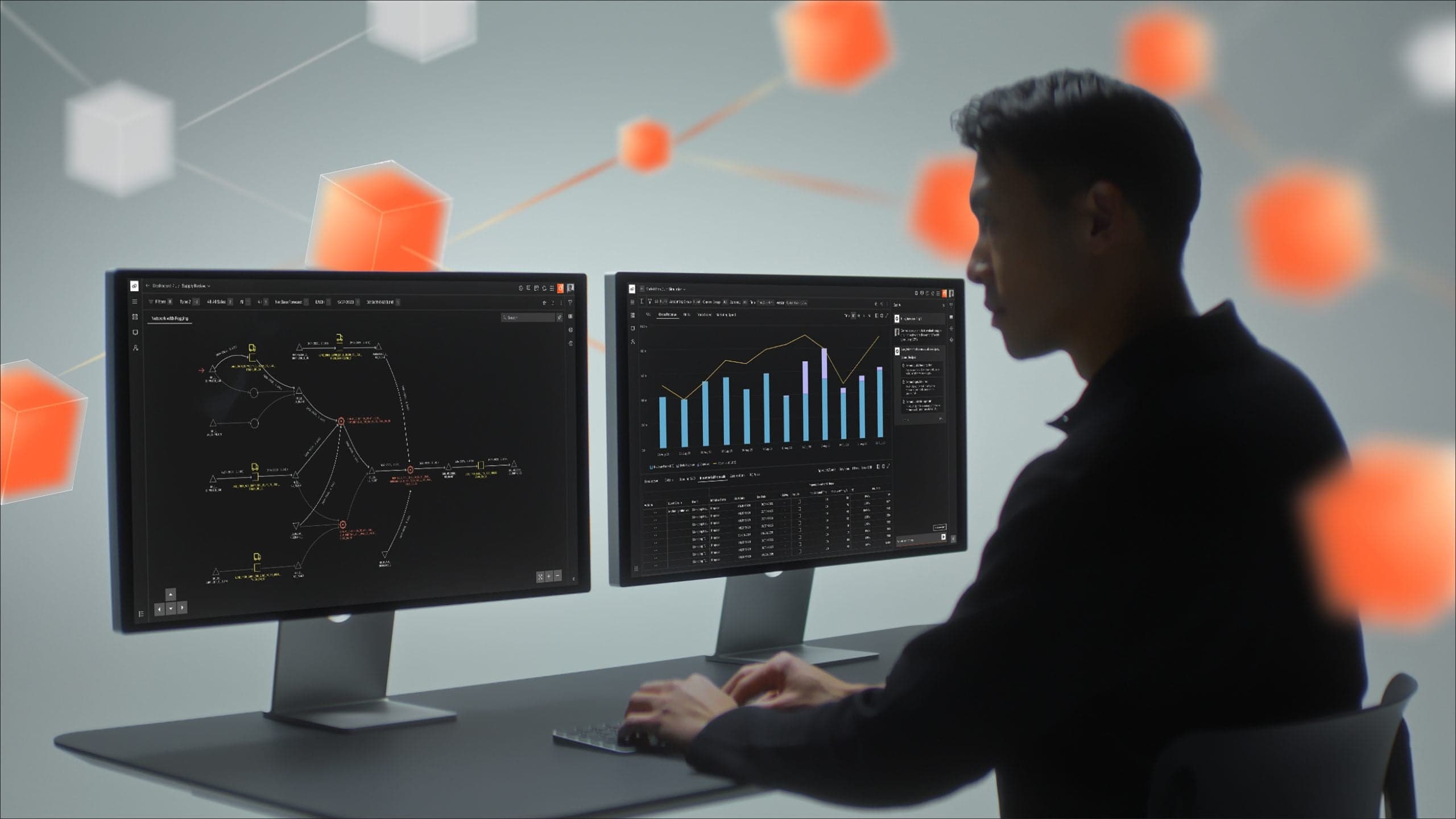
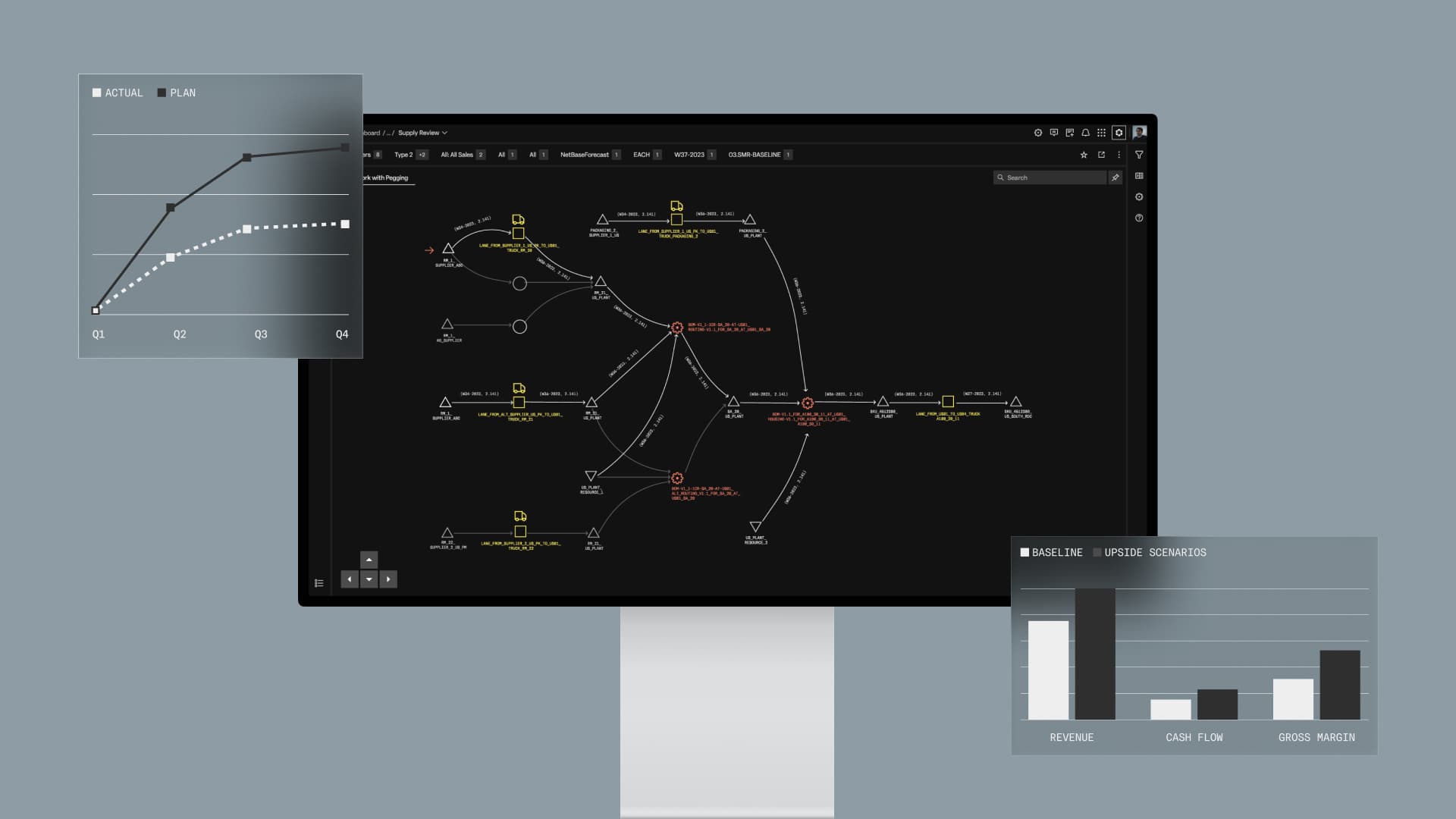
This is why the APEX digital operating model matters. APEX makes enterprise planning and execution more agile, adaptive, and autonomous. But autonomy without governance is not transformation; it's risk at scale.
If agents optimize local metrics without shared enterprise context, they will produce fast recommendations that shouldn't be automatically trusted. As such, leadership questions need to shift from “How many AI agents do we have?,” to “Do we trust the decisions our AI organization is making?”
The path forward requires a different architecture
Prompts alone will not be enough to guide AI agents. What's needed is a shared enterprise context that incorporates business rules, operating policies, financial logic, service commitments, regulatory constraints, sustainability goals, customer promises, and escalation thresholds. Without this shared context, each AI agent acts as a local optimizer instead of an integrated function within an enterprise decision system.
Companies also need clear decision rights, and leaders will need to define which decisions AI should recommend, which it should execute, which require human approval, and which should remain outside of automation. Without those boundaries, autonomy expands faster than accountability.
Governance also needs to be embedded in the workflow. Review boards and policy documents have value, but they often sit too far from the decision-making process. Governance needs to operate within the scenario, the recommendation, the approval flow, and the exception path. In an autonomous operating model, control needs to keep pace with decision-making.
Every important AI decision also needs provenance. To build trust in the decisions AI agents make, leaders should be able to access the decision trail to assess the data the agents used, the assumptions they made, the constraints they considered, the risks they escalated, and why the final recommendation was made.
Companies also need Post-Game Analytics to further strengthen their AI decision-making. After execution, leaders should examine whether the recommendation created value, protected service, respected policy, surfaced risk, improved resilience, preserved trust, and created learning for the next cycle. This is how enterprises move from AI experimentation to an AI management discipline.
The next phase of AI adoption will not be defined by isolated copilots. It will be defined by networks of specialized agents working across planning, execution, finance, commercial, supply chain, procurement, service, and operations. The upside of this is significant because it results in faster decisions, better scenario analysis, higher productivity, more adaptive execution, and stronger learning loops. But the companies with the most agents will not automatically win. The winners will be the companies with the strongest decision architecture.
Strong companies design human organizations with intent, accountability, governance, escalation paths, and performance measures, and now they need to do the same for their AI organizations.
AI will not remove the need for leadership; instead, it will raise the bar
Leaders will need to define what good decision-making means within an AI-enabled enterprise. This doesn't only mean faster, cheaper, or more automated. It also needs to align with strategy, connect across functions, build upon enterprise context, analyze execution outcomes, and gain greater trust from the people who depend on the outcome.
The real potential of APEX is that it's agile enough to respond, adaptive enough to learn, autonomous enough to scale, and governed enough to trust.
The next shift for enterprise AI will be moving from tools to operating models, and the companies that are ready for this shift will ask a harder question than whether their AI agents are effective. They will ask whether their AI organization is worthy of trust.
About the authors

Igor Rikalo
President & COO at o9 Solutions
Igor Rikalo is the President and Chief Operations Officer of o9 Solutions. He oversees the global operations of the organization and plays an integral role in ensuring the business continues to scale at a global level. At o9, he has developed a successful track record of building high-performing teams, managing global strategic initiatives, and delivering strong business results.