5 read min
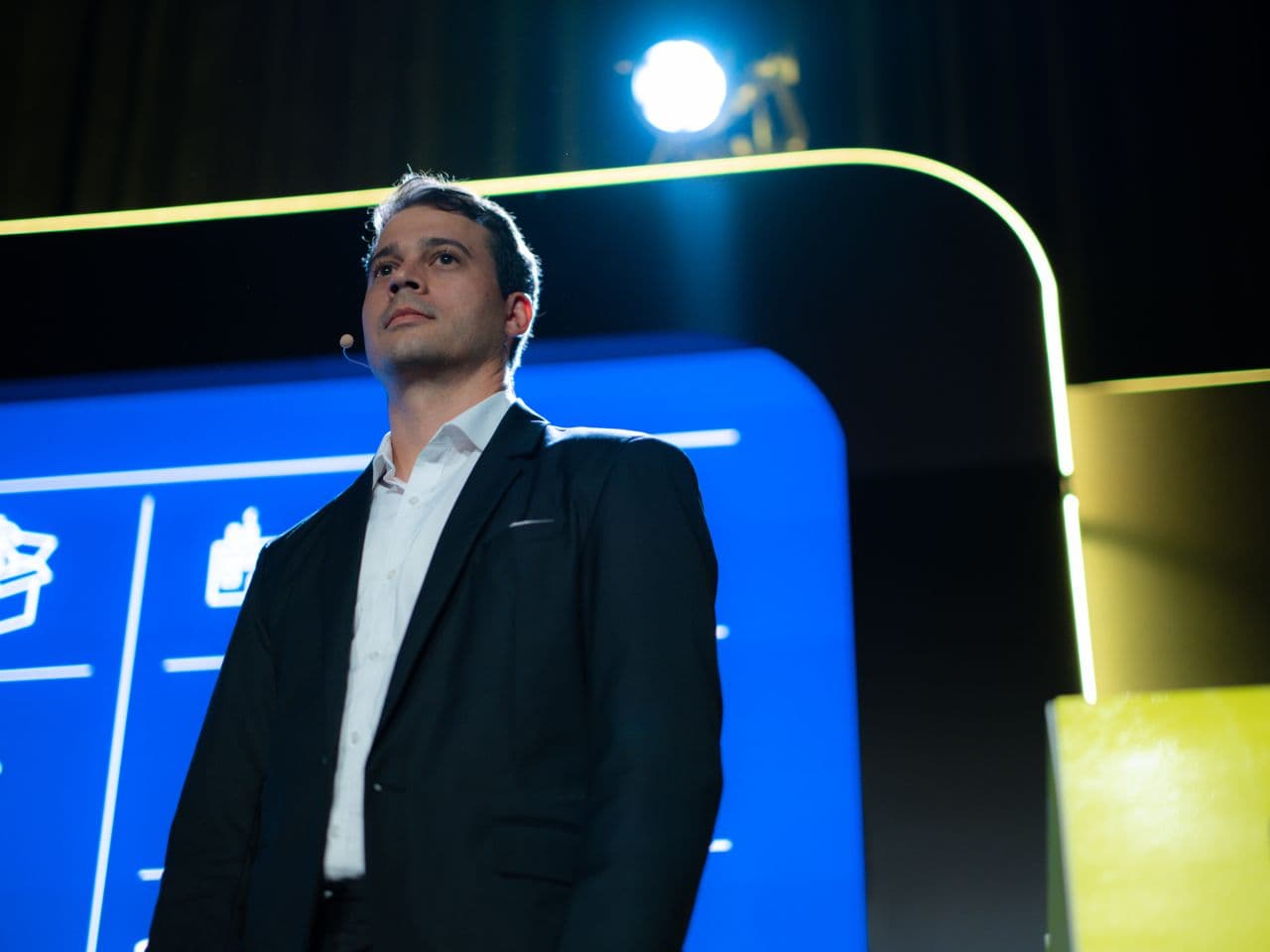
This article is derived from RHI Magnesita's keynote at the aim10x Digital 2025 event. The original keynote, in its entirety, can be accessed here.
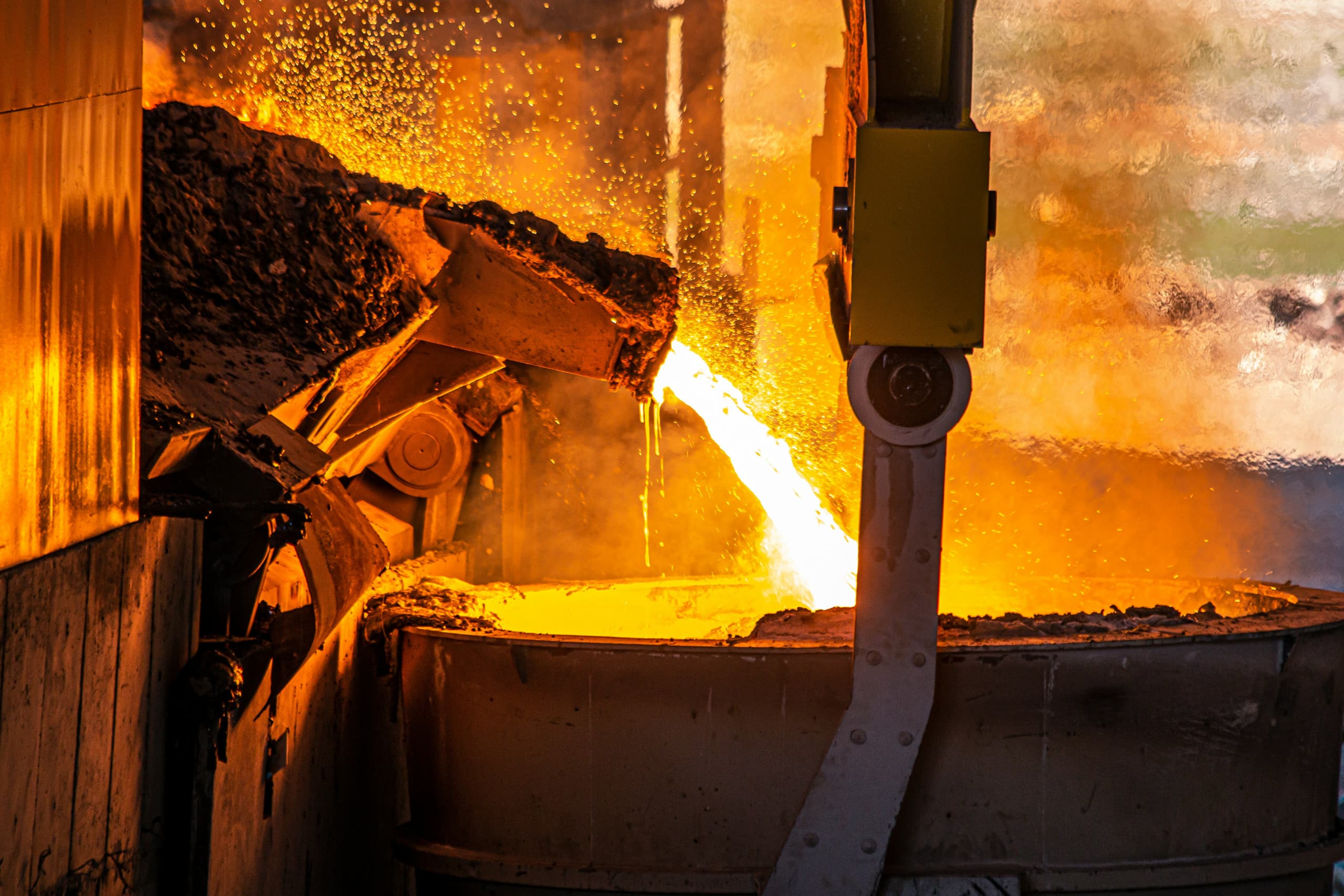
RHI Magnesita knows a thing or two about heat. The company’s high-performance refractory products are essential to industries like steel, cement, and glass; industries that operate at temperatures up to 1700 degrees. But as Adnan Shahid, VP of Planning and Procurement for Resale Products, explains, withstanding market volatility is proving just as crucial.
Coming out of COVID, RHI Magnesita faced a familiar challenge: siloed data, disjointed planning processes, and inconsistent numbers across teams. “Everyone had their own version of the truth,” Shahid recalls. The pandemic had exposed how fragile and fragmented global supply chains could be, especially when decisions depended on static spreadsheets rather than shared intelligence.
The company’s leadership knew they needed a platform that could unify planning across demand, supply, and procurement—something powerful enough to replace manual coordination with intelligent orchestration. That’s when they launched what they called “Project Everest,” a fitting name for a transformation journey that would be both ambitious and steep.
The Mountain Ahead
Like any serious climb, the Everest program was mapped out carefully. The aim wasn’t to digitize processes in name only, but to transform the way the business planned, end-to-end. From statistical forecasting to inventory and production planning, the team sought a unified view of operations and the ability to act on it in real time.
But the journey didn’t start at the peak. “We had to stabilize operations before scaling,” says Shahid. “Only once that was in place could we look for a long-term planning solution.” The team focused first on fixing underlying process inefficiencies, preparing ERP systems for integration, and getting data structures in shape.
o9 was selected for its ability to bring all planning layers into a single platform—from unconstrained demand planning through to production allocation and order commitment. “We didn’t just want a tool that was great at demand or factory planning,” explains Shahid. “We were looking for an integrated solution that could do everything, from forecast to fulfillment.”
Putting North America First
The team began the o9 deployment in North America, a region that offered the right mix of strategic value and operational focus. It represented a significant portion of working capital and cash flow, but had a more manageable production footprint compared to other regions. “It allowed us to focus on demand planning and order promising without overwhelming the rollout with supply-side complexity,” says Shahid.
Beyond technical scope, North America was also chosen for its potential to adopt change quickly. “We knew the region had the right momentum and business case,” he says. And the early wins came quickly. Within the first six months, RHI Magnesita had a working demand and production plan running inside o9, giving the rest of the business a tangible view of what the platform could do.
Reducing Noise While Amplifying Value
One of the clearest indicators of success came from a simple metric: order touchpoints. Before o9, the average customer order was modified up to 40 times as it moved through the system—replanned, rescheduled, or manually updated. “That level of noise was staggering,” Shahid reflects. “It represented inefficiency, frustration, and lost time across teams.”
With o9, those touches are expected to drop by as much as 90%. The goal is to eliminate rework and let teams focus on higher-value decisions. “Instead of firefighting, we want people spending time on analysis and strategy,” says Shahid. This shift isn’t just about automation—it’s about enabling people to do more impactful work.
And the benefits don’t stop at efficiency. The planning transformation is expected to unlock up to €80 million in inventory reductions across the network. “But what excites me more,” says Shahid, “is the process waste we’re taking out of the system. That’s the value people don’t always talk about—but it’s huge.”
Lessons from the Ascent
Shahid is candid about the roadblocks. “This is not a linear journey,” he says. “Every region, every team is different.” The team had to tackle stakeholder concerns, clarify what the transformation meant for employees, and reframe digital planning as an enabler, not a threat.
One success factor was the MVP approach. “We treated MVP as both ‘minimum viable product’ and ‘most valuable player,’” he says. Delivering a visible, functional plan inside the platform early in the rollout helped generate interest and momentum. “It wasn’t perfect, but it showed the business we were moving.”
The team also learned that standardizing processes brought unexpected clarity. “Writing down every process level forced us to confront how much waste existed,” Shahid admits. “It was a wake-up call—and an opportunity.”
What’s Next?
Laying the groundwork for AI. While the focus to date has been on planning transformation, the company has a clear eye on what comes next. “We’re not at the stage yet for full AI deployment,” Shahid says, “but we’re building the foundation.”
Reliable, structured data is step one. “Once we have that in place consistently across regions, we can begin to layer in advanced AI, including demand sensing,” he adds. The team is already identifying future use cases and collaborating with o9 to explore next steps. “We’re learning to crawl before we walk,” he says. “But we know where we’re going.”
Parting Wisdom…
Shahid’s message to other companies on the edge of transformation is simple: start now. “If you wait until you feel ready, you’ll never be,” he says. “Get into the process. Break things down with smart people. You won’t know how much you’re leaving on the table until you do.”
He also underscores the human side of change. “This isn’t something a great leader can muscle through on their own,” he says. “You need resilient teams—people who can take a hit and still keep climbing.”
For RHI Magnesita, Project Everest doesn’t just center on hitting a KPI or completing a system deployment. It’s reshaping how the business plans, how teams collaborate, and how value is created across the network. The journey is ongoing, but the direction is clear.
“We’re not just implementing software,” says Shahid. “We’re transforming the way we work. And that’s a climb worth making.”
About the authors

o9
The Digital Brain Platform
o9 Solutions is a leading Enterprise Knowledge and AI-powered platform helping companies build Agile, Adaptive & Autonomous Planning & Execution Models for transforming enterprise decision-making in environments of rising volatility and uncertainty. Whether it is improving forecast accuracy, matching demand and supply and driving collaboration across the multi-tier supply chain to improve resilience at optimal costs and inventory, or optimizing new product and commercial initiatives to drive revenue growth and margins, decision-making processes from long-range to tactical to execution horizon can be made faster and smarter and connected on o9’s Digital Brain Platform.
o9 brings together game-changing technology innovations — such as innovative enterprise knowledge graph modeling, big data analytics, advanced algorithms for forecasting, demand/supply balancing, scenario planning, real time learning, collaboration, generative and agentic AI, easy-to-use interfaces and cloud-based delivery, and innovative management methods — as well as organization, process and change management best practices to transform decision-making speed and intelligence.