5 read min
Supply chains don’t operate in a vacuum. From material shortages to pricing volatility, disruptions have forced companies to rethink how they plan, forecast, and execute. At Kraft Heinz, demand planning is no longer just about prediction - it’s about precision.
Since 2022, the company has partnered with o9 Solutions to transform its AI/ML forecasting capabilities, enhance inventory management, and drive operational efficiency. The results? Higher accuracy, reduced waste, and a more resilient supply chain.
Marcelo Iuki, Customer Excellence and Demand Planning Lead at Kraft Heinz, shared key insights from this transformation journey, shedding light on how AI-powered forecasting is turning complexity into a competitive advantage.
Raising the Bar on Forecast Accuracy
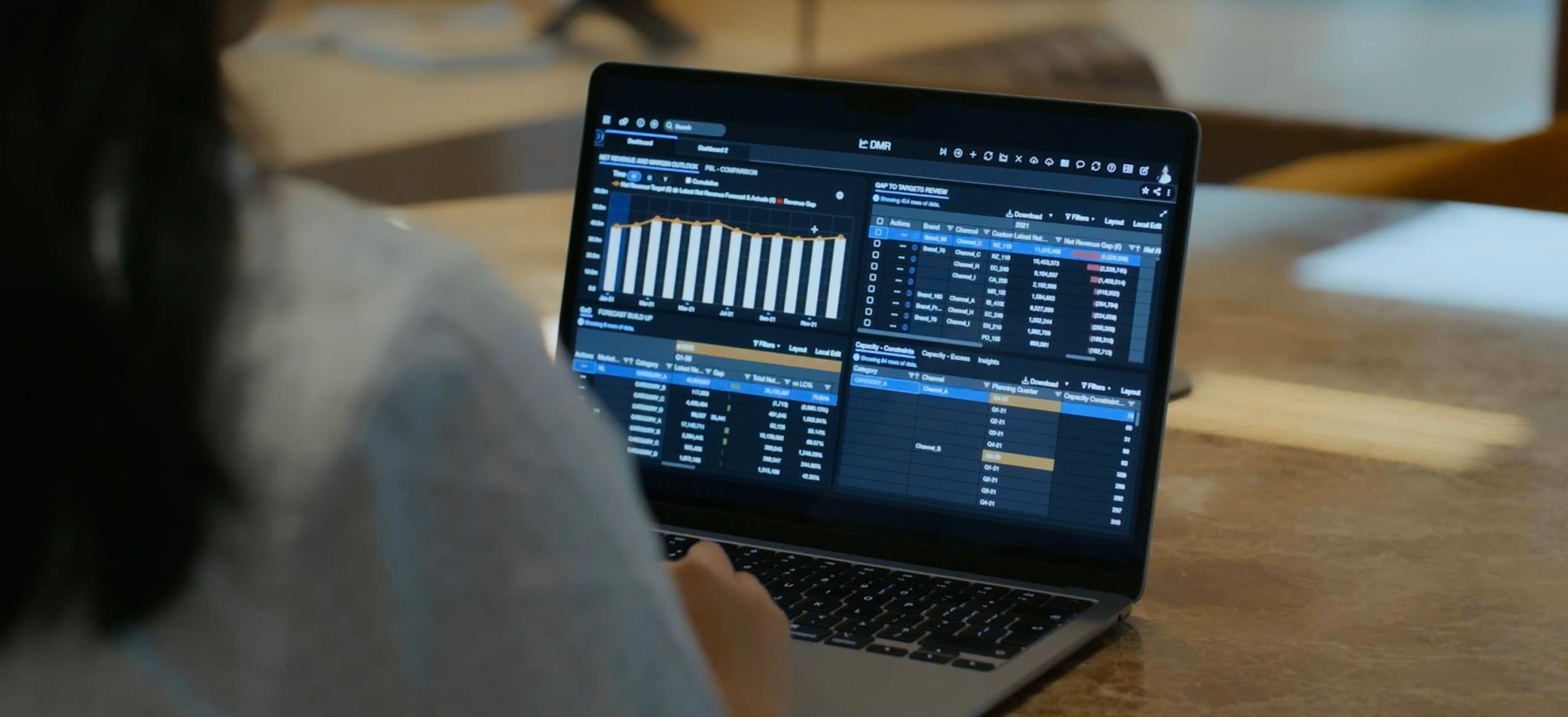
For supply chain leaders, forecast accuracy isn’t just a number - it’s the foundation for better decision-making, cost control, and service reliability. Since implementing o9’s Digital Brain AI-powered planning platform, Kraft Heinz has seen measurable improvements:
- A 8% increase in monthly forecast accuracy, leading to improved production efficiency and supply stability.
- A 10% improvement in short-term accuracy at the weekly item-location level, enabling faster, more precise inventory allocation.
- A 70% forecast accuracy at a four-week lag, allowing for better alignment between supply and demand.
“We’re aiming for top-tier results. We’ve made significant progress, but we know there’s more to achieve," Marcelo explained.
From Accuracy to Impact: Reducing Inventory and Waste
Accuracy alone isn’t the goal - it’s what you do with it that counts. At Kraft Heinz, the impact of AI-driven forecasting extends far beyond numbers, directly influencing sustainability, cost efficiency, and service levels.
By refining its demand planning process, the company has successfully reduced excess inventory by 25%, inching closer to its goal of zero overstock in North America. Supply chain losses have also decreased by 10%, directly reducing food waste and reinforcing sustainability efforts. Additionally, service levels have improved significantly, ensuring that products are always in the right place at the right time - even amid market volatility.
Marcelo put it bluntly: “Sustainability isn’t just a corporate initiative - it’s a supply chain imperative. If we’re wasting food, we’re failing. AI-driven planning helps us prevent that.”
The Role of AI in Planning Transformation
Forecasting is no longer about gut instinct or outdated spreadsheets. AI is reshaping the way companies plan, but its success depends on more than just technology - it’s about applying it in a way that enhances human decision-making.
At Kraft Heinz, three principles guide the use of AI in demand planning:
- Data-Driven PrecisionBy leveraging high-fidelity supply chain analytics and data, Kraft Heinz ensures that forecasts are rooted in facts, not assumptions. The right level of granularity prevents data overload while maintaining real-world usability.
- AI-Powered ForecastingMachine learning continuously refines forecast accuracy, identifying demand signals faster than human analysis alone. AI acts as a virtual scientist, running thousands of simulations to optimize inventory allocation and replenishment.
- Trust and ExplainabilityAI-driven forecasts aren’t black boxes - planners can see why the system makes specific recommendations. This transparency reduces bias and shifts planners from tactical adjustments to strategic oversight.
“Planners sometimes think they know better - and sometimes, they do. But AI isn’t here to replace human expertise. It’s here to enhance it,” Marcelo emphasized.
Lessons in Change Management: Driving Adoption at Scale
Even the most advanced AI-powered tools can fail without user buy-in. Kraft Heinz’s success was not just about implementing new technology but also about ensuring adoption. Marcelo shared key lessons from their journey:
- Digital transformation is about people, not just systems. AI adoption depends on trust. Kraft Heinz focused on educating planners, showing them that AI is an enabler, not a replacement.
- Change must align with market maturity. Not every region is ready for AI at the same pace. North America underwent a comprehensive rollout, while EMEA required a more adaptive approach.
- Breaking down silos unlocks greater value. AI doesn’t just rely on demand-driven models - it incorporates insights from sales and operations planning, finance, and category management to drive cross-functional decision-making.
“We weren’t short on data. The problem was that different teams had different versions of reality. AI helped unify our decision-making,” Marcelo noted.
The Future: AI-Enabled, Autonomous Planning
Kraft Heinz is looking beyond forecasting toward a future of fully autonomous supply chain planning, where AI-driven decision-making powers a more intelligent and resilient supply chain. The company is expanding machine learning capabilities across all business units, ensuring that AI continues to evolve and optimize operations.
Global expansion is another priority, with AI-driven forecasting set to roll out in Latin America and Asia. As AI adoption grows, continuous optimization remains essential, ensuring that the system is not just reactive but self-learning - improving accuracy and adaptability over time.
Marcelo believes this shift is inevitable. “Forecasting is just the start. The future is autonomous planning - where AI enables faster, smarter, and more resilient supply chains.”
What Supply Chain Leaders Can Learn from Kraft Heinz
The journey of Kraft Heinz offers key takeaways for food and beverage companies looking to enhance their supply chain resilience:
- AI-driven demand planning software delivers tangible business benefits, from higher forecast accuracy to cost reduction.
- Scalability is critical - adapting AI models for different market maturities accelerates deployment.
- People must be at the center of transformation - without adoption, even the best AI won’t deliver results.
Kraft Heinz’s experience proves that AI-powered forecasting isn’t optional - it’s essential for building a future-ready supply chain.
Want to learn more? Request a demo or download our whitepaper on AI-powered supply chain transformation.
About the authors

o9
The Digital Brain Platform
o9 Solutions is a leading Enterprise Knowledge and AI-powered platform helping companies build Agile, Adaptive & Autonomous Planning & Execution Models for transforming enterprise decision-making in environments of rising volatility and uncertainty. Whether it is improving forecast accuracy, matching demand and supply and driving collaboration across the multi-tier supply chain to improve resilience at optimal costs and inventory, or optimizing new product and commercial initiatives to drive revenue growth and margins, decision-making processes from long-range to tactical to execution horizon can be made faster and smarter and connected on o9’s Digital Brain Platform.
o9 brings together game-changing technology innovations — such as innovative enterprise knowledge graph modeling, big data analytics, advanced algorithms for forecasting, demand/supply balancing, scenario planning, real time learning, collaboration, generative and agentic AI, easy-to-use interfaces and cloud-based delivery, and innovative management methods — as well as organization, process and change management best practices to transform decision-making speed and intelligence.