8 read min
What is IBP?
Integrated Business Planning (IBP) is a continuous, cross-functional business planning process that aligns strategic planning, financial planning, and operational execution into a single, cohesive system.
Historically, companies relied on Sales and Operations Planning (S&OP) to balance supply and demand. However, IBP takes S&OP a step further. It extends beyond the supply chain to integrate marketing, sales, product development, HR, and, most importantly - finance. The goal of IBP is to ensure that operational decisions are always evaluated through a financial lens, translating strategic intent into coordinated, financially sound actions across the enterprise. Instead of a monthly cadence of spreadsheet reconciliation and functional compromise, modern IBP enables a unified, always-on digital system for proactive decision-making.
IBP Elements
Moving Integrated Business Planning from a high-level concept to an executable strategy requires bringing together three core elements: cross-functional domains, advanced capabilities, and tangible deliverables
1. The Functional Domains
IBP includes data, input, and accountability from almost every major department in a company:
- Sales & Marketing (Commercial): Includes trade promotions, pricing strategies, market intelligence, customer acquisition forecasts, and sales quotas.
- Supply Chain & Operations: Includes inventory levels, raw material availability, manufacturing capacity, logistics capabilities, and procurement schedules.
- Finance: Includes the Annual Operating Plan (AOP), working capital constraints, cash flow projections, margin targets, and overall P&L management.
- Product Development / R&D: Includes the pipeline for new product introductions (NPI), capital expenditure for new innovations, and timelines for retiring old products.
- Human Resources: (Often overlooked, but critical) Includes workforce planning, such as hiring timelines for new shifts to meet a projected spike in manufacturing demand.
2. The Core Capabilities
A mature IBP framework includes several advanced planning capabilities that happen continuously:
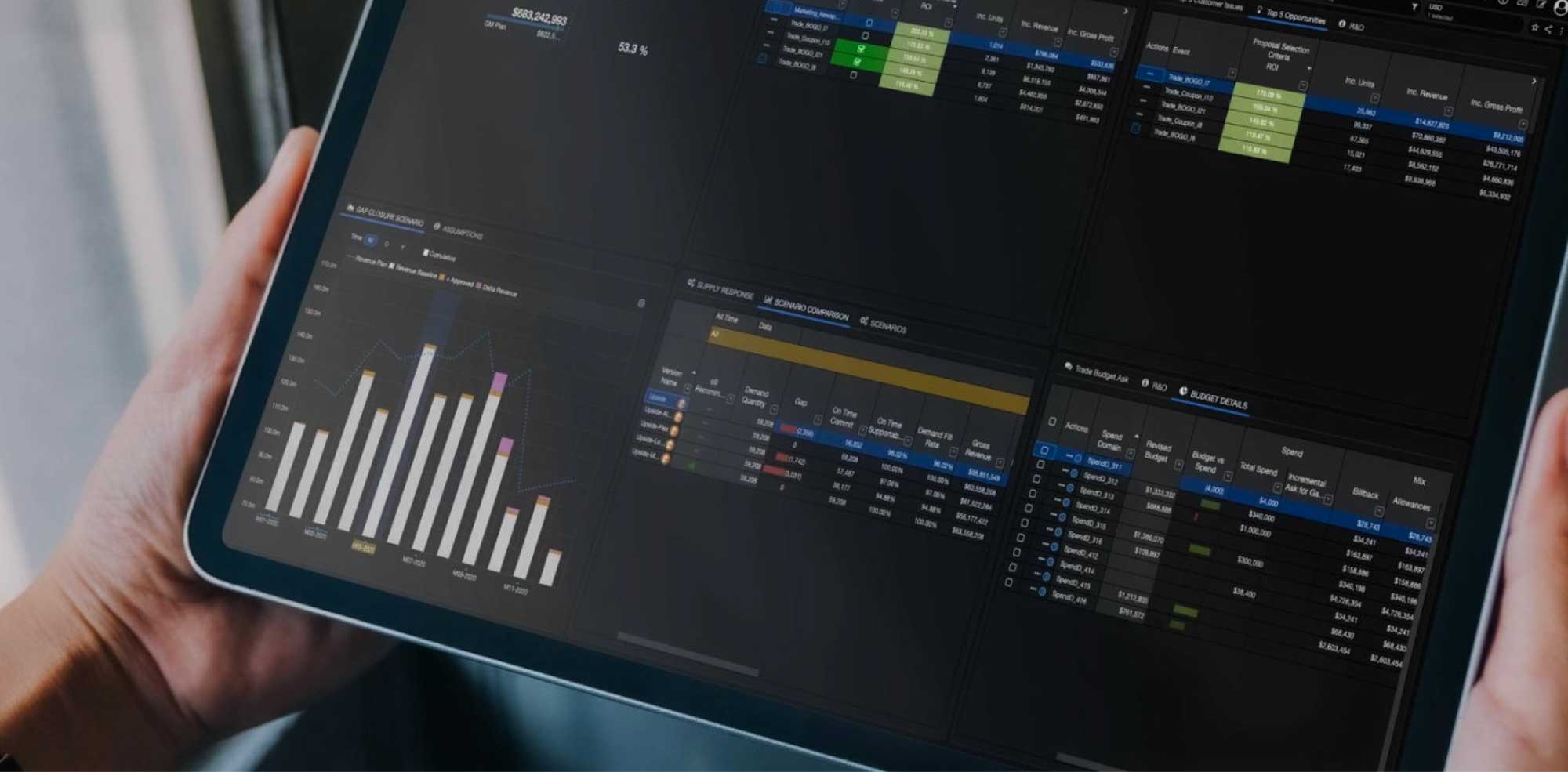
- "What-If" Scenario Modeling: The ability to simulate different business realities (e.g., "What happens to our margins if raw material costs increase by 15% next quarter?").
- Risk and Opportunity (R&O) Management: Identifying potential supply chain bottlenecks (risks) or unexpected spikes in market demand (opportunities) and pre-planning responses to them.
- Continuous Financial Reconciliation: Instantly translating every operational metric (like units sold or pallets shipped) into a financial metric (like gross revenue or freight cost).
- ESG & Sustainability Tracking: Modern IBP increasingly includes tracking carbon footprints, water usage, and waste, allowing companies to balance financial goals with environmental commitments.
3. The Tangible Deliverables
At the end of an IBP cycle, the process includes the generation of specific, agreed-upon outputs:
- An Unconstrained Demand Plan: A true, data-backed projection of what the market will buy.
- A Constrained Supply Plan: A realistic plan of what the company can actually produce and deliver profitably.
- A "Single-Number" Plan: One unified operating plan that the entire company executes against, eliminating the scenario where sales expects to sell 10,000 units but manufacturing is only funded to build 8,000.
- A Rolling 24- to 36-Month P&L: A forward-looking profit and loss statement that updates constantly based on real-time operational decisions.
Why is IBP Important?
Without IBP, companies suffer from the "Silo Effect." The Sales team might run a massive promotion and forecast a huge spike in demand. Meanwhile, the Supply Chain team might decide to reduce manufacturing capacity to save money. The result? Customers try to buy the product, it’s out of stock, revenue is lost, and customer trust is damaged.
IBP is important because it forces everyone to row in the same direction. Here are some of the reasons why it is considered a critical capability for modern enterprises:
1. It Connects Operational Decisions to Financial Outcomes
In a siloed business, the supply chain team might decide to expedite shipping (paying extra for air freight) to ensure a product arrives on time. They hit their operational goal (on-time delivery), but they might wipe out the entire profit margin for that order. IBP ensures that every operational decision is instantly evaluated through a financial lens.
2. It Creates a "Single Source of Truth"
When executives ask, "How are we performing this quarter?", they often get three different answers: one from Sales, one from Finance, and one from Operations. IBP forces all departments to operate from a single, unified data model. There is no more arguing over whose spreadsheet is correct; everyone agrees on the baseline facts.
3. It Enables Agility Through Scenario Planning
We live in a volatile world. A competitor slashes prices, a pandemic disrupts shipping lanes, or a key supplier goes bankrupt. IBP allows companies to instantly run "what-if" simulations. Instead of panicking, leadership can say, "If we lose 20% of our supply from Asia, what does that do to our Q3 revenue, and how should we reallocate our remaining inventory to the most profitable customers?"
Business Impact of Modern IBP
Traditional planning often struggles because different departments use different data. According to Board’s Global Planning Survey, Companies with fragmented planning processes experience:
- 40% longer planning cycles
- 25% higher inventory holding costs
- 30% more forecast errors
- 60% more time spent on data reconciliation versus strategic analysis
The business impact of implementing a robust IBP process can be game-changing. According to research studies, surveys and industry data from leaders like McKinsey and Oliver Wight, companies that invest in modern IBP softwares report:
- Inventory Cost Efficiency: Decreases by 10% to 30%.
- Higher Accuracy: 5-15% increase in forecast accuracy
- Service Improvements: Service level improvements of up to 65% compared to slower-moving competitors.
- Faster Delivery: Boosted on-time delivery by up to 50%
Choosing an IBP Software
Choosing the right Integrated Business Planning (IBP) software is a critical decision that can define an organization's agility and strategic alignment. A modern IBP solution must move beyond traditional data storage and rigid forecasting, acting as an intelligent, dynamic layer that connects strategy with execution.
When selecting an IBP software, it's essential to look for features that support cross-functional collaboration, real-time insights, and financial integration.
Here are the critical functions and criteria to consider when choosing a modern IBP software:
1. Unified, Real-Time Data Foundation (A Single Source of Truth)
A core reason traditional planning fails is siloed data. A good IBP system must seamlessly integrate data from your ERP, CRM, PLM, and HR systems.
- What to look for: Look for platforms that use an "Enterprise Knowledge Graph" or a similar architecture that maps the relationships between your products, customers, suppliers, and financial metrics.
- The Benefit: Everyone from the supply chain manager to the CFO looks at the exact same numbers, eliminating the "battle of the spreadsheets" and ensuring cross-functional alignment.
2. Financial-First Decision Orientation
IBP is distinct from Sales and Operations Planning (S&OP) because it inherently links operational plans to financial outcomes. A modern IBP tool must have a robust financial engine.
- What to look for: The ability to continuously synchronize volume, capacity, and sourcing changes directly with revenue, cost, margin, and working capital metrics.
- The Benefit: Decisions are made based on enterprise value and profitability, rather than just supply chain feasibility or localized departmental goals.
3. Advanced, Real-Time Scenario Modeling ("What-If" Analysis)
In a volatile market, planners need to test multiple strategies before committing to one.
- What to look for: A high-performance simulation engine that allows users to create, compare, and save multiple alternative futures side-by-side in real-time, without needing IT assistance to build complex models.
- The Benefit: Leaders can assess the impact of a sudden demand spike, a supplier disruption, or a raw material price hike, and proactively choose the most profitable course of action.
4. AI and Machine Learning Capabilities
Modern IBP software leverages AI to shift from reactive planning to proactive decision-making.
- What to look for: Machine learning for predictive forecasting (incorporating external signals like weather or economic trends), prescriptive analytics that recommend actions based on constraints, and Generative/Agentic AI to allow users to query data naturally.
- The Benefit: Vastly improved forecast accuracy, automated routine data analysis, and intelligent recommendations that augment human decision-making.
5. Multi-Tier Network Visibility and Collaboration
Your supply chain doesn't end at your factory doors. Effective planning requires visibility upstream and downstream.
- What to look for: Portals and collaboration features that allow you to bring Tier 1 and Tier 2 suppliers, as well as key customers, directly into the planning process.
- The Benefit: Shared planning improves responsiveness, helps detect risks earlier, and builds resilience across the entire value chain.
6. Built-in Executive Collaboration and Workflow Management
IBP reviews shouldn't happen on static slide decks. The software should facilitate the actual meetings.
- What to look for: Live dashboards, task assignments, role-based access, audit trails, and the ability to capture decisions and escalations directly within the platform.
- The Benefit: It transforms IBP from a disjointed monthly meeting into a continuous, trackable, and accountable digital process.
7. Scalability and Flexibility
As your business grows, your planning software must grow with it.
- What to look for: Cloud-native architecture that can process massive volumes of data across multiple dimensions (millions of SKUs, thousands of locations) without slowing down. The logic and business rules should also be flexible enough for users to adjust without needing heavy coding.
- The Benefit: You avoid needing to "rip and replace" your software as your data complexity increases.
Real World Case Studies from o9
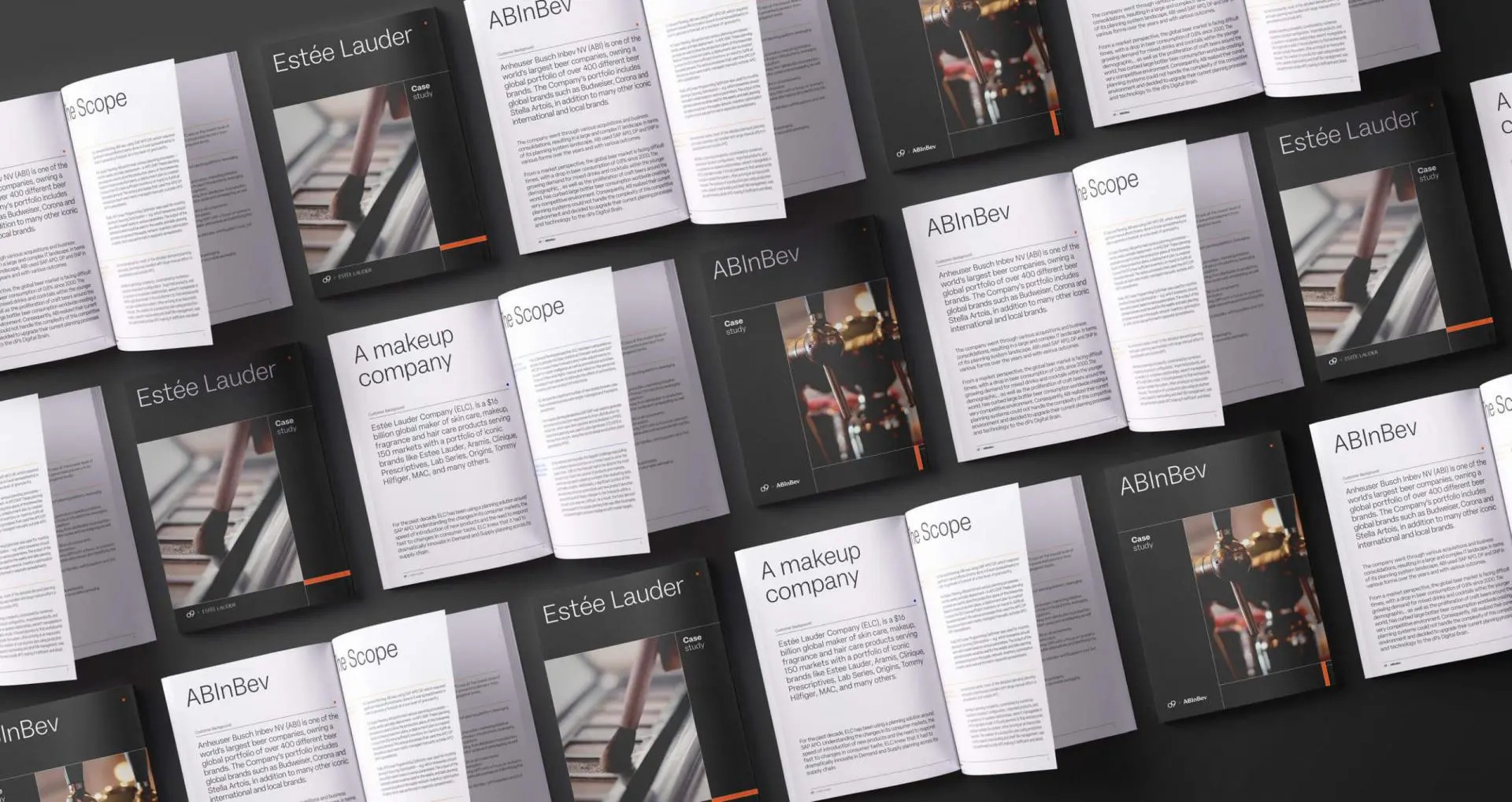
By leveraging the AI-powered o9 Digital Brain platform, hundreds of Fortune 500 companies have successfully transformed how they plan and execute, replacing legacy systems with one unified data-driven platform.
Here are the highlights from some of the world's most complex supply chains that have successfully implemented and scaled o9's IBP capabilities and achieved measurable ROI:
Kraft Heinz partnered with o9 Solutions in North America and Europe to implement an advanced ML forecasting platform, collaborative demand planning solution, and a sales planning module. This initiative resulted in:
- 25% Reduction in Excess Inventory
- 11% Increase in Monthly Forecast Accuracy
- 32% Reduction in Time Spent on Forecasting
By leveraging o9’s integrated planning platform, AB InBev replaced legacy systems such as SAP APO with a single, cloud-native solution, streamlining demand forecasting, supply planning, and inventory management. The transformation enabled:
- 60% Reduction in Out-of-Stocks
- 53% Decrease in Inventory Losses
- 70-90% Touchless Planning
o9’s platform enabled T-Mobile to overcome the challenges of rapid demand growth and achieved:
- 99%+ service levels
- $1 Billion in Value Realized over 3 Years
- 100% fulfilment rates
About the authors

Simon Joiner
Director of Product Management
Simon Joiner is a Director of Product Management, Demand Planning at o9 Solutions. He has over 20 years of experience in transforming Demand Planning Systems, Resources and Processes in such diverse sectors such as Pharmaceutical, Building Supplies, Agriculture, Chemical, Medical, Food & Drink, Electronics, Clothing and Telecoms. Simon lives in Hemel Hempstead in the UK with his wife and two (grown up) children and in his spare time likes to play guitar, research family history, walk the dogs and keep fit with running.